





White stucco Spanish Colonial Revival buildings with terracotta roofs glow at dusk on a hillside dotted with oak trees.

Heat Pump Installation in Clearlake, CA

Tell us about the job

Takes about a minute. No obligation.

New system or replacementHeat PumpLake County, CA
Step 1 of 2

What ZIP code is the job in?

Electricity heats 42.9% of homes in Lake County, more than any other fuel, with bottled or LP gas a distant second at 23.5%. A heat pump fits right into that picture, since it runs on electricity like the furnace or baseboard heat it would replace. For homes already wired for electric heat, swapping in a heat pump means no new gas line and no propane tank to deal with. It also covers cooling, which matters here given how warm Clearlake summers get. If your home falls into that electric majority, this is the straightforward path, not a conversion to some new setup.

8 months
October through May, your system heats
4 months
June through September, it cools
36°F
the average winter night it heats against
86°F
the average summer afternoon it cools against
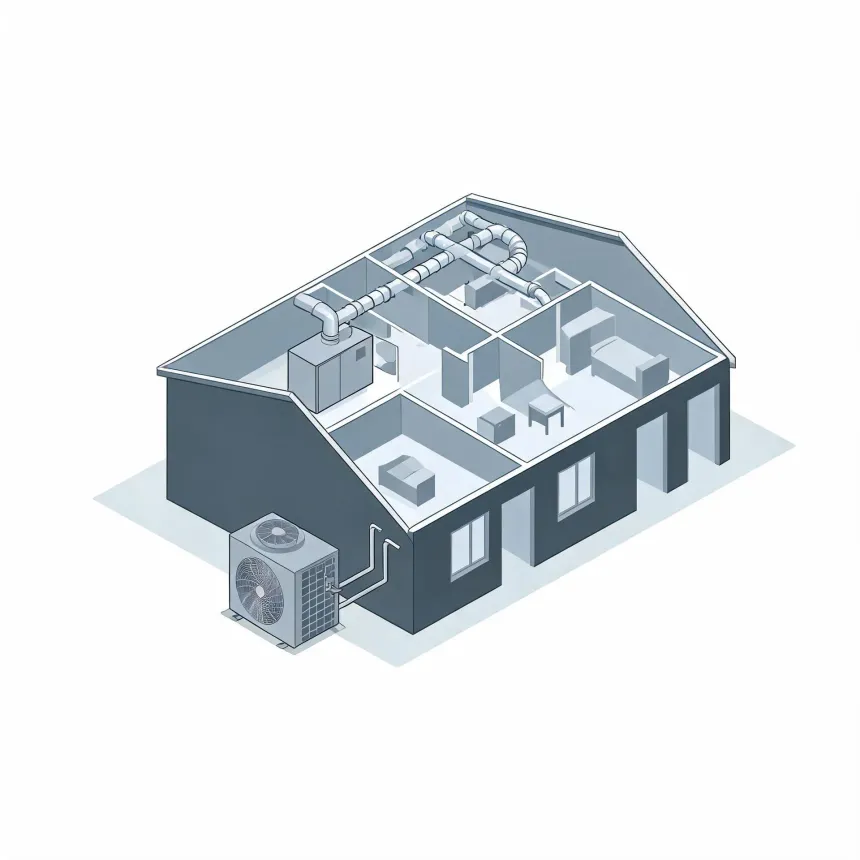
Isometric cutaway illustration of a single-story house showing interior rooms, attic ductwork and an air handler, with an outdoor condenser unit connected by lines along the exterior wall.
Your system heats October through May and cools June through September.

NOAA nClimDiv, 1991–2020 normals

Heat pumps in Clearlake run heat from October through May.

Get yours in before September and the install happens on your timeline, not during a cold snap.

A standard heat pump sized right for your house is all this climate asks for

Power costs 31.97 cents a kWh statewide
18 damaging wind events from 2015 to 2024
6 winter storms from 2015 to 2024
A standard heat pump fits this houseHalf the homes here were built in 1980 or earlier, half since. Age doesn't change what size you need.

Clearlake falls under zone 4B, a mixed climate that asks real work of both your furnace and your AC. Any split-system heat pump installed here new has to clear 14.3 SEER2 for cooling and 7.5 HSPF2 for heating, the federal minimum as of 2023. That floor is already a solid baseline, not a stripped-down unit. A federal tax credit is available on qualifying heat pumps, worth checking against before you settle on a model. The standard sets what can legally go in your house. What size and setup make sense still depends on your home.

This climate doesn't demand the top-tier model

Winter nights here average 36°F, not far below freezing. A heat pump built for that doesn't need to work as hard as one spec'd for harsher cold. Lake County sees damaging wind and a handful of winter storms most years, but the mild overnight lows mean the system itself isn't under constant strain. A reliable, right-sized unit holds up fine here.

Find a contractor
A dark gray heat pump unit mounted on a concrete pad next to a house with gray siding and a stone veneer wall.

Running long, not running hard

This heat pump will run most months of the year, but it's not fighting hard cold while it does. Overnight lows average 36°F through the winter here, so the compressor isn't working against single digits or worse. That's the case for spending on correct sizing rather than a higher tier of equipment. A unit rated for harsher winters than this one gets isn't doing you any favors here.

Sizing comes from a load calculation, not the old unit's label

A contractor works out heat pump size room by room, counting windows, walls, and ceiling height, then adds it up for the whole house. Whatever system is in there now, even if it's the original one, was never proof it was sized right to begin with.
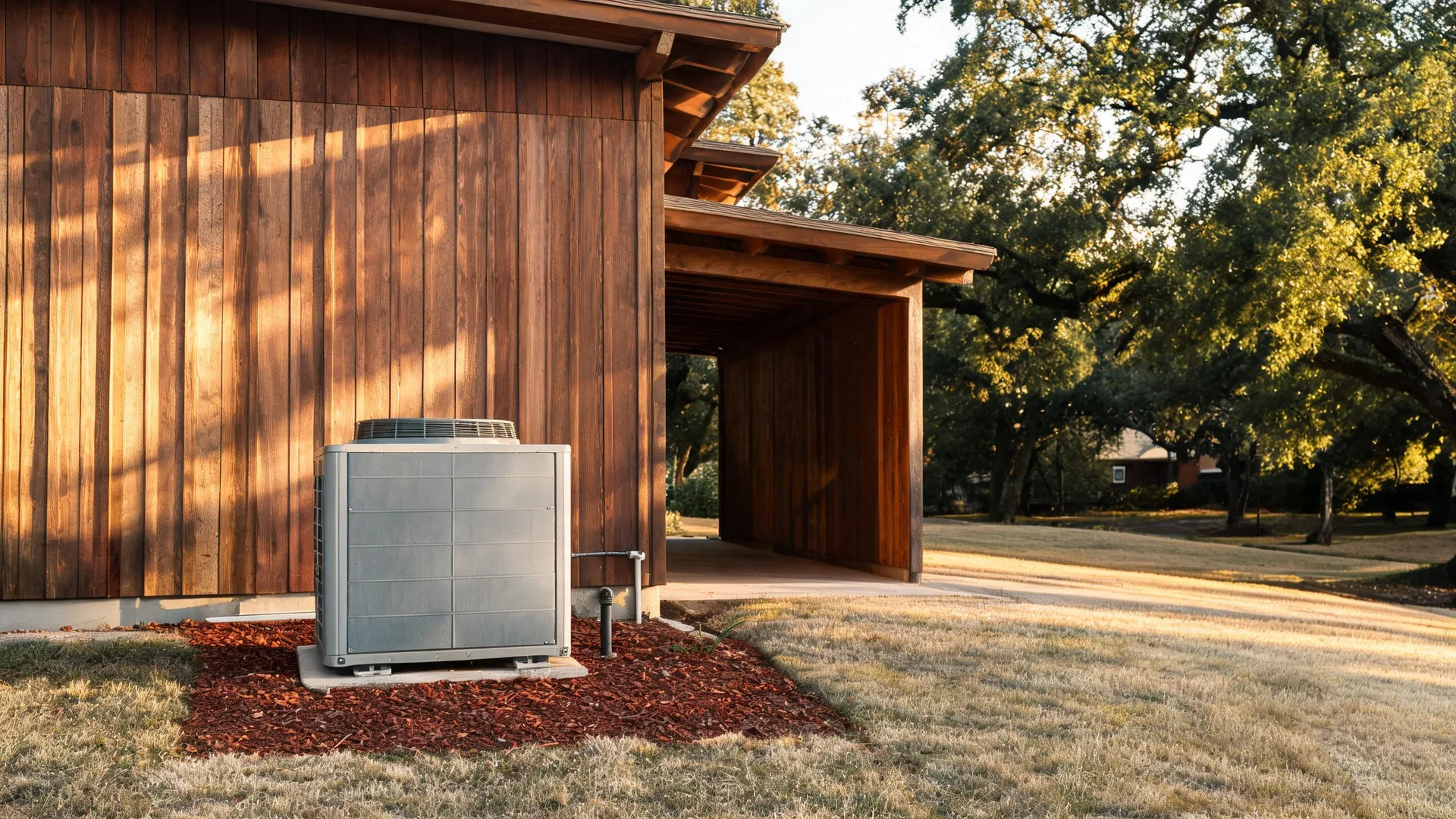
Oversized cools fast but leaves the air damp

A heat pump that's too big shuts off again almost as soon as it starts, before it's pulled any real moisture out of the air. Rooms end up cool and clammy instead of just comfortable. The right-sized unit runs longer, steadier cycles and actually dries the air while it cools it.

Whatever is heating and cooling the house now gets disconnected and hauled off once the new heat pump is in. If it's a furnace paired with a separate AC, both come out, along with the old refrigerant lines and the indoor coil. Any refrigerant left in the old system has to be recovered properly, not vented, so factor that into how the swap gets handled. The electrical circuit feeding the old equipment either gets reused or upgraded to match what the new unit draws. If there's an old gas line running to a furnace that's being replaced outright, it gets capped off safely rather than left live with nothing on the other end. None of this is work you do yourself after the fact. It's part of the install.

Install day starts with the old equipment coming out and the site getting prepped before anything new goes in. The outdoor unit needs a pad or mounting bracket set level. A unit that rocks or sits crooked wears its own compressor out early. Inside, the air handler or coil ties into the existing ductwork, and that ductwork gets checked while it's open, since leaky or crushed ducts undo a chunk of what the new unit is supposed to deliver. Refrigerant lines get run or reused, then pressure tested before anything is charged. A line set with a slow leak will keep the system from performing right for as long as it's missed. Once everything is connected, the system gets charged to the exact weight the manufacturer specs, not just until the air blows cold. Last comes startup, checking refrigerant pressures and airflow, and making sure the thermostat is actually talking to the unit before anyone calls it done.