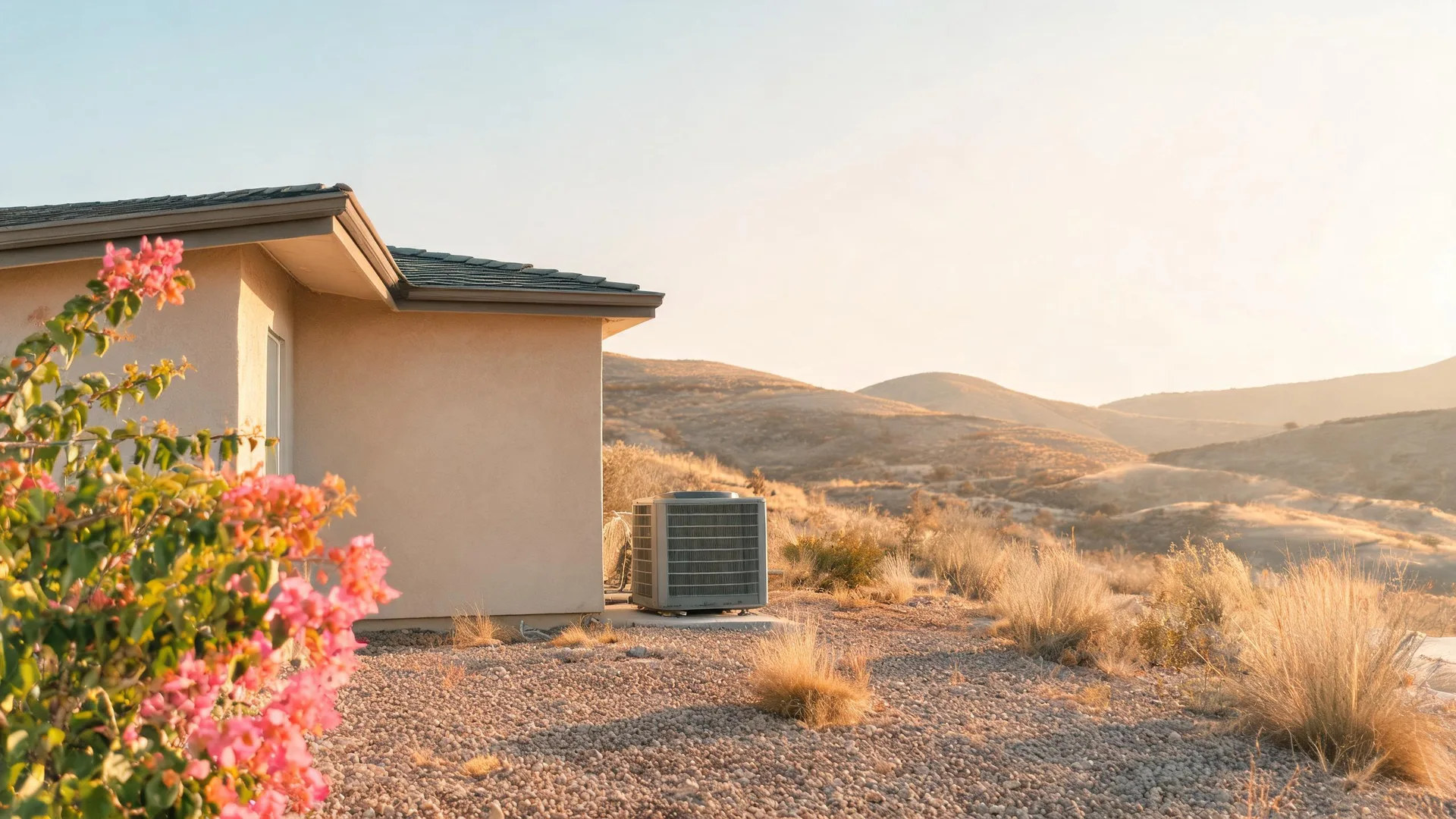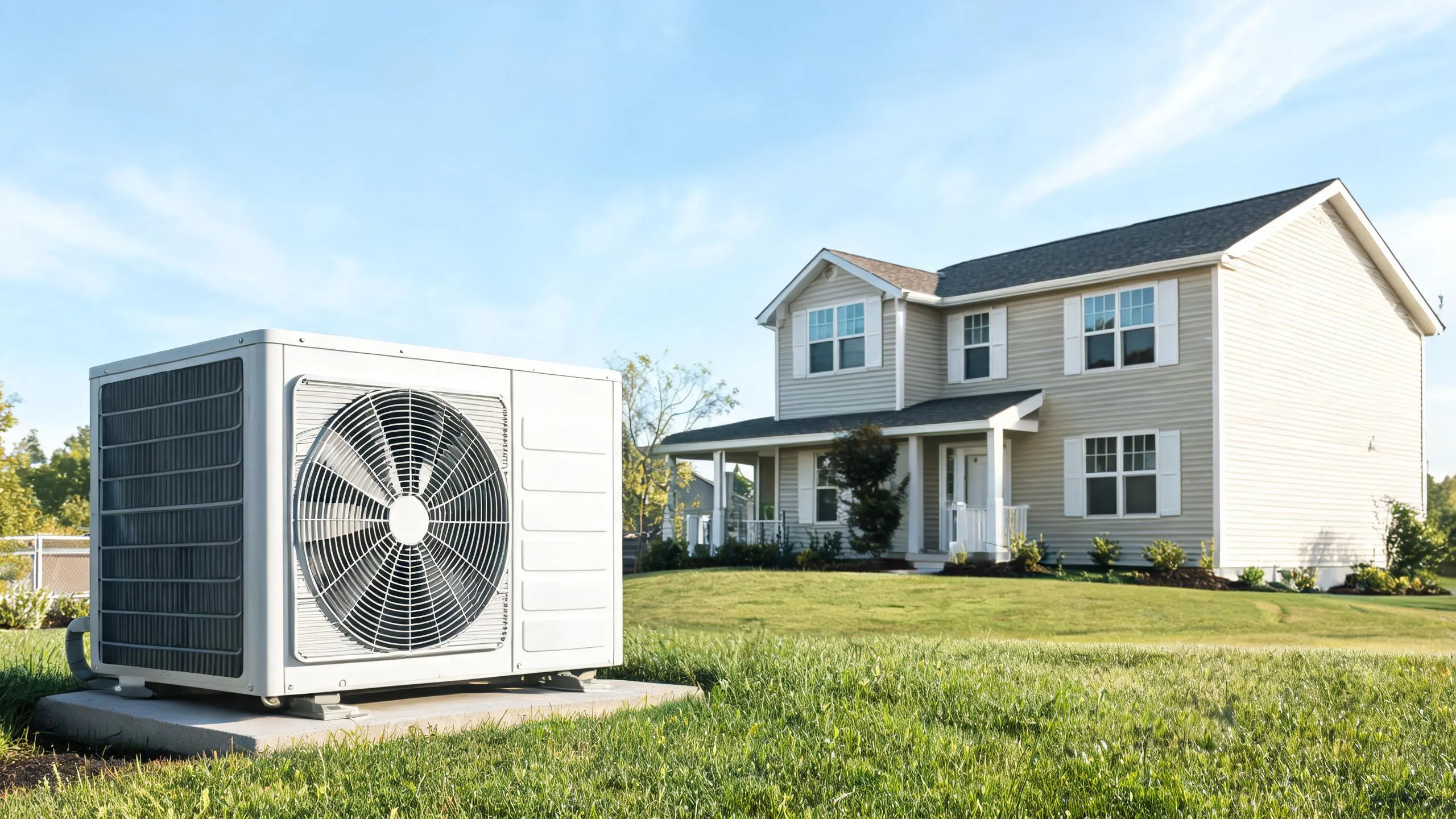
An outdoor heat pump unit mounted on a concrete pad in front of a two-story suburban house.

Heat Pump Installation in Madera, CA

Tell us about the job

Takes about a minute. No obligation.

New system or replacementHeat PumpMadera County, CA
Step 1 of 2

What ZIP code is the job in?

14.3 SEER2 is the floor

Madera County falls under zone 3B, and any split-system heat pump installed new here has to hit at least 14.3 SEER2 for cooling and 7.5 HSPF2 for heating. That's a federal minimum, not a suggestion, so it narrows down which models a contractor can even offer you.

Cooling is the bigger job here

Summers in Madera County run long and winters stay short and mild, so a heat pump here earns its keep mostly on the cooling side. The unit going in should be sized with that in mind, not picked off a chart built for a colder place.

8 months
October through May, your system heats
4 months
June through September, it cools
33°F
the average winter night it heats against
87°F
the average summer afternoon it cools against
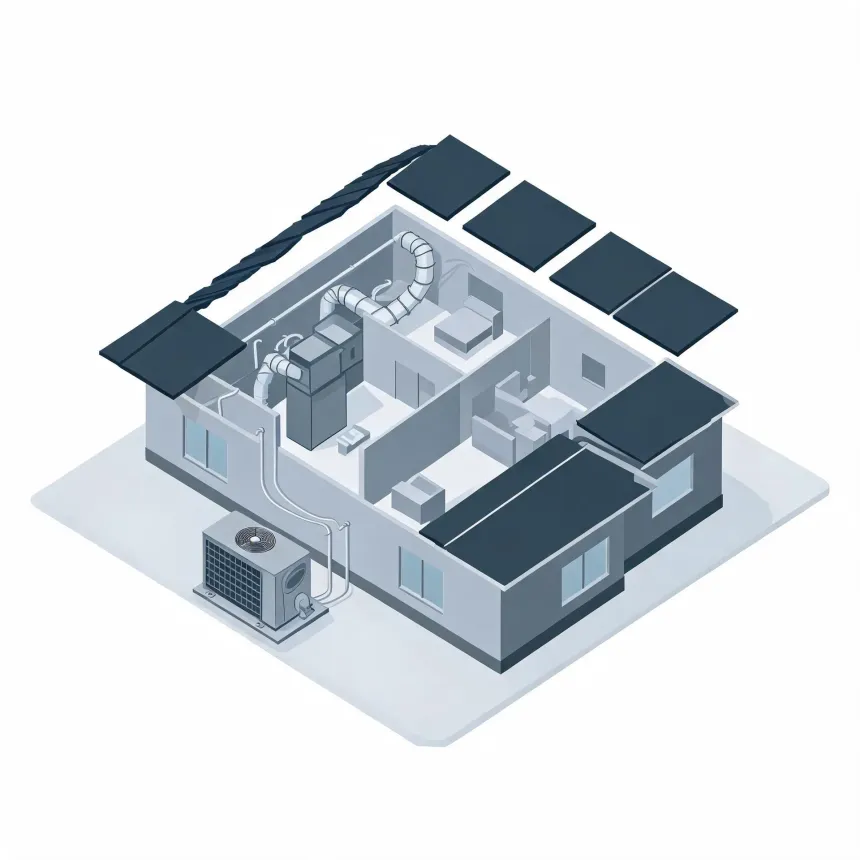
Isometric grayscale illustration of a cutaway single-story house showing interior rooms, ductwork and an air handler, an exterior condenser unit connected by lines, and dark solar panels on the roof.
Your system heats October through May and cools June through September.

NOAA nClimDiv, 1991–2020 normals

Heat here runs October through May, and September is the last month before it starts.

Get a heat pump installed in September and it's broken in by the time the house needs it for heat.

Gas heats more homes here than anything else, and that shapes what a heat pump is replacing

37.8% of homes heat with gas
88 damaging wind events from 2015 to 2024
6 hail events from 2015 to 2024

Electricity in California ran 31.97 cents per kilowatthour in 2024, well above what most states pay. A heat pump here runs on that rate every time it cools the house, which in Madera County is most of the year. The federal efficiency floor for this zone is just that, a floor. Going above it costs more up front, but every point of efficiency above the minimum is a point you're not paying for at that rate. A unit sized and chosen for this climate earns back the difference on the bills that follow.

Mild winters here don't ask much of a heat pump

Winter lows in Madera County average 33°F. That's cold enough to need heat, not cold enough to work a heat pump hard. The strain on a system here comes more from running the cooling side for months on end than from fighting off deep cold. A well-chosen unit at the federal minimum can handle what this climate asks of it. The case for spending above that floor is the electric rate, not the weather.

Find a contractor
A gray heat pump outdoor unit mounted on a concrete pad next to the stone-accented exterior wall of a house.

Sized right, it runs long and even. Sized wrong, it short cycles for years.

A unit sized right for the house runs long, steady cycles that pull moisture out of the air and keep temperatures even room to room. A unit sized too big blasts the house down to temperature fast, shuts off, then starts again soon after. That short cycling is harder on the compressor than a long steady run ever is, and it leaves the air inside colder but still damp. A unit sized too small just runs and runs and never quite catches up on the hottest afternoons. Getting the size right isn't about matching the old equipment. It comes from a load calculation that accounts for square footage, insulation, window area and duct condition, not a guess based on what was there before or a rule of thumb for tonnage per square foot. Houses built differently can need different sized units even at the same size. The sizing matters more for how long the compressor lasts than almost anything else about the install.

What the number actually measures

SEER2 compares the cooling a unit puts out against the electricity it takes to produce it, measured in the lab under one fixed test. HSPF2 does the same thing for the heating side. Neither number says how big a unit should be or how it will behave in a given house. A high rating on a unit that's the wrong size still leaves you with long cycles or short ones, either way wasting what that rating promised.

Why the rating alone won't tell you what to buy

Units carrying the same rating can behave differently once installed. Duct sizing, airflow, and how well the refrigerant charge gets set on install day all affect what a system actually delivers. The label is a starting point for comparing models, not a guarantee of what shows up on the bill. A contractor sizing the job correctly and charging it right at startup matters as much as the rating stamped on the unit.

Taking out the old system is its own job, separate from setting the new one in. A heat pump or furnace being replaced still has refrigerant in its lines, and that has to be recovered properly before anything gets disconnected, not vented out. The old unit gets unbolted from the pad or pulled from its frame, and the lines leading to the indoor coil get capped or removed depending on whether that coil is going too. If the system being replaced is a straight furnace, the gas line and vent connections need to be closed off correctly so nothing is left live or open. None of this is hard to do right, but skipping steps here is how a job ends up with a leak or a code problem that shows up later.

Install day starts with a load calculation, not a crane pulling up. A tech checks the ductwork, the insulation, the square footage, and the windows before anything gets set on the pad. Once the new unit is in place, the lines get connected and pulled down into a vacuum, which clears out moisture and air that don't belong in a closed refrigerant system. Skip that step and the system can still run, just not the way it's supposed to. After that comes the charge, weighed in to the manufacturer's spec rather than eyeballed, and then a startup where the tech checks static pressure, airflow at the registers, and temperature split between the return and supply. A job that looks finished from the curb can still be wrong on the inside, which is why the startup numbers matter as much as the equipment itself.