




An outdoor heat pump unit mounted on a concrete pad in front of a single-story suburban house with beige siding.

Heat Pump Installation in Napa, CA

Tell us about the job

Takes about a minute. No obligation.

New system or replacementHeat PumpNapa County, CA
Step 1 of 2

What ZIP code is the job in?

About 63.5% of homes in Napa County heat with utility gas. Another 27.9% run on electricity, and a small share use bottled or LP gas. If your home already runs on electric heat, a heat pump drops in cleanly, same panel, no new fuel line. If your home heats with gas, a heat pump still works, but the contractor will size it against your home's heat loss and may talk through keeping the furnace as backup for the coldest mornings.

6 months
November through April, your system heats
4 months
June through September, it cools
39°F
the average winter night it heats against
87°F
the average summer afternoon it cools against
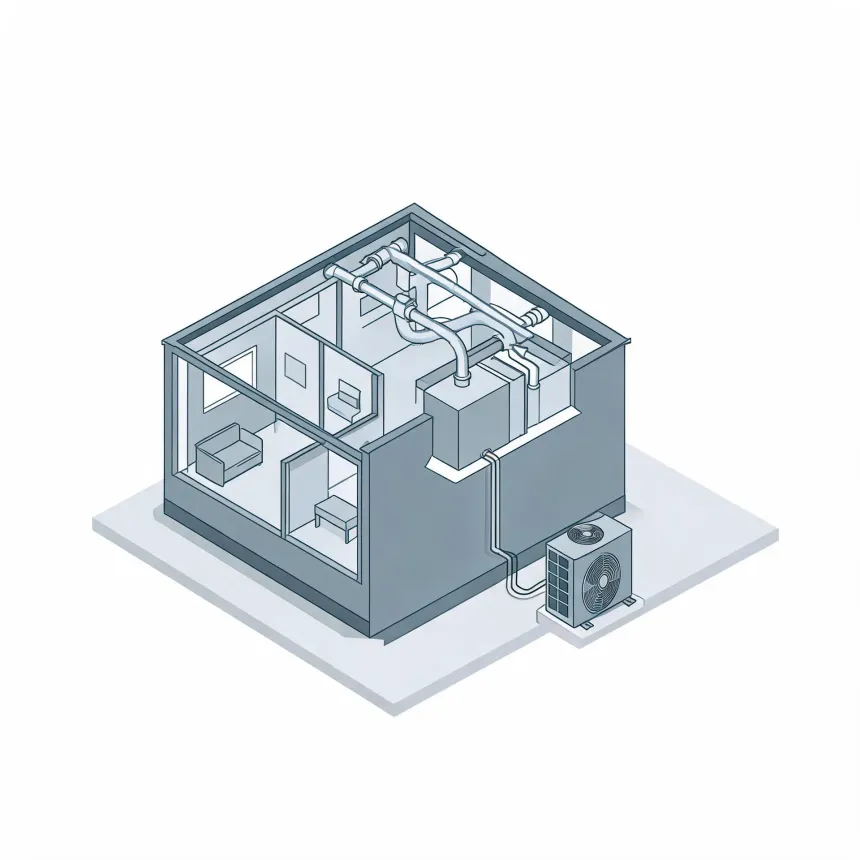
Isometric line illustration of a cutaway house showing interior rooms with furniture, ceiling ductwork connected to an indoor air handler, and refrigerant lines running to an outdoor condenser unit on a pad.
Your system heats November through April and cools June through September.

NOAA nClimDiv, 1991–2020 normals

Half the homes in Napa County were built in 1976 or earlier, half in 1976 or later.

Either way, a correctly sized heat pump handles this county's winters without going bigger or paying for a special rating.

October puts a new heat pump to work before it has to earn its keep

Cooling runs June through September
Heat runs November through April
72 damaging wind events from 2015 to 2024

California electricity ran 31.97 cents per kilowatthour in 2024, well above the national average. That number is the reason heat pump efficiency pays off here more than in most states. A standard heat pump, correctly sized, covers a Napa County home without needing an oversized unit or a premium efficiency tier to justify the switch. Bigger doesn't mean better in this climate. The contractor will size the unit to your home's heat loss, not to the hottest or coldest day on record.

Go with the standard fit

A standard size and efficiency fit fine here. There's no local reason to go bigger or pricier.

Find a contractor
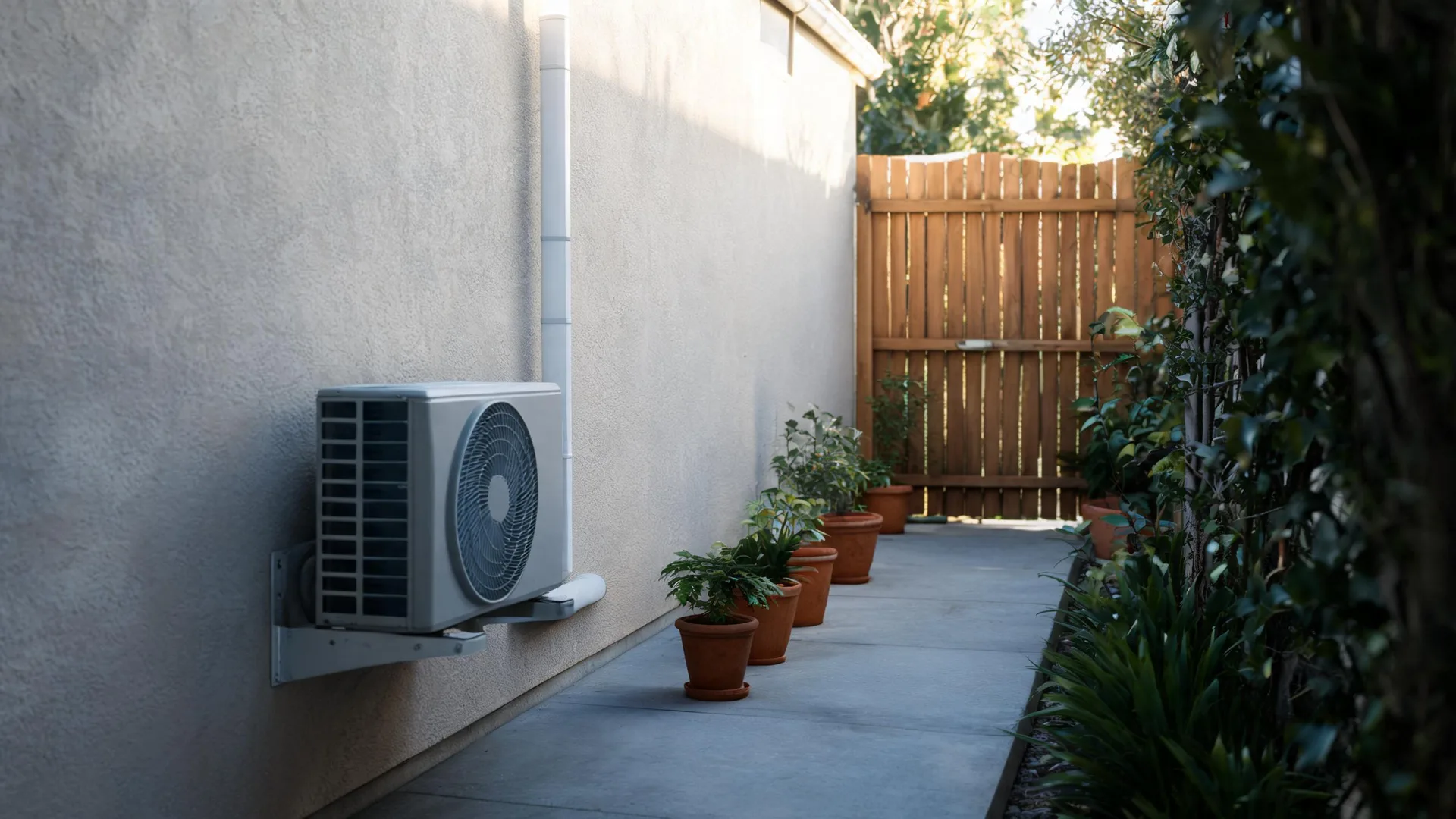
A white mini-split heat pump outdoor unit mounted on a concrete pad beside a gray-sided house, surrounded by gravel and green shrubs.

What the install has to account for

The unit itself is one line on the invoice. The rest comes from what the contractor has to do to make it work right. Sizing means calculating the home's heat loss room by room, not matching the old system's number. Get that wrong and the system runs harder than it should for as long as it's installed. Ductwork matters just as much. A heat pump moves a different volume of air than a furnace or a straight AC, and ducts sized for the old equipment can choke a new system or leave rooms short. Sometimes that means new runs, new returns, or sealing joints that were never sealed. The electrical side counts too. A heat pump needs its own circuit, and if the panel is full or the wire gauge is too thin, that work happens before the unit goes outside. Where the outdoor unit sits and how the refrigerant lines route between it and the air handler shapes the labor as well. A long line set through an attic or a wall takes more time than a straight run. None of this shows up in a quick look at the equipment. It shows up when the contractor walks the house.

The rating measures a season, not a moment

The efficiency number on a heat pump's label comes from running it across a full winter and summer, not from one cold morning or one hot afternoon. A unit can carry a high rating and still work hard on the coldest night of the year, because the label describes an average, not a guarantee for any single day.
A higher rating only pays off if the unit fits the house

A heat pump sized wrong for a home's heat loss won't deliver what its rating promises, no matter how high that rating is. Ductwork that chokes airflow or a unit that's too big or too small for the space will show up on the utility bill regardless of what the label says. The rating describes the equipment. It doesn't describe the installation.

Sizing starts with heat loss, not square footage. A contractor works out how fast a home loses heat on a cold day, room by room, using the walls, the windows, the insulation, and the orientation of the house. Homes of the same size can lose heat at very different rates, so a heat pump that fits next door can be wrong for the house beside it. Oversize it and the unit short cycles, running in quick bursts that never let it settle into steady, efficient operation. Undersize it and it runs constantly on the coldest days and still falls short. Either way shows up as uneven temperatures room to room and a unit that wears out its parts faster than it should.

Install day starts with the old equipment coming out, not the new. If a furnace is staying on as backup, the contractor wires it to hand off to the heat pump instead of fighting it for control of the thermostat. The indoor coil or air handler goes in next, matched to the ductwork already in place. Running the new electrical circuit and setting the line set between indoor and outdoor units is where most of the labor goes, more so if the line has to snake through a wall or attic rather than run straight. Once the lines are connected, the system gets evacuated and charged, then run through a full cycle, heat and cool, before the contractor signs off. A swap with existing ductwork and a clear electrical path goes faster than one needing new duct runs or panel work. Either way, the unit doesn't get left running until it proves it holds a steady temperature.