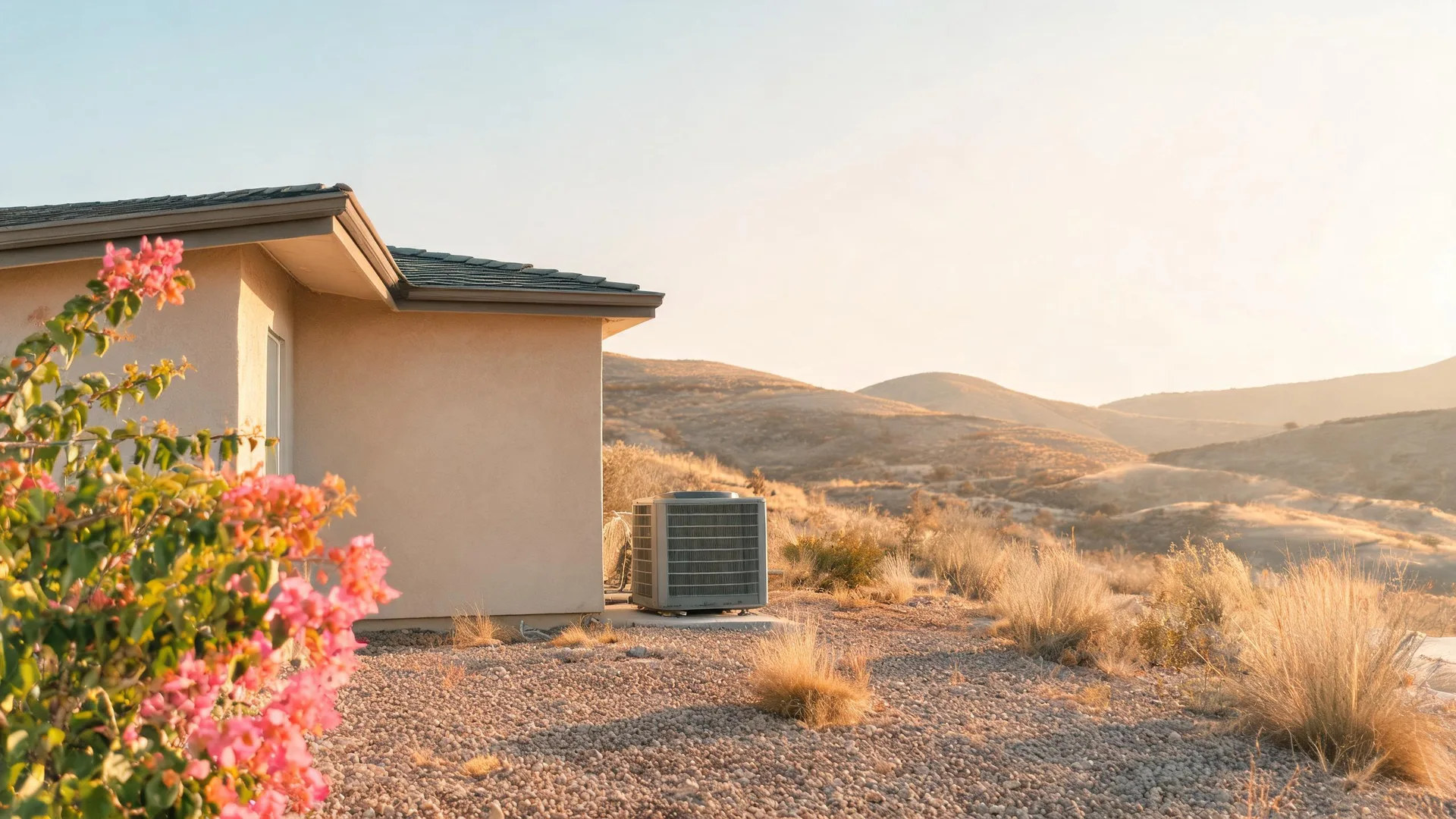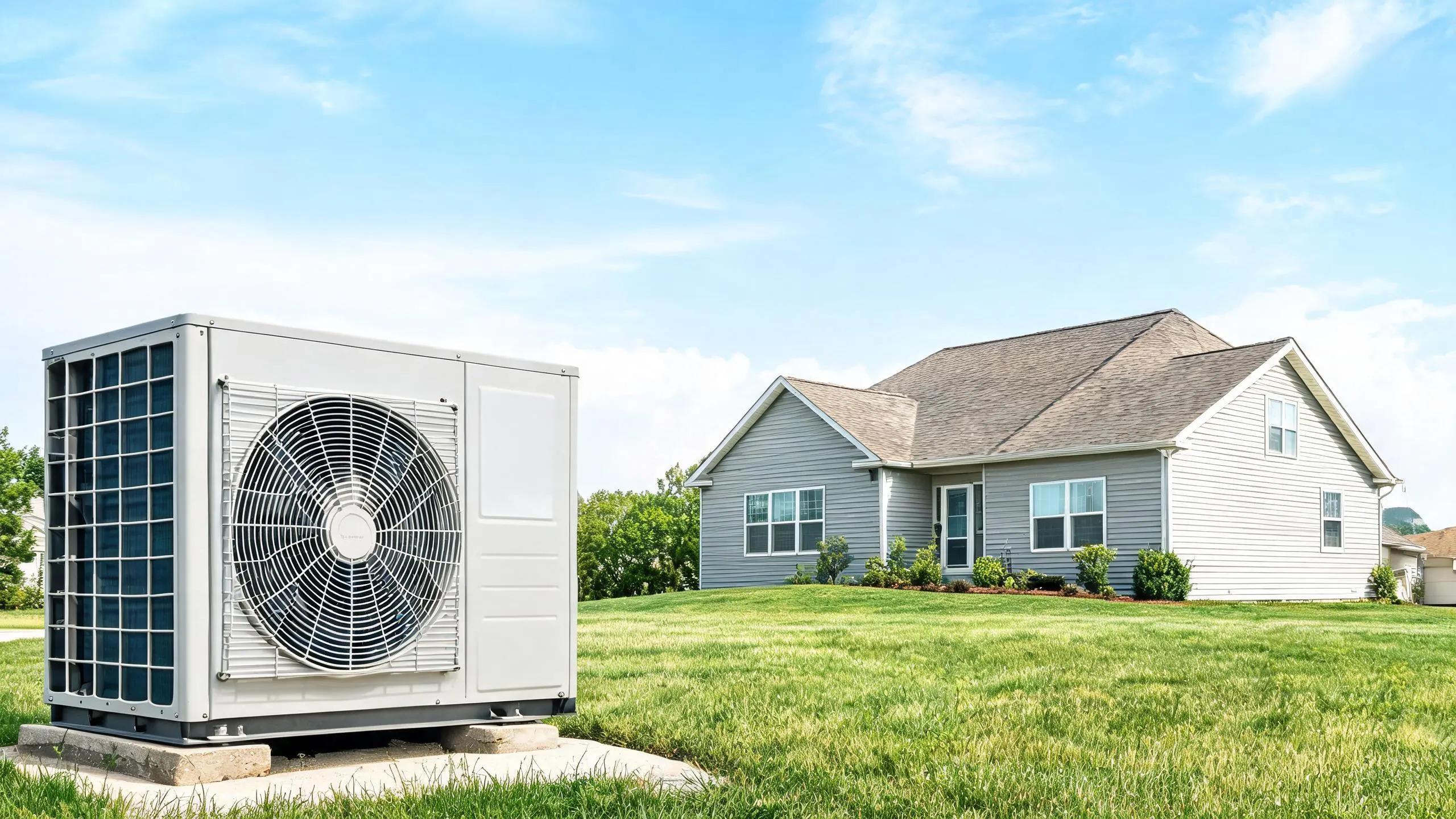
An outdoor HVAC condenser unit on a concrete pad in front of a single-story house with gray siding and a shingle roof.

Heat Pump Installation in Riverside, CA

Tell us about the job

Takes about a minute. No obligation.

New system or replacementHeat PumpRiverside County, CA
Step 1 of 2

What ZIP code is the job in?

Electricity here costs more than almost anywhere

Homes in Riverside County paid an average of 30.11 cents per kilowatt-hour in 2025. That is higher than in most US counties. A heat pump runs on electricity for both heating and cooling, so every hour it runs draws on some of the priciest power in the country.

Every hour this unit runs costs more here

Winters here are mild, so a heat pump in Riverside County will not log as many hours as one in a colder state. That does not make the rate any lower. A unit that runs poorly still costs more on each hour it does run, and how it is sized and installed decides what those hours add up to.

5 months
November through March, your system heats
7 months
April through October, it cools
42°F
the average winter night it heats against
99°F
the average summer afternoon it cools against
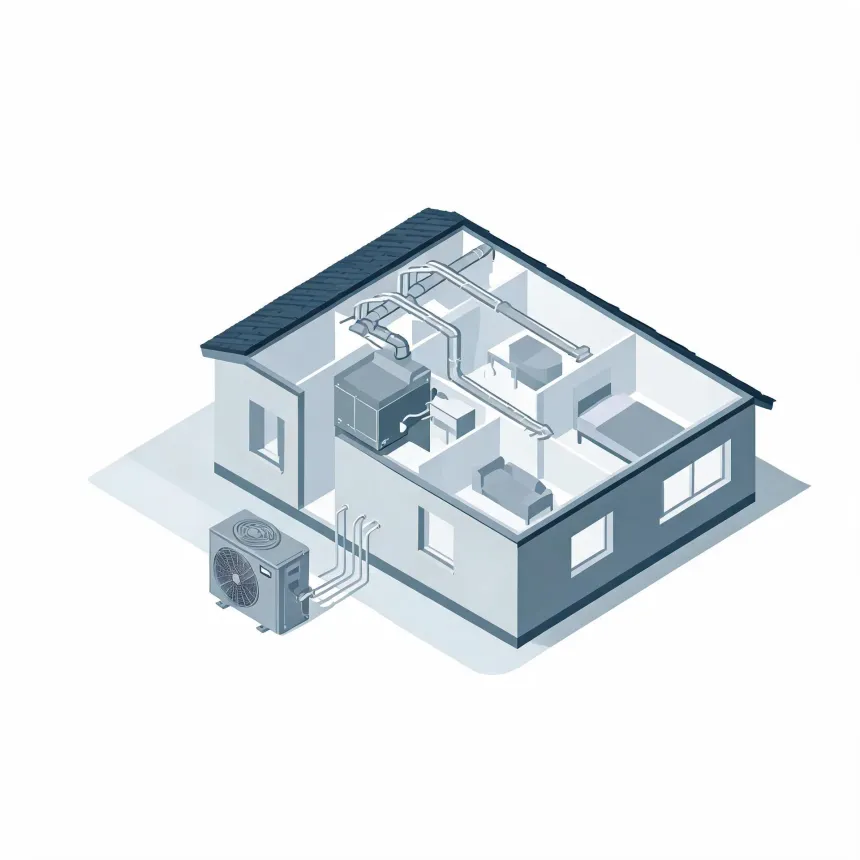
Isometric cutaway illustration of a single-story house showing interior rooms with ductwork, an indoor air handler unit, and an outdoor condenser unit connected by lines along the exterior wall.
Your system heats November through March and cools April through October.

NOAA nClimDiv, 1991–2020 normals

Seven in ten homes in Riverside County heat with gas.

A heat pump replacing a gas furnace is doing a job the house was not built around, so sizing and ductwork need a real look, not a guess.

477 storms in ten years, and the power still goes out

477 severe weather events from 2015 to 2024
17% of homes statewide lost power a day or more in 2024
409 damaging wind events from 2015 to 2024

Cooling starts in April here, which puts March on the calendar as decision time, not install time. A heat pump installed in a rush before that first hot stretch gets sized against a deadline instead of against the house. The same goes for heat. Homes here start running it in November, so October is when this makes sense to schedule, while a contractor can still take the time to check duct sizing and the rest of what a gas furnace never needed. Winters are mild, overnight lows average 42°F across December, January and February, so there's no hard freeze forcing anyone's hand. That gives you room to plan the switch instead of reacting to it.

A correct installation is what makes the high rate work for you

Power here costs more per hour than in most places, so a heat pump that is sized and installed right earns that back on every bill it runs. One that is not still costs more on every hour it runs. Getting the installation right is what decides which one you end up with.

Find a contractor
A person in a dark long-sleeved shirt and tan pants, seen from behind, carries a worn canvas tool bag up stone steps toward a blue front door with a shrub in a blue planter beside it.
A white mini-split heat pump outdoor unit mounted on a concrete pad beside a gray-sided house, surrounded by gravel and green shrubs.

It runs most of the year here, not just a season

This machine will run most of the year here. Summers are long and hot, so cooling runs from spring into fall. Winters are mild enough that heating never shuts it off completely either, even in homes that keep a gas furnace as backup. More running hours means more cycles on the compressor and more hours for dust to load up the coil. The dew point averages 42°F through June, July and August, lower than most of the country, so the air it works with is drier than what a heat pump in a humid state handles. That's less moisture to pull out of the air, which is one less load on the system, but it still runs long hours against heat most of the year. A unit sized right for that workload holds up. One sized off a guess shows wear sooner, in the parts that run every time it cycles on.

Ask for the load calculation, not a guess off square footage

A contractor should measure the house room by room, counting windows, insulation and duct layout, before naming a size. A unit picked off square footage alone can end up oversized or undersized, and either one costs you. Ask to see the numbers, not just the final answer.

Ask what happens at the lowest temperature this unit will see

Every heat pump has a point where it can't pull enough heat from outside air to keep up on its own, and below that point something else has to carry the load, whether that's backup resistance heat built into the air handler or a gas furnace already in the house. Ask what kicks in, and how the system decides when to switch.

The price of a heat pump installation comes down to what it takes to get the sizing and the ductwork right, not just the price tag on the unit. A contractor has to calculate the heat loss and heat gain for the house, room by room, before picking equipment, and that calculation takes time on site. If the ducts are undersized or leaky, they need work too, since a heat pump moves a larger volume of air at a lower temperature than a gas furnace does, and ducts built for a furnace do not always carry that well. Where the air handler goes, how much new line set and wiring it needs, and whether the electrical panel has room for the new circuit all factor in before the first unit shows up. Skipping any of that step lowers the quote and lowers what the system can actually do once it is running.

Riverside County falls under zone 3B, a warm, dry climate zone in the 2021 energy code, and any new split-system heat pump installed here has to meet the federal minimum for that kind of equipment: at least 14.3 Btu of cooling for every watt-hour it draws over the summer, and at least 7.5 Btu of heating for every watt-hour over the winter. Central air systems installed on their own in this region answer to a separate pair of numbers, 14.3 SEER2 and an EER2 of 11.7 or 9.8 depending on the unit. These aren't marketing numbers. They set a floor on what can legally go into the house, which narrows the equipment a contractor can offer you. A federal tax credit is available for qualifying heat pump installations, on top of whatever the efficiency rating earns back on the power bill.