






A row of single-story stucco houses with terracotta tile roofs behind shrubs, seen past a tall cream-colored stucco wall in the foreground and large spreading oak branches overhead.

Heat Pump Installation in Salinas, CA

Tell us about the job

Takes about a minute. No obligation.

New system or replacementHeat PumpMonterey County, CA
Step 1 of 2

What ZIP code is the job in?

Utility gas heats close to half the homes in Monterey County, with electricity close behind and a small share on bottled or LP gas. A furnace paired with central air is still the common setup here. A heat pump replaces both sides of that with one system, running on electricity year round. If your home already has gas, that's worth weighing against a switch. If you're on electric heat now, a heat pump installation is usually a more direct swap.

7 months
November through May, your system heats
3 months
July through September, it cools
38°F
the average winter night it heats against
85°F
the average summer afternoon it cools against
Isometric line illustration of a cutaway house showing interior rooms with furniture, ceiling ductwork connected to an indoor air handler, and a line running outside to an outdoor condenser unit.
Your system heats November through May and cools July through September.

NOAA nClimDiv, 1991–2020 normals

Winter nights here average 38°F, nothing close to a deep freeze.

A heat pump installation here just needs to be sized and matched right, not built for extremes it won't see.

Nothing about Salinas calls for oversizing a system

Half the homes here were built by 1976
156 damaging wind events from 2015 to 2024
18 hail events from 2015 to 2024

A heat pump here just needs to be sized to the house. Salinas doesn't put a system through much, so a correctly sized standard unit will keep up without strain. Electricity here runs 31.97 cents per kilowatt-hour, a bit higher than the national average, so efficiency is worth asking about even if the climate isn't demanding. A unit rated higher costs more going in, and at this rate it has more chance to earn that back over the years it runs. Nothing about this place calls for a bigger system or a specialty model, just one matched to the home and installed correctly.

Pick reliable, not top of the line

It won't be worked hard here, so pick a reliable system that fits. You don't need the top efficiency model.

Find a contractor
A man in a cap, dark jacket and tan pants walks up porch steps toward a navy blue front door, carrying a canvas tool bag filled with hand tools, with a potted plant in a blue planter to the right.
A gray air-source heat pump mounted on a concrete pad next to a house with gray vinyl siding, surrounded by gravel and flanked by green shrubs and white hydrangea flowers.

October, before the first cold night

Heat here runs November through May, about seven months. October is the month to get this installed, before the first cold night puts it to work. A new heat pump that starts its first winter already in place has nothing to prove on day one. One that goes in during a cold snap gets sized and chosen under pressure, and that's when the wrong call gets made.

The sizing job sets the price

A contractor has to work out how much heat the house loses on a cold night and how much heat it picks up on a hot day, then match a system to that. Getting into the walls and attic to check insulation and duct runs takes time, and that time is part of what's billed. A contractor who skips this step and just matches the old system's size isn't doing the job right, even though it looks cheaper on the quote.
What's already there changes the job

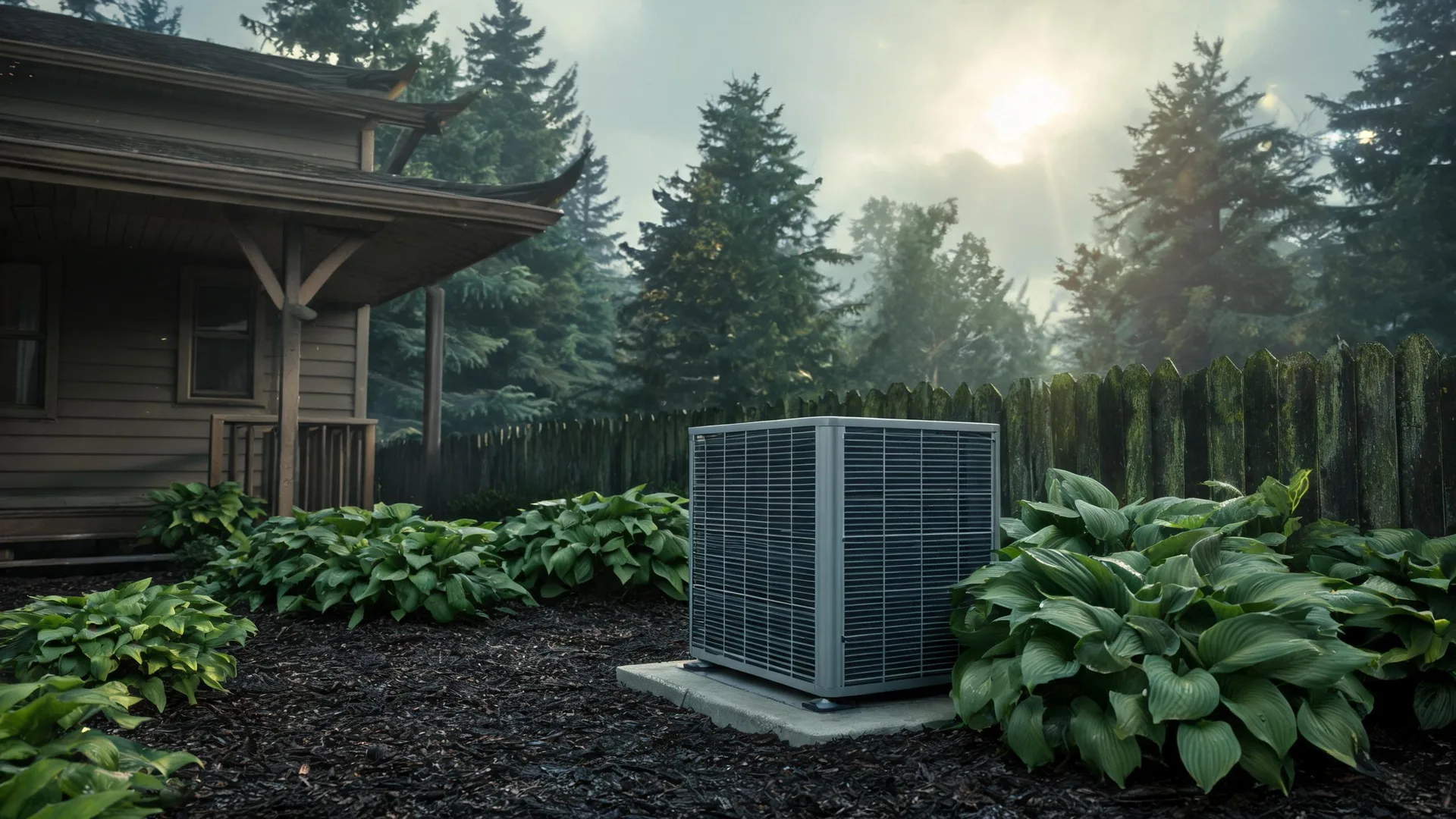
A heat pump needs a refrigerant line set, an outdoor pad, and often an air handler sized differently than the old furnace. If the ductwork is already in good shape and sized right, the installer reuses it. If it's undersized or leaky, resizing or sealing it adds to the job. The electrical panel matters too. Heat pumps run on electricity full time, so the circuit has to be able to carry that load, and an older panel may need work before the system can go in at all.

The efficiency rating on a heat pump's label tells you how much heat it moves for the electricity it puts in, measured against a standard test. A higher-rated unit moves more heat per unit of power than a lower-rated one, and since a heat pump runs on electricity for both heating and cooling, that number follows you all year. But the rating is a ceiling, not a promise. It's measured under set lab conditions, and what you actually get depends on whether the system is sized right for the house and installed with a properly charged line set and good airflow through the ducts. A top-rated unit installed poorly can run worse than a plainer one installed well. The label is good for comparing one unit against another, not for predicting exactly what either one will do once it's running in your home.

Install day starts with the old equipment coming out, furnace or air handler and the outdoor condenser both. The line set gets run between the new outdoor unit and the indoor coil, and that line has to be cut, brazed and sealed clean, then pulled down to a vacuum to pull out any moisture and air before refrigerant goes in. The outdoor unit sits on a new pad, leveled, with clearance around it for airflow. Inside, the air handler or coil gets set and tied into the existing ductwork, and the electrical hookup gets run to its own circuit sized for the unit. Once it's all connected, the contractor charges the line set, checks refrigerant pressures against the manufacturer's spec, and runs the system in both heating and cooling to see it respond. A thermostat built for a heat pump goes in last, because a standard furnace thermostat won't control it right.