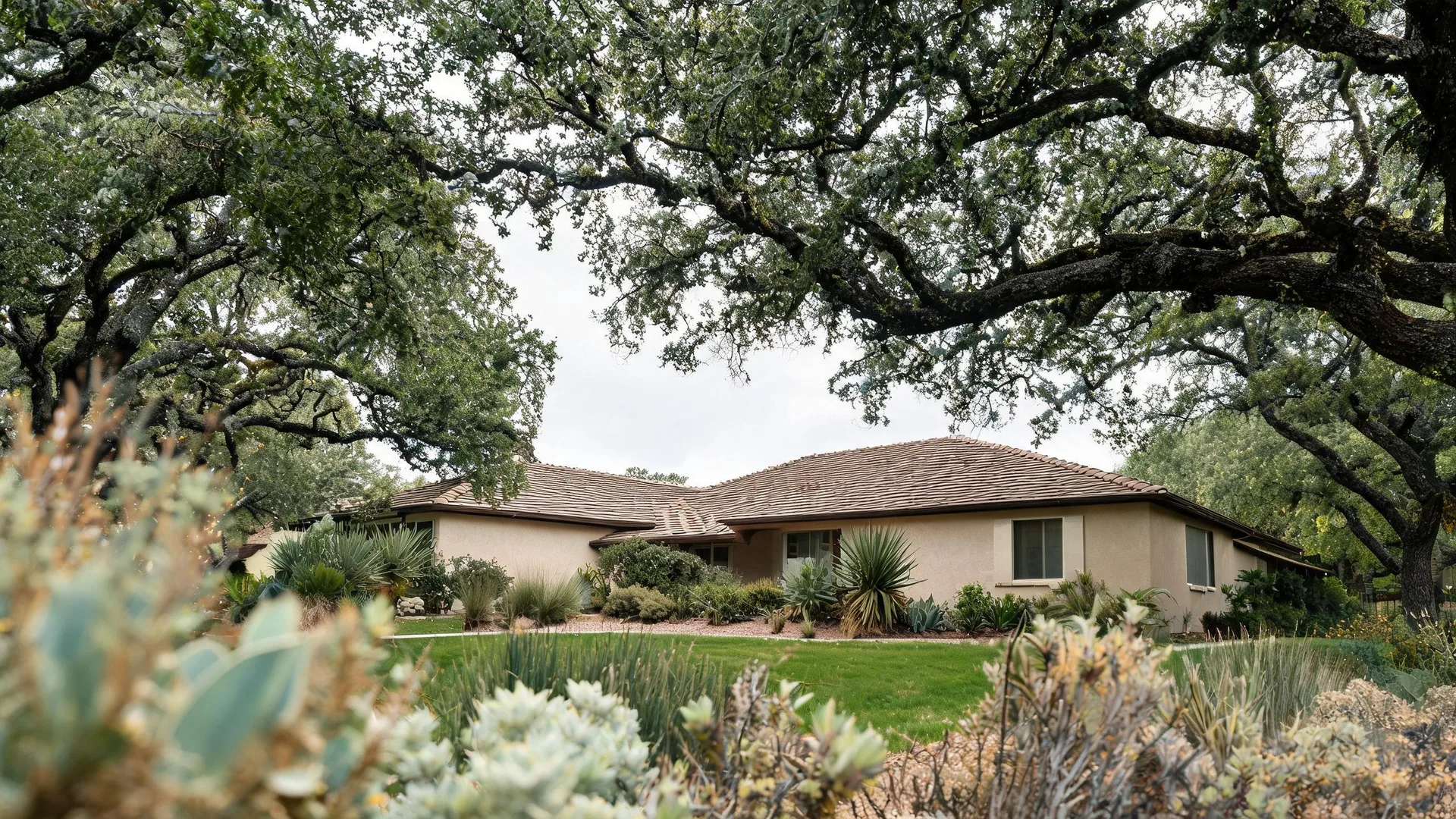







A single-story stucco house with a tile roof seen across a lawn, framed by large spreading oak branches and foreground agave and shrub plantings.

Heat Pump Installation in San Bernardino, CA

Tell us about the job

Takes about a minute. No obligation.

New system or replacementHeat PumpSan Bernardino County, CA
Step 1 of 2

What ZIP code is the job in?

Electricity in California ran 31.97 cents per kilowatt-hour in 2024, among the highest rates in the country. A heat pump moves heat instead of burning gas to make it, so it gets more out of every kilowatt-hour than a furnace or electric resistance system gets out of the same dollar. At San Bernardino rates, that difference shows up on the bill every month the system runs. The efficiency rating on the unit you choose is not a number for comparing brochures. It is the number that decides what this system costs you to run for as long as you own it.

5 months
November through March, your system heats
6 months
May through October, it cools
39°F
the average winter night it heats against
99°F
the average summer afternoon it cools against
Isometric cutaway illustration of a house showing interior ductwork, an indoor air handler unit, and an outdoor condenser unit beside the building.
Your system heats November through March and cools May through October.

NOAA nClimDiv, 1991–2020 normals

Gas heats 70.8% of homes in San Bernardino County.

A heat pump replaces both that furnace and the AC with one system, and it runs on the same electric rate that already lights the house.

Heat or cooling runs most months here. Put the new system in before it has to.

Cooling runs May through October
Heat runs November through March
425 damaging wind events from 2015 to 2024
Built for San Bernardino's weatherDamaging wind hit San Bernardino County 425 times between 2015 and 2024.

San Bernardino County saw 425 damaging wind events between 2015 and 2024, and the outdoor unit sits outside taking all of it. Where it gets placed matters. Clear of falling branches, away from the gutter line, out of the path where wind-blown debris lands hardest. Power loss matters too. A heat pump needs electricity to run, same as the furnace blower and the AC it replaces, so an outage stops either system the same way. If backup power matters to you, that's worth raising with the installer before the unit goes in, not after.

A new system here has to clear this region's efficiency floor

San Bernardino sits in climate zone 3B, and any heat pump installed here now has to meet 14.3 SEER2 and 7.5 HSPF2 at minimum. Central air systems installed alongside one have their own regional floor to meet. Those numbers set the baseline for what can legally go into this house. A federal tax credit is available on top of that for equipment that qualifies, which changes the math on choosing above the minimum instead of at it.

Find a contractor
A man in a cap, dark shirt and tan work pants, seen from behind, carries a canvas tool bag up steps toward a blue front door beside a potted shrub.
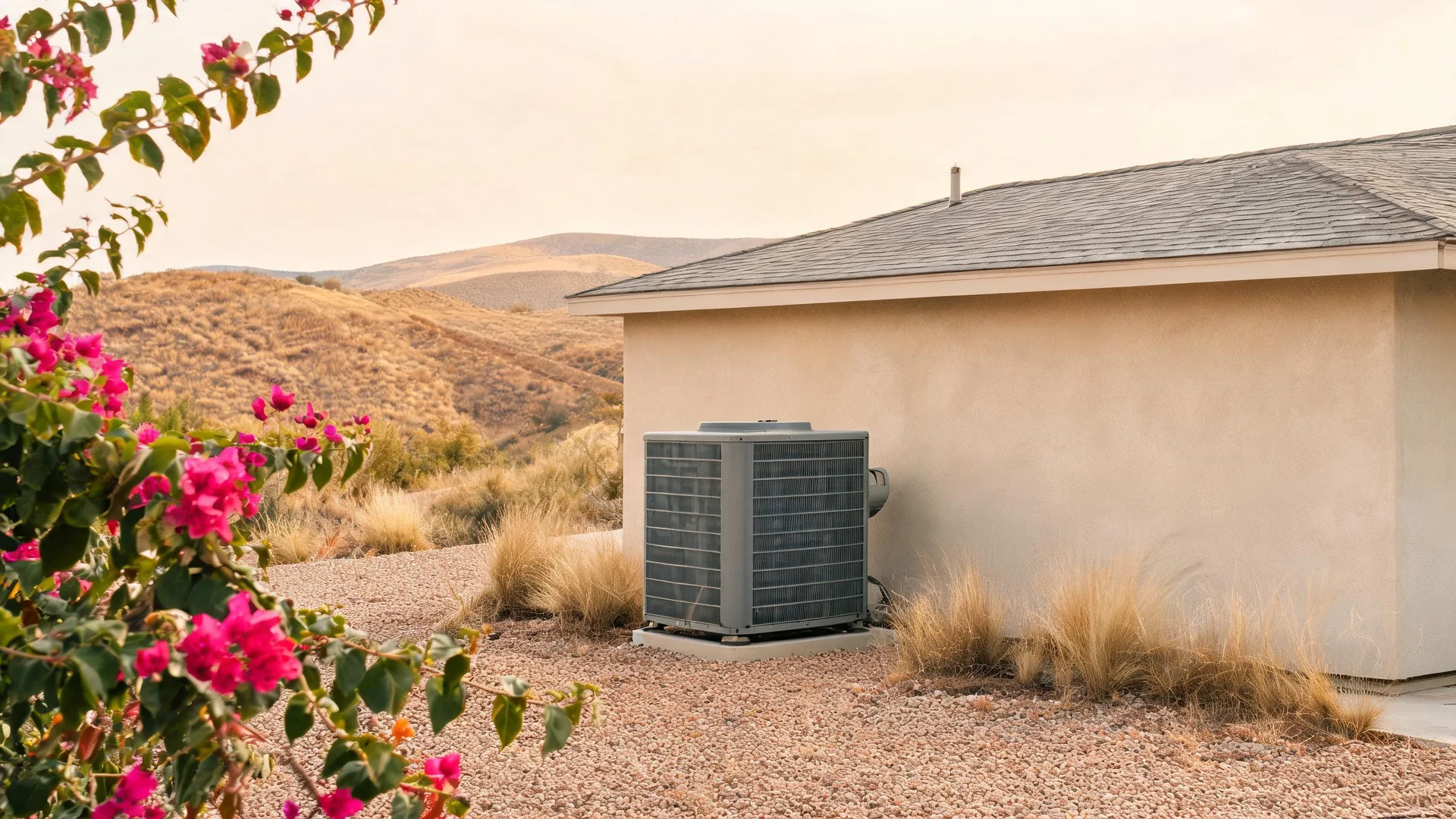
A gray heat pump condenser unit mounted on a concrete pad against the gray lap-siding exterior wall of a house.

This system doesn't get much downtime

A heat pump installed here cycles on in more months than it rests. The compressor doesn't get the long stretch of downtime a system in a milder climate gets, and neither does the outdoor unit sitting through those wind events. That adds up to more running hours over the life of the system, not fewer. The fix isn't a bigger unit. An oversized heat pump short cycles, which wears the compressor faster than steady, correctly sized runtime does. A contractor sizing this system should be running a load calculation on this house, not pricing off the unit that was here before. Pay attention to the warranty too. A compressor that's working this many months a year benefits from the strongest coverage available, not the minimum that came standard.

Ask to see the load calculation, not just a number

A heat pump has to be sized to the house. The square footage, the insulation, the windows, the layout all factor in. A contractor who sizes off the equipment that was already there is guessing. Ask to see the calculation itself, not just the figure it produced.
Ask what carries the heat when the air outside gets too cold

Every heat pump has a point where it can no longer pull enough heat from the outdoor air to keep up on its own. Below that point something else has to take over. Ask what that backup is, whether it is built into the unit or added separately, and what it runs on.

The equipment itself is one line item, and not the only one that moves the price. Ductwork is often the bigger factor. If the existing ducts were sized for a furnace and AC, they may not match what a heat pump needs to run efficiently, and modifying or replacing them costs more than the unit swap does. Electrical work is another. A heat pump draws differently than a gas furnace, and the electrical panel or circuit feeding the outdoor unit has to be able to carry that load, which sometimes means panel upgrades before the system goes in at all. Where the indoor and outdoor units go, and how far apart they sit, changes the amount of refrigerant line and labor the job takes. None of that shows up on the sticker price of the equipment, and a quote that skips it isn't a complete quote.

Installation starts with the old equipment coming out, not the new unit going in. The furnace or AC gets disconnected, the refrigerant lines get drained or replaced, and if the indoor coil is being swapped, that comes out too. Setting the outdoor unit is its own step. It needs a level pad, clearance on all sides, and a spot that matches what was discussed before the crew showed up. Running new line sets or modifying ducts happens next, and this is where a job can run long if the existing setup doesn't match what the new system needs. Once everything's connected, the system gets charged with refrigerant and tested, and a contractor worth hiring checks airflow at the vents and cycles the system in both heating and cooling before calling it done. Walk through with the installer at the end. Ask what they adjusted, what they tested, and what the thermostat settings should be for the first few days while the system settles in.