






An outdoor air conditioning condenser unit mounted on a concrete pad in front of a single-story suburban house.

Heat Pump Installation in San Mateo, CA

Tell us about the job

Takes about a minute. No obligation.

New system or replacementHeat PumpSan Mateo County, CA
Step 1 of 2

What ZIP code is the job in?

San Mateo County saw 282 severe weather events between 2015 and 2024. Most of that was wind, 266 events, with 9 hail events and 3 winter storms mixed in. A heat pump's outdoor unit sits outside year round, taking whatever comes through the yard during a windstorm. Power cuts matter just as much as the weather that causes them. Statewide, 17% of households went at least a day without power in 2024. A heat pump needs power to run, for heat as much as for cooling, so an outage reaches further into the house than it would with a gas furnace.

7 months
November through May, your system heats
43°F
the average winter night it heats against
73°F
the average summer afternoon it cools against
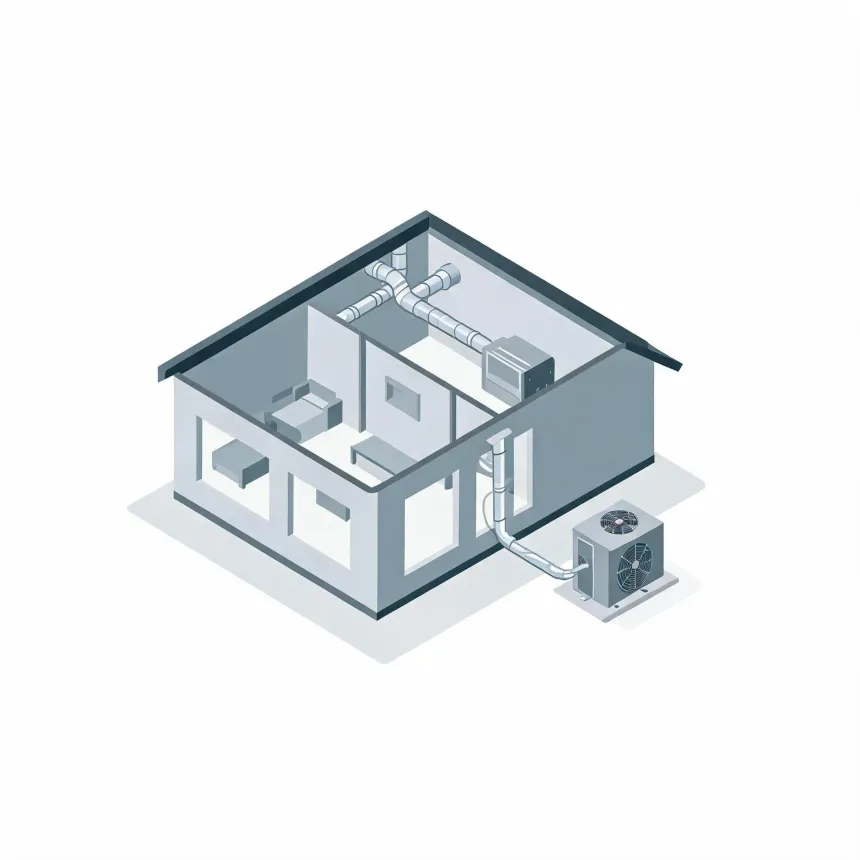
Isometric illustration of a cutaway house showing interior rooms, ceiling ductwork and an air handler, connected by lines to an outdoor condenser unit on a pad beside the building.

Half the homes in San Mateo County went up in 1966 or earlier.

An install crew sizing a heat pump for a house that age has to work with the ductwork and electrical panel already in it, not a blank slate.

Gas heats most homes here, which decides how this install gets done

62.8% of homes heat with gas
266 damaging wind events from 2015 to 2024
9 hail events from 2015 to 2024
Electricity here costs what it costsSan Mateo County homes paid 38.23 cents per kilowatt-hour in 2025, more than most US counties.

A heat pump outdoors here isn't working against much. The dew point in summer averages 54°F, lower than most of the country, so the unit isn't pulling heavy, wet air all day the way it would elsewhere. A well built, mid-tier heat pump handles that load without strain. You don't need to pay for the highest efficiency tier on the market to get reliable heat and cooling out of it here. What matters more is a unit and an install that can take wind and the odd outage in stride, since that's the actual stress this climate puts on it.

Plan for the outdoor unit and the outage before install day

Ask the installer where the outdoor unit will sit and what it's protected by, since it rides out whatever wind comes through the yard. Worth asking too what happens to heat and hot water if the power drops, and whether a battery or backup setup makes sense alongside the heat pump. Settle both before the crew shows up, not after.

Find a contractor
A man in a cap, dark long-sleeved shirt and brown work pants carries a canvas tool bag up porch steps toward a blue front door, with a shrub in a blue planter beside it.
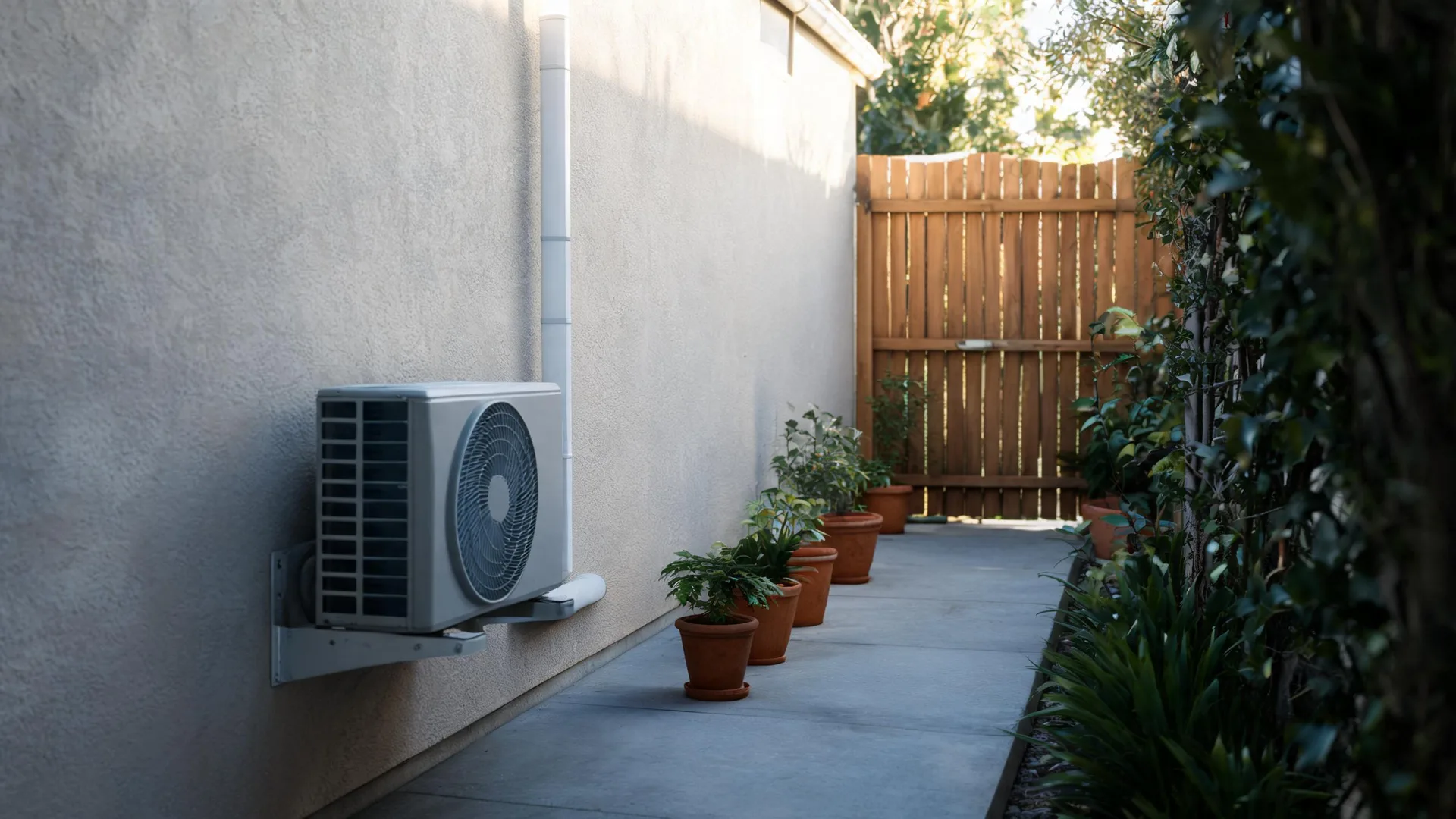
A white mini-split heat pump outdoor unit mounted on a concrete pad beside a gray-sided house, surrounded by gravel and green shrubs.

Get it in before November, not after

Heat here runs from November through May, seven months out of the year. October is the month to get this done, before the first cold morning and before an installer's schedule fills up with people who waited. Once homes start running heat, overnight lows average 43°F through December, January and February, and that's when you want a system already proven, not one still getting dialed in. A heat pump installed in October gets a mild stretch of weather to settle in before it has to carry the house through winter.

The old equipment doesn't come out first

A crew disconnects power and any refrigerant lines before anything gets unbolted. If the house is replacing a gas furnace, the gas line to that furnace gets capped off, not left open. The old outdoor unit, indoor coil and any line set that's being replaced get hauled off by the install crew. None of it goes in the trash at the curb, since refrigerant has to be recovered properly rather than vented.
The ducts and panel stay, usually

A heat pump install doesn't mean tearing out ductwork that's already there, unless it's too small or too leaky to move the air the new system needs. The electrical panel gets checked too, since a heat pump draws differently than a gas furnace did. If the panel has room for the new circuit, it stays as is. If it doesn't, that gets sorted before the new unit ever gets set outside.

The efficiency rating on a heat pump's label tells you how much heat or cooling it produces for the power it draws. A higher rating means lower running cost over the life of the unit, but that number is measured under set lab conditions, not whatever your ductwork and install happen to be. Two units with the same rating can run differently in the same house, because the rating doesn't account for duct leaks, a low refrigerant charge, or a unit sized wrong for the space. An installer earns that rating back for you through a tight install, not just the equipment they bring. A mid-tier unit installed well will often outperform a high-tier one installed poorly, since the rating on the box assumes everything downstream of it is done right.

San Mateo County sits in climate zone 3C, warm with a long cooling season and winters that stay mild. Any split-system heat pump installed here now has to hit at least 14.3 SEER2 for cooling and 7.5 HSPF2 for heating, the federal minimum for equipment built from 2023 on. If the install includes straight air conditioning rather than a heat pump, the separate rule for this region adds an EER2 floor on top of the SEER2 number, so the unit holds up on the hottest, stillest afternoons and not just on paper. These are floors, not targets to aim for. A unit sold here has to clear them before it ever reaches a truck, so the real choice is what's built above that line, not whether the equipment qualifies at all.