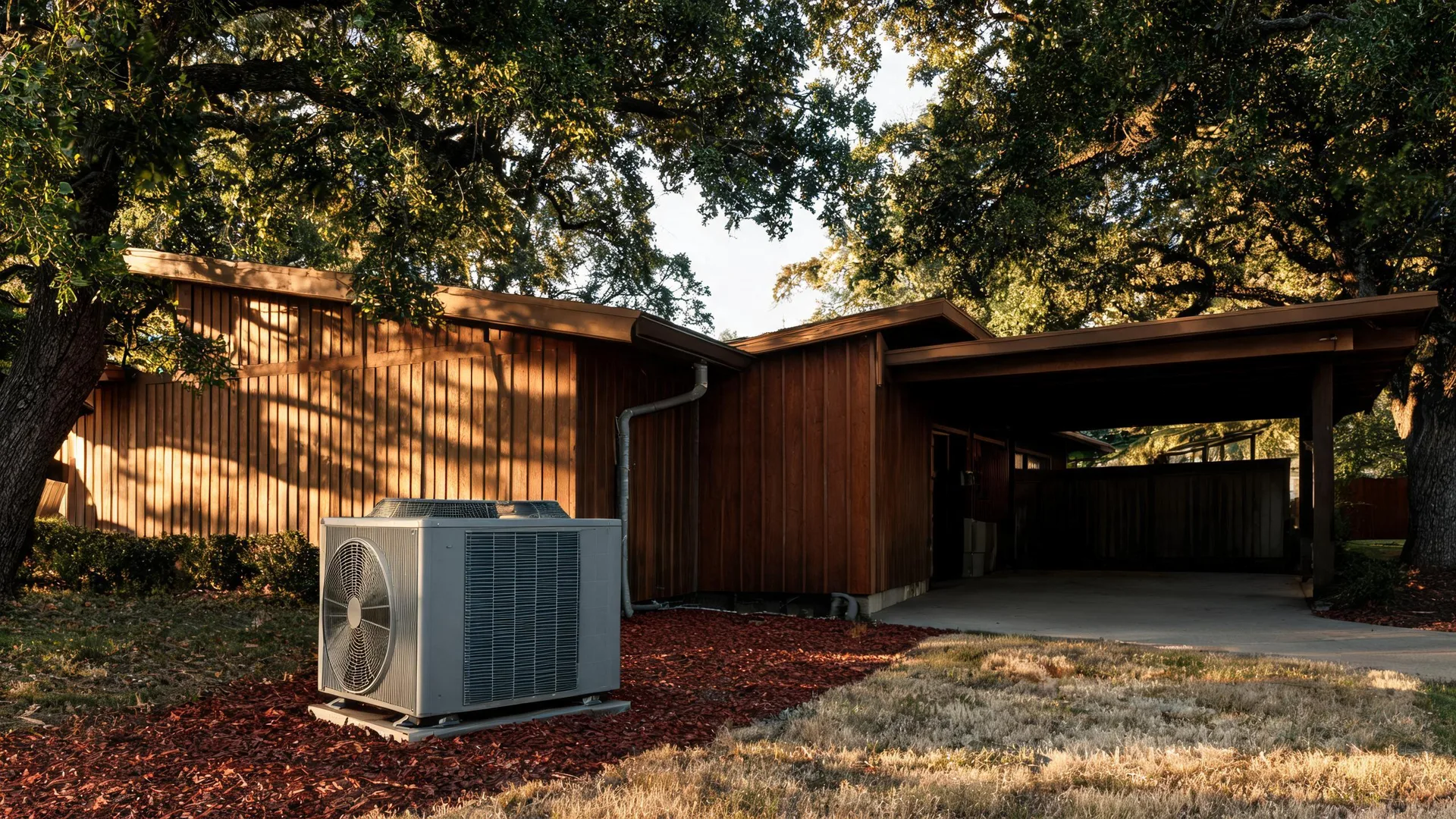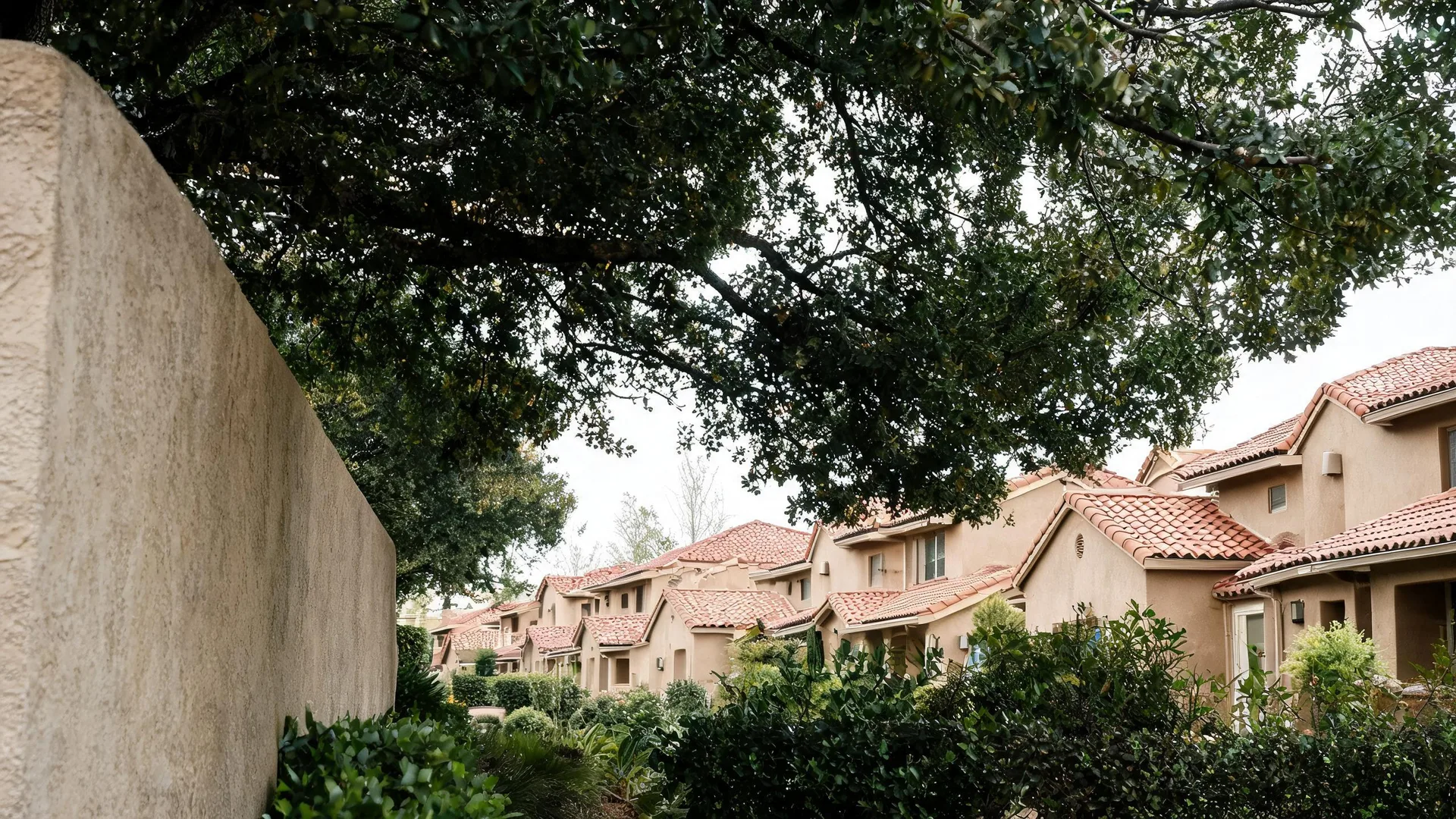
A row of stucco houses with red barrel-tile roofs seen past a tall stucco wall in the foreground, framed by overhanging tree branches and dense green shrubs.

Heat Pump Installation in South Lake Tahoe, CA

Tell us about the job

Takes about a minute. No obligation.

New system or replacementHeat PumpEl Dorado County, CA
Step 1 of 2

What ZIP code is the job in?

Electricity here runs 31.97 cents a kilowatt-hour

California power costs more than it does in most states. A heat pump that runs efficiently earns that back every month, because it's pulling from a meter that charges more for every kilowatt-hour it uses.


Efficiency matters more on the install than the brand name

At this rate, how the system is sized and set up counts for more than which label is on the unit. A heat pump sized wrong for this house will run longer than it should, and at this price per kilowatt-hour, that shows up fast.

8 months
October through May, your system heats
2 months
July through August, it cools
33°F
the average winter night it heats against
83°F
the average summer afternoon it cools against
Isometric line illustration of a cutaway single-story house showing interior rooms, ceiling ductwork, an indoor air handler unit, and an outdoor condenser connected by a line set.
Your system heats October through May and cools July through August.

NOAA nClimDiv, 1991–2020 normals

Winter nights here average 33°F through December, January and February.

A heat pump isn't fighting deep cold in South Lake Tahoe, so a well-built standard system can handle the job without reaching for the top efficiency tier.

Heat runs eight months here, so a new system should go in before October

Cooling runs July through August
Heat runs October through May
225 damaging wind events from 2015 to 2024

El Dorado County falls under zone 4B, and any split-system heat pump installed here now has to meet federal minimums of 14.3 SEER2 for cooling and 7.5 HSPF2 for heating. Those are the floor, not a recommendation, so a contractor quoting something below that isn't quoting something legal to install. If the install gets certified as central air equipment rather than a heat pump, a separate EER2 test applies on top of the SEER2 number. None of this means reaching for the most expensive system on the lot. It means the minimum here already does real work, since it was set for a climate that asks something of both heating and cooling.

Most homes here run on gas, so know what a heat pump install changes

Gas heats more homes here than anything else, with propane close behind and electric heat well back of both. A heat pump still works in this climate, but most of what it would replace is a gas or propane furnace, not another heat pump. That changes what the install involves and what's worth asking a contractor about before signing anything.

Find a contractor
A dark gray heat pump unit mounted on a concrete pad next to a house with gray siding and a stone veneer wall.

Storms show up in the records, but they aren't what wears this system down

That 33°F average is what the system is actually working against, not the storms on record. Wind and hail can knock out power or dent a cabinet, but neither one makes a heat pump run longer or harder. What drives run time is how far the outdoor temperature sits from the indoor setting, hour after hour, and a mid-30s night doesn't push a well-built standard system very far. Put the money into correct sizing and a unit rated for reliability in this spot, rather than chasing the highest efficiency number on the sheet.

Ask for the load calculation, not a guess off square footage

A heat pump has to be sized to how much heat a house actually loses, which depends on insulation, window area and layout, not just floor space. A contractor should walk the house and run the numbers, room by room. A system sized off square footage alone can come back oversized or undersized, and either one costs more to live with than the time it takes to calculate it right.

Ask what happens on the coldest night

Every heat pump has a point where it can't pull enough heat from the outside air to keep up on its own, and below that point something else has to carry the load, usually electric resistance strips. Ask where that point is for the system being quoted, and what kicks in below it. That number tells you more about how the house will actually feel in deep cold than any efficiency rating on the label.

Most installs here are swapping out a gas or propane furnace, so there's an old system to deal with and a decommission to do right. A furnace draws gas through a line that has to be capped or removed, not just disconnected at the unit. If there's a chimney flue that served it, that gets addressed too, since an open flue is a path for outside air whether anything's venting through it or not. The old ductwork usually stays, but a contractor should check it against what the heat pump needs. Furnaces push hotter air in shorter bursts, heat pumps run longer at a lower output, and a duct system sized for one doesn't always move air the same way for the other. None of this is hard to do right. It just has to get done, not skipped because the new unit is the part everyone's paying attention to.

Install day starts outside, with the outdoor unit set on a pad and the line set run between it and the indoor coil. Those lines get connected, then pulled down to a vacuum to clear out moisture and air before any refrigerant moves through them. Skip that step and moisture sits in the line, mixes with refrigerant, and causes problems that show up months later, not that day. Once the system holds vacuum, it gets charged to the amount the manufacturer specifies for that line length, not just topped off by feel. The indoor side gets tied into the air handler or ductwork, the electrical and controls get wired in, and then the whole thing gets run through its paces, heating and cooling both, before anyone calls it finished. A system that's never been checked in both modes is a system nobody's actually tested.