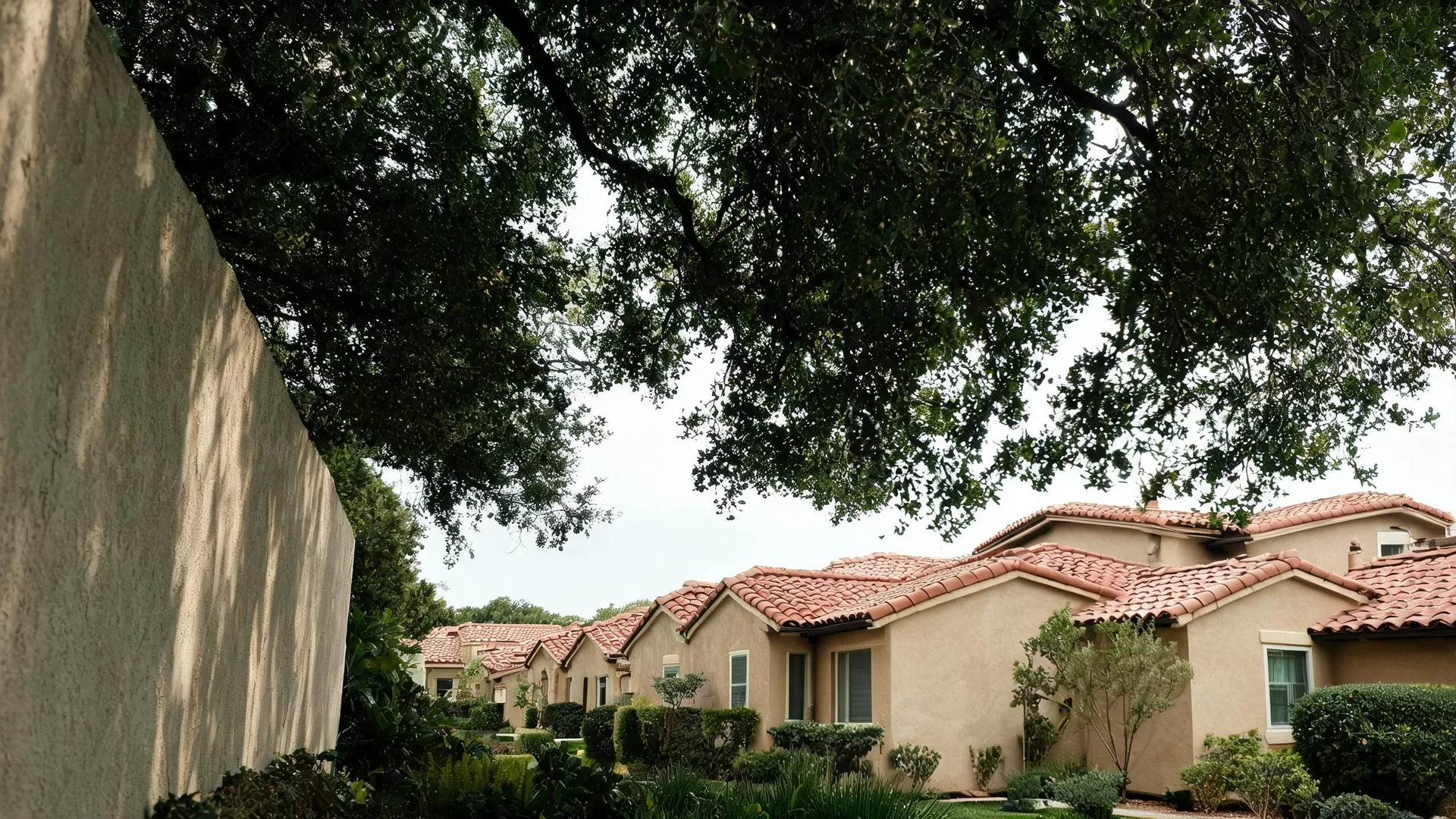
A row of single-story stucco houses with red tile roofs behind landscaped shrubs, framed by a tall stucco wall on the left and overhanging tree branches above.

Heat Pump Installation in Ukiah, CA

Tell us about the job

Takes about a minute. No obligation.

New system or replacementHeat PumpMendocino County, CA
Step 1 of 2

What ZIP code is the job in?

Gas is the top fuel here, but not by much

Utility gas heats 28.7% of homes in Mendocino County, with electricity at 22.2% and propane at 21.5%. No single fuel dominates the county, which means a lot of homes already have some kind of setup other than gas.


A heat pump replaces the furnace and the AC

If your home heats with propane or oil, a heat pump install means running new electrical circuits and deciding what happens to the old fuel line. If your home already has central air, the ductwork and electrical panel may already be close to what's needed.

8 months
October through May, your system heats
2 months
July through August, it cools
37°F
the average winter night it heats against
81°F
the average summer afternoon it cools against
Isometric line illustration of a cutaway house showing interior rooms with furniture, ceiling ductwork connected to an indoor air handler, and an outdoor condenser unit linked by refrigerant lines.
Your system heats October through May and cools July through August.

NOAA nClimDiv, 1991–2020 normals

Half the homes in Mendocino County were built in 1977 or earlier, half later.

A heat pump sized to your square footage works the same in either one.

Heat pump installs here go best in June or September, ahead of the season that follows

Cooling runs July through August
Heat runs October through May
59 damaging wind events from 2015 to 2024
Winters here don't ask much of a heat pumpNights average 37°F in December through February, well inside what a heat pump is built for.

Mendocino County falls under zone 3C, the mild marine climate band in the state energy code. Any heat pump installed here has to meet a federal minimum of 14.3 SEER2 for cooling and 7.5 HSPF2 for heating. Central air conditioners paired with a heat pump carry their own matching floor under the same rules. These are floors, not targets a contractor is choosing between. A system quoted below them isn't legal to install here, whatever the price looks like on paper.

Standard size, standard efficiency, nothing extra to pay for

A system sized to your home's square footage, built to the federal minimum, is what this job calls for. Nothing about Ukiah's climate or housing stock asks you to pay for more than that. Electricity here runs 31.97 cents per kilowatt-hour, so the efficiency floor already in place is worth meeting, not exceeding.

Find a contractor
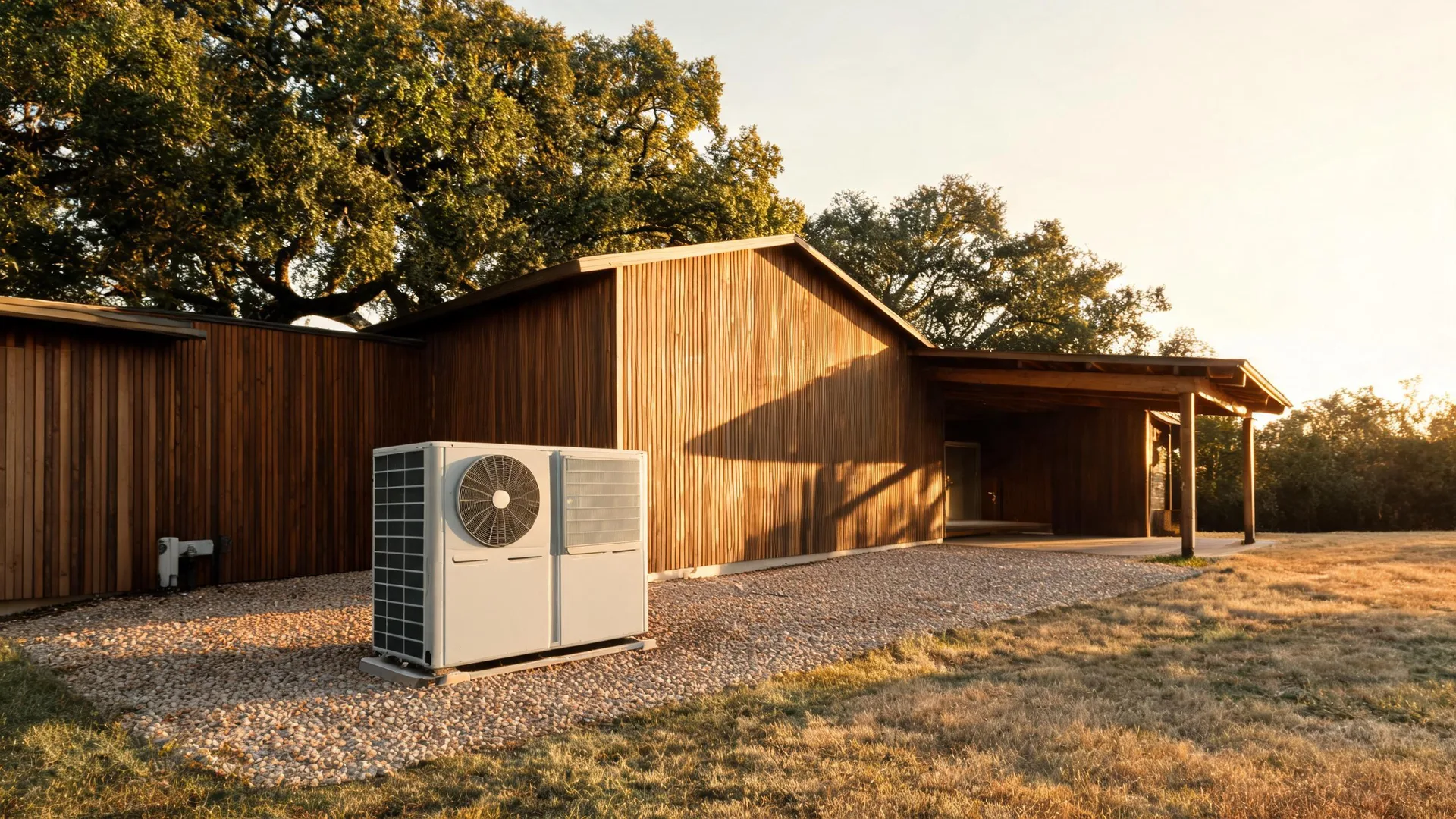
A gray heat pump outdoor unit mounted on a concrete pad next to the stone-accented exterior wall of a house.

The install costs what the job takes, not what's on the label

Installed cost comes down to what the job takes, not just the equipment sitting on the truck. A straightforward swap, same location, same ductwork, same electrical panel, costs less labor than one that needs new circuits run or a panel upgrade to handle the load. Ductwork matters too. If it's sized and sealed right, the heat pump can just connect to it. If it's leaky or undersized, a contractor has to decide whether to fix it first or let the new system fight it the whole time it runs. The outdoor unit needs a clear, level spot with room for air to move through it, so site work is part of the quote, not an extra. Line set length between the outdoor and indoor units factors in too, since longer runs take more refrigerant and more labor to install right. None of this is about the brand on the unit. It's about what has to happen at the house to get it running correctly.

Ask what the load calculation found, not just the tonnage

A contractor should size a heat pump by running a load calculation on your home, checking wall and ceiling insulation, window area, and square footage, not by matching whatever size is already out there. Homes built differently call for different tonnage even at the same square footage. If a quote lists a size without anyone having looked at the house, ask how they got that number.

Ask what happens when it's coldest out

Every heat pump has a balance point, the outdoor temperature below which it can't pull enough heat from the air to keep up on its own. Below that point, the system leans on backup heat strips or a paired furnace to make up the difference. Ask what the balance point is for the unit being quoted and what kicks in below it. A system with no backup plan for its coldest days will leave you short right when you need it most.

A heat pump that's too big for the house cools or heats the air fast, hits the thermostat setting, and shuts off before it's pulled any moisture out or settled the temperature evenly room to room. Then it sits idle until the temperature drifts again and kicks back on. That's short cycling, and it's the opposite of what you want from a system that's supposed to run long, steady stretches. Too small, and it runs constantly during the hardest days of the year, never quite catching up, leaning harder on backup heat than it should. Getting the size right isn't about rounding up to be safe. It's a calculation based on how the house holds and loses heat, done before the install, not guessed at from the unit it's replacing.

Install day starts outside, with the old condenser disconnected and the line set drained down. Indoors, the furnace or air handler comes out if the heat pump is replacing it, and the new air handler or coil goes in its place, tied into the existing ductwork wherever it can be. Electrical work usually takes a good part of the day too. A heat pump draws on circuits a furnace never needed, and that often means work at the panel, not just a new breaker. Once the indoor and outdoor units are set, the line set gets connected. The system is evacuated to pull out air and moisture, then charged with refrigerant to the manufacturer's spec. The last part is commissioning. The contractor checks refrigerant pressures, airflow across the coil, and that the thermostat is actually talking to the system the way it should. A contractor worth hiring walks you through the thermostat and what the backup heat does before they leave, not just the invoice.