





White stucco buildings with red-tiled roofs glow with warm interior lights across a tree-covered hillside at dusk.

Heat Pump Repair in Riverside, CA

Tell us about the job

Takes about a minute. No obligation.

RepairHeat PumpRiverside County, CA
Step 1 of 2

What ZIP code is the job in?

A heat pump here runs cooling for months straight through a long, hot summer, and that kind of runtime adds up on the parts that don't get a break: the compressor, the fan motor, the contactor making and breaking connection day after day. The air is dry, too. A dew point around 42°F in June, July and August means the unit isn't fighting humidity the way a lot of the country does, but fighting heat for that long is its own kind of load. Riverside County has also seen damaging wind hit the area 409 times between 2015 and 2024, and wind finds the outdoor unit, loosening panels, working at electrical connections, pushing debris into the coil. None of that means something is badly wrong. It means a heat pump out here earns its wear honestly, and the same symptom can come from a few different causes. Worth having someone trace it back to the actual part before anything gets replaced.

5 months
November through March, your system heats
7 months
April through October, it cools
42°F
the average winter night it heats against
99°F
the average summer afternoon it cools against
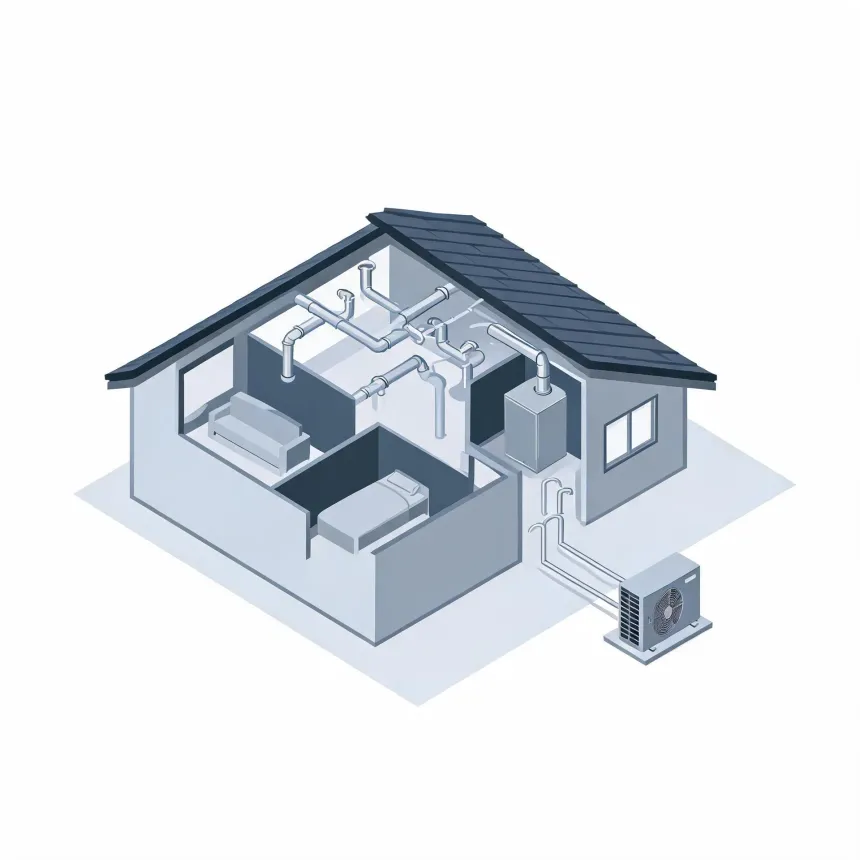
Isometric cutaway illustration of a small house showing ducted air distribution, an indoor air handler, and an outdoor condenser unit connected by lines, with a sofa and bed in the rooms.
Your system heats November through March and cools April through October.

NOAA nClimDiv, 1991–2020 normals

Riverside County logged 477 severe weather events between 2015 and 2024, including 409 damaging wind events, 7 hail events and 6 tornadoes.

An outdoor heat pump unit sits outside through all of it, so wind and hail damage can show up as a repair call long after the storm passed.

Two startups a year, and the weak part shows up both times

Cooling runs April through October
Heat runs November through March
409 damaging wind events from 2015 to 2024

Electricity in Riverside County costs more than almost anywhere else in the country. That number matters more once something is wrong with the unit. A heat pump that's low on charge or running on a failing capacitor pulls more power to do the same job, and you feel that on the bill before you feel it in the house. It doesn't run as many months here as it does in other places, but every hour it runs with a worn part is an expensive hour. Getting it looked at soon keeps a small problem from costing you all summer.

Your heat pump has earned its wear. Get it diagnosed right.

A heat pump out here works hard enough that something is bound to wear out before its time. When it does, the right move is a proper diagnosis, not a guess. Get the actual part traced and fixed so the repair holds.

Find a contractor
A man in a cap, dark long-sleeve shirt and tan work pants climbs porch steps toward a blue front door, carrying a waxed canvas tool bag with tools visible inside.
A gray heat pump outdoor unit mounted on a concrete pad next to the stone-accented exterior wall of a house.

Built recently, running hard

Half the homes in Riverside County were built in 1990 or later. If yours is one of them, the heat pump probably isn't old enough to explain what's going wrong. A unit that age has plenty of working life left in it, which makes a repair the sensible call over a replacement. Worth checking what year your system actually went in, especially if you're not the one who bought it new. Mobile homes make up close to one in eleven houses here too, and those systems carry their own install quirks worth mentioning to whoever comes out.

Where the wear actually starts

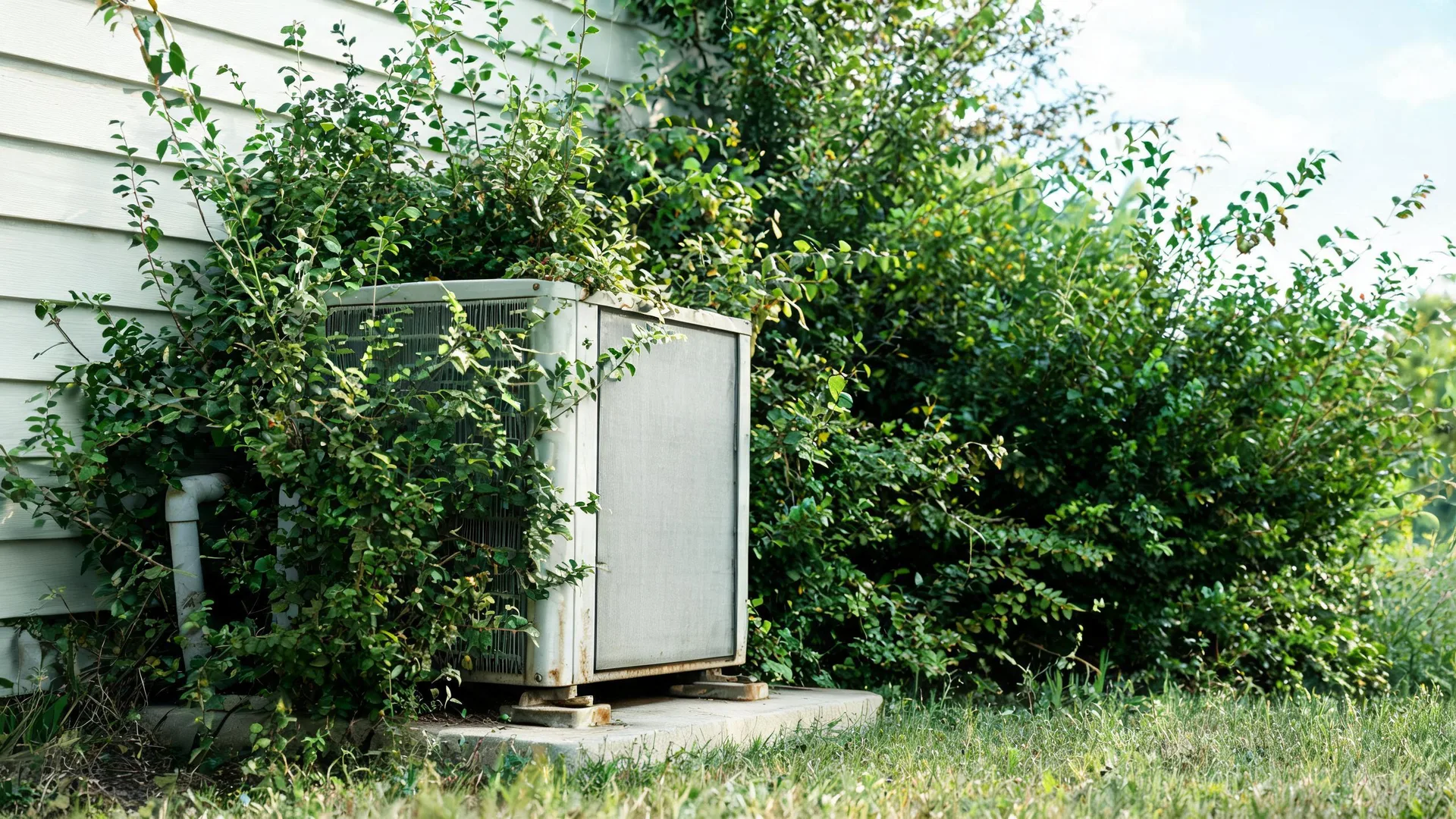
A heat pump fails the same handful of ways regardless of climate. The capacitor weakens over years of starting and running the compressor and fan motor, and a weak one shows up as hard starting or a motor that hums but won't spin. The contactor's contacts pit and burn from constant cycling until the connection gets unreliable. Refrigerant charge drops only if there's a leak somewhere in the line set or coil, never from normal use. The reversing valve that switches between heating and cooling can stick, leaving the system stuck in one mode. Outdoor coils collect dirt and debris that block airflow and make the whole system work harder to move the same heat.
Why the same part fails differently

Two systems with the same bad capacitor behave differently depending on what else is going on. A unit with a dirty coil puts more strain on a weak capacitor than a clean one does, so the same worn part can fail outright in one system and just struggle in another. That's why a tech traces the symptom back through the system instead of swapping the part that usually causes it. A contactor replaced without checking why it burned out just buys time until the real cause, often a failing capacitor forcing it to work harder, takes out the new one too.

A heat pump that's struggling doesn't fail cleanly. It fails a little worse every hour it keeps running. A compressor working against a refrigerant leak runs hotter than it should, and that heat breaks down the oil that's supposed to protect it. A blower motor with worn bearings draws more current to keep spinning, and that current wears the windings faster. Ice on a coil that should defrost blocks airflow further, which makes the system run longer to do the same job, which builds more ice. Shutting it down when something sounds or feels wrong costs you comfort for a day. Leaving it running can turn a part that needed cleaning or adjusting into a part that needs replacing.

If the outdoor unit took a real hit in the last storm, a branch, hail, flying debris, that's worth mentioning when you call someone out, even if the system still runs fine today. Wind can loosen a panel or work a wire connection loose without stopping the unit outright, and the fault shows up weeks or months later as a short cycle or a tripped breaker. Hail can dent a coil's fins enough to choke airflow without anyone noticing until the system starts working harder than it should. None of that shows up on a bill or a thermostat reading. It shows up when a tech has the panel off and knows to look for it. Telling them what the unit has been through saves them from chasing a cause that was actually a storm weeks back.