Heat pump vs furnace in Imperial County, California

Price Both Options

Quotes from pros near you

A person's hand in a blue shirt adjusts a round black and silver wall thermostat on a white wall, with an open tool bag on the floor and a living room with a gray sectional sofa in the background.

Tell us about the job

Takes about a minute. No obligation.

New system or replacementImperial County, CA
Step 1 of 3

What kind of equipment?

Which costs less to run in Imperial County?

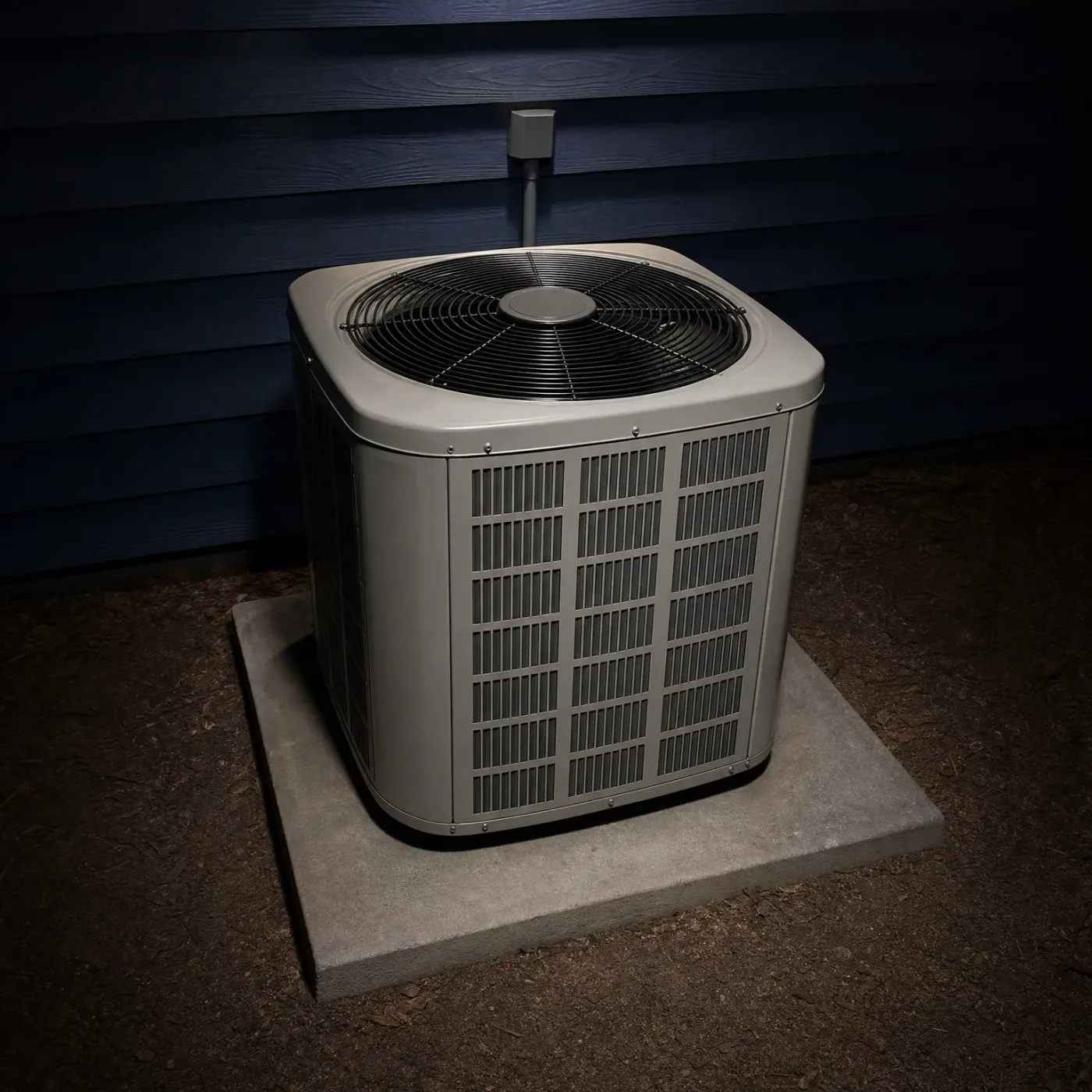
A gray outdoor condenser unit with a top-mounted fan grille sits on a concrete pad beside a dark blue horizontal lap-sided wall, with a refrigerant line and small disconnect box on the wall above.

Heat pump

To heat your home here$4.26per 100,000 Btu

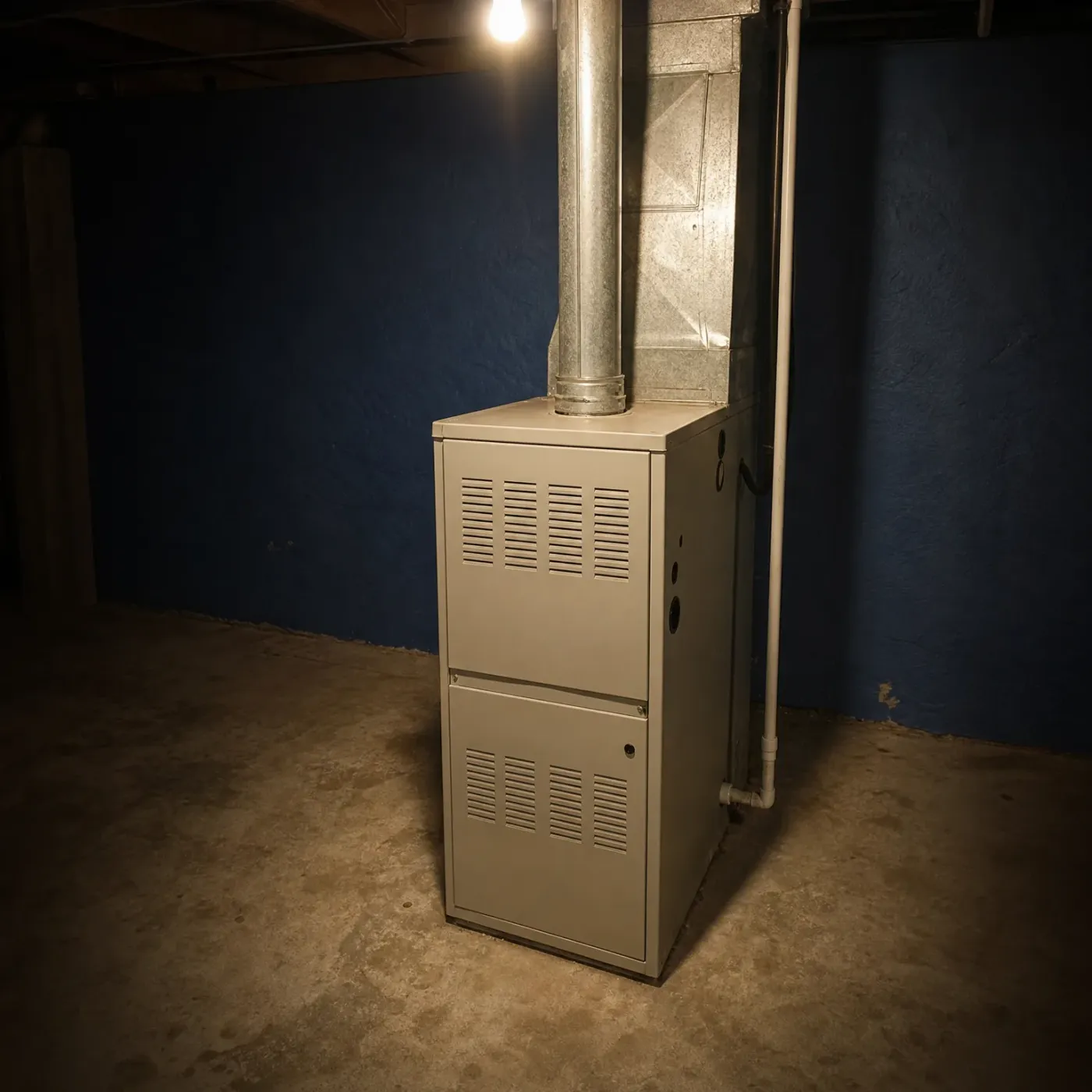
A beige furnace with louvered panels stands on a concrete basement floor against a blue painted wall, with a galvanized metal flue pipe and ductwork above and a white pipe running down the wall.

Furnace

To heat your home here$2.31per 100,000 Btu

At California's gas and electricity prices, a gas furnace makes the same heat as a heat pump for at least 45% less.

Btu stands for British thermal unit, the standard measure of heat energy.

Where does a heat pump shine?

  • Made for mild winters

    Winter nights here average 45°F, not the deep cold a heat pump struggles with. At that temperature it can pull heat from the outside air all winter without much strain.

    A navy blue front door with a brass knob on a light blue clapboard house, with a weathered wood porch, jute doormat, leather boots, and a blue glazed pot of evergreen branches and pinecones, beside frost-covered ground.
  • Covers a long cooling season

    Cooling runs March through October here. A heat pump handles that job the same way it handles winter, so it's doing its main work nearly all year round.

    A covered porch with blue-gray lap siding and ceiling, a ceiling fan, hanging and potted ferns, wicker seating, and a navy round table holding a glass of iced tea on a woven coaster, with a seated person in a rocking chair and green trees in the background.
  • Steady, even comfort

    Instead of short bursts of heat, it keeps a gentle, steady output going. The house stays at one comfortable temperature.

    A living room at dusk with a navy armchair holding an open book and a gray throw, a beige sofa with plaid and navy pillows, a lit table lamp by a window showing bare trees and snow, a golden retriever lying on a patterned rug, a wooden coffee table with a mug, a stone fireplace surround and a lantern candle.

Where does a furnace shine?

  • Pairs with any central AC

    Most central air systems are built around a furnace. The two share the blower, the ducts and the thermostat.

    A metal floor vent set in a wood floor near a baseboard and window with a sheer white curtain, with a wooden table holding books and a blue mug on the left and a blue sofa with a fringed throw on the right.
  • Proven, simple, easy to get serviced

    Parts are easy to find and most repairs are routine. Getting one fixed rarely means waiting on a specialist.

    A gloved hand holds a square pleated air filter in front of a gray furnace in a basement, beside a wooden shelf with storage bins and a potted plant.
  • Fast, strong heat on demand

    The air coming from the vents feels genuinely hot. That's welcome on a freezing morning.

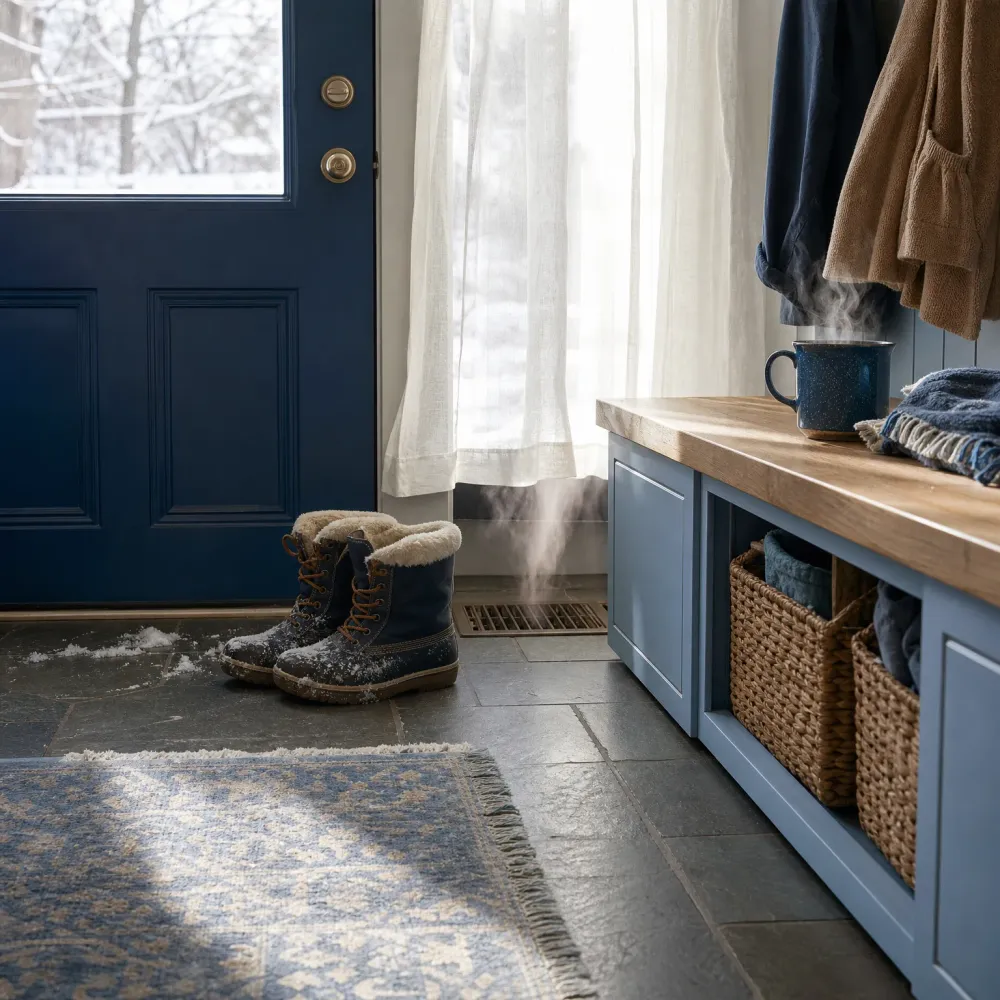
    A mudroom with a navy door with a window showing snow outside, snow-dusted fur-lined boots on a stone tile floor, a patterned rug, and a light blue bench with wood top holding a steaming mug and woven storage baskets, with coats hanging above.

Winters here barely ask for heat

Your winter is short and it is mild. Heat runs about three months, December through February, and the overnight low over those months averages 45°F. That is not cold. It is the kind of cold a heat pump handles without strain.

Freezing nights are rare here. Out of the roughly 90 nights in that three month stretch, only about 4 drop to 32°F or below. That is the one case where a heat pump has to work hard and lean on backup heat, and in Imperial County it almost never happens.

So the case against a heat pump on cold-weather grounds does not hold here. The climate that makes people worry about heat pumps is a hard freeze most of the winter. This county does not have that.
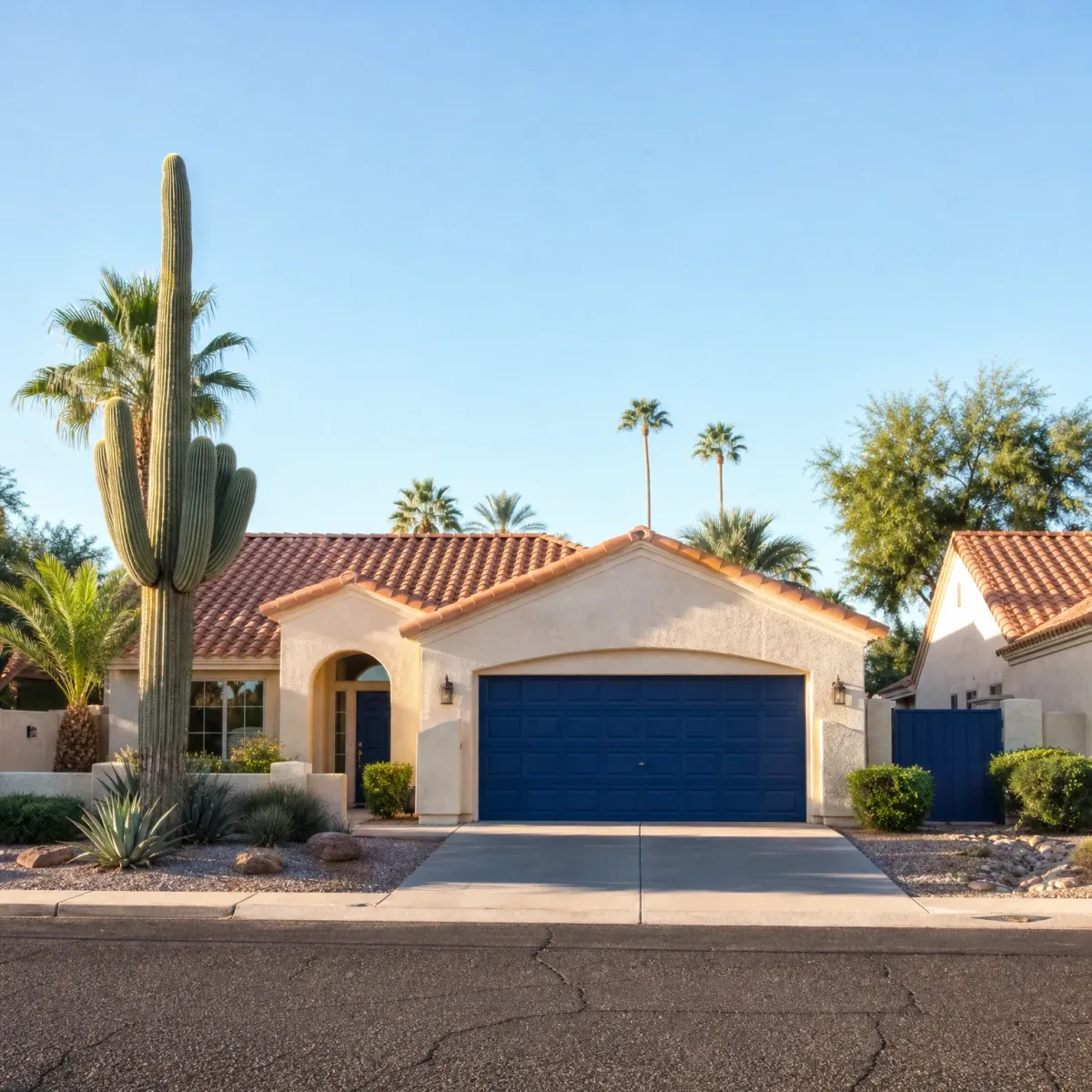
Single-story stucco house with a red tile roof and blue two-car garage door, fronted by a concrete driveway, gravel landscaping with a tall saguaro cactus, agave and palm trees under a clear sky.

The furnace still wins on the bill

Even with an easy winter, the furnace costs less to run. At California's average prices, a gas furnace makes the same heat as a heat pump for at least 45% less, $2.31 against $4.26 per 100,000 Btu. That gap is about the fuel, not the weather, and it holds whether the night outside is 45°F or 32°F.

But heat is only three months of what your system does here. Cooling runs about eight, March through October, with afternoons hitting 90°F or above on about 180 days a year, roughly half the year. A gas furnace has nothing to do with that. It heats, and for the other nine months of the year it sits unused while a separate AC carries the house.

A heat pump carries both jobs with one machine, which is why the cards above call it suited to a long cooling season and steady comfort. If what matters most to you is the lowest cost to make heat, the furnace does that, by a wide margin, every winter night. If you would rather one system handle the three mild months of heat and the eight months of cooling that follow, that case is the heat pump's to make, and your winters here are mild enough that it can make it without strain.

Sources: NOAA nClimDiv · NOAA 1991–2020 seasonal normals · EIA SEDS 2024 · 10 CFR 430.32

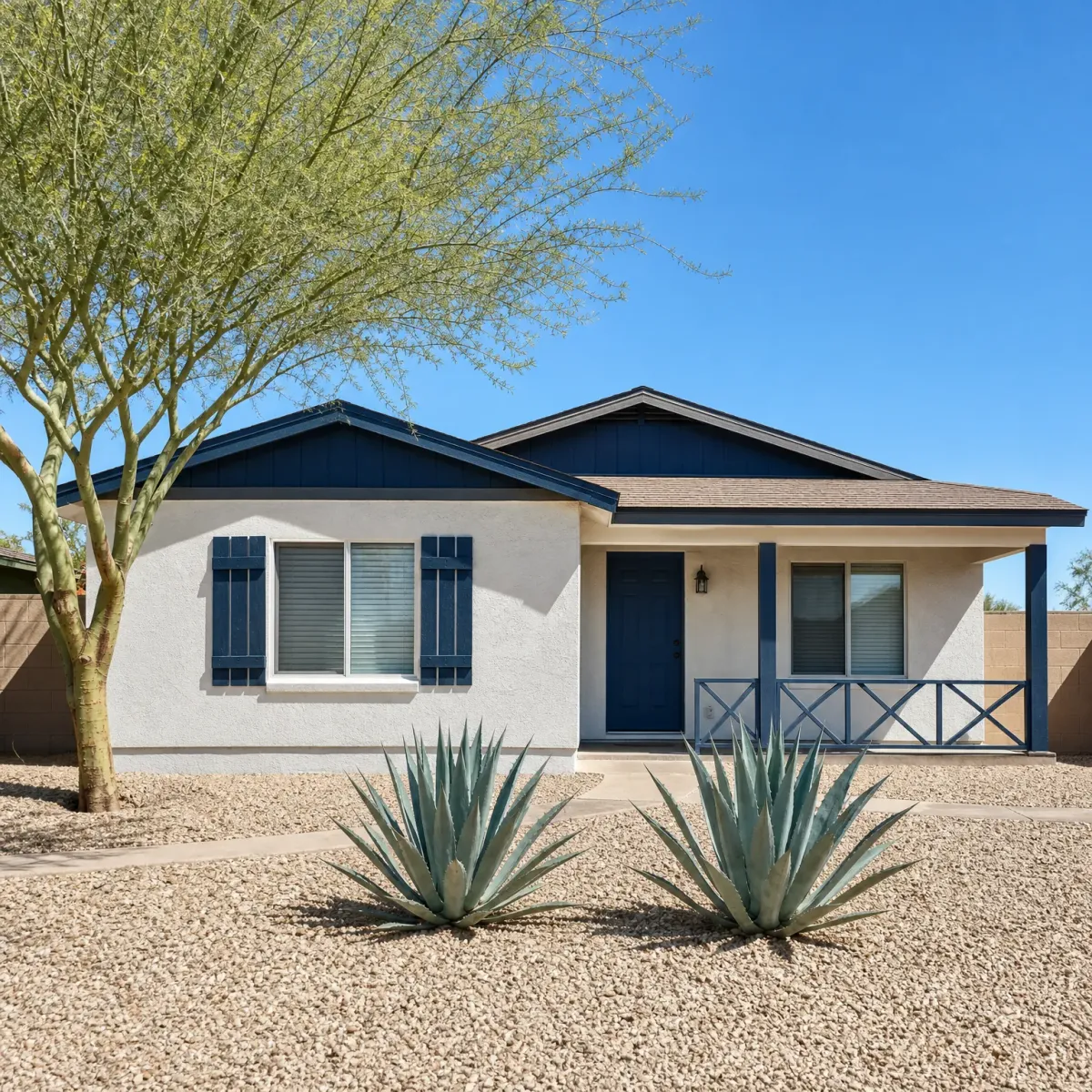
Single-story white stucco house with navy blue trim, shutters, front door and porch railing, with two agave plants in a gravel yard and a thin-leaved tree at left under a clear blue sky.

Common questions about heat pumps and furnaces

  • Will a heat pump keep my house cool enough here?

    Yes. A heat pump is a central air conditioner in the summer months, same as a straight AC system, and afternoons here reach 90°F or above about 180 days a year, so it is built to handle that load. The only difference between a heat pump and a regular AC is what happens in winter, not summer.

  • Can I keep my furnace and add a heat pump?

    Yes, and it is a common setup here. The furnace handles the roughly three months of heat each year, and a heat pump or a separate AC handles the eight months of cooling. The furnace sits idle outside December through February either way, so pairing it with a heat pump for cooling does not cost you anything on the heating side.

  • What if my house doesn't have a gas line?

    Without a gas line, the choice is a heat pump or a furnace burning propane or oil instead of natural gas. A heat pump also covers your cooling season, which runs about eight months a year here, so it does double duty where a propane or oil furnace only heats. Propane and oil also cost more per Btu than the natural gas this page's gas furnace numbers are based on, so the $2.31 figure does not carry over to either one.

  • Is a heat pump cheaper to run than a furnace in Imperial County?

    No. A furnace costs $2.31 per 100,000 Btu of heat here against $4.26 for a heat pump, so the furnace runs cheaper at California's gas and electricity prices. Gas heats a little under two in five homes in the county and electricity a little over half, but price per Btu is what decides the utility bill, not which fuel is more common.