


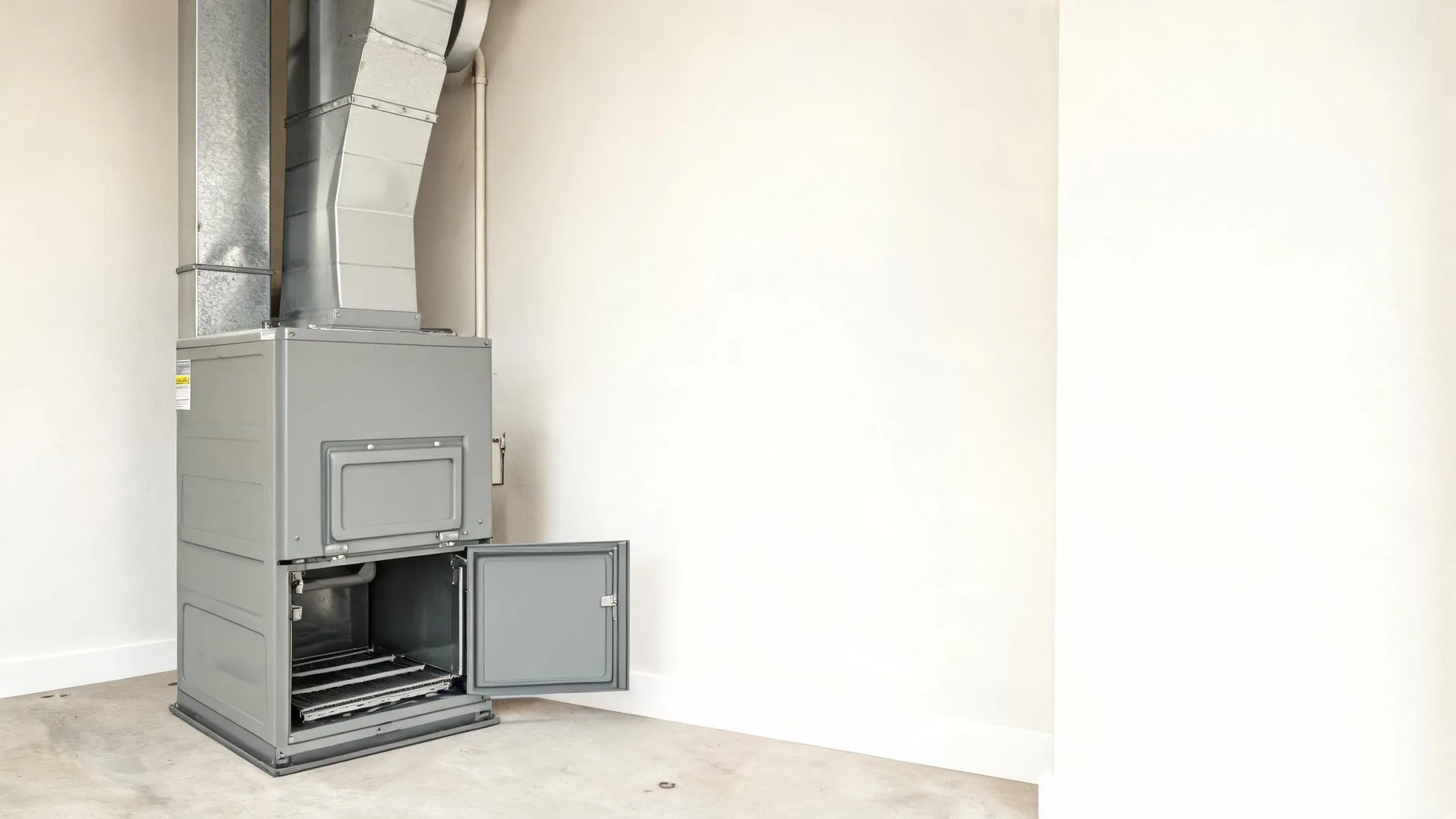
A gray forced-air furnace with sheet-metal ductwork stands in an unfinished basement with exposed wooden joists, concrete walls, and a hanging incandescent bulb.

Furnace Repair in El Centro, CA

Tell us about the job

Takes about a minute. No obligation.

RepairFurnace or heatingImperial County, CA
Step 1 of 2

What ZIP code is the job in?

Your furnace only has to carry the house three months a year, December through February. The rest of the time it sits idle. That's a short work schedule compared to what furnaces deal with almost anywhere else, and it matters when something breaks. A heat exchanger or blower motor that's only run a few months each winter hasn't taken the beating it would in a place with a long, hard winter. When a furnace here needs a repair, it's rarely because the machine wore out from overuse. More often it's age, a part that failed on its own, or something that got neglected. That's usually a good reason to fix it rather than replace it.

3 months
December through February, your furnace is on duty
45°F
the average winter night it heats against
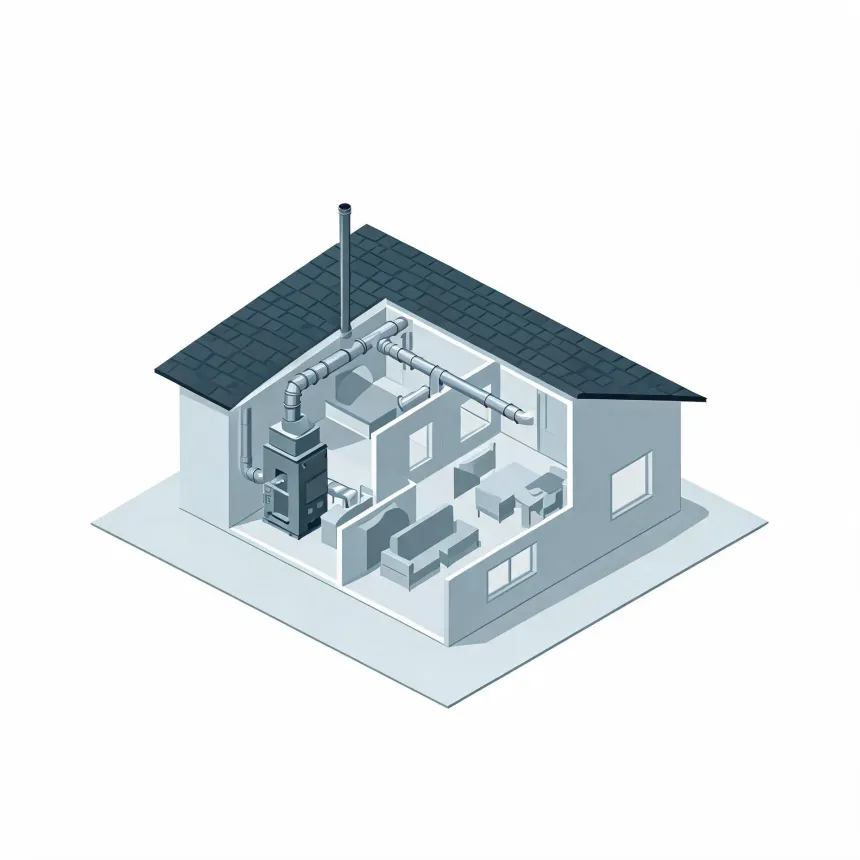
Isometric cutaway illustration of a single-story house with a dark shingled roof, showing a furnace with a flue pipe and branching ductwork running through interior rooms furnished with a sofa, table and chairs.
Your furnace works hardest from December through February.

NOAA nClimDiv, 1991–2020 normals

Half the homes in Imperial County were built in 1988 or later.

A furnace that came with a house that age has likely logged fewer winters than it looks like, and that's usually worth something when it breaks.

A furnace running worse than it should is costing you more every month it waits

Heat runs December through February
Winter nights average 45°F
Climate zone 2B
Weak parts tend to fail when the heat first kicks onHeat goes on in December here. A part that barely held on last winter tends to fail in that first cold week, not later in the season.

A furnace that's struggling doesn't fail quietly. A cracked heat exchanger, a dirty flame sensor, a blower pulling more than it should, any of that shows up on your electric bill before it shows up as a breakdown. At $93.69 per million Btu, California power is some of the most expensive in the country, and a furnace running rough burns more of it to put out the same heat. The longer a bad part sits there, the more it costs you between now and when it finally quits. That's the case for getting it looked at now rather than waiting out the season.

Fix it now, and it's good for years of mild winters ahead

A furnace that came with a newer house still has most of its life ahead of it. Get the repair done and it should carry you through plenty more winters here.

Find a contractor
A gas furnace with attached ductwork, gas piping, and condensate lines installed in a concrete-block basement.

A furnace fails one part at a time, not all at once

A furnace doesn't wear out the way a timing belt or a set of brake pads does, on a slow curve you can see coming. Most of what fails in one is a single part that reaches the end of its life and quits: an igniter that cracks, a flame sensor that gets coated until it can't sense the flame anymore, a control board with a failed relay. None of those give much warning. The furnace runs fine, then it doesn't. That's actually good news for a repair decision. A dead igniter doesn't mean the cabinet, the heat exchanger or the blower assembly are anywhere close to failing too. Those parts have their own separate lifespans, and one going bad doesn't drag the others down with it. The case against repair gets stronger when the heat exchanger itself is the problem, since that's the part that's expensive to replace on its own and often not worth swapping into an older furnace. Everything else, the igniter, the sensor, the board, the inducer motor, is a normal wear part that gets replaced on its own all the time without touching the rest of the machine.

A cracked heat exchanger gets worse with every cycle

Once a heat exchanger cracks, the metal around that crack has already given out. Heat keeps flexing it open and shut on every cycle, and the crack grows a little each time. Running the furnace on a cracked exchanger doesn't just risk carbon monoxide getting into the air, it turns a contained crack into a bigger failure that spreads to the rest of the chamber.
A dirty flame sensor leads the furnace to shut itself down

A flame sensor coated with residue stops reading the flame properly, and the control board reads that as no flame at all. The furnace shuts the gas off as a safety measure, then tries to relight, then shuts off again. Each short cycle puts more wear on the igniter and the gas valve than a normal burn would, so a problem that started as a dirty sensor ends up taking other parts down with it.

Before calling anyone, check the thermostat first. Make sure it's set to heat, not just fan, and that the set point is actually above room temperature. Next, go to the breaker box and look for a tripped breaker on the furnace circuit, and check that the furnace's own power switch, usually a light switch near the unit, hasn't been bumped off. If the furnace has a standing pilot, see whether the pilot light is lit. Check the air filter too. A filter packed with dust chokes airflow, and some furnaces shut themselves down when they can't pull enough air through. Last, look at the vent pipe outside where it exits the house and make sure nothing is blocking it, no debris, no nest, nothing stuffed in the opening. None of this calls for opening the cabinet or touching gas or electrical connections. If the furnace still won't run after that, the problem is inside the machine and needs a tech.

A diagnostic visit starts with the tech asking what the furnace was doing before it quit: short cycling, no heat at all, a burning smell, anything you noticed. Then they go to the cabinet and check things in order rather than guessing. They'll check for power at the board, look at the igniter to see if it's glowing or cracked, and check the flame sensor for a buildup of residue. If the furnace tries to start, they'll watch the ignition sequence through a full cycle to see where it fails. That usually points straight to the bad part, whether it's the igniter, the sensor, the inducer motor, or a relay on the control board. They'll also pull the panel on the heat exchanger side and check it for cracks or rust-through, since that's the one thing that decides whether the furnace is worth repairing at all. Most visits end with the tech naming the part, showing you what's wrong with it, and telling you straight whether it's a simple swap or something bigger.