
Signs of a cracked heat exchanger in California

RepairFurnace or heatingCalifornia
Step 1 of 2

What ZIP code is the job in?

A cracked heat exchanger shows up as a burning or formaldehyde-like smell when the furnace runs, soot inside the cabinet, a flame that flickers or changes color when the blower kicks on, or a carbon monoxide alarm going off. Some people notice headaches or nausea that ease up when they leave the house. The crack forms from years of the metal heating and cooling each time the furnace cycles, and it lets exhaust gas mix into the air moving through your ducts instead of venting outside. Gas furnaces here run on and off most nights from late fall into early spring, and each cycle flexes that metal a little more. Once it cracks, the furnace isn't safe to run until someone inspects it and shuts off gas to it if needed. This isn't something to wait on or try to check yourself. It takes a proper inspection to confirm, and the furnace should stay off until that happens.

A gray furnace with sheet-metal ductwork, PVC vent pipes and a yellow gas line stands on a concrete basement floor beside wooden stair framing.

Furnace running clean

The flame stays steady and blue when the blower starts. No smell when the heat kicks on, no soot around the cabinet, and the carbon monoxide alarm stays quiet. Gas line, flue pipe and ductwork all connect to the furnace the way they were installed, with nothing scorched or loose around them.


An older gas furnace with a louvered front panel stands on a concrete basement floor beside galvanized sheet-metal ductwork, a metal flue pipe, gas piping and a flexible conduit along a concrete wall.

Furnace in trouble

The flame wavers or turns yellow when the blower comes on. A burning smell or something like formaldehyde fills the room, and soot shows up inside the cabinet or near the vents. If the carbon monoxide alarm sounds, shut the furnace off and have someone qualified look at it before running it again.

Watching for Signs or Calling Now

Furnace runs, but something's off

  • A flame that leans or flickers when the blower turns on points to air being pulled through a crack instead of the burner acting up on its own.
  • A furnace that trips its limit switch and shuts off partway through a cycle can still be doing real damage even if it starts back up fine.
  • Rust or scaling on the exchanger itself, visible with the panel off, usually means the metal has already started to give way.
  • Soot around the cabinet without a flame problem can mean combustion gases are escaping somewhere they shouldn't.
  • A furnace that's short-cycled all winter has put more stress on that metal than one that runs in long, even stretches.

Call it now, don't wait

  • A carbon monoxide alarm going off during a heating cycle means the furnace gets shut down and inspected before it runs again, no exceptions.
  • A burning or formaldehyde smell that shows up only when the furnace is running, not when it's off, points straight at the exchanger.
  • Headaches or nausea that ease up when you leave the house and come back once the furnace has been off for a while are worth taking seriously.
  • A furnace that's audibly ticking or popping as metal expands, paired with any smell, isn't something to wait out until spring.
  • A technician who can run a combustion analyzer and inspect the exchanger directly will tell you more in an hour than days of watching for symptoms will.
A gray-haired man in a dark long-sleeve shirt sits on a gray sofa in a living room, looking toward a sunlit window with sheer curtains.
A gray-haired man in a dark green sweatshirt sits on a sofa in a living room, looking toward a bright window, with a houseplant, lamp, fireplace and framed art behind him.
A gray-haired bearded man in a dark green collared sweater sits on a sofa in a living room with a window, houseplant, floor lamp and bookshelves, looking off to the side.
A gray-haired man in a dark green sweater sits on a sofa in a sunlit living room, looking off to the side, with a framed landscape painting, dining table and shelving behind him.

A furnace pro near you

Your request goes to one pro, not a list of companies.

There's no charge for the request.

Why the blower matters here

A crack in the heat exchanger usually only leaks when the blower is running. The moving air pulls exhaust through the crack and pushes it into the ducts instead of letting it rise up the flue. That is why the flame flicker or the smell often lines up with the blower cycling on, not with the burner lighting. A furnace that seems fine until the fan kicks in is telling you something about where to look, not just that something is wrong.

Why California furnaces get checked less

Winters here are mild enough that a lot of furnaces run for a few months and sit idle the rest of the year. That shorter run time means fewer hours for a technician to catch a developing crack during normal use, and fewer chances for a homeowner to notice a problem before the furnace gets put away for the summer. A furnace that only runs part of the year still needs the same inspection a furnace running all winter would get.

A middle-aged woman with shoulder-length dark hair, wearing a gray cardigan over a cream top, sits in an upholstered armchair and looks toward a sunlit window, with a shelf holding framed pictures and a plant behind her.
A woman and a child wrapped together in a thick knitted blanket on a sofa, both with eyes closed, with a lit table lamp and houseplant in the dim background.
  1. Metal expands as the burner fires and heats the exchanger.

  2. A crack opens along a seam or weld under that heat.

  3. The blower starts and draws air across the cracked metal.

  4. Exhaust gas leaks through the crack into the duct air.

Winter nights average 40°F statewide

On a 40°F night your furnace is cycling on and off for hours, not just at bedtime. Each cycle flexes the heat exchanger as it heats up and cools down, and that repeated flexing is what opens a crack at a seam or weld over time.

NOAA nClimDiv 1991-2020 county normals weighted by homes

A gray high-efficiency furnace in a basement with PVC venting pipes, a yellow gas line, metal ductwork, concrete walls and floor, and a wood-framed stairway at left.

What a sound furnace looks like

The cabinet stays clean inside, no soot streaking the metal near the burners. The flue pipe and supply plenum connect tightly, and the gas line runs straight to the valve with no slack or corrosion. Nothing about the setup needs a second look.

A beige furnace with a louvered front panel and metal ductwork stands on a concrete basement floor beside pipes and a white cylindrical water heater.

What a furnace in trouble looks like

An older furnace like this has had more years of heating and cooling for the metal to expand and contract. Check the louvered vents and the ductwork connection for soot or rust streaks, and watch whether the condensate line stays dry when it should be draining.

A man in a dark blue shirt stands in an open front doorway of a stucco and wood-clad house, facing a blond woman seen from behind in the foreground on a stone walkway.

A cracked heat exchanger is not a wait and see repair

If your furnace is showing any of this, the flame acting strange when the blower starts, a burning smell, soot, a carbon monoxide alarm that's gone off, the exchanger needs to be looked at before the furnace runs again. That's true whether your winters feel mild or not. The crack doesn't heal on its own, and running the furnace while it's there means exhaust gas going into the air your house breathes instead of up the flue.

This isn't a job for guesswork. It calls for someone who opens the cabinet, checks the exchanger itself, and tells you plainly whether it's cracked or whether something else is behind what you're seeing. A furnace tech who works on these all winter in your area has seen this exact failure before and knows where to look first. You'll be matched with one licensed contractor near you, not a handful competing for the job, and that contractor will reach out to go over what's happening with your furnace.

Interior corner of a living room with a beige upholstered sofa and dark cushion in the foreground, a ceramic vase of leafy branches on a dark side table by a curtained window, a framed picture on the wall, and a wood-surround fireplace at right.
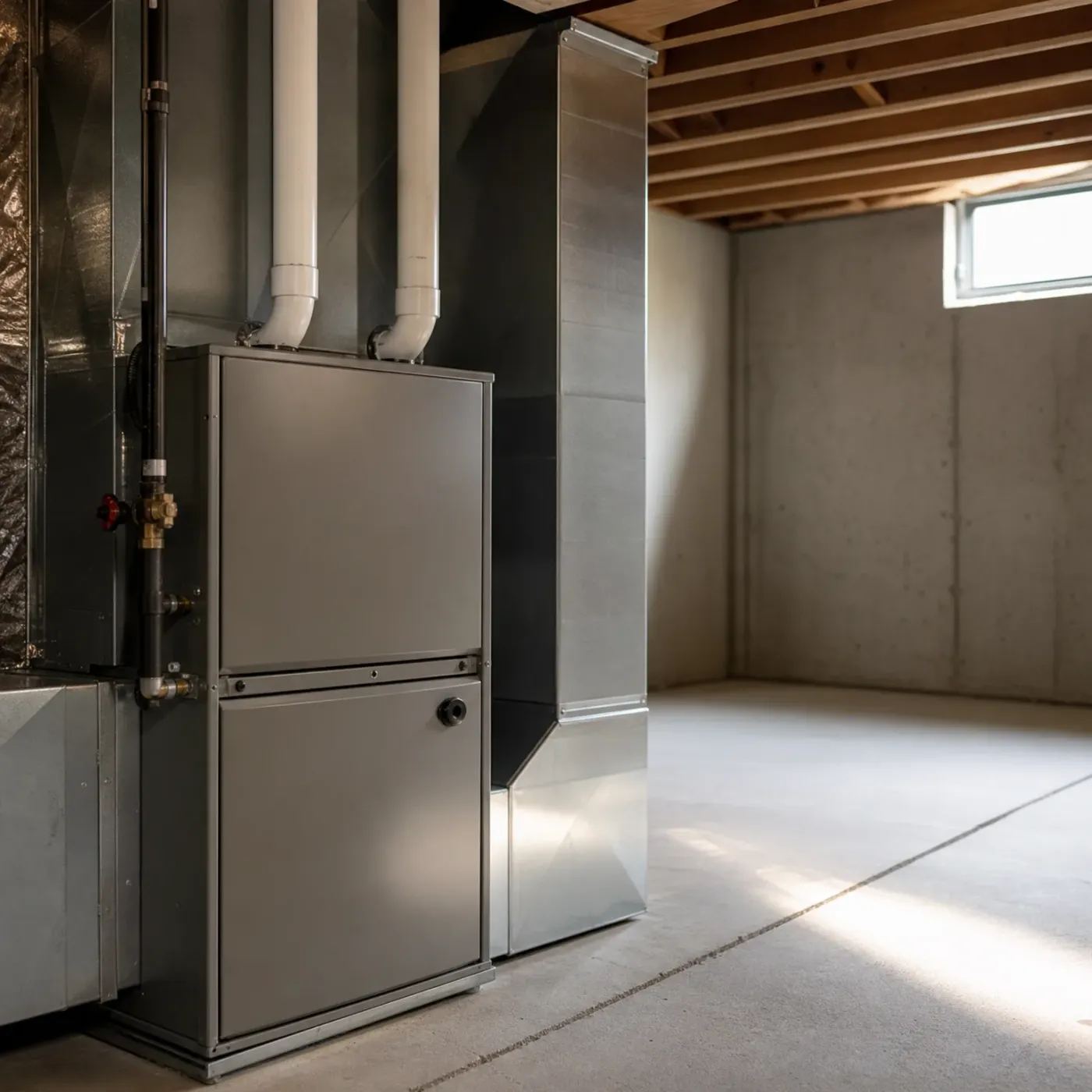
A gray furnace with PVC vent pipes and sheet-metal ductwork stands against a wall in an unfinished basement with concrete floor and walls, exposed wood joists, and a small window.

A local pro for your furnace repair

Find a local pro

The pro who reaches out is licensed in California.

You only hire the pro if you want to.