First cold nights of the year
Riverside's mild winters mean the furnace sits idle most of the year, then fires up on the first chilly night with months of dust on the burners.

A burning smell from the furnace is unsettling, especially with Riverside winters mild enough that the furnace only runs a handful of nights a year. That gap is exactly why the smell shows up. Dust settles on the burners and heat exchanger all the months the system sits idle, and the first real cold snap burns it off. The question is whether that's all it is, or something worse.
A furnace that's been off since spring collects dust on the burners and heat exchanger. The first time it fires up for the season, that dust burns off and puts a faint smell through the house for ten or fifteen minutes, then it clears. That's normal and nothing to worry about. What isn't normal is a smell that lingers, gets stronger, or smells like hot metal, plastic, or something electrical rather than dust. Riverside winters are short, so a furnace here might sit unused for seven or eight months at a stretch, long enough for dust to build up heavier than in a house running heat daily. If the smell doesn't fade after that first run, or it comes back on later cycles, turn the furnace off and have someone look at it.
Furnace sits unused for months while Riverside stays warm.
Dust settles thick on the heat exchanger and burners.
Burners fire and the dust on them starts to burn off.
Burning dust smell clears from the vents within an hour.


Most of the time, that burning smell is just dust from months of sitting idle, and it clears out on its own. But what happens after that first hour tells you whether to relax or act. If the smell is gone by the second night, the furnace did what it was supposed to do. If it's still there on night two or three, something besides dust is going on, and that's worth getting looked at. A smell that's sharp or plasticky rather than dusty points toward the blower motor or the wiring behind it, and that's not something to run through. If you also notice a musty or sour note, moisture likely got into the cabinet while the furnace sat unused all those warm months. The more serious risk is a cracked heat exchanger, which can send combustion byproducts into the air your household breathes without any obvious sign. And if what you smell is closer to rotten eggs than burning dust, that's gas, not dust, and the right move is to get everyone out of the house and call the gas company before doing anything else.




Riverside's mild winters mean the furnace sits idle most of the year, then fires up on the first chilly night with months of dust on the burners.
If the smell is still there after the furnace has run a while, a cracked heat exchanger or failing blower motor is worth having a contractor check.
It's just past seven on a December evening, cold enough that you finally bumped the thermostat up. The furnace in the hall closet clicks on, and a thin haze of dust drifts out from the grille near the floor, catching the light from the hallway. You crouch down and smell it before you see it, that scorched, papery smell, coming off the burners inside. Nobody else in the house has noticed yet. You stand there a minute, waiting to see if it gets worse or starts to ease off, one hand still on the thermostat dial, the dust already starting to settle again on the carpet by the vent.
Your request goes to one pro, not a list of companies.
No fee to send it, and nothing to sign.
If this is the first cold night of the year and the smell is the dry, sharp kind, let the furnace keep running. Open a window or two in the room, turn on a bathroom fan if you have one, and give it an hour. A furnace that's just burning off months of dust on the burners clears on its own and shouldn't need a visit. Shutting it off partway through doesn't help much, since the dust is still there waiting for the next run. Watch for the smell fading, not growing, and note whether it's gone by the time you go to bed.
If the smell is electrical, like hot plastic or burning wire, turn the furnace off at the thermostat or the switch at the unit and don't run it again until someone's looked at it. The same goes for a smell that's still there on a second or third cold night, or one that gets stronger instead of weaker. A furnace tech who works on these year-round in Riverside will know within a few minutes whether it's the heat exchanger, a wiring issue, or something in the blower, and can tell you if it's safe to run in the meantime.
Nights here only average 42°F in deep winter, so your furnace isn't working against real cold. It cycles on for a few hours at a time, not all night, which is why dust has so long to settle between runs and why that burning smell catches you off guard each year.
NOAA nClimDiv 1991-2020
If the smell is sharp and dry, and tonight is the first cold night you've run the furnace this year, waiting an hour is reasonable. Crack a window, keep an eye on it, and most of the time the smell is gone before the room warms up. That's a furnace burning off months of dust, nothing more. You don't need a contractor out for that. Waiting costs you nothing but a little patience, and it tells you something useful either way. If the smell clears, you're done until next winter. If it doesn't, you've lost an hour, not a week, and you now know this isn't the dust.
A smell that's electrical, like hot plastic, or one that carries into a second night of running, isn't something to sit with. Those point to wiring, a failing motor, or something inside the cabinet breaking down rather than dust on the burners. Shutting the furnace off at the thermostat or the breaker and calling a contractor is the right move the same day you notice it. A local contractor who works on furnaces through every Riverside winter has likely smelled this exact thing before and knows what it usually means on a system like yours. That's not a guess on their part. It's the difference between a furnace that's starting its season and one that's telling you something's wrong.



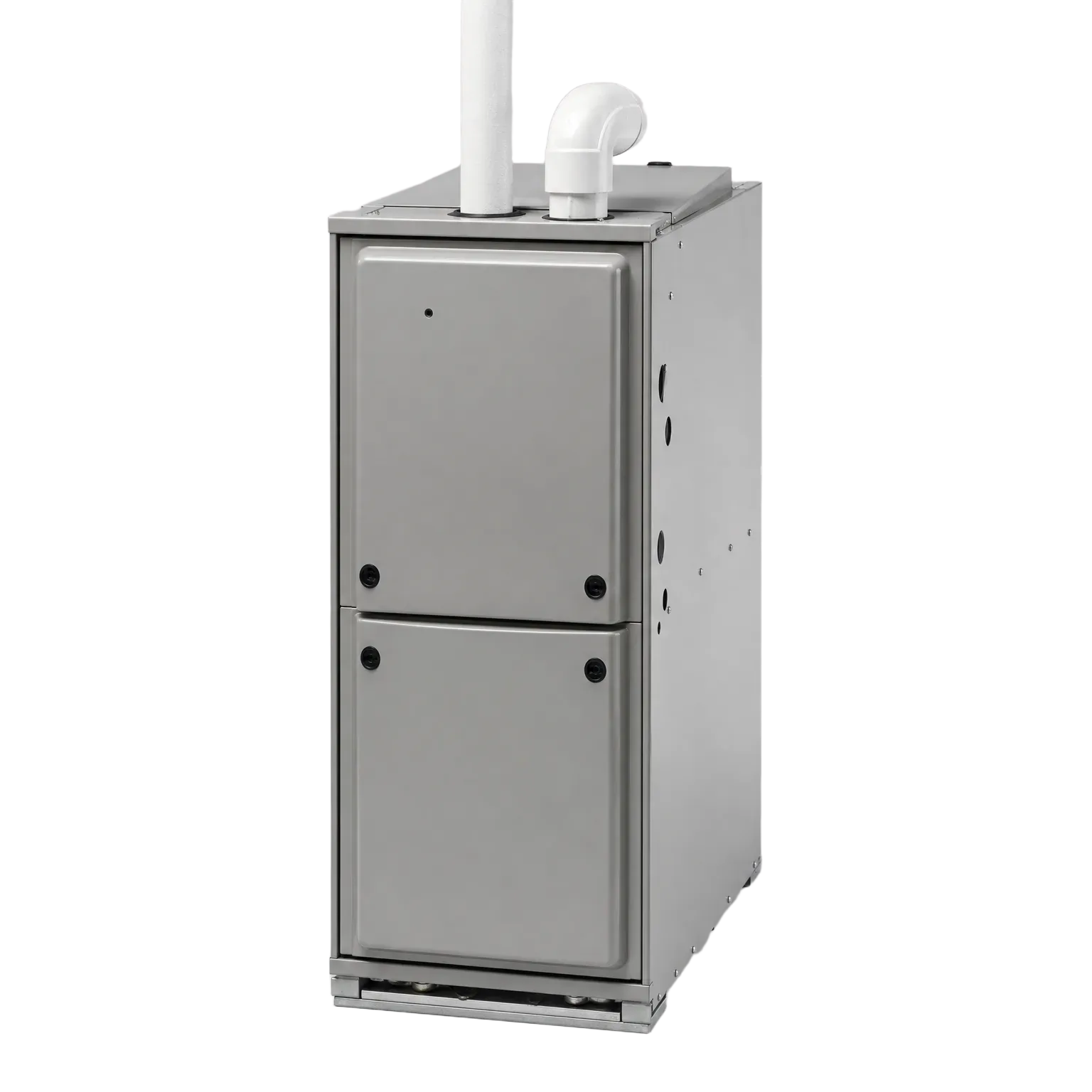
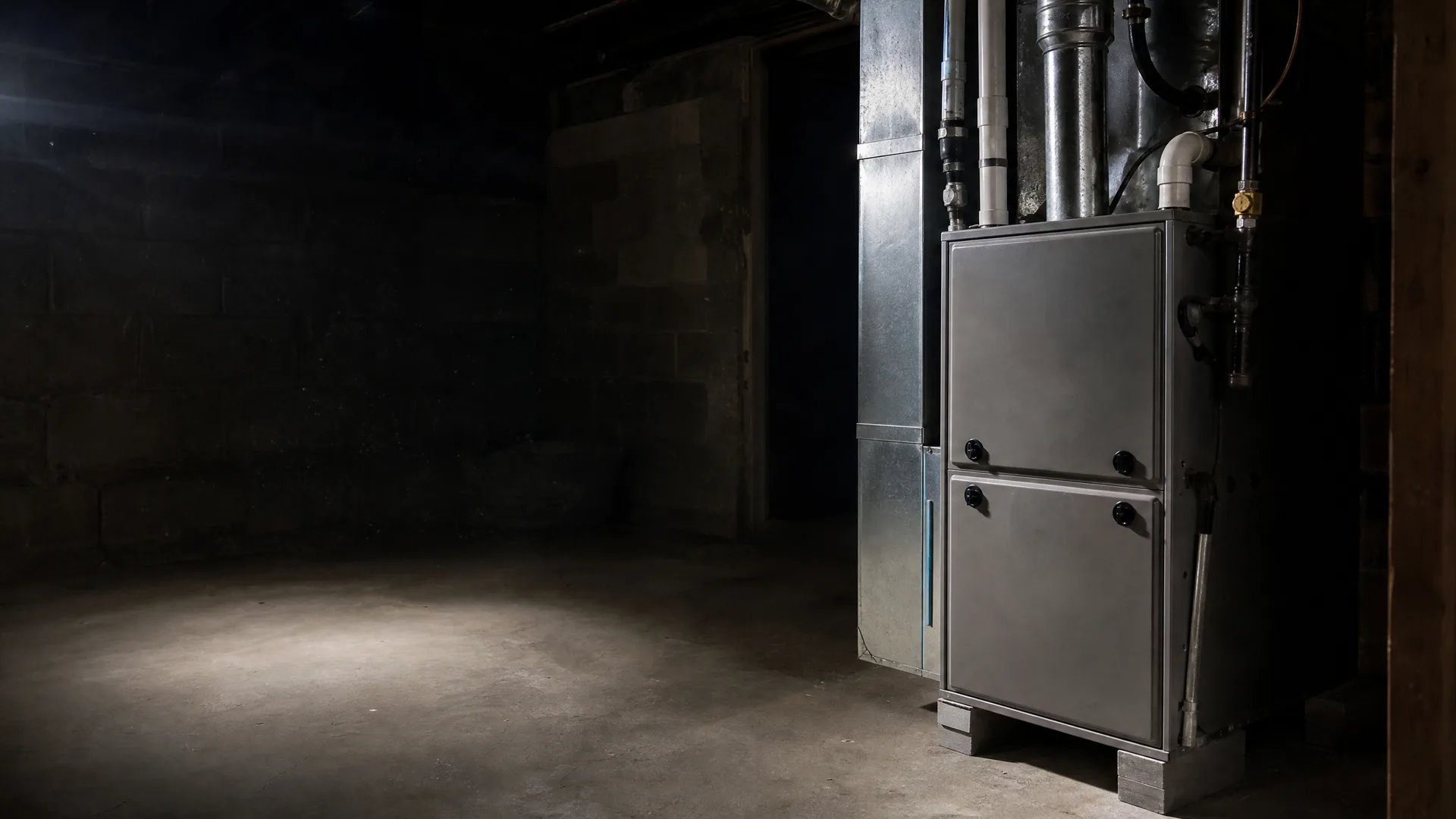
This is what a furnace looks like when nothing is wrong. The flue pipes, the gas line, the condensate drain all sit where they should, nothing scorched or loose. A furnace in this shape burns off a little dust on the first cold night and then runs clean the rest of the winter.

Years of dust sitting on the cabinet and louvers is more than a first-night burn-off. If the smell keeps coming back or changes to something sharper than scorched dust, a furnace that looks like this is worth having someone local look at before the next cold snap.
Winter nights average 42°F
Nights only average 42°F here, so the furnace never has to work hard, and it idles long enough between runs for dust to pile back up.
Heat runs November through March
Five months of heat sounds like a lot until you see it's one stretch a year. Most of the other seven months, that dust just sits there untouched.
70% of homes heat with gas
With 70% of homes here on gas, this same smell is showing up in furnace closets all over the county tonight, not just yours.
NOAA nClimDiv 1991-2020 · ACS 2020-2024
A burning dust smell that clears within an hour just means your furnace is doing what any furnace does after sitting idle through a Riverside summer. One that lingers past the first night, or smells sharp like plastic or metal instead of dust, is telling you something the first explanation doesn't cover. That's the point where it's worth having someone look at it rather than guess. A furnace technician working Riverside County sees this same pattern every year, the first cold snap bringing in calls about burning smells, and knows which ones are dust and which ones are a cracked heat exchanger or a wiring problem starting to fail. Requesting service here puts you with one licensed local contractor, not a handful of companies competing for the job, so you're dealing with a single call back from someone who already knows what tends to go wrong in furnaces that sit unused most of the year. You already know what you smelled and how long it lasted. That's enough to go on.





The pro who gets in touch is licensed in California and works in Riverside County.
Sending the form costs nothing.