


What to do when the heat goes out in San Jose, CA

Send the request today and let a furnace pro reach out to you.

Let a pro reach out

First, check the thermostat is set to heat and the temperature is set above room temperature, then check the breaker for your furnace hasn't tripped. If those are fine, look at the furnace itself. A light on the control board blinking a pattern, or no lights at all, points to a failed igniter, a dirty flame sensor, or a blower motor that won't start. Gas furnaces are what most homes around San Jose rely on, and these are the parts that wear out and need a repair. None of this is an emergency the way a cold snap elsewhere might force it to be. Winters here are mild, so a furnace that's down for a day or two isn't going to put your home at risk. But a furnace that won't light, or that cycles on and off, usually points to a part that needs replacing before it fails completely. Getting it looked at while it's still a small problem is worth doing.

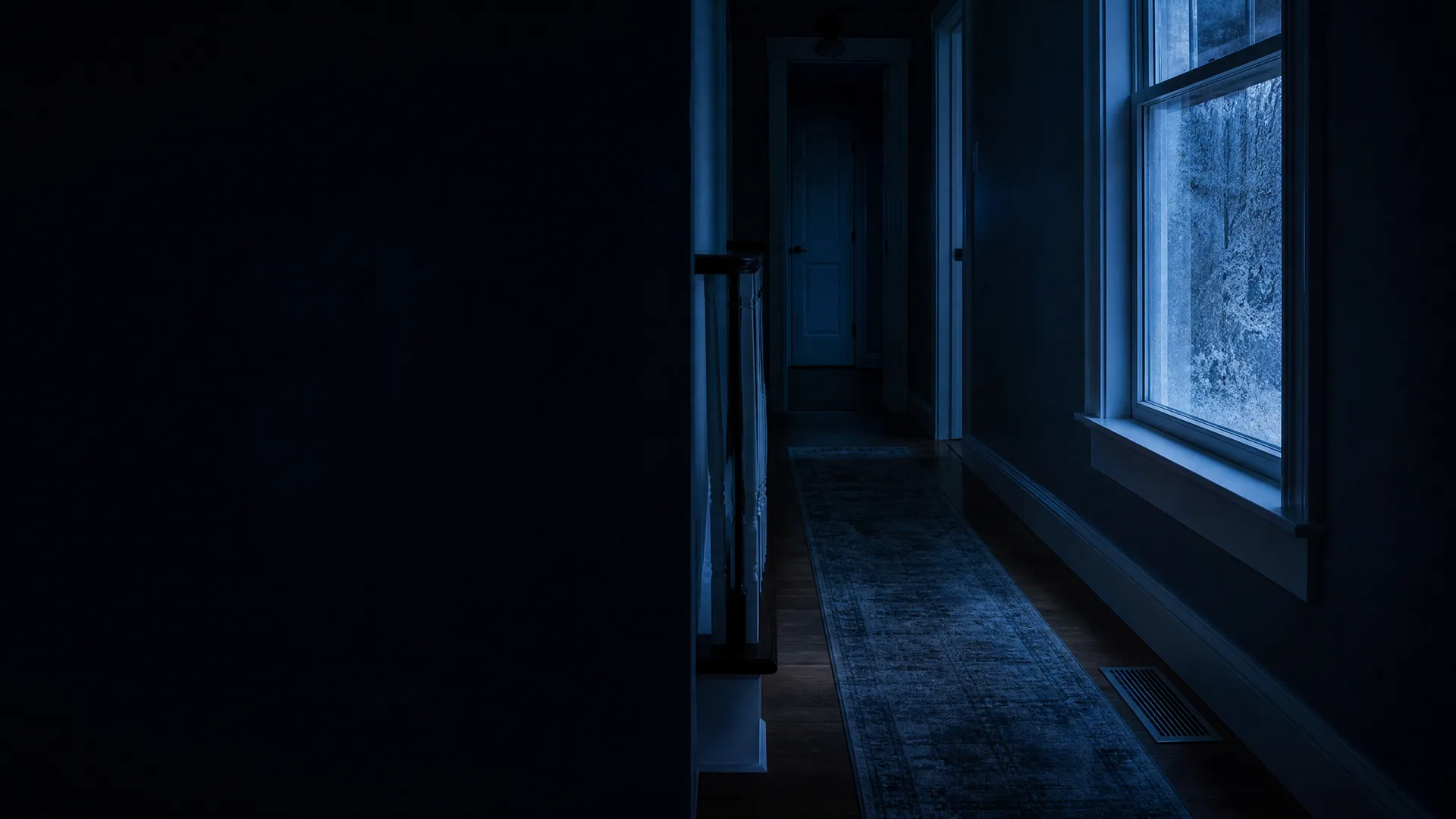
A dark interior hallway lit only by blue light from a window on the right, with a runner rug on a wood floor, a floor vent, a closed door at the far end, and a stair railing at left.

You wake up because your feet are cold outside the blanket. 2 a.m., and the house has that still, wrong quiet to it. Down the hallway the vents aren't ticking or pushing air, nothing. You get up to check on the kids and the hallway window has frost climbing the inside edge of the glass, something you don't see much in San Jose. The blue nightlight by the bathroom door is the only light on, and it makes the cold look worse than it probably is. You stand there in the hallway, listening for the furnace to kick on. It doesn't.

Why does the house feel colder room to room

You notice the living room still feels all right but the bedrooms down the hall are cold, or the air coming from the vents feels room temperature instead of warm. Maybe the furnace is running longer than it used to, or kicking on and off every few minutes instead of settling into a cycle. You might catch a burning dust smell the first time it fires after sitting idle, or no smell at all, just air that isn't warm. Left alone, a furnace that's struggling to light or stopping mid-cycle tends to get worse, not better, and on a cold night in San Jose that's a slow slide toward a house with no heat at all.

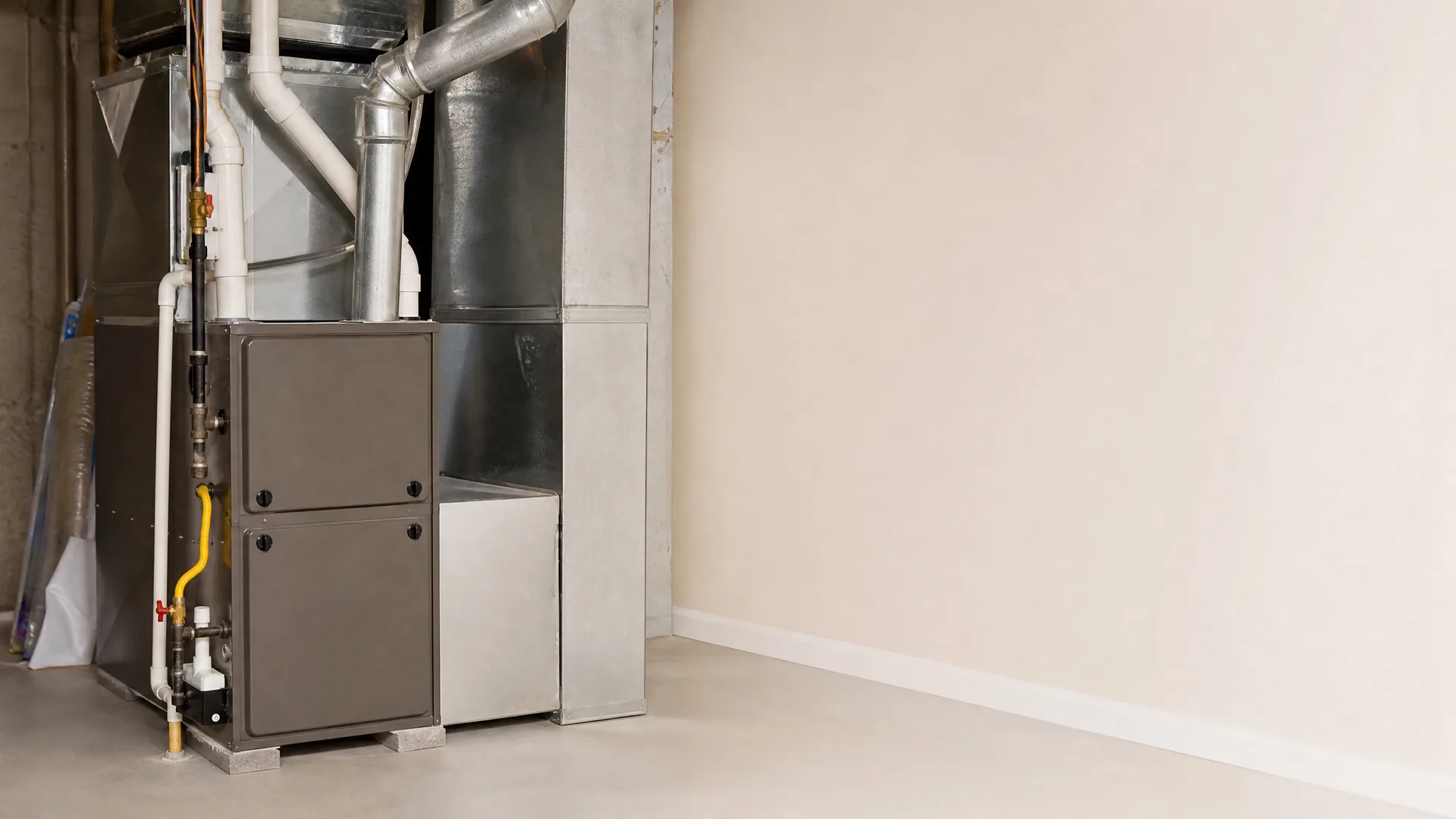
A gas furnace with two gray access panels stands in a basement corner, connected to sheet-metal ductwork and copper, PVC, and yellow gas piping, beside a plain beige wall and concrete floor.

What the blinking light tells you

That light on the control board isn't decoration. It flashes a count, pauses, then repeats it. Two flashes might mean a pressure switch problem, three or four might point to a flame sensing issue, depending on the brand. The furnace is telling you what it already checked and failed. A contractor reads that code first, before opening anything up, because it narrows down what's wrong before a single tool comes out.

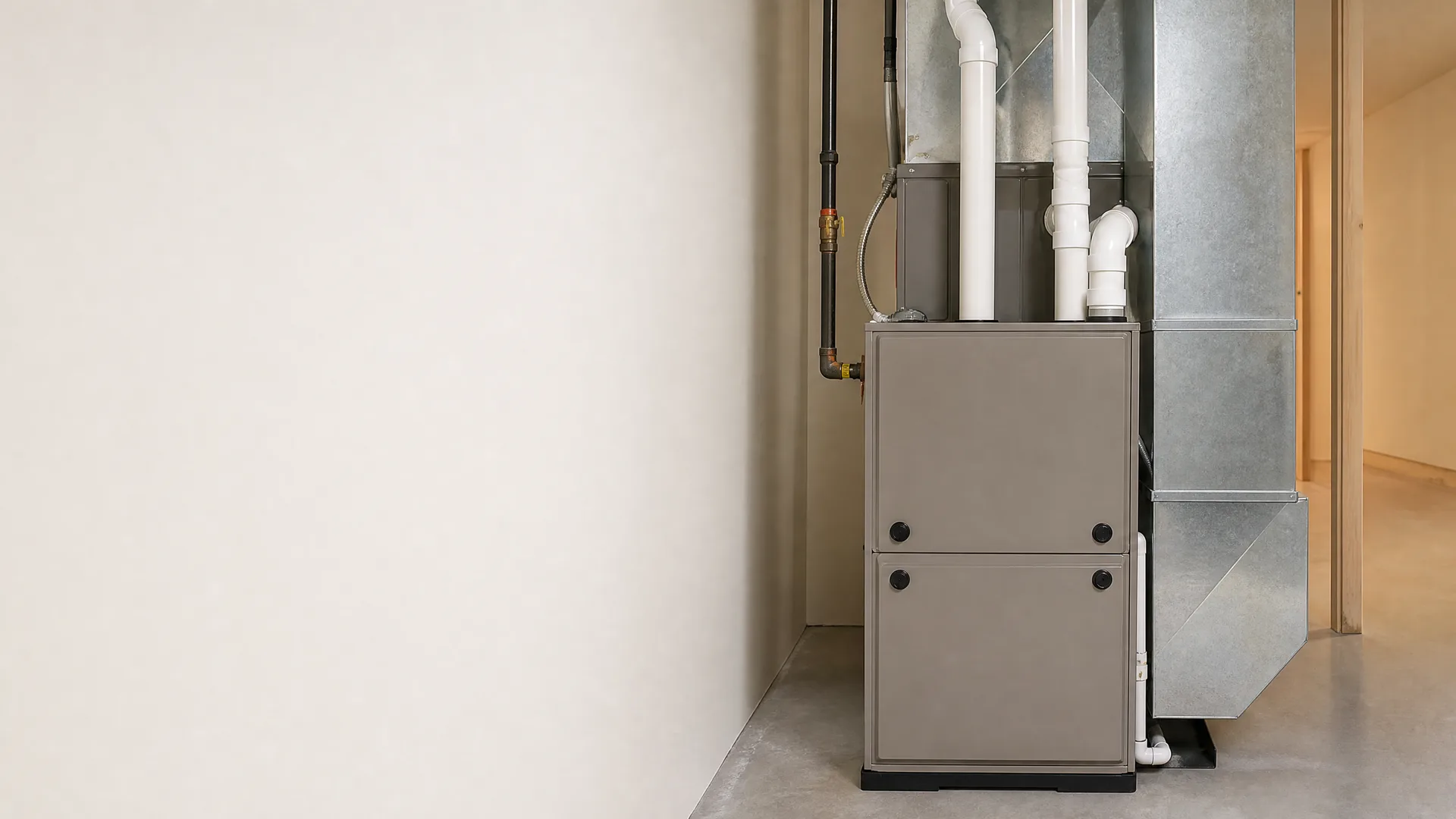
A gray furnace with white PVC vent pipes and a galvanized sheet-metal duct stands against an interior wall on a concrete floor, with a large blank wall to the left.

Why gas furnaces need outside air

A gas furnace burns fuel to make heat, and that burning needs a steady supply of outside air along with somewhere for the exhaust to go. If the intake or exhaust vent outside your house is blocked, by debris, a bird's nest, or anything else, the furnace can shut itself down rather than run unsafely. Most homes in Santa Clara County heat with gas, so this is worth a look before you assume the problem is internal.

A closed silver laptop and a light ceramic mug of dark coffee sit on a wooden table, with a window showing a sunset at left and a kitchen counter with a cutting board and potted plant in the background.

What happens before the furnace ever fires

A gas furnace has to prove a few things before it will light. The thermostat calls for heat, the inducer motor spins up to clear the exhaust, and a pressure switch checks that the venting is actually working. Only then does the igniter get power. It glows for about 15 to 30 seconds, the gas valve opens, and the flame sensor confirms there's a real flame before the system lets it keep burning. Skip any one of those steps and the furnace shuts itself down rather than risk running unsafe. That's most of what a blinking light or a furnace that clicks but won't catch is telling you.

None of this explains itself over the phone, and most homeowners don't have a reason to know it until the heat is out. Once you've sent the details through, you're not the one calling furnace companies, sitting on hold, or repeating what the light did three times to three different people. That part is handled, and what's left is someone showing up who already knows what a pressure switch failure looks like in a Santa Clara County attic in January.

Living room interior with a light sofa holding a dark green cushion and a brown knit throw, a tall leafy plant by a black-framed window, a wooden coffee table with a round tray, and wooden shelves holding vases and books.
A gray high-efficiency furnace in a basement with sheet-metal ductwork, white PVC vent pipes, metal plumbing lines, a condensate pump on the floor, and a window showing green trees outside.

Running the way it should

A furnace like this fires, the inducer clears the vent, and warm air moves through the ducts overhead. The condensate line drains off what the exhaust leaves behind. Nothing here is loud or smells off, and the house heats evenly room to room.


An older metal furnace with PVC and metal pipes stands on a concrete basement floor beside galvanized ductwork, with wooden stairs and a water tank in the background.

What trouble looks like up close

Dust built up across the cabinet, a gas line that's seen better days, the water heater crowded in next to it. None of that alone means failure. But a furnace this old is more likely to be the reason your house is cold right now.

Repair Now or Replace

Call for repair

  • A furnace that's tripping its breaker, throwing a blink code, or short cycling is usually a specific part failing, not the whole unit giving out.
  • Flame sensors, igniters, pressure switches and inducer motors can be replaced on their own while the rest of the furnace keeps running fine.
  • Gas furnaces in Santa Clara County homes often run 15 years or more since winters here are mild and the system isn't working hard most of the year.
  • A repair gets the heat back on in the near term without the cost of swapping out the whole unit.
  • If the furnace is heating unevenly or cycling more than it used to, a repair now can head off a bigger failure later this winter.

Consider replacement

  • A furnace that needs the same repair twice in a year or two is telling you the part that keeps failing isn't the real problem.
  • If the heat exchanger has cracked, that's not a fix, since it affects the parts of the furnace that handle combustion directly.
  • An older furnace paired with San Jose's high electric rates can mean a newer, more efficient unit pays back faster here than in other parts of the country.
  • A furnace original to the house may be old enough that matching parts are harder to find when something else fails.
  • Replacing it resets the clock, so you're not troubleshooting the same system again next winter.
  1. Thermostat calls for heat and sends power to the control board.

  2. Inducer motor spins up to clear exhaust from the heat exchanger.

  3. Pressure switch confirms the inducer is actually venting properly.

  4. Igniter heats up, then the gas valve opens to feed the burners.

A bearded man in a navy t-shirt sits on a beige sofa, laughing while looking toward a laptop screen visible in the lower foreground, with a houseplant, shelves, and a framed picture behind him.
A bearded man in a plaid flannel shirt stands indoors looking out a condensation-covered window at a snowy landscape, with a speckled mug on the sill and kitchen shelves behind him.
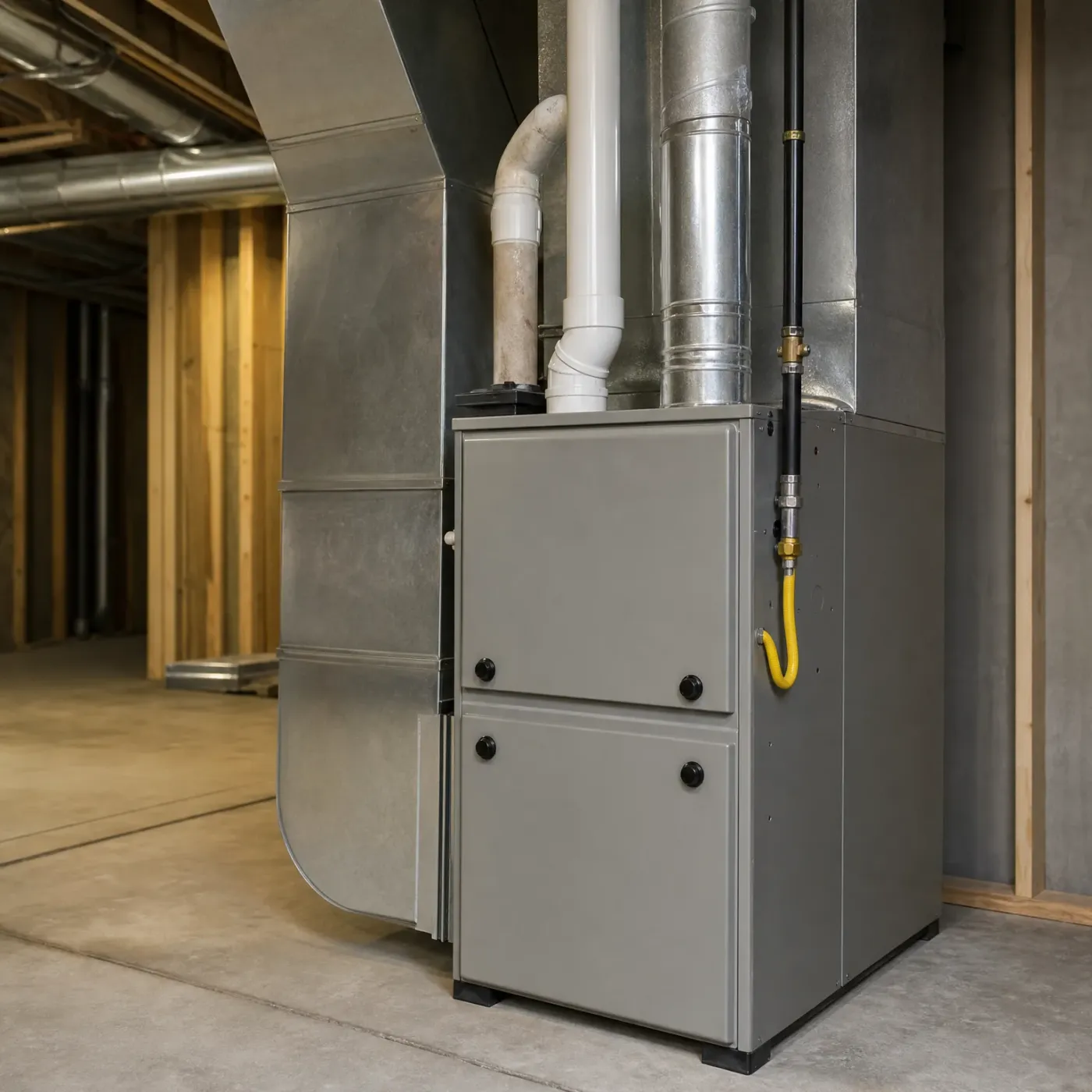
A gray two-panel furnace stands on a concrete basement floor beside large sheet-metal ductwork, with white PVC vent pipes, a metal flue, and a black gas line with a yellow flexible connector running above it.

Hand off the furnace problem

Explain the furnace problem once instead of to every shop in Santa Clara County.

Get the furnace repair search off your mind today.

I'm done searching

No fee to send it, and nothing to sign.

A basement utility area with a gray furnace, sheet-metal ductwork, pipes, plastic-covered walls, a concrete floor, and a black shelving unit holding storage bins.
A furnace like this cycles on, warms the house, and shuts off without a sound or smell out of place.
A gray metal furnace with louvered vent panels stands on a concrete basement floor beside galvanized ductwork, gas and plastic pipes, and foil-faced insulation along the ceiling and wall.
Rust on the cabinet and an older burner setup like this mean parts are more likely to fail when you need heat most.

Winter nights average 39°F

Nights here average 39°F in December and January, so your furnace isn't fighting single digits, but it is running most nights of the week. A furnace that cycles on that often has more chances to show a bad igniter or a weak pressure switch, which is why nights are when these problems usually turn up.

NOAA nClimDiv 1991-2020

You wait a few days to see if it clears up on its own, because the house isn't cold enough yet to feel urgent, and a repair call feels like something to put off.

A furnace that's short cycling or throwing a blink code doesn't fix itself by waiting. The part behind it keeps failing the same way until someone replaces it, and most nights here still dip into the 40s.

A beige furnace with two access panels stands against a concrete basement wall, with galvanized sheet-metal ductwork, a white PVC pipe, flexible conduit and insulated ducting around it.
Before you get your furnace repair
A gray furnace with white PVC vent pipes stands beside sheet-metal ductwork in a basement with a smooth concrete floor, exposed wood framing, and plastic sheeting on the walls.
After you get your furnace repair

You keep checking the blink code yourself

You're back online looking up what two flashes means on your brand, calling around to find someone who works on your furnace, and explaining the same thing twice.

Hand it over

Send the form once

You describe what the furnace is doing and someone licensed to fix it gets in touch. No more calling around San Jose to find who's free.

Hand it over

How long does San Jose heat have to keep working each year

  • Winter nights average 39°F

    Overnight lows average 39°F here in December and January, so your furnace is cycling on most nights, not just the cold snaps.

  • Heat runs November through May

    Heat runs November through May here, about seven months, which is more chances for a worn igniter or sensor to fail.

  • 58.5% of homes heat with gas

    58.5% of homes in Santa Clara County heat with gas, same as yours, so a gas furnace problem here is a common call, not a strange one.

NOAA nClimDiv 1991-2020 · ACS 2020-2024

Where this leaves you

  • A tripped breaker, a bad thermostat setting, or a blink code on the control board each point to a different fix.
  • Pressure switches, igniters, and flame sensors are the parts that most often fail and stop a furnace from lighting.
  • Short cycling or a repeating blink code is a sign of a specific part failing, not a reason to replace the furnace.
  • Furnaces here run most nights from November through May, so a small problem gets more chances to show itself.
  • Waiting it out doesn't fix a pressure switch or a worn igniter, and the house stays cold while you wait.
  • Sending the form once means you stop calling around and explaining the same problem more than once.

Start with what you can check yourself. The thermostat, the breaker, a light on the control board blinking a pattern. That tells you whether this is something you can see from across the room or something that needs a closer look. Past that point, the usual suspects are a handful of parts: the pressure switch, the igniter, the flame sensor. One of those failing is why a furnace won't light, and it's a repair to that one part, not a reason to replace the system. None of that depends on how cold it gets outside. Your furnace here is running most nights from November through May, long before the hardest cold of the year shows up, and that's a lot of chances for a weak part to finally give out. The house doesn't stay warm while you wait to see if the problem clears up on its own. A pressure switch that's failing stays failing. An igniter that won't glow hot enough won't fix itself overnight. The only thing waiting changes is how many more cold mornings you sit through first. Once you send the form, the rest of it, finding someone who works on your furnace, explaining the blink code, going back and forth on scheduling, isn't yours to sort out anymore. You've already done the part that mattered: figuring out it's time to call.

A smiling man in a dark green sweater sits at a wooden table with a light gray mug in a kitchen with white tile backsplash, pendant lights, and an adjoining living room visible.
A smiling man in a dark gray sweater stands indoors looking to the side, with a kitchen counter holding a ceramic mug and open wooden shelves behind him and a living area in the background.
A smiling man in a dark blue button-up shirt stands at a white kitchen island, with open shelving, a gas range, a potted plant and a window in the background.
A smiling man with dark wavy hair and a beard, wearing a dark green knit sweater, sits in an open-plan living room and kitchen with a brown sofa, large windows, and a counter holding a mug and a wooden bowl.

Furnace Repair

Let someone else find the pro

Explain the job once and skip repeating it on every call.

A black-framed smartphone standing upright against a plain light gray background, its screen filled with solid green.
RepairFurnace or heatingSanta Clara County, CA
Step 1 of 2

What ZIP code is the job in?