





White stucco Spanish Colonial Revival houses with red tile roofs glow with warm light against a dry hillside at dusk.

Furnace Installation in Clearlake, CA

Tell us about the job

Takes about a minute. No obligation.

New system or replacementFurnace or heatingLake County, CA
Step 1 of 2

What ZIP code is the job in?

Most houses around Clearlake heat with electricity, and electricity here is not cheap. California households paid $93.69 per million Btu in 2024, among the highest rates in the country. A furnace that wastes some of what it draws is spending your money to do it. The difference between a well-matched system and one that is working harder than it needs to shows up on every bill from the day it starts running.

8 months
October through May, your furnace is on duty
36°F
the average winter night it heats against
80% AFUE
the federal minimum any new unit must meet
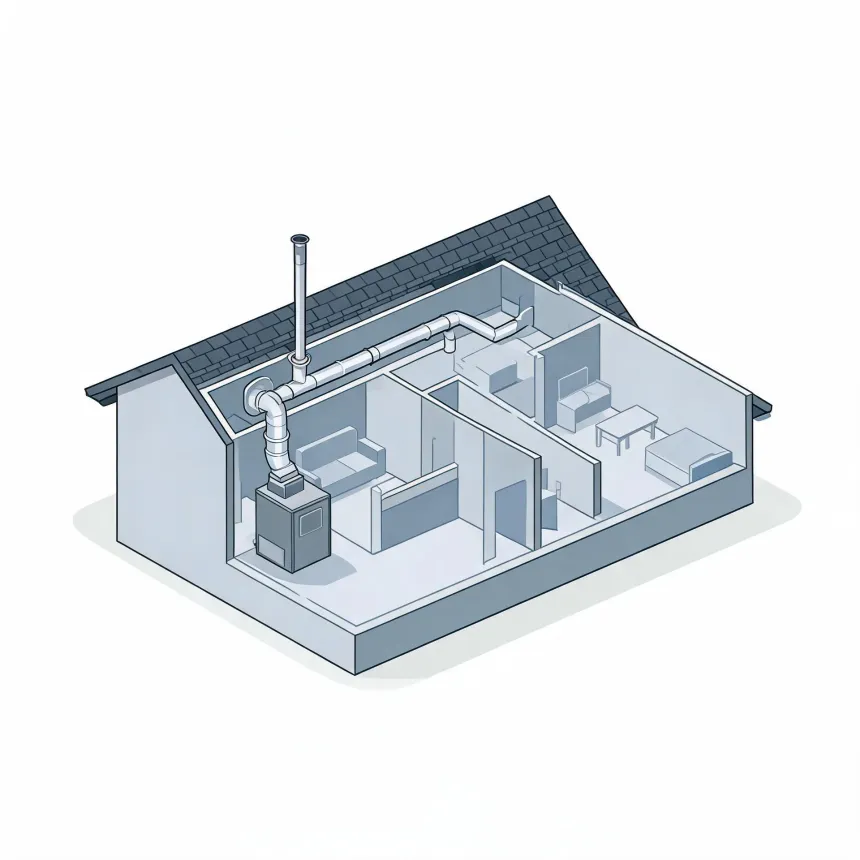
Isometric cutaway illustration of a single-story house showing interior rooms with furniture and a furnace connected to ductwork and a vertical flue pipe extending through the roof.
Your furnace works hardest from November through April.

NOAA nClimDiv, 1991–2020 normals

The efficiency number on the label is how much of the fuel or power it draws actually turns into heat in your house.

A furnace that loses more of that draw to waste still has to make up the difference, so it runs longer to reach the same temperature.

Eight months of heat means eight months of this bill

Heat runs October through May
Winter nights average 36°F
Climate zone 4B
Most homes here run on electric heat42.9% of homes in Lake County heat with electricity, more than any other fuel.

Lake County sits in climate zone 4B, which asks real work of both heating and cooling here. Any gas furnace installed has to clear a federal efficiency floor to be sold at all. Units built from November 2015 on have to turn at least 80 percent of the gas they burn into heat over the winter. That floor rises to 95 percent for furnaces built from December 2028 on, so a system bought now still has to meet the 80 percent minimum until that date arrives. A federal tax credit is available for qualifying high-efficiency equipment, on top of whatever that higher efficiency saves on a bill already running close to the highest electric rates in the country.

Pick the system that matches your house, not just the price tag

Getting the sizing and setup right at install is what keeps that efficiency number true once the furnace is actually running in your home. A unit that's oversized or poorly matched burns more than it should to hold a temperature, and on electric rates like these that difference doesn't stay small.

Find a contractor
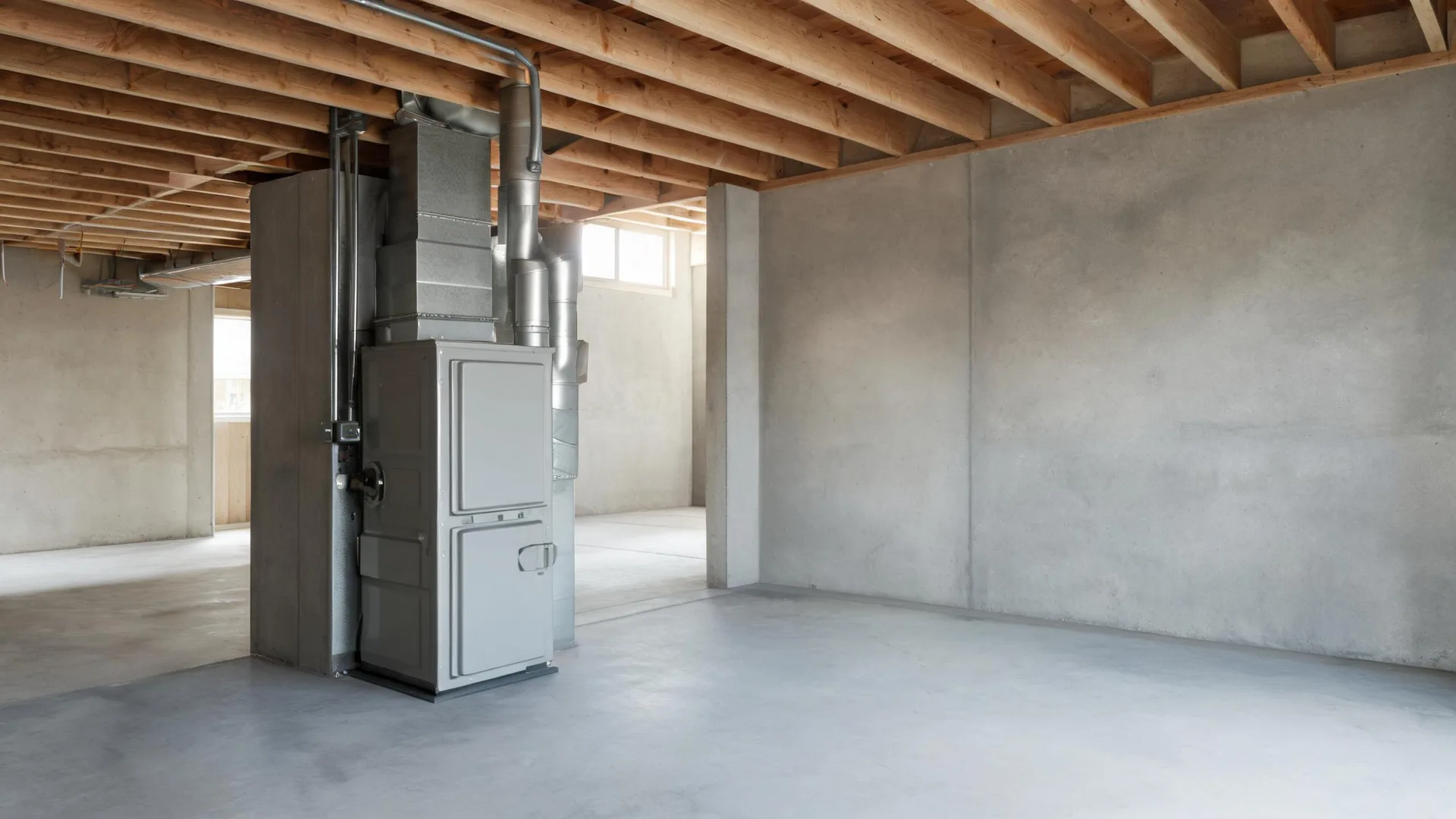
A gray high-efficiency gas furnace installed in an unfinished basement, surrounded by gas lines, a condensate drain, and sheet-metal ductwork.

Sized for this house, not the one next door

A furnace gets sized by doing a load calculation on the house, not by matching the box that's already bolted in. The contractor works out how fast the house loses heat, based on things like square footage, ceiling height, window area and insulation, and sizes the furnace to cover that loss on the coldest expected day. Go bigger than that number and the furnace short cycles: it blasts the house up to temperature fast, shuts off, and starts again a few minutes later. Each start draws extra power and puts wear on the igniter and the heat exchanger, and the burners never settle into a steady run long enough to heat evenly. Go smaller and the opposite problem shows up. The furnace runs constantly, strains to hold the thermostat setting, and still leaves the far rooms cold. Either way the unit is working against its own design instead of with it, and that shows up over the life of the system, not just on the first bill.

The old furnace has to come out first

A gas furnace sits on a line that has to be shut and capped, or an electric furnace on a circuit that has to be disconnected before anything new goes in. The old cabinet gets unhooked from the ducts, pulled out, and the space gets checked over before the new unit sets in its place. If the heat exchanger has a crack or the old unit was venting wrong, that gets found and dealt with on the way out, not left behind the new one.
The ductwork stays, so it has to be right

A new furnace moves a different amount of air than the one it replaces, and it ties into the same ducts that were already there. If a duct run is too narrow or a return is undersized for what the new furnace pushes, the new unit inherits that problem on day one. Worth having the contractor check the ducts while the old furnace is out, since that's the easiest time to fix anything that doesn't match.

A few things drive what an installation actually takes to do right. The size of the furnace matters more than people expect, since a bigger box isn't a better one and the wrong size shows up for as long as the system runs. The ductwork plays into it too. If the existing runs and returns don't match what the new furnace moves, that has to get sorted before the furnace can do its job, not after. Venting is part of it as well, since a furnace has to exhaust safely and that sometimes means new pipe, not just a reconnect. And whatever gets found when the old unit comes out, a cracked heat exchanger, a return that was always undersized, gets dealt with then, because that's the one point in the job where it's actually accessible.

Install day starts with the house powered down and the gas line or electrical circuit confirmed dead before anyone touches the old furnace. From there it's disconnect, pull the old cabinet out, and set the new one in place, tying into the same ducts and the same vent path unless something there needs changing first. The gas line gets reconnected and pressure tested, or the electrical hookup gets wired in and checked, before the furnace ever fires. Once it's set, the contractor runs it through a full cycle: checking that burners light evenly, that the blower is moving the right amount of air, and that the system shuts off and restarts the way it should. Startup also means setting the gas pressure to spec and checking the temperature rise against what the manufacturer calls for, because a furnace running outside that range will wear faster even if it seems to work fine at first. The thermostat gets tested last, confirming it's actually talking to the new equipment before anyone calls the job done.