Is a high-efficiency gas furnace worth it in California

A local installer who puts in furnaces gets your project.

New system or replacementFurnace or heatingCalifornia
Step 1 of 2

What ZIP code is the job in?

Is a high-efficiency gas furnace worth it in California?

Gas heats most California homes, and with power rates among the highest in the country, you're weighing whether a high-efficiency furnace actually earns back the extra cost or whether a standard model does the job just fine for how little you run it.

For most California homes, yes, if you plan to stay in the house

A high-efficiency furnace turns more of the gas it burns into heat instead of sending it out the flue, so it uses less gas to hold the same temperature. Where winters are mild, you run the furnace fewer months than someone in a colder state, so the gas savings add up slower. The payoff still comes, because electricity is expensive here and a furnace that needs less of it to run its blower and ignition keeps that part of the bill down too. If you're in the house long enough to see a few winters through, the lower gas and electric use covers the difference. If you're moving soon, a standard-efficiency furnace heats the house just as well in the meantime.

A gray-haired bearded man in a dark coat and scarf dusted with snow stands smiling in a dimly lit entryway with a white front door, a side table with a lit lamp, an oval mirror, and a patterned rug.
An older bearded man in a dark snow-dusted coat and gray scarf stands just inside a dimly lit home entry, with a framed picture, lit table lamp, and an adjoining room with a fireplace behind him, and snow visible through the open door.
A gray-haired, bearded man in a dark snow-dusted coat stands smiling in a dimly lit entry hall with a staircase, a lit table lamp, a framed picture, and a living room visible through a doorway.
An older man with gray hair and a beard, wearing a dark jacket dusted with snow, stands smiling in a dimly lit hallway with lamps and a living room visible behind him.

Standard vs. High-Efficiency Furnace

Standard Furnace

  • A standard gas furnace runs around 80 percent efficiency, so about 20 cents of every dollar of gas goes out the flue.
  • The install cost is lower, since it doesn't need the special venting or condensate drain a high-efficiency model needs.
  • It vents through a metal flue rather than PVC pipe, which keeps the install simpler if your existing vent is already in place.
  • It still runs on the same gas rates as any furnace, and gas in California heats most homes already.
  • Repairs tend to be simpler too, since the parts and the venting are more common and less specialized.

High-Efficiency Furnace

  • A high-efficiency furnace condenses the exhaust and typically runs 90 percent or higher, pulling more heat out of the same gas.
  • It needs PVC venting and a condensate drain, which can add to the install if your home isn't already set up for it.
  • With power rates among the highest in the country, every bit of gas heat it saves you matters more here than in cheaper states.
  • California winters are mild compared to colder states, so the furnace runs fewer hours a year than it would elsewhere.
  • The equipment and install usually cost more upfront than a standard furnace, and the payoff depends on how many months a year it actually runs.
  • If your ductwork and venting are already set up for one, the switch is a smaller job than installing one from scratch.
A dark high-efficiency furnace on a concrete pad in a basement, connected to galvanized ductwork, white PVC vent pipes, and copper and black gas piping, with concrete walls and wood framing nearby.

The high-efficiency setup

PVC pipe handles the exhaust because the flue gas is cool enough not to need metal. A second PVC line drains condensate from the unit, and copper feeds it gas. The sealed cabinet and tight venting are what let it pull more heat out of the same gas.

A gas furnace with a louvered upper panel stands on a concrete pad in a basement, flanked by sheet-metal ductwork, white PVC and metal pipes, and insulated columns.

The standard furnace showing its age

The flexible metal conduit and bare sheet-metal ductwork are typical of an older install. A condensate line here means it's at least a mid-efficiency unit, but the aging cabinet and connections are worth having a local contractor look at before winter.

Why does one room never warm up like the rest

You notice it most on the coldest nights. One room stays cold no matter how long the furnace runs. The system cycles on and off more than it used to, or it just runs long stretches without the house feeling any warmer. The gas bill in December and January climbs higher than it seems like it should. Sometimes there's a faint burnt smell when it first kicks on, or the pilot light area looks sooty. None of that means the furnace is finished, but a unit working harder to do the same job is burning more gas to get there, and a cracked heat exchanger or a failing igniter won't announce itself before it quits.

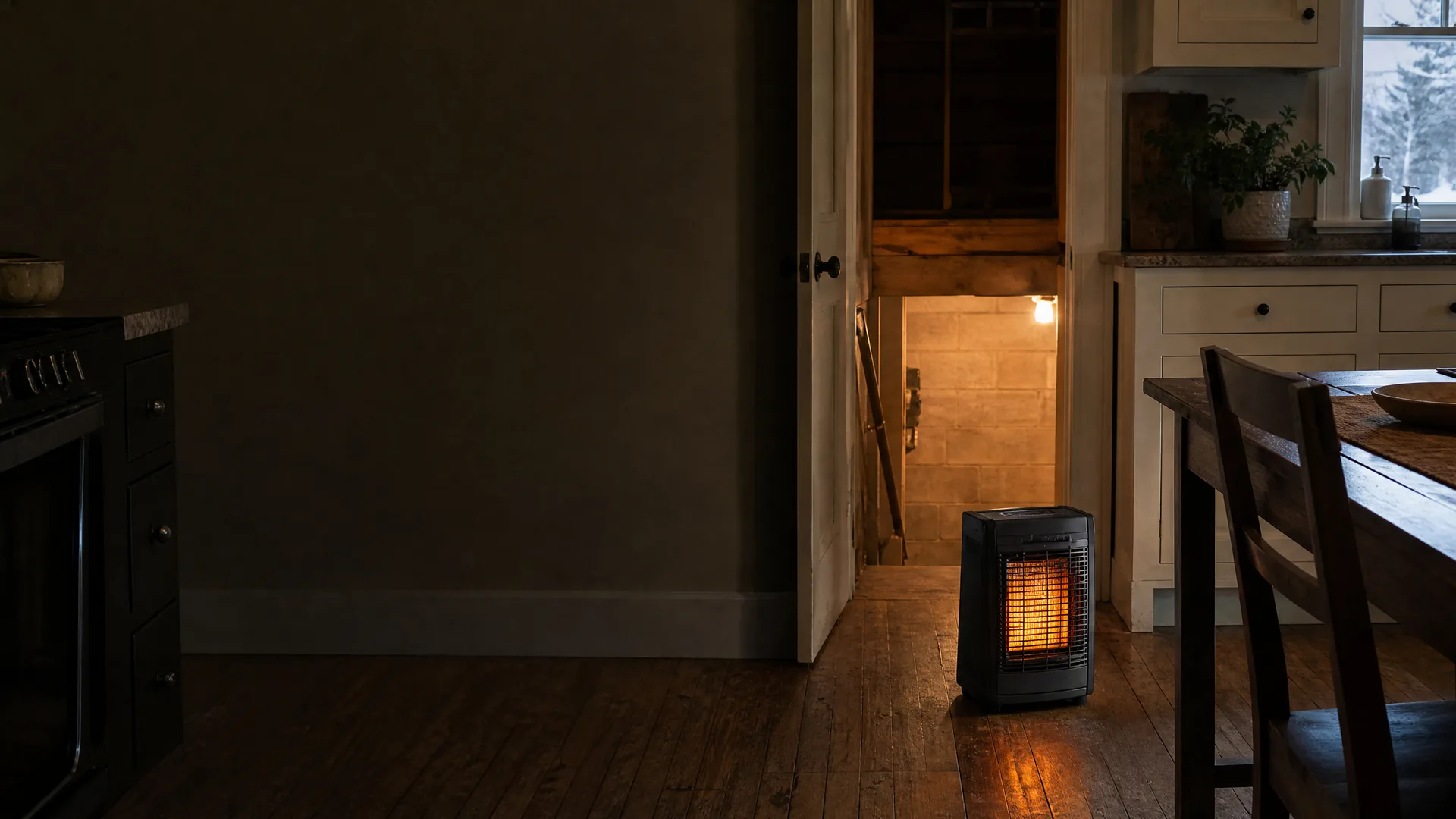
A dimly lit interior with wood plank flooring where a small portable heater with a glowing orange element sits near an open doorway, with a stove at left, kitchen cabinets and a potted plant at right, and a wooden table and chair in the foreground.

You're up before the rest of the house, and the kitchen is the coldest room in it. The space heater's been dragged out from the hall closet again, its coil glowing orange by the table while you wait for coffee. The basement door is open behind it, because that's where the furnace is, and you've been down there twice this month already, flashlight out, trying to get the thing to catch. It did, eventually. It always has so far. You stand there in a sweatshirt, hands wrapped around the mug, listening for the blower to kick on upstairs. A local contractor who works on furnaces like yours all winter would know in five minutes whether this one has another year in it.


A furnace pro near you

One installer gets your project, so there's no bidding war over it.

Asking costs nothing, and the choice to hire stays yours.

What that extra efficiency actually buys

A high-efficiency furnace pulls heat from the exhaust before it leaves the house, using a second heat exchanger the standard model doesn't have. That's why the exhaust is cool enough to run through PVC instead of metal. Ninety-five percent efficiency means only about a nickel of every gas dollar goes unused, against twenty cents on a standard unit. Over years of winters, that gap in gas use is what the higher install cost is set against. It doesn't change how warm the house feels on a given night. It changes how much gas it took to get there.

Where the payback actually comes from

The case for one over the other comes down to how much gas your house burns each winter and how long you plan to stay in it. A house that runs its furnace a few months a year on mild nights won't close the gap between the two as fast as one running long stretches of cold. Gas rates matter here too, not just electric ones. A local contractor who installs both types every winter can look at your current gas bills and your home's heat loss and tell you where your own numbers actually land, rather than guessing from an average.

A woman wrapped in a thick beige fleece blanket sits on a sofa with an open book on her lap, beside a lit table lamp, with a frost-covered window behind her.
An older woman with gray hair in a bun and glasses, wearing a beige knit sweater, smiles while looking to the side in a warmly lit kitchen, with a loaf of bread on the counter in the foreground and a snowy scene outside the window.

When the standard furnace makes sense

If your furnace is original to the house and already in a spot with simple metal venting, replacing it with another standard model keeps the install straightforward. There's no PVC venting to route, no condensate drain to add, no place to find a slope for one. A short furnace life so far, a home you're not planning to stay in long, or a furnace closet that makes new venting hard all point the same way. You still get a new unit with modern safety controls, just without the second heat exchanger or the higher equipment cost that comes with it.

When high-efficiency pays for the venting

Gas rates here keep climbing along with electricity, and a furnace that pulls more heat out of every therm feels that less. If the old venting needs work anyway, or the furnace sits somewhere a new PVC run and condensate drain are easy to add, the case gets stronger. A house you plan to keep for years gives the extra equipment cost more winters to work against. It also matters if the room above or beside the furnace runs cold now. The tighter cabinet and better heat extraction change how evenly the house holds heat, not just what the gas bill does.

An older beige furnace with a louvered vent panel stands on a concrete basement floor beside galvanized sheet-metal ductwork, a metal flue pipe and vertical pipes along a concrete wall.
Before you get your furnace installation
A beige high-efficiency furnace with white PVC vent pipes stands beside galvanized sheet-metal ductwork in a basement with a concrete floor, exposed wood studs, and metal piping along the wall.
After you get your furnace installation

61% of homes statewide heat with gas

With most houses in the state burning gas for heat, your furnace isn't an edge case the utility barely plans for. It's the normal setup, which means parts, venting options and installers familiar with both standard and high-efficiency models aren't hard to come by here.

ACS 2020-2024 5-year B25040

A high-efficiency furnace earns its keep in a house that holds onto heat and loses less of it to a cold room or a drafty vent run. A standard furnace earns its keep where the venting is already simple and the furnace just needs replacing like for like. Either way, the install is the part that decides how it performs for the next twenty years, and that's where getting it right matters more than which furnace you picked. A local contractor who installs and services both kinds knows which one suits your ductwork, your venting, and the room that never quite warms up, because that's the furnace call they get most often in this state. You'll be matched with one contractor, not a handful calling at once, so the person who reaches out already has an idea of what your house needs before they walk in.

A wooden front door with six small glass panes and a narrow sidelight, set in a shingled house entry with white trim, reached by stone steps flanked by a planted urn with purple flowers and leafy branches in the foreground.
Exterior corner of a house with beige horizontal lap siding and a black-framed window, with white hydrangeas, ornamental grasses and low plantings along a flagstone patio.
Corner of a house with tan lap siding and a window, a brick step edge, flowering white hydrangeas and green shrubs beside a flagstone walkway leading to a white picket fence and a tree in backlit sunlight.
House exterior with cream horizontal lap siding, a dark-framed window, a black wall lantern beside a wood door, potted shrubs on stone steps, and white and pink hydrangeas in the foreground garden.
Corner of a cream lap-sided house with a white-framed window and dark shingled roof, beside a white-flowering hydrangea shrub, a clipped hedge, mulched bed and lawn.

A local pro for your furnace installation

Only one pro gets your request, so you hear from one company.

Request a pro

No fee to send it, and nothing to sign.