





An unfinished basement interior featuring a large metal furnace unit, exposed ceiling joists, concrete walls, and scattered boxes and cables on the floor.

Furnace Installation in Salinas, CA

Tell us about the job

Takes about a minute. No obligation.

New system or replacementFurnace or heatingMonterey County, CA
Step 1 of 2

What ZIP code is the job in?

Gas heats most homes in Monterey County, close to half, more than electricity and propane combined. If a gas line already runs to your house, a gas furnace is usually the straightforward call. It replaces what's there, uses the venting already in place, and the contractor doesn't have to work around a fuel source that isn't already at your house. Electric furnaces and heat pumps fit the homes without gas service, and there are plenty of those too. Which one makes sense for your install mostly comes down to what's already feeding your current system.

7 months
November through May, your furnace is on duty
38°F
the average winter night it heats against
80% AFUE
the federal minimum any new unit must meet
Isometric cutaway illustration of a house showing interior rooms with furniture, a furnace unit with a tall flue pipe outside, and ductwork running through the attic.
Your furnace works hardest from November through April.

NOAA nClimDiv, 1991–2020 normals

Furnaces in Salinas start running in November and go through May.

Have the new one in before October ends, so install day isn't the first cold morning of the year.

Salinas doesn't ask much of a furnace, so buy for the climate you have

Heat runs November through May
Winter nights average 38°F
Climate zone 3C

Natural gas ran $18.44 per million Btu in California last year, on the higher side nationally. Once you're paying that much for gas, the gap between a mid-efficiency furnace and the most efficient one on the shelf takes longer to show up on your bill. A high-efficiency model can still make sense if your venting needs work anyway or you're planning to stay in the house a long time. If you're choosing between two models mostly on the efficiency number, weigh it against which one your contractor can service easily and which one actually fits the space you have.

80 percent AFUE is the floor here, and often all you need

Any furnace installed here has to clear 80 percent AFUE, the federal floor for a new gas furnace. Zone 3C's mild winters mean that floor is usually enough, nothing in the climate pushes you higher. If you want to go above it anyway, a federal tax credit is available for qualifying high-efficiency models. Either way, the furnace that goes in has to meet that number first.

Find a contractor
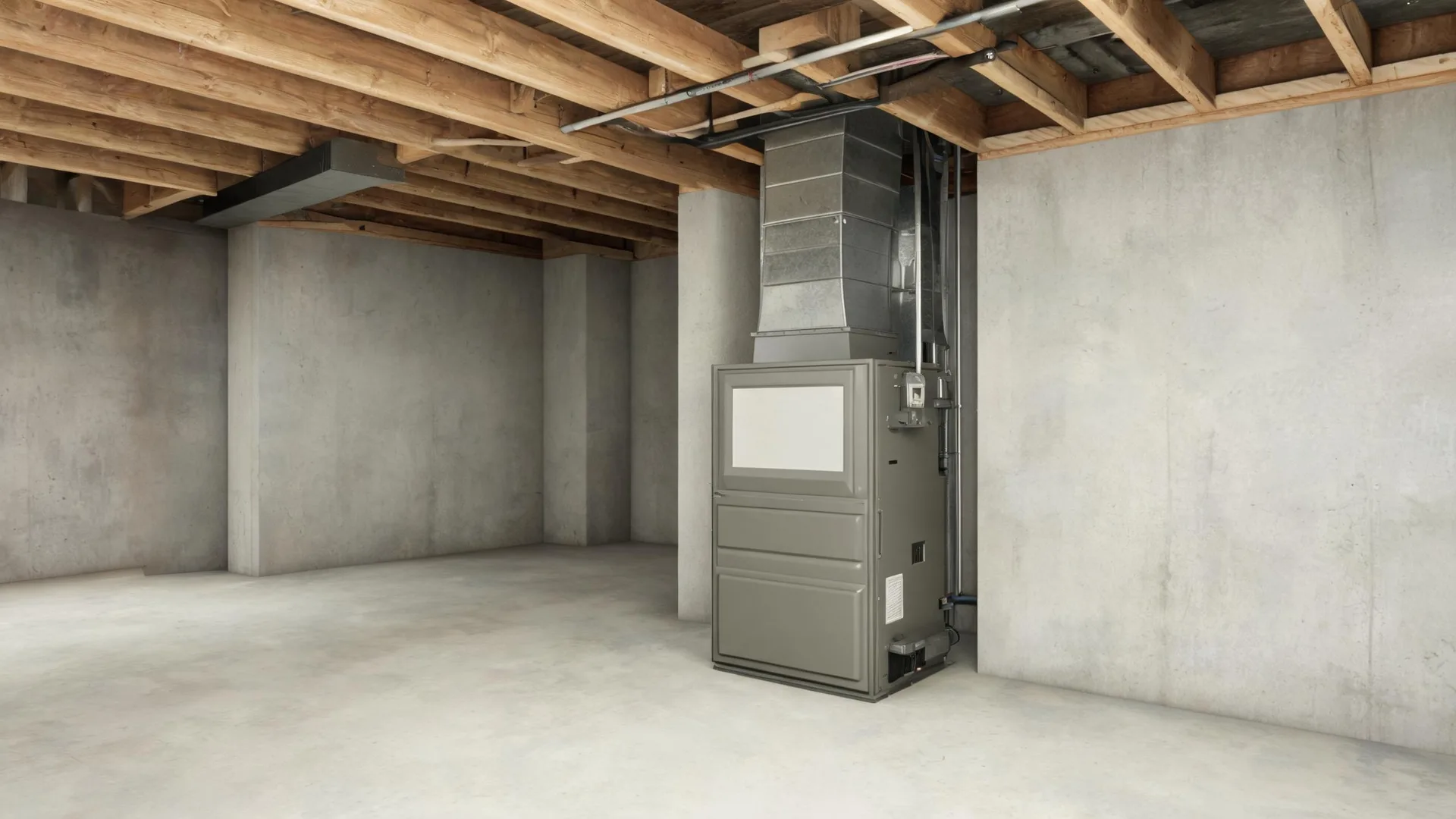
A gray gas furnace with attached ductwork and piping installed in an unfinished concrete basement.

The right size runs for years without strain. The wrong size shows it early.

A furnace that's too big for the space cycles on, satisfies the thermostat fast, and shuts off again before it's run long enough to warm things evenly. That short cycling wears on the igniter and the blower motor, and it leaves cold spots because the air never circulates long enough to even out. Too small, and it runs long stretches without catching up on the coldest mornings, which pushes wear onto the same parts from the other direction. Sizing a furnace right means a contractor works out how much heat the house actually loses through its walls, windows and roof, room by room, not just a guess based on square footage or whatever size unit is already there. Get that load calculation right and the furnace someone installs should run for its full lifespan without the short cycling or the constant catch-up either mistake causes.

The furnace itself is one line on the invoice

Ductwork is usually the bigger factor. If the existing ducts are undersized, leaky, or routed in a way that doesn't match the new furnace's airflow, a contractor has to modify or seal them before the furnace can do its job. A straightforward swap, same location, same ducts, same venting, costs less work than a job where the old setup needs correcting first.

The furnace you keep is worth asking about

Moving a furnace to a new spot, switching fuel types, or changing how it vents all add labor beyond hooking up the unit. A straight swap in the same place, using the same gas line and the same vent, is the simplest version of this job. Anything that changes the path the furnace sits on or breathes through adds steps a straight swap doesn't need.

An unfinished basement containing a forced-air furnace with metal ductwork, exposed wooden ceiling joists, a hanging Edison bulb, and bare concrete floors.

A high-efficiency gas furnace would save about $60 a year to run in Monterey County compared with a gas furnace.

  • A high-efficiency gas furnace$290 a year
  • A gas furnace$350 a year

Estimates for a typical Monterey County home, from EIA household energy data, California fuel prices and NOAA climate normals. Your home will differ.

The old furnace comes out first. That's when a contractor finds out what's really behind it, the condition of the gas line, the state of the flue, whether the return air opening is even big enough for the new unit. Setting the new furnace is the fast part. Most of the day goes to connecting it properly, sealing the duct transitions, running the gas line, venting it correctly, and wiring the thermostat in. Once it's set, the contractor runs it through a full cycle, checking gas pressure, checking the temperature rise across the heat exchanger, watching how the flame looks when it's burning the way it should. A furnace that passes that check on day one tends to keep running the way it started.