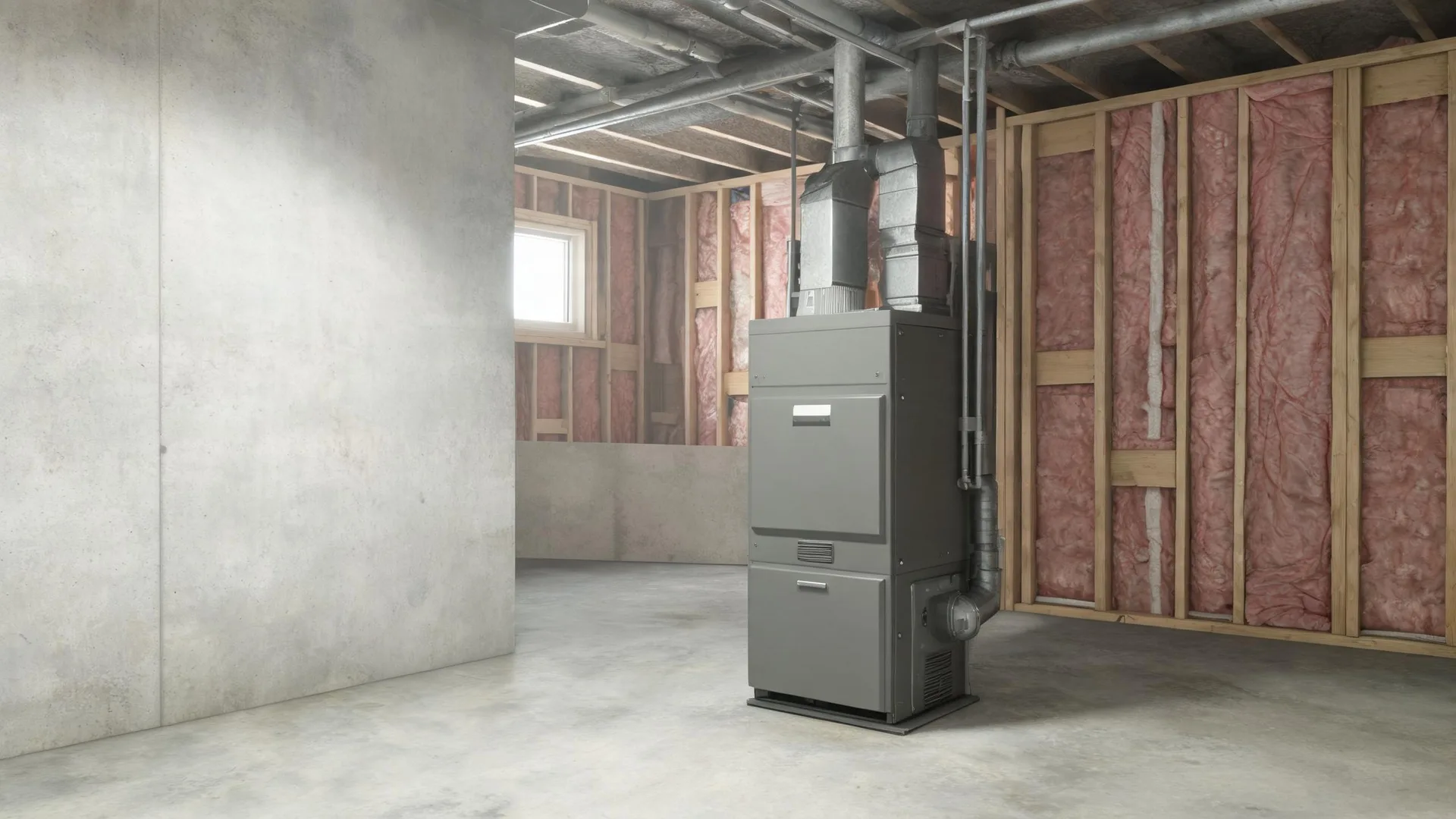
Gas is the default here
Utility gas heats 62.6% of homes in Sonoma County, more than any other fuel. Electricity covers 26.1%, and propane makes up most of the rest.
Takes about a minute. No obligation.
Utility gas heats 62.6% of homes in Sonoma County, more than any other fuel. Electricity covers 26.1%, and propane makes up most of the rest.
If your house already has a gas line run to a furnace, putting in another gas furnace is usually the straightforward job. Switching fuel types is a bigger project, since it means adding ductwork for electric or running new gas lines where there weren't any.

NOAA nClimDiv, 1991–2020 normals
The size of the furnace matters more than the brand.
One that's too big for the house will short cycle, and one that's too small will run constantly without keeping up.


Natural gas in California ran $18.44 per million Btu in 2024, on the higher side for the country. That changes the math on a new furnace. A high-efficiency model costs more up front, and the fuel savings that would normally pay that back come slower here. It can still be the right call if the furnace is going into a tight space or the house has specific venting needs, but it's not a given. For most homes, matching the furnace correctly to the house and getting a unit that will hold up matters more than squeezing out another few points of efficiency.
Furnace here runs November through May, and overnight lows average 40°F through December, January and February. That's not hard duty for a furnace. A correctly sized system built to last will cover what this climate asks of it.
Find a contractor
A furnace sized right for the house and installed correctly will hold up fine here without paying extra for the highest efficiency tier on the shelf. Put that money into proper sizing and a clean installation instead.
A contractor works out heat loss room by room, using the square footage, the window area, the insulation and the ceiling height. Matching the new furnace to whatever was pulled out just repeats the mistake if that one was never sized right to begin with.
When a furnace is too big for the house, it satisfies the thermostat fast and shuts off before air has moved evenly through every room. Rooms near the thermostat read comfortable while rooms further away lag behind. The fix isn't a bigger unit, it's the right one.
Estimates for a typical Sonoma County home, from EIA household energy data, California fuel prices and NOAA climate normals. Your home will differ.
The old furnace comes out first, along with the flue pipe and the line set feeding it, and the condition of what's underneath usually isn't clear until that happens. The gas line gets checked for the right size and shut off while the connection is made. Ductwork at the plenum often needs cutting and refitting since a new furnace rarely lines up exactly with the old one's dimensions. Once it's set, the contractor checks the vent pipe slope and clearance, fires the burners, and reads the gas pressure at the manifold to make sure it matches what the furnace is built for. The last step is checking temperature rise across the heat exchanger against the furnace's rating, since that number says whether the airflow is set right. A furnace can be installed and still run wrong if that last check gets skipped.