





A illuminated Spanish Colonial Revival estate with white stucco walls and red tile roofs nestled at the base of golden oak-covered hills at dusk.

Furnace Installation in Ukiah, CA

Tell us about the job

Takes about a minute. No obligation.

New system or replacementFurnace or heatingMendocino County, CA
Step 1 of 2

What ZIP code is the job in?

Utility gas heats more homes in Mendocino County than any other fuel, close to three in ten. Bottled, tank or LP gas covers another fifth or so, which tells you plenty of homes here aren't on a gas main and rely on a tank instead. If your current furnace runs on gas, replacing it with another gas furnace is usually the straightforward path, since the gas line and venting are already in place. A contractor can confirm whether your home is on utility gas or an LP tank before quoting the job.

8 months
October through May, your furnace is on duty
37°F
the average winter night it heats against
80% AFUE
the federal minimum any new unit must meet
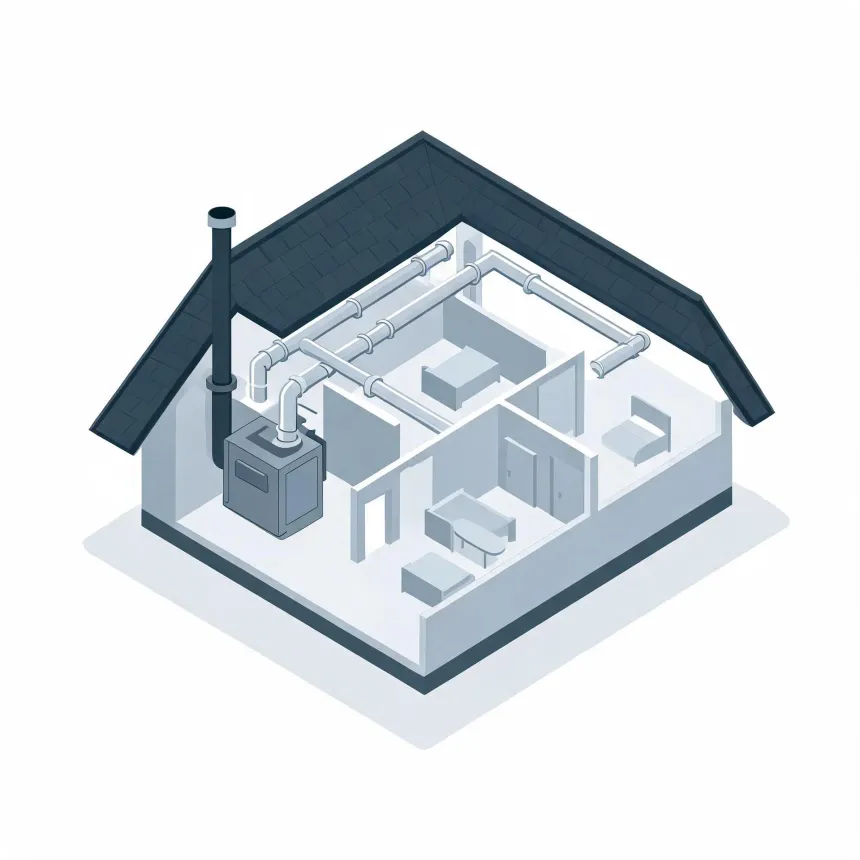
Isometric illustration of a cutaway house showing a dark furnace unit with a flue pipe and branching ductwork running through rooms with simple furniture under a dark gabled roof.
Your furnace works hardest from November through April.

NOAA nClimDiv, 1991–2020 normals

Half the homes in Mendocino County were built in 1977 or earlier, half since.

A new furnace just needs to match the house it's going into, old or new, not come oversized or overpriced for what the job calls for.

Nothing here calls for more furnace than the house needs

Heat runs October through May
Winter nights average 37°F
29 winter storms from 2015 to 2024
What gas costs here, and what it doesn't changeCalifornia gas ran $18.44 per million Btu in 2024, high enough that fit matters more than a bigger efficiency number

September is the month to get this done here. Heat starts running in October and stays on through May, eight months straight, so once it starts there's no good time to have it fail. Getting the new furnace in before October means the installer isn't rushing the job in a cold house, and you're not waiting on parts or scheduling once the temperature drops. It also means the furnace gets its first real test on a mild day, not the first cold one.

Your new furnace has to meet today's minimum, not tomorrow's

Any furnace installed here now has to hit 80 percent AFUE, the federal floor for non-weatherized gas furnaces. That minimum rises to 95 percent for units made a few years out, but what goes into your house today only has to meet the standard in place now. A federal tax credit is available for qualifying high-efficiency equipment, worth checking against what you're installing.

Find a contractor
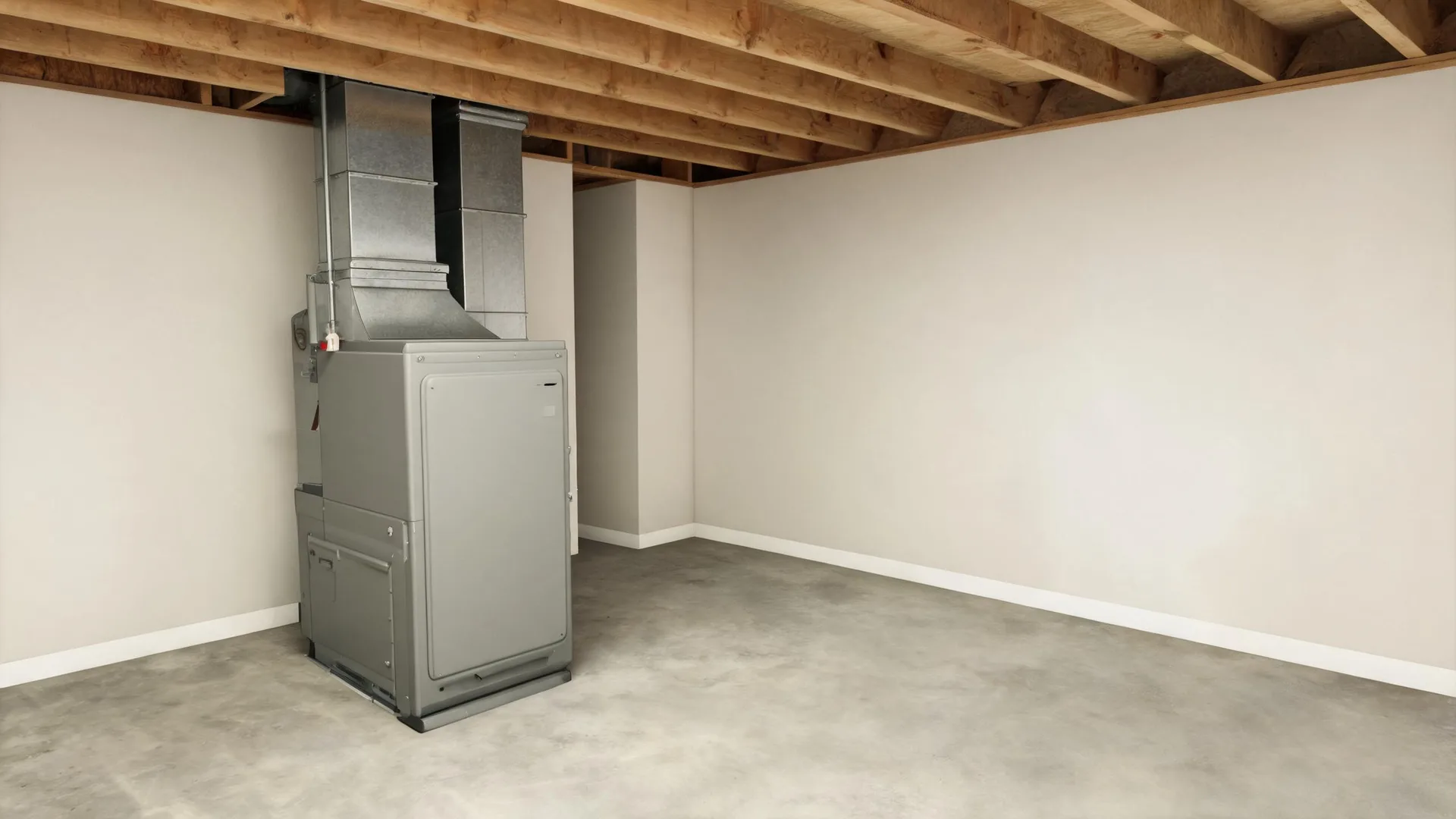
A gray residential gas furnace installed in an unfinished basement, surrounded by ductwork, a metal flue pipe, and a gas supply line.

A bigger furnace isn't a stronger one, it's just a furnace that cycles more

A furnace that's too big for the house will still heat it, just badly. It heats the air fast, shuts off, and sits idle until the room cools enough to call for heat again. That on-off cycling is hard on the heat exchanger and the igniter, since both see more starts and stops over the same stretch of weather. A furnace sized to the house runs longer, steadier cycles, which actually feels warmer at the register and puts less wear on the parts that start and stop. Sizing isn't a guess. A contractor works it out room by room, from the windows, the insulation, the layout, and the local design temperature, the coldest it's reasonably expected to get here. That calculation is what decides the right size, not the size of the furnace being replaced.

The old furnace gets disconnected and hauled out

Before the new unit goes in, the gas line gets capped off, the flue or vent pipe comes apart, and the old furnace gets disconnected from the ductwork and the electrical. A contractor removes the cabinet once everything feeding it is safely shut off. None of that reuses the old furnace's parts, even ones that look fine, since the new unit has its own venting and wiring needs.

What's left behind usually gets reused, not replaced

The ductwork, the return air, often the gas line and electrical whip all stay in place if they're in good shape and sized right for the new furnace. A contractor checks each of these during the swap rather than assuming they carry over. That's part of why matching the new furnace to what's already there matters as much as the furnace itself.

An unfinished basement containing a metal furnace with ductwork, exposed wooden joists on the ceiling, cardboard boxes, a coiled cable, and a single hanging incandescent bulb.

A high-efficiency gas furnace would save about $80 a year to run in Mendocino County compared with a gas furnace.

  • A high-efficiency gas furnace$400 a year
  • A gas furnace$480 a year

Estimates for a typical Mendocino County home, from EIA household energy data, California fuel prices and NOAA climate normals. Your home will differ.

Installation day starts with the new furnace still in its packaging and ends with it running a full heat cycle before the crew leaves. Once the old unit is out, the installer sets the new cabinet, connects the ductwork, runs the gas line to it, and wires in the thermostat and electrical. The flue or vent pipe gets fitted to match that specific furnace, since venting requirements differ between models. After everything is connected, the gas gets turned on and the system is checked for leaks before it's ever fired up. Then it runs, usually more than once, so the installer can watch the flame, check the temperature rise through the plenum, and confirm the blower is moving the right amount of air. A furnace that looks installed but hasn't been tested under a real heat cycle isn't a finished job yet.