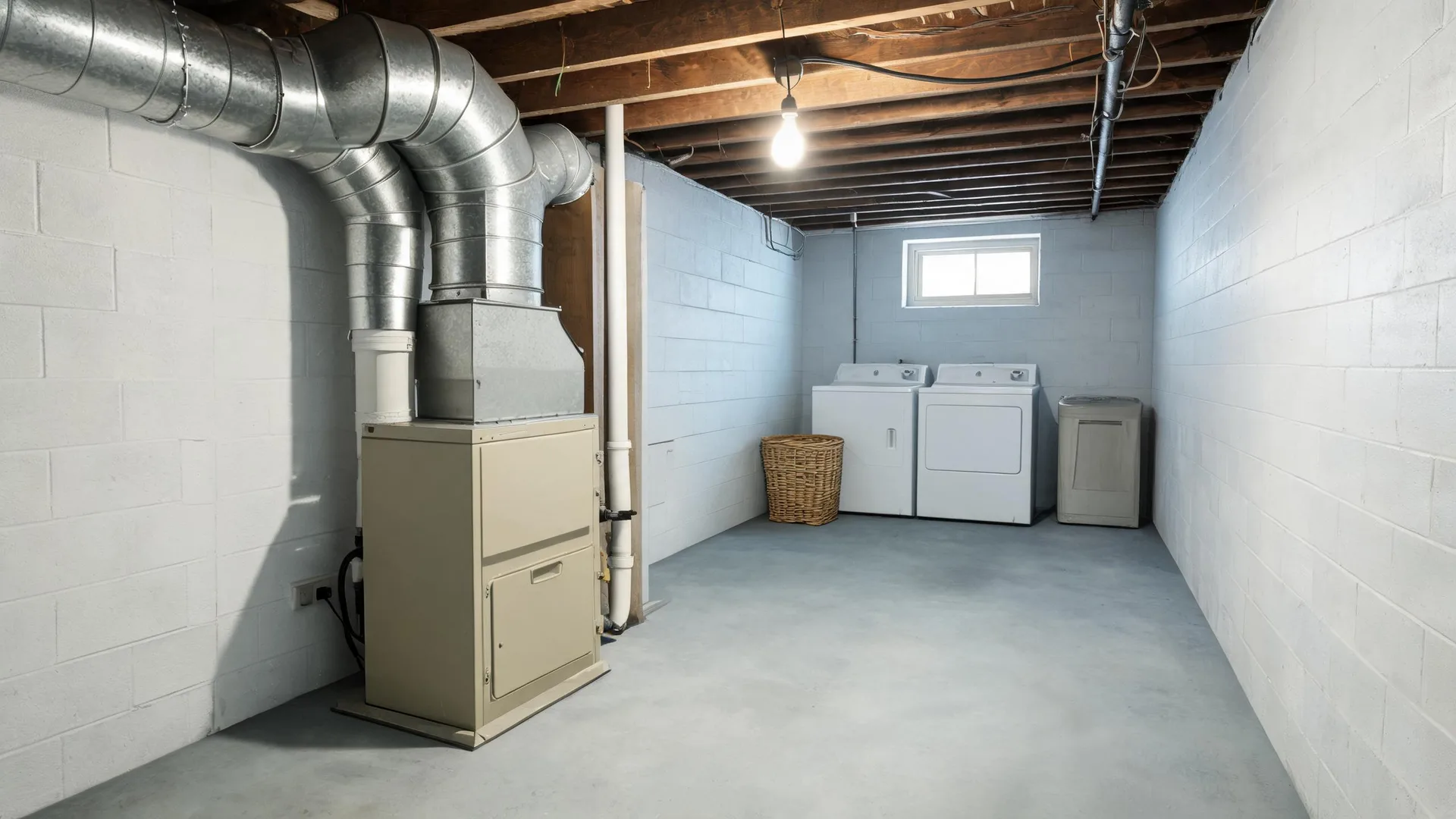
Most of Vallejo heats with gas
Utility gas heats 60.5% of homes in Solano County. Electricity is a distant second at 31.8%, and LP gas accounts for 2.7%. If your house came with a gas furnace, you're in the majority here.
Takes about a minute. No obligation.
Utility gas heats 60.5% of homes in Solano County. Electricity is a distant second at 31.8%, and LP gas accounts for 2.7%. If your house came with a gas furnace, you're in the majority here.
When the new furnace burns the same fuel as the old one, the gas line, the vent and the electrical hookup are already in place. A switch to electric heat means new circuits and ductwork questions that a straight swap avoids.
NOAA nClimDiv, 1991–2020 normals
Natural gas in California runs $18.44 per million Btu.
At that price, the high-efficiency furnace takes longer to pay for itself, so pick the one that fits your house.



Ask the contractor about AFUE, but don't let it decide the purchase. At $18.44 per million Btu, the gap between a mid-efficiency and a high-efficiency furnace stays small on your bill either way. What matters more is whether the unit is sized right for your house and your ductwork. A furnace that's too big or too small for the space will cost you in comfort no matter what its rating says. Ask about the warranty and whether parts are easy to get locally. Those hold up long after the efficiency numbers stop mattering.
Furnace here runs November through April, and even on the coldest nights the overnight low only averages 40°F across December and January. That's a mild load compared to most places. A furnace built to spec and properly sized will cover it without strain, so there's little reason to pay up for the top efficiency tier.
Find a contractor
A furnace cycles on and off for years, and what wears depends on how many times it starts, not just how long it runs. Every ignition puts the heat exchanger through an expansion and a contraction. More cycles over the years means more chances for a crack to start there. This is part of why sizing matters more than efficiency rating. An oversized furnace satisfies the thermostat fast and shuts off, then has to start again soon after, racking up cycles the house didn't need. A furnace sized to the house runs longer stretches and cycles less, and that steadier pattern is easier on the igniter, the blower motor and the heat exchanger alike. When you're comparing systems, ask the installer how they're sizing it for your house, not just what the unit is rated for.
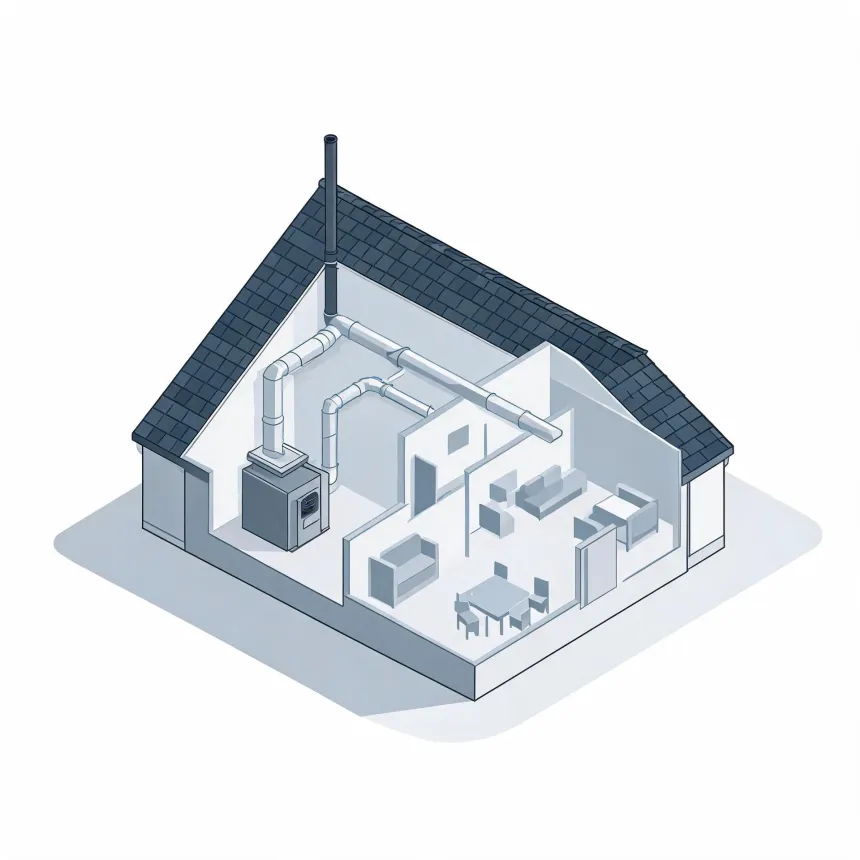
The installer shuts off gas and power to the old unit, disconnects it from the ductwork and the vent, and removes it from the house. The gas line and electrical connection stay in place if the new furnace uses the same fuel, which keeps the job simple. The old unit itself has no resale value and goes out with the contractor, usually to a scrap or recycling yard.
Before the new furnace goes in, the installer checks the venting and the duct connections the old one was using. A higher efficiency furnace can need a different vent material than an older mid-efficiency unit did, so this is where that gets caught. Reusing the old ductwork is normal, but it still gets inspected for leaks or damage before the new furnace ties into it.
Estimates for a typical Solano County home, from EIA household energy data, California fuel prices and NOAA climate normals. Your home will differ.
Once the new furnace is set in place, the installer runs gas and power to it and fires it up to check the flame and the heat rise. A combustion analyzer gets used to check the exhaust and confirm the burner is tuned right, not running rich or starving for air. The blower gets tested across its speeds, since that's what moves the heat through your ductwork. Then the installer checks static pressure in the ducts to make sure air is moving the way the furnace expects. The thermostat gets wired up and tested last, cycling the system on and off to confirm it responds. Before they leave, a good installer walks you through the filter location and the shutoff so you know where to go if something seems off.