Get matched with someone who does this kind of work in Riverside County.
Water pooling under the furnace or dripping from the vent pipe is not something to leave alone. A furnace that heats gas winter mornings in Riverside shouldn't be leaving puddles on the garage floor or soaking the carpet near the closet where it sits. Something is letting water go where it shouldn't.
A few things cause this. A clogged condensate line or a cracked drain trap on a high-efficiency furnace backs water up until it overflows. A blocked or disconnected vent pipe lets exhaust condense where it isn't supposed to. On an older furnace with no condensate line at all, water showing up usually points to the vent system or a cracked heat exchanger, and that one isn't something to wait on.
Figuring out which of these it is means getting someone out to look at the unit, trace the line, check the vent pipe, and open the cabinet. That's not a call you make once. It's usually a few calls, explaining the same leak to each one, waiting to hear back, then doing it again if the first one can't come out this week or doesn't work on your brand of furnace.
This page gets you past that part. Tell it what's going on with your furnace and where you are, and it matches you with a contractor who works on furnaces like yours in Riverside and the surrounding area. That contractor reaches out to you directly. No sitting on hold, no retelling the story to three different shops, no guessing which company actually has someone free this week.
What happens once they're out at your place, whether it's a line to clear or something more, is between you and them. But getting to that point, having someone qualified lined up and reaching out, is the part this page takes care of.
A furnace leaking water almost always comes from condensation, not a burst pipe. If your furnace is a high-efficiency model, the kind with a second plastic vent pipe running out through the wall, it cools the exhaust enough to turn part of it to water, and that water drains out through a condensate line. When that line clogs or the drain trap cracks, the water backs up and finds its way onto the floor instead. An older, standard furnace vented through metal flue pipe shouldn't be producing condensate at all, so water there usually means a cracked heat exchanger or a nearby AC coil draining where it shouldn't. Either way, the furnace needs to come off until someone looks at it. Running it with water pooling underneath risks the electronics and, if it's the heat exchanger, risks a cracked one leaking combustion gas into the house.
Why does a Riverside furnace leak even on a mild winter night?
Winter nights average 42°F
Winter nights average 42°F here, cold enough for a high-efficiency furnace to run long enough to condense water in the vent pipe.
Heat runs November through March
Heat runs November through March, so a clogged drain line or cracked trap has months to work before anyone notices the puddle.
70% of homes heat with gas
70% of homes here heat with gas, and gas furnaces are the ones that produce this condensation in the first place.
NOAA nClimDiv 1991-2020 · ACS 2020-2024
A clogged condensate drain
The condensate line carries that water out to a drain or to the outside of the house, and it's a narrow tube, so algae and sludge build up inside it over time. Once it's blocked, the water backs up into the furnace and finds the first low spot to escape, usually the drain pan or the base of the cabinet. This is the most common reason a furnace leaks and it isn't tied to how old the unit is. A furnace that's run fine for years can start leaking the first time that line clogs. Clearing it is a straightforward repair, not a sign the furnace is failing.
A cracked or rusted drain pan
The drain pan sits underneath the heat exchanger and catches the condensate before it reaches the line. Metal pans rust through after enough years of sitting wet, and plastic ones can crack at the corners. Once that happens, water drips past the pan instead of into it, often landing somewhere that makes the leak look worse than a clogged line would. A cracked pan needs to be replaced, not patched, since it will keep leaking in the same spot. If the furnace sits in a closet near carpet or drywall, this is the version worth catching early.
How the condensate system works
The condensate trap sits below the heat exchanger and uses a water seal to stop exhaust gas from backing up through the drain line.
A pressure switch reads suction from the inducer motor, and it won't let the burners fire if the trap or line is blocked.
Secondary heat exchangers are aluminum, and condensate pooling against bare metal for months can pit it enough to leak on its own.
The drain line usually empties into a condensate pump or a floor drain, and either one can fail and send water back toward the furnace.
Some furnaces route condensate through a PVC tee with a cleanout cap, which is the one place a clog can be cleared without taking the line apart.
A furnace installed tilted even slightly out of level can leave standing water in the trap long after a repair is finished.
The water starts at the secondary heat exchanger, where the exhaust cools enough to condense. From there it drips down into the condensate trap, a small reservoir that holds a shallow pool of water on purpose. That pool seals the line so exhaust gas can't push back up through it into the furnace cabinet. The pressure switch is part of this chain too. It checks that the inducer motor is pulling suction the way it should, and if the trap or the line past it is blocked, the switch won't let the burners light at all. Past the trap, the water runs through PVC to wherever it's supposed to go, a floor drain, a condensate pump, sometimes a tee fitting with a screw cap for clearing debris. Any one of those points can fail on its own. A pump's float switch sticks, a floor drain backs up, sludge builds in the narrow tube until it closes off. When the path out is blocked, the water doesn't just sit there. It backs up toward the furnace and finds whatever gap in the cabinet lets it out, which is the puddle you're looking at. None of this depends on the furnace being old. A unit installed slightly out of level can trap water in the pan indefinitely, and a secondary heat exchanger that sits wet long enough can pit through the aluminum and start leaking from the metal itself, not just the drain.
Before you get your furnace repairAfter you get your furnace repair
A pro who works on furnaces
Skip searching for a furnace pro and answer a few questions instead.
A local pro who knows furnaces gets your details and gets in touch.
It costs nothing to send, and you don't have to hire anyone.
Why does water only drip when the furnace just shut off?
Water pooling under the furnace or dripping from the vent pipe is not something to leave alone. A furnace that heats gas winter mornings in Riverside shouldn't be leaving puddles on the garage floor or soaking the carpet near the closet where it sits. Someone who notices this already noticed one more thing: the drip doesn't happen while the furnace runs, only once the burners cut off. That timing seems backward, and it's worth understanding why it happens that way before assuming the worst.
The drip happens as the pressure switch resets and leftover water drains
While the furnace runs, the inducer motor keeps suction on the vent system, and that suction holds water up in the trap and line instead of letting it fall. The moment the burners shut off, that suction stops, and whatever water collected during the cycle is free to drain or spill over if the line is slow. That's why the drip shows up right after the furnace goes quiet instead of during the two or three minutes it was firing. If it happens every time the furnace shuts off, the condensate line or trap is likely holding more water than it should, and that points to a clog rather than a one-time drip.
Running dry
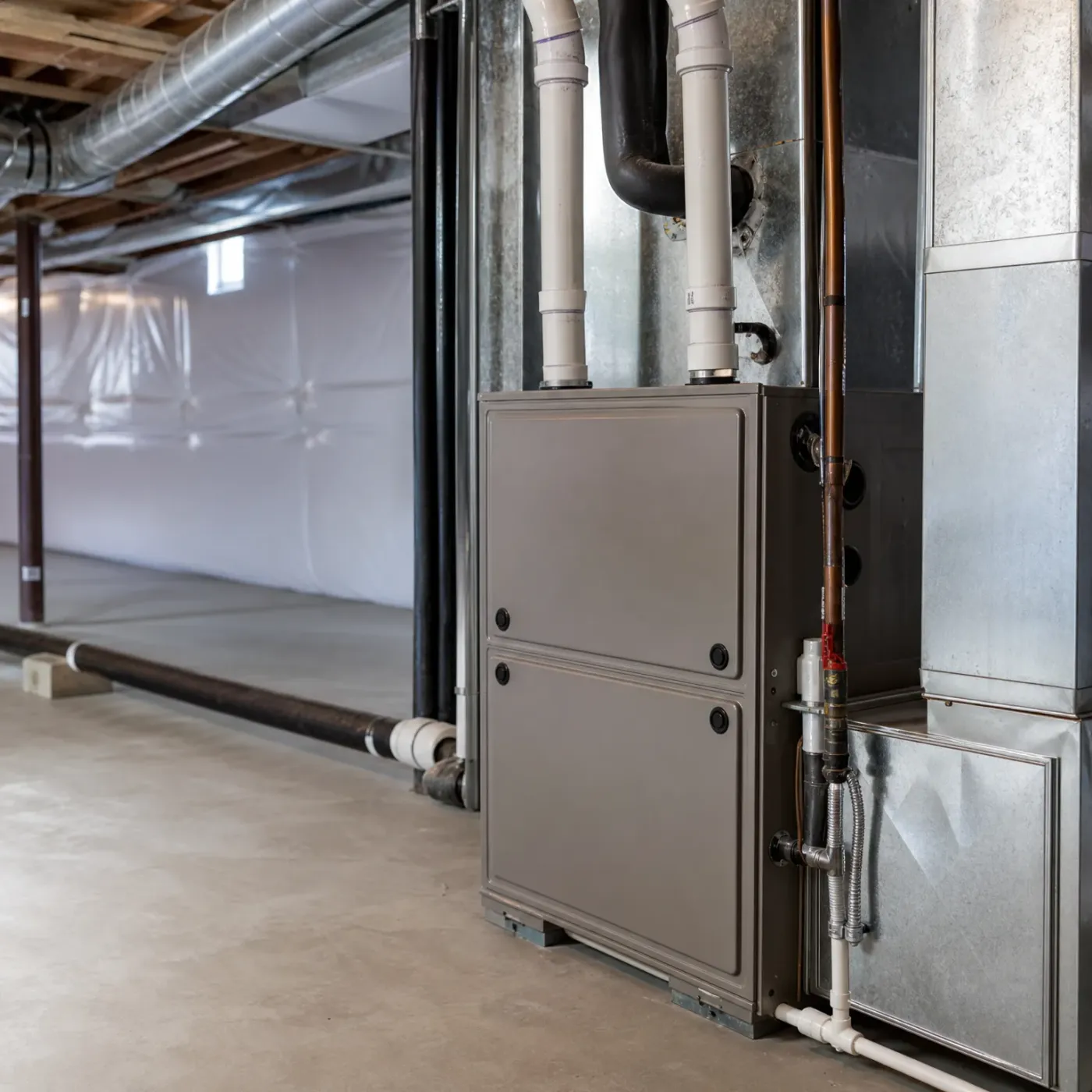
This is a high-efficiency furnace doing what it should. The PVC pipes carry condensate out to a drain, the gas line feeds the burners, and nothing collects where it shouldn't. A furnace set up like this handles winter in Riverside without a drop on the floor.
Water where it shouldn't be
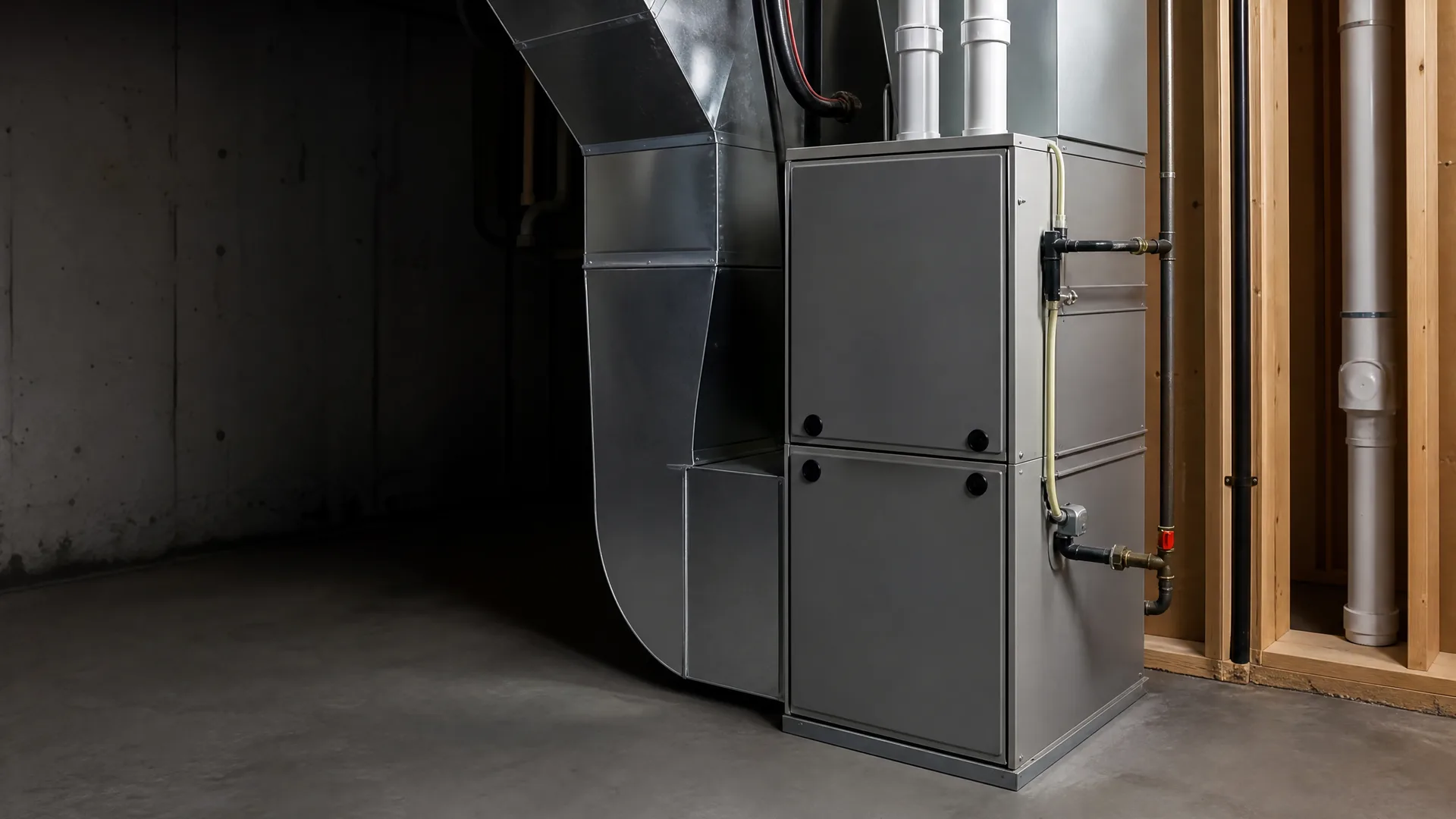
This furnace vents through metal ductwork and pipes, and a mid-efficiency unit like this still produces some condensate that has to go somewhere. If the drain path is blocked or cracked, water finds the base of the cabinet instead, and it won't stop until the path is cleared.
1
The burners fire and the heat exchanger pulls heat from the exhaust gas.
2
Cooled exhaust turns to water inside the secondary heat exchanger.
3
Water drains down into the condensate trap below it.
4
The trap's water seal holds back gas while passing the water through.
What's that puddle actually doing to your house
Look under the furnace and along the base of the cabinet. A ring of water, a damp patch on the garage floor, or drops hanging off the vent pipe are the first things you'll notice. If the furnace sits in a closet near carpet or drywall, the water can wick into both before you ever see a puddle, and that's where it turns into swollen baseboards or a musty smell that doesn't go away with the windows open. Rust forming on the burner compartment or the sheet metal underneath is a sign it's been leaking longer than today. Left alone, the water can reach the circuit board or gas valve, and that turns a small drain problem into a furnace that won't run at all.
A dry cabinet, tight gas fittings, and condensate moving steadily out through the PVC to the drain.
Water pooled at the base of the cabinet, with the gas shutoff and condensate line sitting right where the leak starts.
Winter nights average 42°F
At 42°F, your furnace isn't cycling on and off a few times a night, it's running long stretches to hold the house steady. That's more hours for condensate to form and more water moving through the drain line and trap before morning.
NOAA nClimDiv 1991-2020
A puddle with a clear cause
A furnace leaking water almost always traces back to a clogged drain line, a cracked trap, or a condensate line that was never sloped right in the first place. None of that fixes itself. The water will keep finding the same low spot on the garage floor until the drain path is cleared or the part that failed gets replaced.
You already know not to let a small leak sit until it's a bigger one. The part that takes time isn't deciding to act, it's finding someone who can look at a Riverside furnace and tell a clogged line from a cracked trap without three different guesses. Answer a few questions about what you're seeing and a contractor who handles this kind of repair will reach out directly, so you're not the one calling around or explaining the puddle twice.