



Why your furnace is leaking water in California

Describe your furnace job, and a local pro who handles it gets in touch.

Find a furnace pro

A furnace leaking water almost always means condensation is forming where it shouldn't, or the condensate drain is blocked or cracked. If your furnace is a high-efficiency condensing model, it produces water as a normal part of running and sends it out through a drain line and sometimes a condensate pump. When that line clogs with algae or dirt, or the pump fails, the water backs up and finds its way out of the unit instead. On older, standard furnaces, water pooling nearby is more often condensation from ductwork or a nearby humidifier, not the furnace itself. Either way, the water needs somewhere to go, and a leak means it's found the wrong path. Left alone, it can damage the furnace's internal parts, the flooring underneath it, or the ceiling below if the unit sits in an attic. A furnace with a water leak needs a look before you run it again.

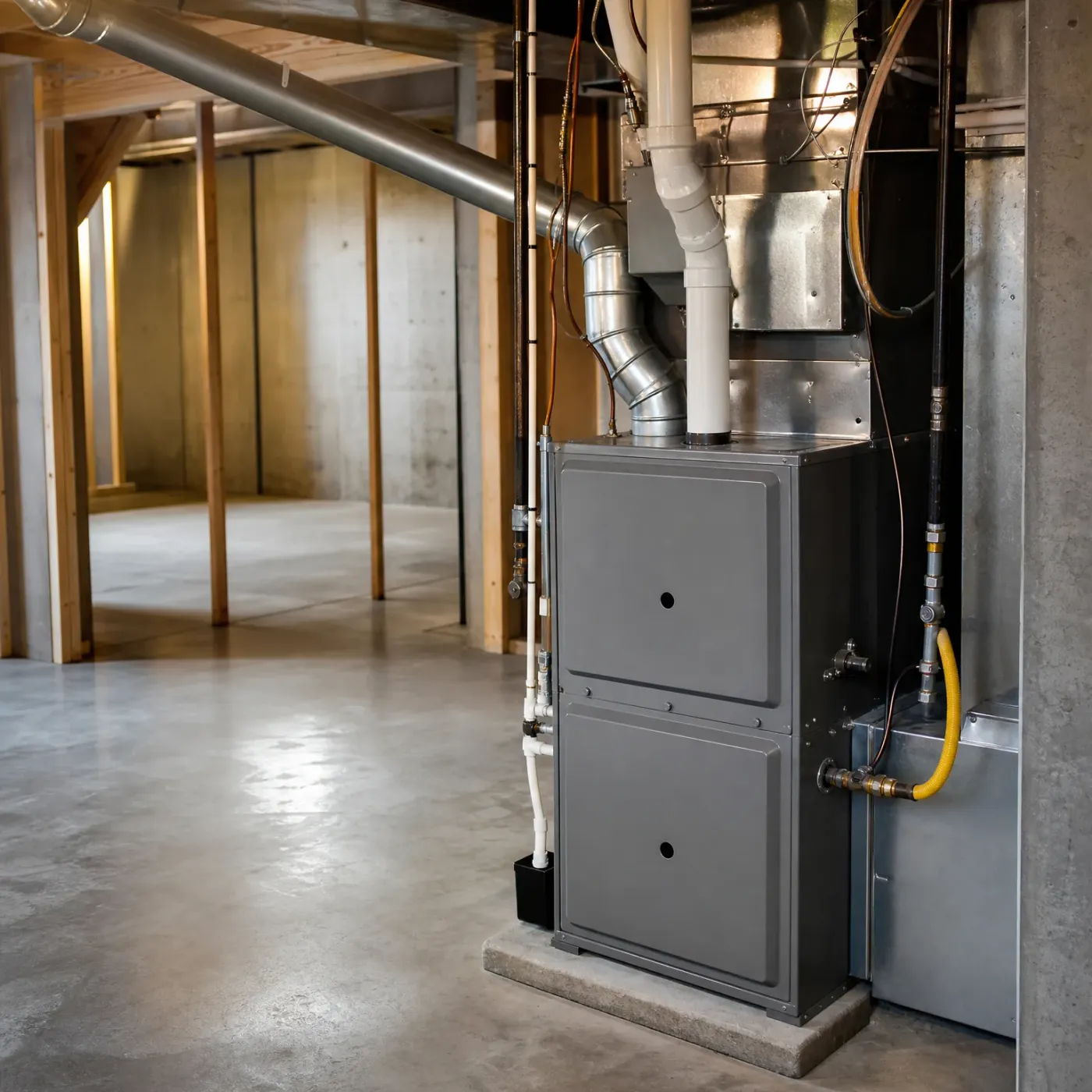
A gray high-efficiency furnace with two access panels stands in a bare basement corner, connected to sheet-metal ductwork, white PVC vent pipes, and flexible gas and electrical lines.

Why condensing furnaces make water

A high-efficiency furnace cools the exhaust gas enough to pull extra heat out of it before the gas leaves the house. That cooling turns part of the exhaust to water. A PVC drain line carries that water to a floor drain or a condensate pump. If that line kinks, clogs with sludge, or comes loose at a joint, the water backs up and finds its way out of the cabinet instead.

A gas furnace with metal ductwork, copper and yellow gas piping stands against a wall in an empty room with a bare concrete floor.

What an older furnace tells you

If your furnace vents through metal pipe instead of PVC, it isn't a condensing model, and it shouldn't be producing water at all. Water showing up there usually means flue gas is condensing inside the heat exchanger or vent pipe because of a cracked heat exchanger, a sizing problem, or a vent that's drawing poorly. That's a different repair than clearing a drain, and it's worth having looked at before you run the furnace again.

Which Furnace Type Do You Have

Condensing Furnace

  • Water is normal here, so a leak usually means the drain line or the trap built to carry that water away has failed somehow.
  • A cracked PVC line, a clogged trap, or a plugged condensate pump are the usual culprits, not the furnace itself failing.
  • The secondary heat exchanger can also corrode over years of contact with that condensate and start leaking from inside the cabinet.
  • Check the drain line for a sag or a kink where water can pool and back up instead of draining to the floor drain or pump.
  • A clogged line often trips a float switch and shuts the furnace down before any real water damage happens.
  • If the exchanger itself is leaking, that's a repair to the furnace's core, not just a cleared line or a new trap.

Standard Furnace

  • A standard gas furnace doesn't produce condensate, so any water around it is coming from somewhere else entirely.
  • A leak here points to a nearby AC coil, a humidifier attached to the ductwork, or a plumbing line routed near the unit.
  • If the furnace shares a closet or platform with the air handler coil, condensation from that coil can drip down and look like a furnace leak.
  • Rust or water stains on the furnace cabinet can show up long after the actual source of the water has already been fixed.
  • Tracing the water back to where it starts matters more here, since the furnace itself has no reason to be making it.
  • A contractor can check the coil, the humidifier lines, and the surrounding plumbing before touching the furnace itself.
A beige high-efficiency furnace stands on a concrete basement floor beside sheet-metal ductwork, with white PVC vent pipes, flexible conduit and copper and steel piping running up a concrete wall to an electrical box.

Furnace running as it should

PVC pipes above the furnace carry condensate out on their own, drop by drop, while the ductwork moves warm air through the house. No puddle forms at the base. The gas line and shutoff stay dry, and the floor around the unit stays clean.


An older gas furnace with a louvered front panel stands on a concrete basement floor beside large sheet-metal ductwork, a metal flue pipe, copper piping and wood framing.

Furnace in trouble

Dust has built up around the base, and water is finding its way to the concrete floor instead of out through the flue pipe. An older furnace like this may not condense at all, which means any water here points somewhere else, often a cracked drain pan or a clogged humidifier line.

A woman with dark hair in a bun wearing a cream knit sweater sits on a gray sofa in a bright living room, looking off to the side.
A woman wrapped in a knit blanket sits on a gray sofa in a living room, looking toward a bright window with houseplants and an armchair in the background.
A woman in a gray cowl-neck sweater sits on a light sofa with cushions, smiling and looking to the side, with a kitchen and window visible behind her.
A woman with dark hair in a bun, wearing a light linen shirt, sits on a sofa and looks to the side, with a window, houseplants and a kitchen with pendant lights blurred behind her.

A clogged drain line

Algae or sediment blocks the PVC line and water backs up into the furnace, dripping down near the burner compartment or the cabinet base.

Get a local pro

A cracked condensate trap

A small crack lets water escape before it reaches the drain, wetting the floor under the furnace every time it runs.

Get a local pro
A beige sheet-metal furnace with a louvered upper panel stands on a concrete basement floor, connected to galvanized ductwork, white PVC vent pipes, and a metal gas line with an electrical box.
Before you get your furnace repair
A gray high-efficiency furnace with white PVC vent pipes stands in an unfinished basement beside sheet-metal ductwork, gas piping, and insulated stud walls on a concrete floor.
After you get your furnace repair
A gray gas furnace on a concrete pad in an unfinished basement, connected to sheet-metal ductwork, white PVC venting, and a yellow gas line, with concrete walls and wood framing in the background.

The right pro for this job

Explain the job once and skip repeating it on every call.

A local pro who knows furnaces gets your details and gets in touch.

Match me with a pro

It costs nothing to send, and you don't have to hire anyone.

What's that water doing around your furnace

You might notice a damp spot on the floor near the cabinet, or water beaded along the bottom edge where it meets the base. Sometimes it's a puddle that shows up after the furnace has run a while. You might hear a gurgle from the drain line, or catch a musty smell if water has been sitting under there for days without anyone noticing. Check the PVC line and the floor drain it feeds into. Left alone, that water can soak subfloor, warp cabinets nearby, or grow mold where nobody's looking, and it can trip the furnace's safety switch and shut your heat off until someone deals with it.

A gray high-efficiency furnace with white PVC vent pipes stands beside galvanized sheet-metal ductwork in a basement with a concrete floor, with a wooden staircase and railing at left.

Running dry

The PVC lines overhead carry condensate out at their own pace, and the floor underneath stays dry. The gas line and shutoff valve on the right sit clean, no corrosion, no drips. The air handler next to it does its job without a mark on the concrete pad below.

An older gas furnace with louvered panels sits on a concrete pad in a basement, connected to sheet-metal ductwork and PVC and metal pipes, with a water heater and wooden stair framing in the background.

Water where it shouldn't be

Here the same setup sits on the pad, ductwork and gas shutoff in place, but something below the furnace or air handler is wet. A cracked trap or a blocked line will put water on the floor instead of into the drain, and it keeps showing up until the drain path is fixed.

A smiling older woman with gray hair in a cream knit sweater stands in a dimly lit kitchen beside a window showing snow outside, with a round loaf of bread on the counter in the foreground.
A woman and a child wrapped together in a knitted gray blanket on a couch, with the child's head resting on her shoulder and a lit table lamp and houseplant in the background.

Leaving it alone

The leak doesn't stop on its own. A clogged drain line stays clogged until something clears it, and most furnaces have a float switch that shuts the system down once water backs up far enough. That means no heat, and in a house that heats with gas, that's the only heat you have. Left longer, water sitting near the cabinet base can reach wiring or the gas connections nearby, and a cracked trap only gets worse under repeated cycles. What starts as a damp spot on the floor can turn into a furnace that won't fire at all, usually on a morning you needed it to.

Getting it looked at

A contractor who works on furnaces can trace the water back to where it's actually coming from, whether that's the drain line, the trap, or the condensate pump, and clear or replace whatever failed. That's different from guessing at it yourself or calling around to find someone who'll pick up the phone and show up the same week. Once you're matched with a contractor, you explain the problem once, not to every name in a search result. They reach out, look at what's actually happening at your furnace, and you're not the one sorting through quotes to figure out who to trust with it.

Winter nights average 40°F statewide

Winter nights here average 40°F, so your furnace isn't running flat out for months on end the way it would somewhere colder. It still cycles on most nights all winter, and every one of those cycles sends condensate down the drain line. That steady, moderate use is exactly when a slow clog or a small crack shows up as a puddle.

NOAA nClimDiv 1991-2020 county normals weighted by homes

A woman in a cream sweater and jeans stands in the open doorway of a white stucco house, holding the dark door, while a man in a dark quilted jacket seen from behind walks toward the entry past potted plants.

A leaking furnace has a cause, and it's fixable

Water at the base of your furnace isn't a mystery once someone opens the cabinet. It's a blocked line, a cracked trap, or a pump that's failed, and each of those has a straightforward fix. Left alone, the float switch will eventually cut your heat on a cold night, which is the last thing you want when you're the one making sure everyone in the house stays warm.

You don't have to figure out which part failed before you call. Describing a drip, a puddle, or a furnace that won't start is enough to get matched with a contractor who handles this kind of repair and will reach out to look at your specific system. That saves you the work of searching around, calling several places, and repeating the same description of the problem to each one.

A living room corner with a beige sofa and cushion, a round wooden coffee table holding a pale ceramic vase of eucalyptus stems and a wooden bowl, and a curtained window with a potted plant above a latticed radiator cover in the background.
An empty basement with bare concrete walls and floor, exposed wooden joists and pipes overhead, and a dark furnace with sheet-metal ductwork and vent pipes in the right corner.

Matched to your furnace job

Skip searching for a furnace pro and answer a few questions instead.

RepairFurnace or heatingCalifornia
Step 1 of 2

What ZIP code is the job in?