



Lit white stucco buildings with terracotta roofs nestled among oak trees on a dry hillside under a deep blue night sky.

Furnace Maintenance in Clearlake, CA

Tell us about the job

Takes about a minute. No obligation.

Tune-up, service, or cleaningFurnace or heatingLake County, CA
Step 1 of 2

What ZIP code is the job in?

Electricity in California ran $93.69 per million Btu in 2024, among the highest in the country. Most furnaces here run on electric heat, so that price applies to every hour the system runs. A furnace with a dirty filter or a clogged element has to work harder to put out the same heat, and that extra work shows up on the bill. A furnace running clean doesn't have that problem. When power costs this much, the difference between a furnace running the way it should and one that isn't is harder to ignore.

A furnace draws the same current whether the heat exchanger is clean or coated with dust.

A tune-up checks that exchanger, because a thin layer of dust on it is enough to make the furnace run longer for the same heat.

Most of Clearlake heats with electricity, which changes what a tune-up needs to catch

42.9% of homes heat with electricity
Heat runs October through May
Winter nights average 36°F

Heat goes on in October here and stays on through May, eight months of the year. That's most of the year running on the most expensive power in the country. September is the month to get a furnace looked at, before it has to carry that load. A furnace that starts the season with a dirty element or a weak connection runs that way for eight months, not one. Booking the check in September catches it before the cost does.

A furnace that runs clean costs less to run

A tune-up catches the dust and the weak connections that make a furnace work harder than it needs to. With power priced the way it is here, that work shows up on the bill every month the heat runs. Getting it checked now means the furnace isn't carrying that extra load all winter.

Find a contractor
A gas furnace with attached ductwork, gas piping, and condensate lines installed in a concrete-block basement.

A real tune-up opens the panel, not just the filter door

A quick visit gets the filter swapped and the thermostat checked, and that's about it. A thorough one takes the panels off. The tech checks the heating elements for hot spots or a burned connection, because a loose wire there runs hotter than it should and wears out faster. The blower wheel gets pulled or at least inspected for dust buildup, since a coated wheel moves less air for the same effort. Every electrical connection gets tightened, not just looked at, because a connection that's slightly loose heats up every time the furnace runs. Amp draw gets tested against what the furnace is rated for. If it's drawing more than it should, something's already working harder than it needs to, even if the furnace still heats the house fine today. None of that shows up from across the room. It shows up when someone takes the time to check it.

Change the filter

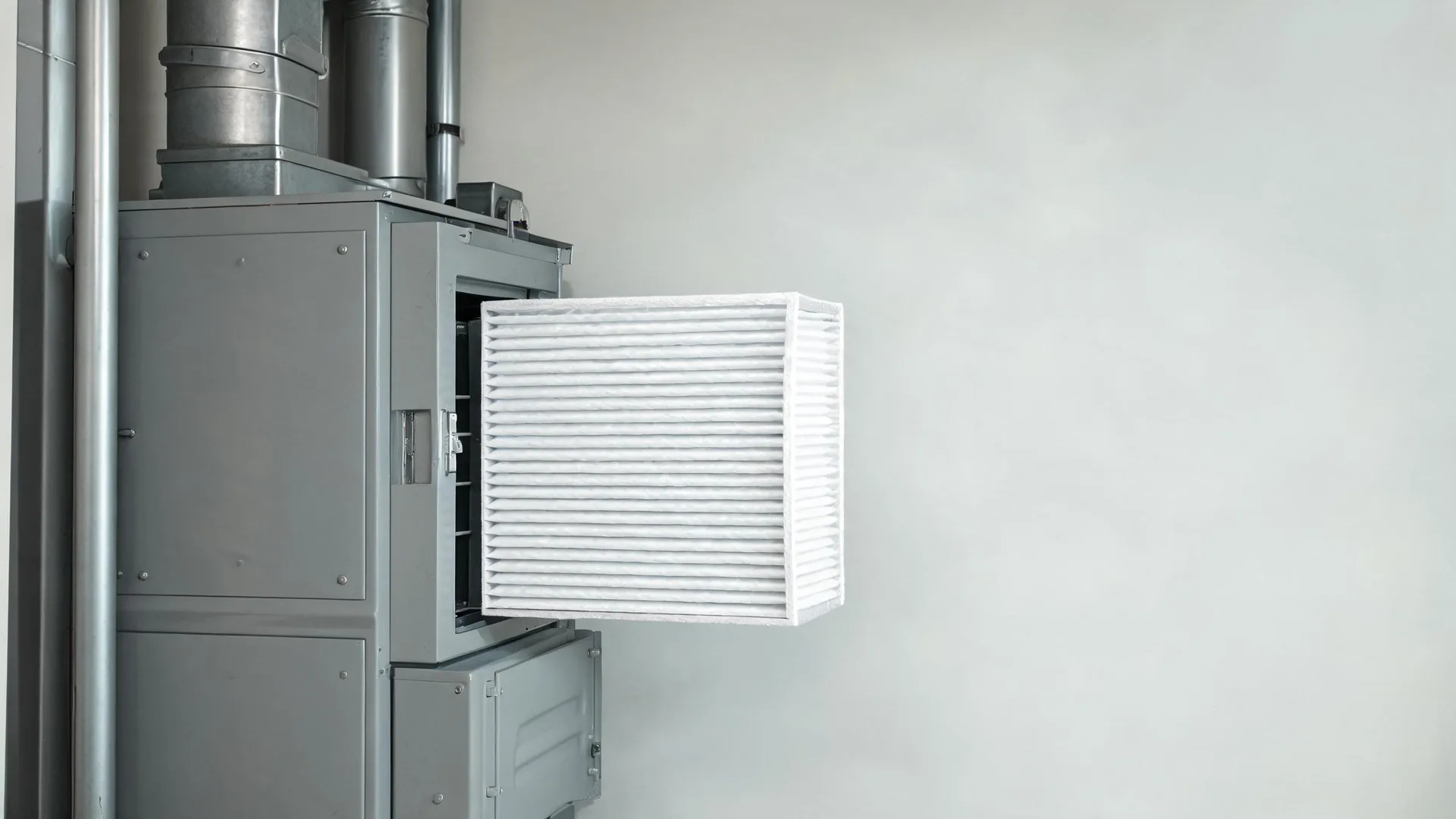
A dirty filter is the one thing worth checking without waiting for a tech. A filter clogged with dust makes the furnace pull harder to move the same air, and that strain lands on the blower motor over time. Hold it up to the light. If you can't see through it, swap it. This is the only part of the system meant to be touched between visits.
Leave the rest alone

The panels, the wiring, the heating elements inside, none of that is a homeowner job. Opening the cabinet on a furnace that's running exposes live electrical connections, and tightening or touching the wrong one can do more harm than the dust ever would. If the furnace is making a new noise or not heating like it used to, that's a reason to call, not a reason to go looking inside.

Skip enough tune-ups and a furnace doesn't fail outright, it just gets worse at its job a little at a time. Dust builds up on the heating elements and on the blower wheel, and both losses stack. A coated wheel moves less air, so the elements run longer to push out the same heat, and a thin film on the elements themselves makes them transfer less of that heat into the airstream to begin with. Connections that were snug last year loosen slightly with every heating cycle, and a loose connection runs hotter than a tight one every time the furnace fires. Left alone, that heat damages the connection further, which makes it run hotter still. None of this trips a breaker or shuts the system down. The furnace keeps heating the house, drawing more current to do it, until a connection finally fails or an element burns through. By then it's a repair, not a tune-up.

A tune-up has an order to it, because each check depends on the one before it. The tech starts with power to the unit off, then pulls the panels to get at what the filter door never shows. Flame sensor and igniter come first on a gas furnace, cleaned or tested so the burners light every cycle instead of trying twice. On an electric furnace, the sequence is different, the heating elements and their connections take that spot instead. The blower gets checked for a wheel free of dust and a motor that isn't straining to turn it. Safety switches get tested too, the ones that shut the furnace down if airflow drops or a panel comes loose, because a switch that's failed quiet is worse than no switch at all. Last comes a full cycle, running the furnace through a heating call start to finish to see that everything just checked actually works together.