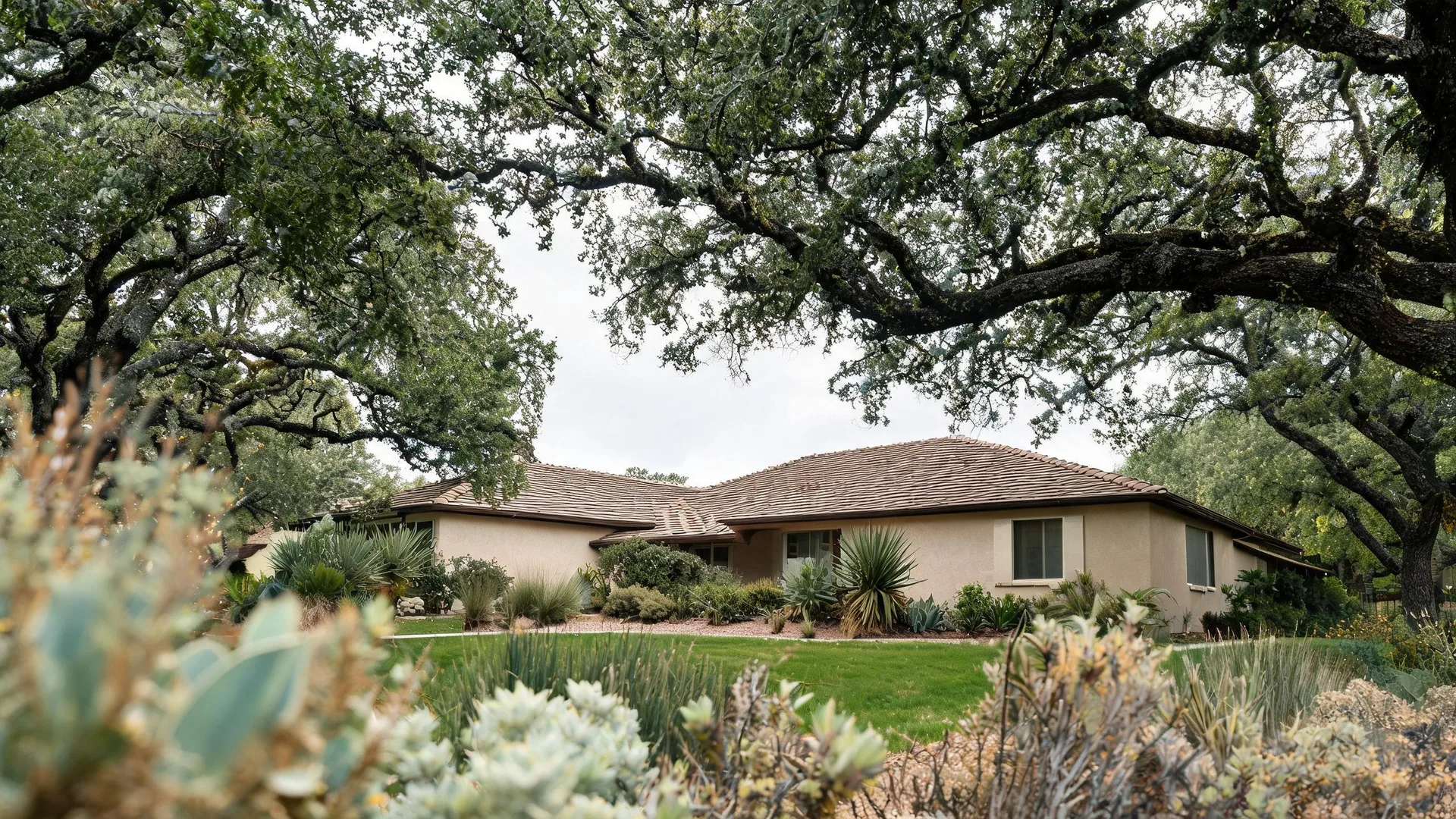
A single-story stucco house with a tile roof seen across a lawn, framed by large spreading oak branches and foreground agave and shrub plantings.

Furnace Maintenance in Merced, CA

Tell us about the job

Takes about a minute. No obligation.

Tune-up, service, or cleaningFurnace or heatingMerced County, CA
Step 1 of 2

What ZIP code is the job in?

Half the homes here were built in 1986 or later

Merced County splits right down the middle, half the homes built in 1986 or earlier and half in 1986 or later. A furnace that came with one of the newer homes still has a lot of working life ahead of it.


A newer furnace is worth the yearly check

A furnace with years left in it is worth keeping in good shape. Skipping the yearly check on a younger furnace just trades away the life it should have had.

A Merced furnace only runs about six months a year, November through April.

A furnace with that light a workload rarely fails from wear. It fails from being skipped.

Most of Merced heats with gas, and gas heat needs more than a filter change

61.5% of homes heat with gas
Heat runs November through April
Winter nights average 40°F

October is the month to get a furnace looked at here. Heat comes on in November and once it does, it runs every day through April. A furnace that sat quiet since spring is being asked to start up and hold steady right away, with no easy stretch to work out a problem before the cold settles in. Checking it in October means any issue shows up on someone's schedule instead of on the first cold night.

Light duty still needs a yearly check

A furnace here only works about six months of the year, so it doesn't wear out from strain. It sits the other six months, and that's when small problems turn into no-heat calls once November comes. A yearly check catches that before the season starts.

Find a contractor
A man in a cap, dark shirt and tan work pants, seen from behind, carries a canvas tool bag up steps toward a blue front door beside a potted shrub.
A gas furnace with attached ductwork, gas piping, and condensate lines installed in a concrete-block basement.

Start the yearly check now, not after something breaks

That yearly check matters most while a furnace is still young. Catch a loose connection or a worn part early and the fix is small. Let the same thing go unchecked year after year and it turns into a bigger repair, maybe the whole unit. If your furnace came with a newer build here, the yearly check is what keeps it on track for a long working life instead of a short one.

Change the filter yourself

A dirty filter is the one thing worth checking without calling anyone. Pull it out, hold it up to a light, and if you can't see through it, swap it. A clogged filter starves the burner of airflow and makes the furnace run longer to do the same job.

Keep the area around it clear

Don't stack boxes or anything else against the furnace or over the vents near it. It needs open air around it to pull in what it burns and to breathe out safely. Beyond that and the filter, leave it alone. Anything involving the burner, the flame or the flue is a job for the yearly check, not a homeowner with a screwdriver.

A tune-up gets inside places the filter never touches. The burner assembly gets pulled and cleaned, because soot and dust on the burner change the shape of the flame, and a flame burning wrong puts more carbon monoxide into the exchanger than it should. The flue gets checked for a solid connection and a clear path, since a cracked or blocked flue can let exhaust back up into the house instead of outside. The igniter gets tested under load, not just looked at, because an igniter can glow fine and still fail the moment it's asked to light the burner night after night. The flame sensor gets cleaned, since a film of oxidation on it will make the furnace shut itself off a few seconds after startup, over and over, for a reason that looks like nothing from the thermostat. None of that shows up when the furnace is just sitting there running warm air through the vents.

A tune-up also covers what happens once the burner shuts off. The inducer motor gets checked for noise and for how freely it spins, since a bearing starting to go will howl before it ever seizes outright. Gas pressure gets measured at the valve, not guessed at, because pressure that drifts even a little changes the flame and the heat output without any outward sign. The heat exchanger gets inspected for cracks, because a crack there is the one thing that turns a working furnace into a carbon monoxide risk, and it can't be seen or smelled from the living room. Wiring and connections get checked for anything loose or corroded, since a loose connection is what causes a furnace to work fine for weeks and then quit on the coldest night for no reason anyone can see. A furnace that looks fine from the thermostat can still be failing in any one of these places.