




White Mediterranean-style houses with lit windows photographed at dusk beneath golden hills.

Furnace Maintenance in Napa, CA

Tell us about the job

Takes about a minute. No obligation.

Tune-up, service, or cleaningFurnace or heatingNapa County, CA
Step 1 of 2

What ZIP code is the job in?

Your furnace in Napa only works November through April, and even then the overnight low averages 39°F. That is light duty next to colder places, where a furnace has to fight to keep up all winter. Light duty does not mean no duty. An igniter or a flame sensor wears with age whether the furnace runs hard or easy, and a furnace that sits unused for months can develop its own problems. A yearly check before November catches a weak igniter or a dirty flame sensor while it is still a small fix.

November is when your furnace in Napa starts working for real.

October is the month to get it checked, before it has to run.

One visit a year covers a furnace that only works half the year

Half the homes here were built by 1976
Heat runs November through April
Winter nights average 39°F

Most homes in Napa heat with gas, 63.5 percent of them. Electric heat covers another 27.9 percent, and a small share runs on bottled or LP gas. A gas furnace needs more than a filter swap. The burner has to light clean, the flame sensor has to recognize that it did, and the flue has to carry the exhaust out of the house instead of back into it. Those are the parts a yearly check is for.

Get it checked before it has to work

Get your furnace checked before November and you're covering a system that only has to prove itself for six months. One visit catches a weak igniter or a dirty flame sensor while it's still small money.

Find a contractor
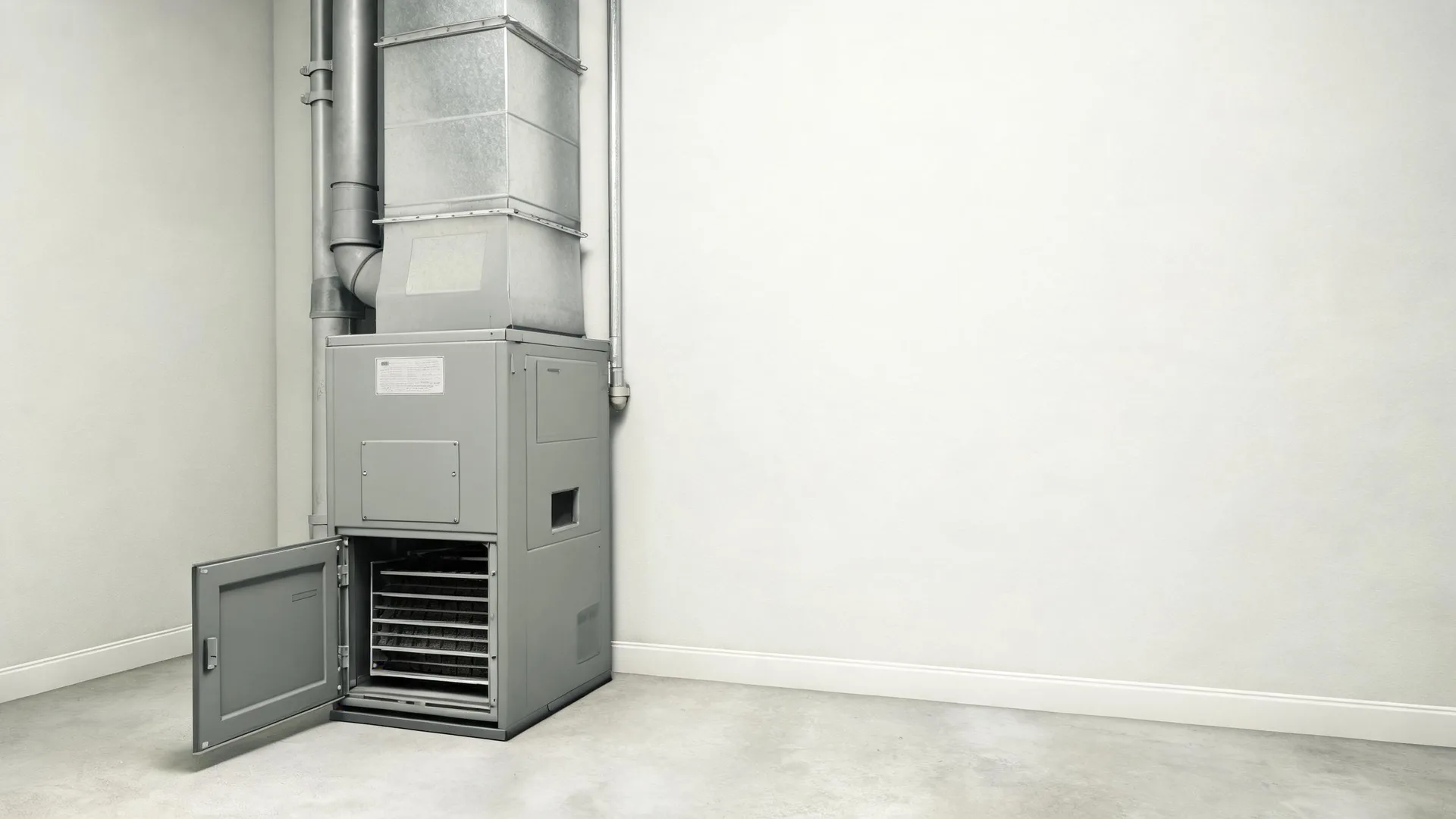
A gray residential gas furnace installed in an unfinished basement, connected to sheet-metal ductwork and PVC pipes.

Skip it long enough and the furnace tells you the hard way

A furnace that never gets looked at still keeps running, for a while. Dust builds up on the burner and changes how clean it lights. The flame sensor picks up a coating that makes it slower to recognize a flame, until one day it doesn't. None of that announces itself. The furnace fires the same way it did last year, right up until the morning it doesn't fire at all. Skipped maintenance doesn't break a furnace. It just lets the small wear nobody caught turn into the part that finally gives out.

A quick visit checks the filter and calls it done

A fast tune-up swaps the filter, glances at the thermostat, and moves on. It catches the obvious, but a furnace can look fine from the outside and still have a burner that lights unevenly or a flue connection that has worked loose.
A thorough one opens the furnace up

A real tune-up pulls the burner assembly to check how the flame actually looks, tests the flame sensor's response instead of just wiping it down, and checks the flue and venting for a solid connection. Those are the checks that catch a problem before it becomes a no-heat call.

Between visits, the main thing worth your attention is the filter. A dirty filter chokes airflow, and a furnace starved for air runs hotter than it should and shuts off sooner than it should. Check it monthly when the furnace is running and swap it when it looks gray and matted rather than waiting for a set date. Keep the area around the furnace clear too. Boxes or stored items pushed up against it block the air it needs to breathe and can be a fire risk near the burner. Beyond that, pay attention to how it sounds and smells. A burning dust smell the first few times it fires after sitting idle is normal and clears on its own. A smell that lingers, or any smell like rotten eggs, is not something to wait out.

A proper tune-up starts before the burner ever lights. The tech checks the intake and exhaust vents for blockage, since a furnace that can't breathe right can't burn clean. Inside, the heat exchanger gets inspected for cracks, because a cracked one lets exhaust mix with the air moving through your house. The igniter gets tested under load, not just looked at, and the flame sensor gets cleaned and checked for how fast it responds. Gas pressure gets measured and adjusted if it's off, since too much or too little changes how the burner fires. The blower motor and wheel get checked too, since a wheel caked with dust can't move the air the furnace is heating.