



An unfinished basement containing a gas furnace with ductwork in the foreground and miscellaneous stored items along the far concrete wall.

Furnace Maintenance in Santa Rosa, CA

Tell us about the job

Takes about a minute. No obligation.

Tune-up, service, or cleaningFurnace or heatingSonoma County, CA
Step 1 of 2

What ZIP code is the job in?

Half the homes in Sonoma County were built in 1979 or later, so a lot of furnaces here still have plenty of working life left in them. A yearly check is what keeps it that way. A technician can clean the burner, check the igniter, and make sure the furnace is drawing air correctly before any of that turns into a reason for a repair call. If your system came with the house, find out its age and start checking it every year from here on.

Your furnace only has to work seven months a year here, November through May.

A furnace with a light load like that stays in good shape longer, so a yearly check is usually enough to keep it running.

Most of this county heats with gas, so maintenance means checking the burner, not just the filter

62.6% of homes heat with gas
Heat runs November through May
Winter nights average 40°F

Put the yearly check on the calendar for early fall, before the first cold week. Skip a few years and small problems stack up quietly, a dirty flame sensor here, a burner running slightly rich there, until one of them finally stops the furnace on a cold morning. Catching each one the year it starts is what keeps a furnace from ever needing more than a check. That matters more here, since a furnace built in the last few decades still has years ahead of it worth protecting.

Get your furnace checked before November

November is when your furnace starts working for real. Book the check in October and a technician can catch a weak igniter or a dirty burner before the furnace has to prove itself on the first cold morning.

Find a contractor
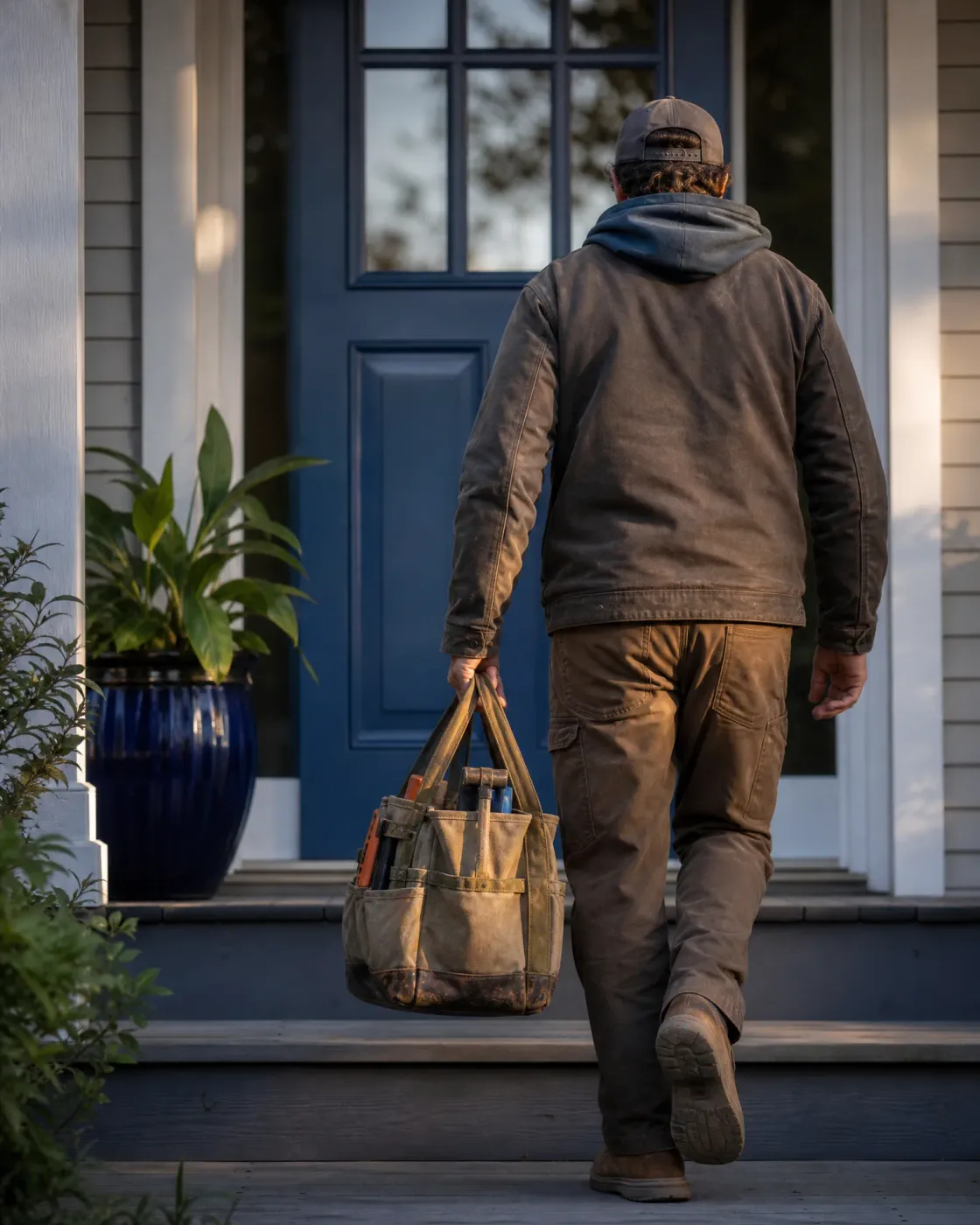
A man in a brown jacket and cap, seen from behind, carries a canvas tool bag up porch steps toward a blue front door beside a potted broad-leafed plant.
A gray residential gas furnace installed in an unfinished basement, connected to sheet-metal ductwork and PVC pipes.

Light duty still needs a yearly look

Seven months of work out of the year is not much strain on a furnace. The other months it sits idle. That is why a yearly check is enough here, and why it still matters every year. A furnace that sits most of the year can still pick up a cracked gasket or a sticking valve while it's off. The only way to know is to have it looked at before it starts working again.

Change the filter yourself

A dirty filter chokes airflow across the heat exchanger, and that is the one thing you can check without opening any panel. Pull it, hold it up to a light, and if you can't see through it, swap it. A clogged filter makes the burner run longer to push the same heat through the house, and it's the most common reason a furnace short cycles.

Leave the burner and igniter alone

The burner, the igniter, and the flame sensor are not something to clean or adjust between visits. These need to be handled by someone who can test the gas pressure and flame signal while they're in there, not just wiped down. If you notice soot near the furnace, a smell of gas, or the burner flame looking yellow instead of blue, that's a reason to call, not a reason to open it up.

A furnace usually gives some warning before it fails outright. Short cycling is one, where it fires up, runs a few minutes, and shuts off before the house warms. A burner flame that looks yellow or orange instead of steady blue means it's not burning clean, and that can point to a problem worth catching early. A furnace that takes a few tries to light, or makes a popping sound when it does, is telling you the igniter or the burner needs a look. Rooms that used to heat evenly but now run cold in one corner can mean airflow is restricted somewhere between the furnace and the vent. None of these mean the furnace is done. They mean it's asking for the check before it asks harder.

A proper tune-up starts before the panels come off. A technician checks the gas pressure at the manifold, since too high or too low both affect how clean the burner runs. The flame sensor gets cleaned or tested, not just looked at, because a coated sensor is one of the most common reasons a furnace shuts itself off mid-cycle. The igniter gets checked for a weak glow or a crack you can't see without pulling it. The blower wheel gets checked for dust, since a dirty wheel moves less air even when the motor sounds fine. The heat exchanger gets inspected for cracks, because a cracked exchanger can let combustion gas mix into the air moving through the house. Last comes the draft, making sure the furnace is venting properly and not pulling exhaust back into the house. None of this takes long on a furnace that only runs part of the year, but skipping it is how a small problem sits unnoticed until the furnace has to work for real.