October starts the real work
Furnaces in Ukiah go into service in October and stay on through May. That first cold stretch is when a weak igniter or a clogged flame sensor shows up, because the furnace is finally being asked to run.
Takes about a minute. No obligation.
Furnaces in Ukiah go into service in October and stay on through May. That first cold stretch is when a weak igniter or a clogged flame sensor shows up, because the furnace is finally being asked to run.
A furnace sitting unused since spring won't tell you what's wrong with it. Have it checked in September, before the demand starts, so a bad part gets caught while it's still an easy fix instead of a no-heat call in October.
A quick tune-up checks that the furnace turns on and blows warm air.
A thorough one pulls the burners, checks flame sense in microamps, and tests the limit switch, because a furnace that passes a quick look can still fail the first cold week of the season.




Half the homes in Mendocino County were built in 1977 or earlier, half in 1977 or later. Furnaces don't wear faster for being in an older house, and they don't get a pass for being in a newer one. Either way, the same parts take the same wear, one heating cycle at a time. That's why once a year covers it, regardless of when the house was built. What matters is getting that one visit in before the cold stretch that was already mentioned above, not the age of the place it's in.
It starts running hard in the first month of the season here. Book the check the month before.
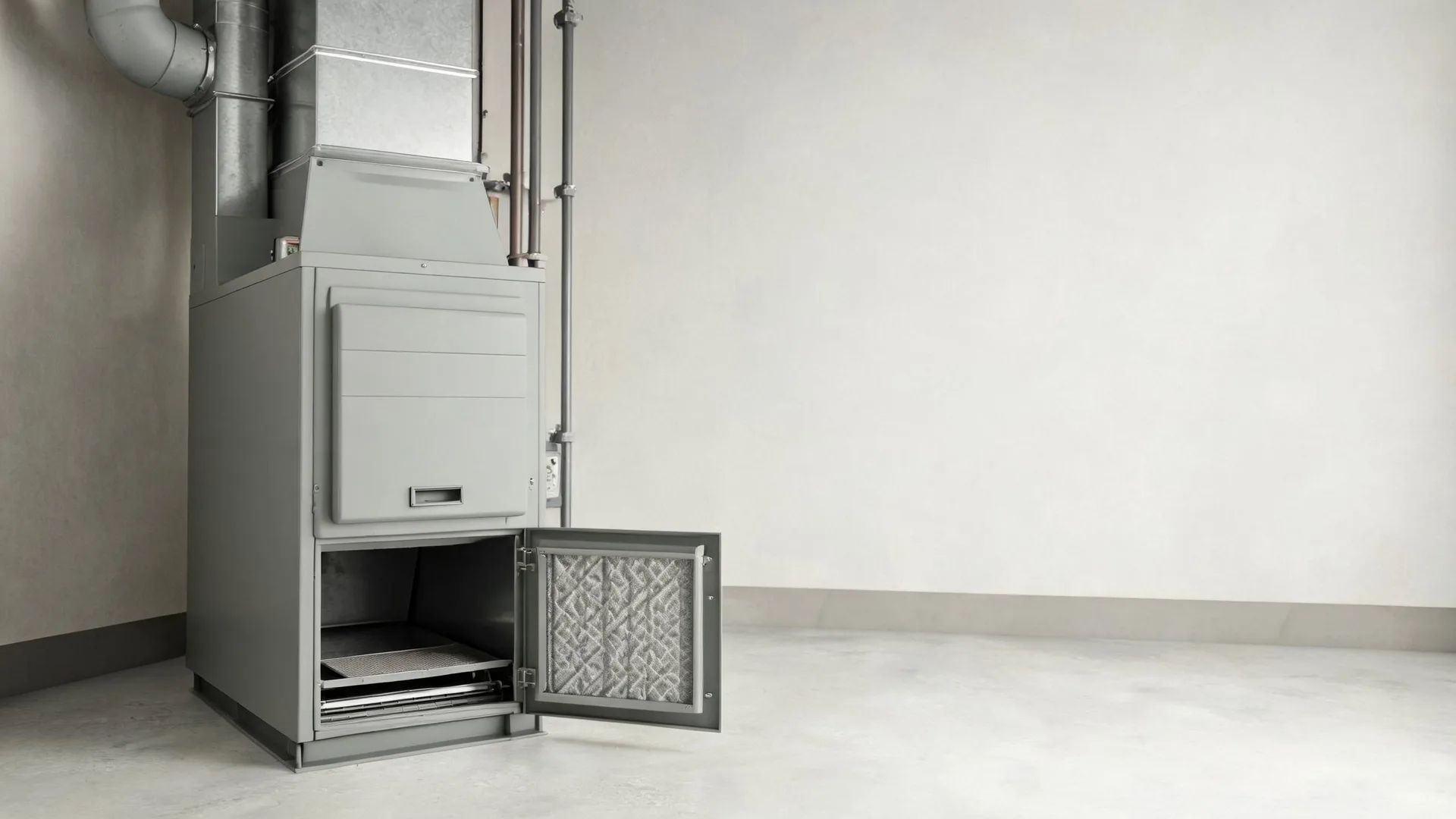
Find a contractorChange the filter. A dirty one chokes airflow, and the furnace runs longer to push the same heat through a house, which wears the blower and can crack a heat exchanger over time. Check it monthly during the season and hold it up to a light. If you can't see light through it, swap it. Keep the area around the furnace clear too, nothing stacked against the cabinet, nothing blocking the return grille. Look at the vent pipe outside where it exits the house and make sure nothing's nesting in it or blocking it. Past that, leave the cover panels on and leave the gas valve and burners alone. If you smell gas, hear a new rattle, or see the flame burning yellow instead of blue, that's not a between-visits fix.
A heat exchanger can split in a spot the cabinet never lets you see, and a furnace with a crack like that can still blow warm air like nothing's wrong. Checking it means pulling the furnace apart and looking with a camera or a light, not glancing at the outside casing.
A tech reads the flame sensor's signal in microamps while the furnace is firing. A sensor coated in a thin layer of corrosion will still light the furnace some days and fail on others, and that signal is the only way to catch it failing before it leaves the house cold.
Skip the yearly check and the furnace doesn't fail all at once. The igniter draws more power each time it lights until one day it doesn't glow hot enough and the gas never catches. The flame sensor builds up a film from normal combustion, and that film gets between the sensor and the flame until the signal drops too low and the furnace shuts itself off as a safety measure. Dust collects on the blower wheel and in the burner assembly, and the furnace works harder to move the same air, which runs every part hotter and shortens its life. None of this announces itself. The furnace runs fine, then it doesn't, usually on the night it's working hardest.
A tune-up is a specific list, not a glance inside the cabinet. The burners get pulled and cleaned, because a burner clogged with dust or corrosion burns unevenly and can leave soot inside the heat exchanger. The flame sensor gets cleaned or tested, not just looked at. The inducer motor and blower motor get checked for noise and for play in the bearings, since a motor starting to fail usually sounds different before it actually quits. Gas pressure gets measured at the manifold, because too much or too little pressure changes how clean the burners fire. The ignition system gets tested through a full cycle, not just watched for a spark. Electrical connections get tightened, since a loose connection generates heat on its own and burns the connector over time. A tech who skips most of this and just swaps the filter has done a filter change, not a tune-up.