



An unfinished basement featuring concrete block walls, exposed floor joists, a bare concrete floor, and a forced-air furnace with a large metal exhaust duct in the corner.

Furnace Repair in Chico, CA

Tell us about the job

Takes about a minute. No obligation.

RepairFurnace or heatingButte County, CA
Step 1 of 2

What ZIP code is the job in?

Furnaces in Chico run from November through April, about six months of the year. Overnight lows average 37°F through December, January and February. That's cold enough for a furnace to run most of the night, but nothing extreme. There's nothing about winters here that wears a furnace out faster than normal. When one stops working or starts acting up, it's almost always a common part failing the way it does anywhere else. Maybe an igniter, maybe a flame sensor, maybe the blower motor. The fix is finding which part it is, not guessing at what the weather did to it.

6 months
November through April, your furnace is on duty
37°F
the average winter night it heats against
90 winter storms
in ten years, the nights a failure hurts most
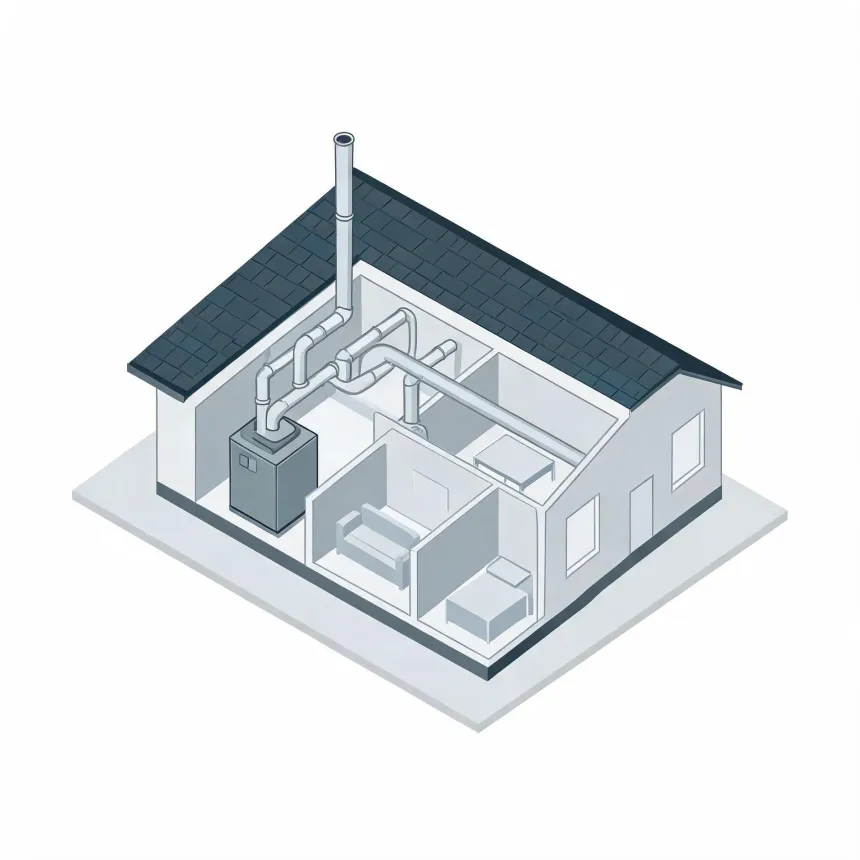
Isometric cutaway illustration of a single-story house showing a gray furnace connected to white ductwork and a flue pipe extending through the shingled roof, with simplified furniture in the interior rooms.
Your furnace works hardest from November through March.

NOAA nClimDiv, 1991–2020 normals

A furnace that short cycles, turning on and off before the house warms up, usually has a dirty flame sensor or a thermostat telling it the wrong thing.

Short cycling wears out parts faster, so the sooner someone looks at it, the less likely it leads to a bigger repair.

Winters here are ordinary. Most furnace trouble still comes down to power.

135 severe weather events from 2015 to 2024
17% of homes statewide lost power a day or more in 2024
38 damaging wind events from 2015 to 2024

Half the homes in Butte County were built in 1981 or later, and plenty of Chico furnaces are as new as the house they came with. A furnace that age hasn't earned a replacement yet. If yours is one of them, a broken igniter or a bad flame sensor is still just that part failing, not the system giving out. Repairing it is the straightforward move. Replacement starts making sense as a furnace gets old and parts start failing one after another, not after a single repair.

If your furnace came with the house, fix the part that failed

A broken igniter or flame sensor doesn't mean the furnace is done. Get the actual part diagnosed before anyone talks replacement.

Find a contractor
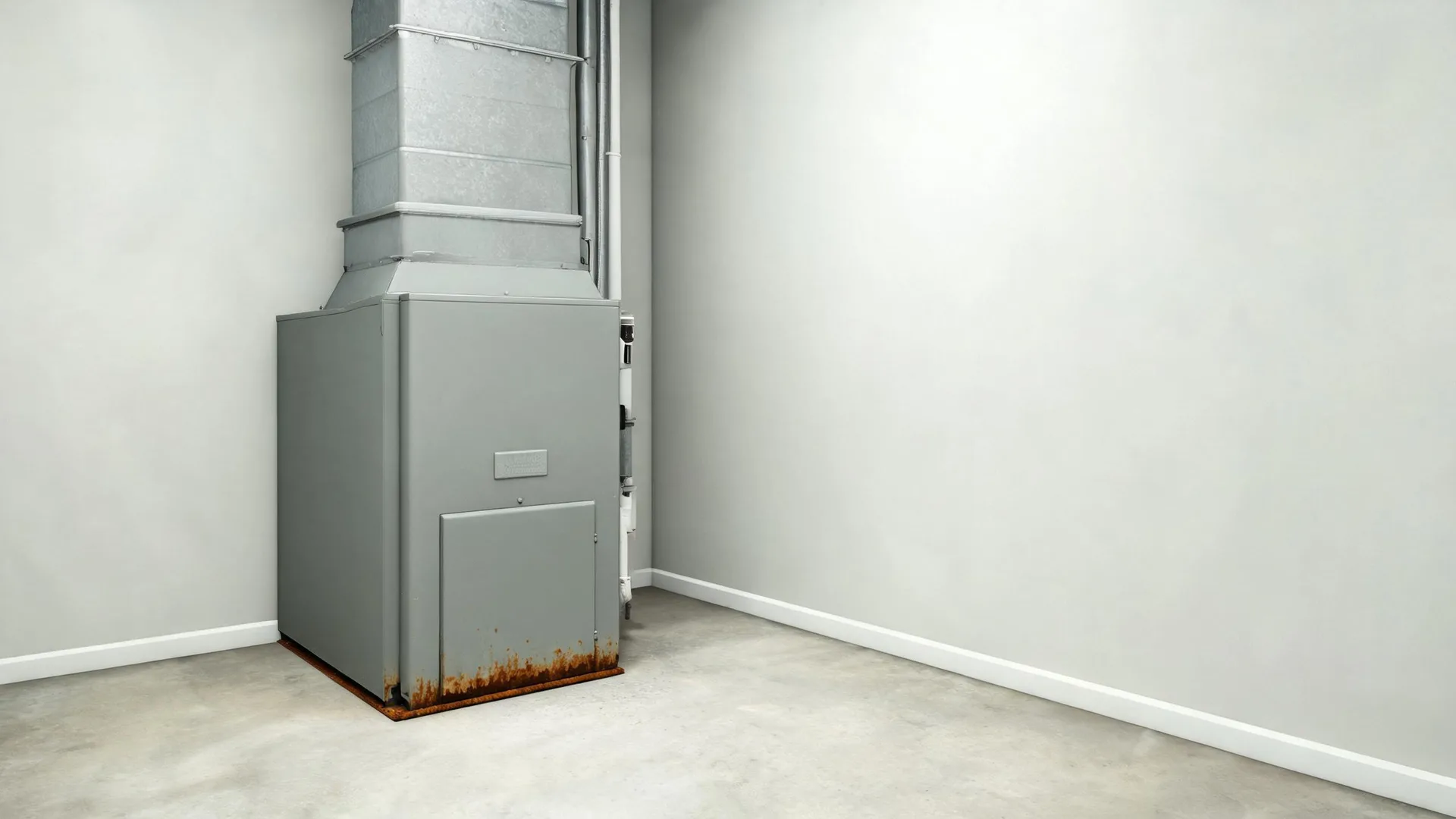
A gray high-efficiency gas furnace installed in an unfinished basement, surrounded by gas lines, a condensate drain, and sheet-metal ductwork.

What to check before you call anyone

Check the thermostat first. Make sure it's set to heat, not cool, and that the set temperature is actually above room temperature. Next, go to the breaker box and make sure the furnace breaker hasn't tripped. Furnaces run on electricity even though they burn gas, so a tripped breaker shuts the whole thing down with no warning. Check the filter. A filter clogged with dust blocks airflow, and some furnaces will shut themselves off rather than run with air that can't move through them. If you can see the filter is gray and matted, swap it for a new one before doing anything else. If your furnace has a standing pilot, look for the small flame through the viewing window. If it's out, there's usually a reset button or a lighting instruction printed right on the panel. If the pilot won't stay lit after relighting, that's a sign of a bad thermocouple, and that part needs a tech. Last, check that the vent hood outside hasn't been blocked by anything, leaves, a nest, snow. A blocked vent can shut a furnace down as a safety measure. None of this is risky to check yourself. None of it involves opening the burner compartment or touching gas lines.

A cracked heat exchanger gets worse every hour it runs

A furnace with a cracked heat exchanger can still push warm air, so nothing seems urgent. But every cycle flexes that crack a little more under heat. Left alone, it goes from a repair to a full replacement, and in the meantime it's a safety problem, not just a mechanical one.

A failing blower motor can take the circuit board with it

A blower motor pulling more current than it should, from worn bearings or a failing capacitor, puts strain on the control board that runs it. Keep running it in that state and you're not just risking the motor. You're risking a second repair that didn't need to happen.

An unfinished concrete basement containing a gas furnace with sheet-metal ductwork, utility shelving, and exposed overhead joists.

A new furnace would cut about $70 a year off heating for a typical Butte County home.

  • A new high-efficiency furnace$330 a year
  • An older furnace$400 a year

Estimates for a typical Butte County home, compared with an older unit built to the previous federal minimum, from EIA household energy data, California fuel prices and NOAA climate normals. Your home will differ.

Repair makes sense when one part has failed and the heat exchanger is sound.

Replacement makes sense when the heat exchanger is cracked or the furnace keeps needing parts.

A diagnostic visit starts before any panel comes off. A tech asks what the furnace was doing, when it started, and whether anything changed right before, a thermostat swap, a breaker trip, a filter that hasn't been touched in a while. Then comes testing, not guessing. That means a multimeter on the igniter to check resistance, a look at the flame sensor under a bright light for corrosion, and watching a full cycle start to finish to see where it actually fails. Pulling the blower wheel lets a tech check bearings and listen for the motor straining. The goal is to find the one part actually causing the problem, confirm it with a reading or a direct look, and rule out the others rather than replacing parts on a guess.