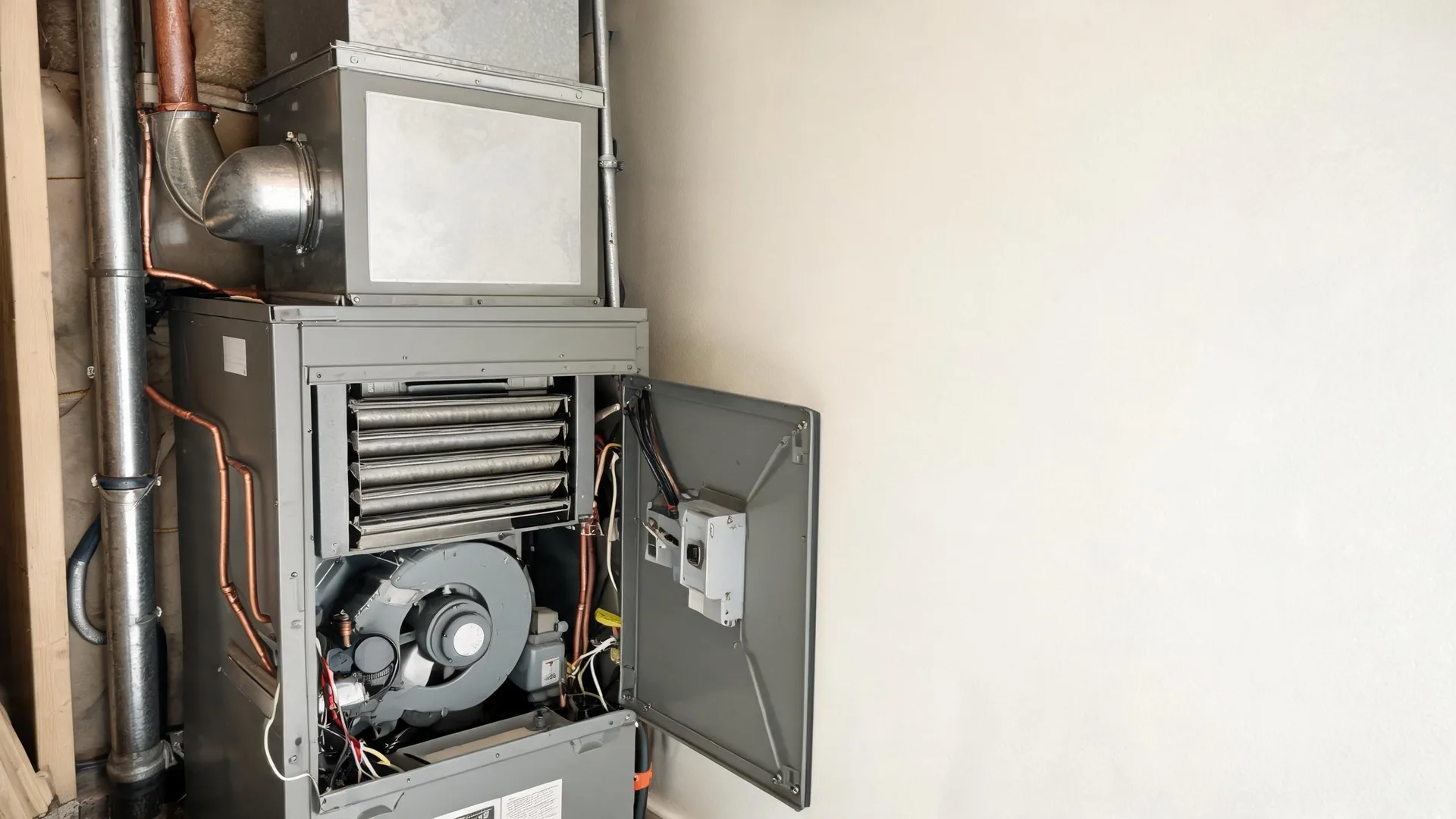
Eight months of real work
Furnaces in Clearlake run October through May, with overnight lows averaging 36°F in December and January. That's a long, steady season, long enough for normal wear to catch up with a furnace that's overdue for attention.
Takes about a minute. No obligation.
Furnaces in Clearlake run October through May, with overnight lows averaging 36°F in December and January. That's a long, steady season, long enough for normal wear to catch up with a furnace that's overdue for attention.
None of that points to anything unusual in how this furnace fails. The common causes, a bad igniter, a dirty flame sensor, a clogged filter choking airflow, show up here the same as anywhere else. A contractor who checks these first usually finds the answer fast.

NOAA nClimDiv, 1991–2020 normals
Furnaces in Clearlake get their first real test in October.
A part that was already weak tends to give out in the first cold weeks of the season.




A furnace that needs a repair every year is telling you something. Igniters and flame sensors fail one at a time, and that's a normal fix, the kind every furnace needs sooner or later. A cracked heat exchanger, a blower motor on its way out, or a control board that's already failed once, that's a different conversation. Age matters more than any single breakdown. A younger furnace is usually worth fixing almost no matter what's wrong with it. An older one, especially if the heat exchanger or blower is the problem, is often money better put toward a new unit. A good tech can tell you which kind of problem you've got, not just which part failed.
Nothing about this area is especially hard on it. It's most likely the usual problem with the usual fix.
Find a contractorA furnace fails the same way whether it's new or old, just more often as it ages. Every cycle, the igniter heats up and cools down, and that stress is what eventually cracks it. The flame sensor sits in the burner flame every time the furnace runs, and over enough cycles it builds up a coating that keeps it from sensing the flame at all. The blower motor has bearings that wear with every hour of runtime, so the more hours it logs, the closer it gets to seizing up or burning out. None of that is damage from any one season. It's the running itself, cycle after cycle, that uses a furnace up.
Check the thermostat first. Make sure it's set to heat and the setting is above room temperature, and swap the batteries if it uses them. Go to the filter next. Pull it out and hold it up to a light. If you can't see light through it, that's choking airflow and it's worth replacing before anyone comes out. Check that the furnace switch, the one that looks like a light switch near the unit, hasn't been bumped off. Look at your breaker panel for a tripped breaker while you're at it.
Don't take the furnace cabinet apart or reach near the burners. Don't try to relight a pilot light if yours has one and it's gone out, some older systems need a specific sequence to do that safely. If you smell gas, don't flip any switches or try anything at all, get out and call your gas utility from outside the house. A furnace that's short-cycling, turning on and off every few minutes, or tripping its breaker repeatedly needs a tech, not more troubleshooting.
A furnace that's struggling doesn't fail cleanly. It compensates. A dirty flame sensor might let the furnace fire, drop out, then try again, over and over, and each of those failed attempts puts more stress on the igniter sitting next to it. A clogged filter forces the blower to work harder to push air through, and that extra load is what burns out a blower motor years before it should've quit. A cracked heat exchanger is the one that matters most. Left alone, it doesn't heal itself, and running the furnace keeps pushing combustion gases through a path they shouldn't take. None of these get better with time. Shutting the furnace off and calling someone stops the damage where it is instead of letting one worn part take the next one down with it.
A diagnostic visit starts before any panel comes off. A tech asks what you noticed first, whether it was a smell, a sound, short cycling, or the furnace just not firing at all, because that points to a different part before any tool comes out. Next comes a visual check of the burners, the flame color, the wiring at the control board, looking for the obvious before chasing the obscure. Then the meter comes out, checking voltage at the igniter, resistance across the flame sensor, amp draw on the blower motor, numbers that say whether a part is weak or dead rather than guessing from how it looks. On a gas furnace, a tech checks for a cracked heat exchanger too, since that's a safety issue, not just a performance one, and it has to be ruled out before anything else gets fixed. By the end you should know what failed, why it failed, and whether it's a sign of something bigger.