



A gas furnace and sheet-metal air handler unit installed in an unfinished concrete basement.

Furnace Repair in Eureka, CA

Tell us about the job

Takes about a minute. No obligation.

RepairFurnace or heatingHumboldt County, CA
Step 1 of 2

What ZIP code is the job in?

Humboldt County logged 282 severe weather events between 2015 and 2024, most of it wind and winter storms: 145 damaging wind events and 115 winter storms, with 21 hail events and one tornado mixed in. A furnace sits indoors, but the weather still reaches it. Wind drives debris into outdoor vents, and ice and heavy rain find their way into anything with a seam or a gap. Statewide, 17% of households went at least a day without power in 2024, and a furnace with electronic ignition or a blower motor won't run without it. If your system has been through a storm, even one it seemed to shrug off, it's worth having someone check it before the next cold snap finds the weak spot.

8 months
October through May, your furnace is on duty
37°F
the average winter night it heats against
56%
of homes here heat with gas, so most furnaces here burn gas
115 winter storms
in ten years, the nights a failure hurts most
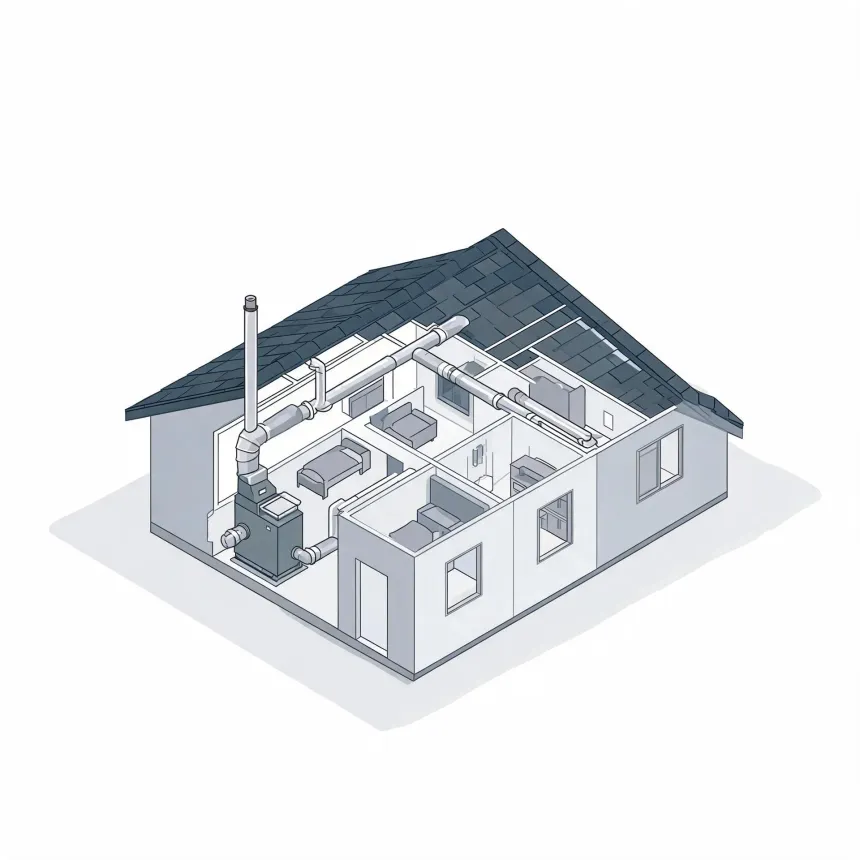
Isometric cutaway illustration of a single-story house showing interior rooms with furniture, ceiling ductwork, a furnace unit with a tall flue pipe, and a dark shingled roof.
Your furnace works hardest from November through April.

NOAA nClimDiv, 1991–2020 normals

Half the furnaces in Humboldt County sit in houses built in 1973 or earlier.

A furnace that old has likely had at least one repair already, so this one is worth a straight answer on what's left in it.

Eight months of heat starting in October, the first cold snap finds whatever didn't make it through summer

Heat runs October through May
Winter nights average 37°F
115 winter storms from 2015 to 2024
Eight months a year, this furnace doesn't get to restHeat runs October through May here, longer than almost anywhere else

A repair call on an older furnace is a good time to ask more than one question. Get the immediate problem fixed, but ask what shape the rest of the unit is in while the panels are off. A furnace from a house built in 1973 or earlier has been through decades of this county's wind and winter storms, and whatever repairs it already had may not be the last. Find out if the part failing now is a one-off or a sign the whole unit is wearing out. That answer tells you whether to pay for the fix in front of you or start planning for the next one.

Have the rest of the unit checked while it's open

A furnace that came through wind or hail without a problem can still have a cracked vent cap or a gap that let moisture in. If the power went out with it, that's one more thing worth a look before the cold sets in. Get the unit checked while someone's already there for the repair.

Find a contractor
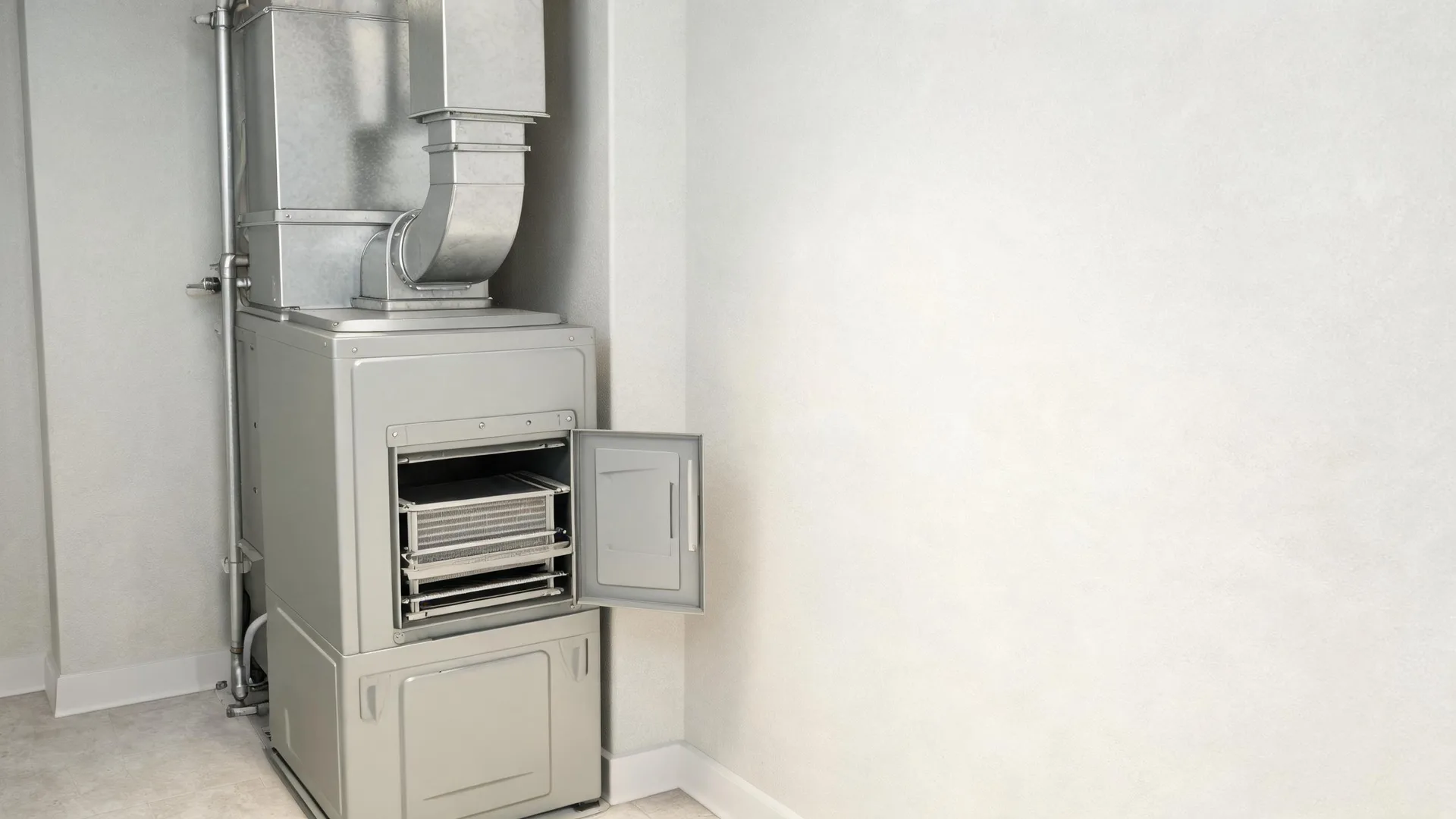
A gray gas furnace with attached ductwork and piping installed in an unfinished concrete basement.

Long runtime, hard weather, more to check than what called for the visit

Eight months of runtime wears a furnace down on its own, and the weather this county gets adds to that. The same unit sits through 115 winter storms between 2015 and 2024, same wiring, same vents, taking hits year after year on top of the daily work of keeping the house warm. When a part finally gives out, it's rarely the only thing that's been strained. Whoever comes to fix it should check for the ones that haven't failed yet.

A crack doesn't heal on its own

A cracked heat exchanger or a split in the vent pipe only gets bigger under heat and pressure. Running the furnace while that part is damaged pushes exhaust into air it was never meant to reach, and the crack won't close back up between cycles. The longer it runs like that, the more it spreads.

Waiting turns a part into a system problem

A failing igniter or a dirty flame sensor makes the furnace try and fail, over and over, which strains the control board reading those attempts. A blower running on a worn motor bearing draws more current than it should, which wears the motor further and can trip a limit switch. Shutting it down when something first acts up keeps one bad part from taking others with it.

An unfinished basement containing a forced-air furnace with metal ductwork, exposed wooden ceiling joists, a hanging Edison bulb, and bare concrete floors.

A new furnace would cut about $90 a year off heating for a typical Humboldt County home.

  • A new high-efficiency furnace$440 a year
  • An older furnace$530 a year

Estimates for a typical Humboldt County home, compared with an older unit built to the previous federal minimum, from EIA household energy data, California fuel prices and NOAA climate normals. Your home will differ.

Repair makes sense when one part has failed and the heat exchanger is sound.

Replacement makes sense when the heat exchanger is cracked or the furnace keeps needing parts.

A furnace repair is worth it when the part failing is ordinary wear, the kind any unit racks up over years of running. An igniter, a flame sensor, a blower motor, a control board: these fail on their own schedule and swapping one out brings the furnace back to normal. The heat exchanger is a different question. It's the part that shouldn't be touched twice. A crack in it means the unit is no longer safe to run as is, and if the metal has gotten that brittle in one place, a tech will want to look hard at the rest of it too. Age by itself doesn't condemn a furnace, but a string of unrelated parts failing one after another usually means the whole unit is winding down, not just the piece in front of you. Ask whoever's doing the repair which kind of problem this is before you decide how far to go with it.