







A gray forced-air furnace with ductwork stands in an unfinished concrete basement surrounded by storage items and clutter.

Furnace Repair in Merced, CA

Tell us about the job

Takes about a minute. No obligation.

RepairFurnace or heatingMerced County, CA
Step 1 of 2

What ZIP code is the job in?

Your furnace only has to carry the house from November through April, about six months. Overnight lows average 40 degrees even in the coldest stretch of winter, December through February. That is not a hard ask for a furnace. It is not running flat out against single-digit nights the way one does further north. So when a Merced furnace is acting up, age or a worn part is usually the reason, not a system beaten down by the climate. That makes most repairs worth doing.

6 months
November through April, your furnace is on duty
40°F
the average winter night it heats against
62%
of homes here heat with gas, so most furnaces here burn gas
1 winter storms
in ten years, the nights a failure hurts most
Isometric cutaway illustration of a small gabled house showing a furnace with flue pipe and ductwork connecting to interior rooms containing a sofa, bed, and cabinets.
Your furnace works hardest from November through March.

NOAA nClimDiv, 1991–2020 normals

Half the homes in Merced County were built in 1986 or later.

A furnace that came with a newer house still has years in it, so a repair call makes more sense than a replacement quote.

Call it first in November, before a cold night finds the weak part

Heat runs November through April
Winter nights average 40°F
Climate zone 3B
A Merced furnace built to lastHalf the homes here were built in 1986 or later, so most furnaces still have years of work left in them.

A furnace that has not been worked hard for years is a good candidate for a repair call instead of a replacement quote. If yours is heating unevenly, cycling too often, or making a new noise, a technician can usually find the one worn part causing it rather than telling you the whole unit is done. Get it looked at before the cold nights in December and January, not during one. A furnace that fails on a 40 degree night is rarely a furnace that was overworked. It is usually one that needed a part replaced months earlier.

It's usually worth repairing

It has an easier job here than in most places, so your furnace is often in decent shape. Repair is usually worth it.

Find a contractor
A man in a gray T-shirt and tan work pants, seen from behind, carries a worn canvas tool bag up concrete steps toward a blue front door of a house with gray siding and a potted shrub.
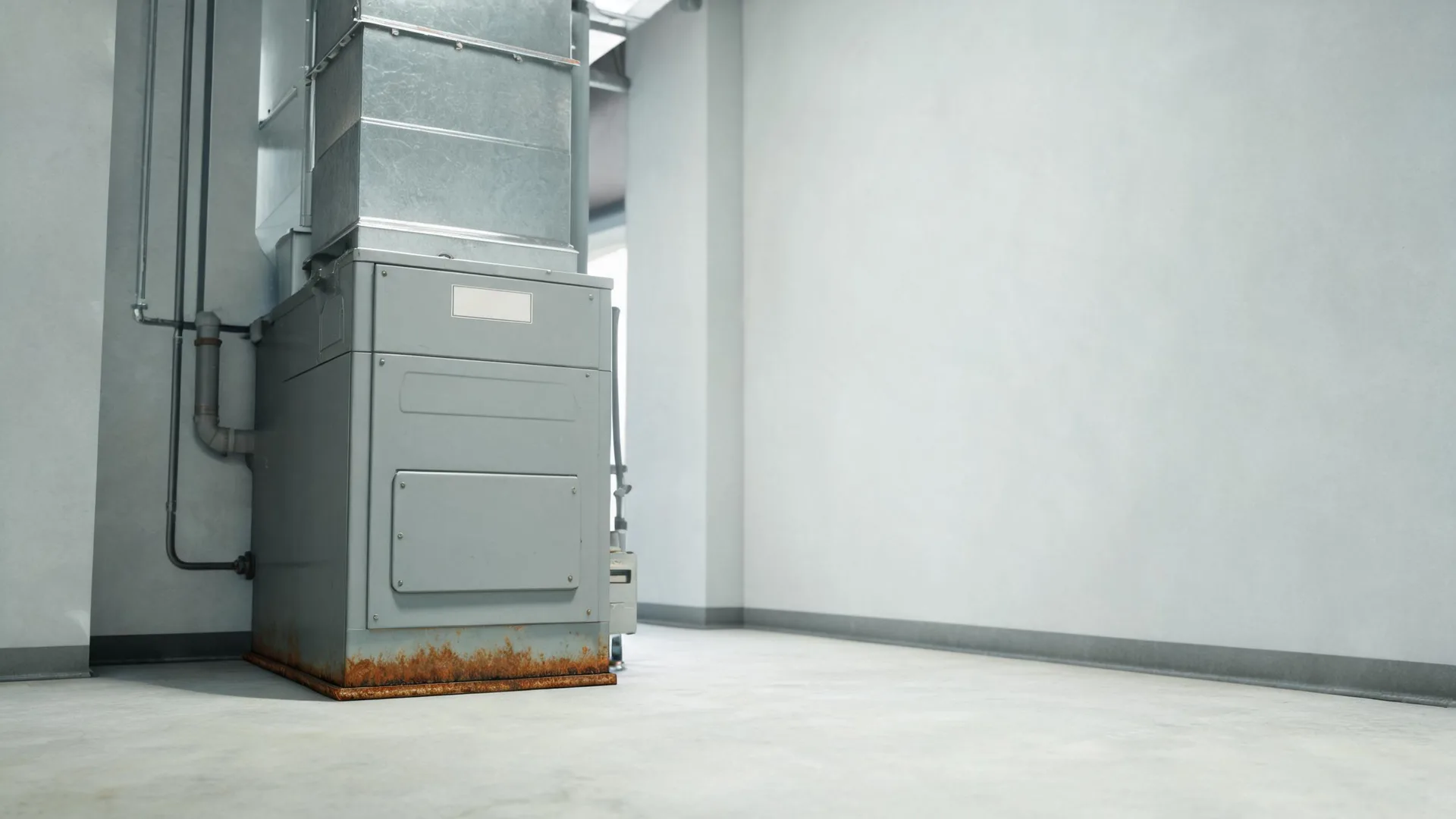
A gray residential gas furnace installed in an unfinished basement, surrounded by ductwork, a metal flue pipe, and a gas supply line.

Why a small problem does not stay small

A cracked heat exchanger stays small until the metal keeps flexing open and shut with every cycle, and that is what widens the crack. A blower motor with a failing bearing runs hotter each time it turns, until it seizes. An igniter that is already weak draws the same current on every cycle, and one more firing is what ends it. None of these improve by running. The furnace does not wear back into shape, it just spends the life the part had left. A furnace cycling oddly or making a new sound is telling you about one part, not asking to be left alone.

What you'll notice first

A furnace in trouble usually shows up in how the air feels, not in a warning light. Rooms that used to heat evenly now have cold spots. The blower runs longer than it used to, or it short cycles, kicking off a few minutes after it starts. The air coming out of the vents feels cooler than normal, even though the furnace is running. A burner that should light with a quiet whoosh instead clicks several times before it catches, or doesn't catch at all.

Noise and smell tell you where to look

A new sound means a part is wearing, not that the furnace is old. A rattle usually means a loose panel or a blower wheel out of balance. A screech points to a bearing. A burning dust smell in the first run of the season is normal, but it should clear in a few minutes. If it lingers, or you smell something closer to gas, that's not a smell to wait out. The furnace is already telling you which part to check before it fails outright.

An empty unfinished basement containing a forced-air furnace with overhead ductwork, exposed ceiling joists, and a single hanging light bulb.

A new furnace would cut about $50 a year off heating for a typical Merced County home.

  • A new high-efficiency furnace$260 a year
  • An older furnace$310 a year

Estimates for a typical Merced County home, compared with an older unit built to the previous federal minimum, from EIA household energy data, California fuel prices and NOAA climate normals. Your home will differ.

Repair makes sense when one part has failed and the heat exchanger is sound.

Replacement makes sense when the heat exchanger is cracked or the furnace keeps needing parts.

A repair is worth doing when the part explains the symptom. A cracked heat exchanger, a blower motor on its last bearing, a control board that has already failed once, these are reasons to talk replacement, because the part failing is central to what the furnace does and the rest of the unit is the same age. Most furnace calls are not that. A bad igniter, a flame sensor that needs cleaning, a pressure switch, a capacitor, these fail on their own schedule and fixing one tells you nothing about the rest of the unit. The furnace around that part is often fine. A technician can tell you which kind of problem you have once they have opened it up, and that is a better answer than guessing from the symptom alone. Age matters less than how the furnace has been maintained and how it has been running up to now.