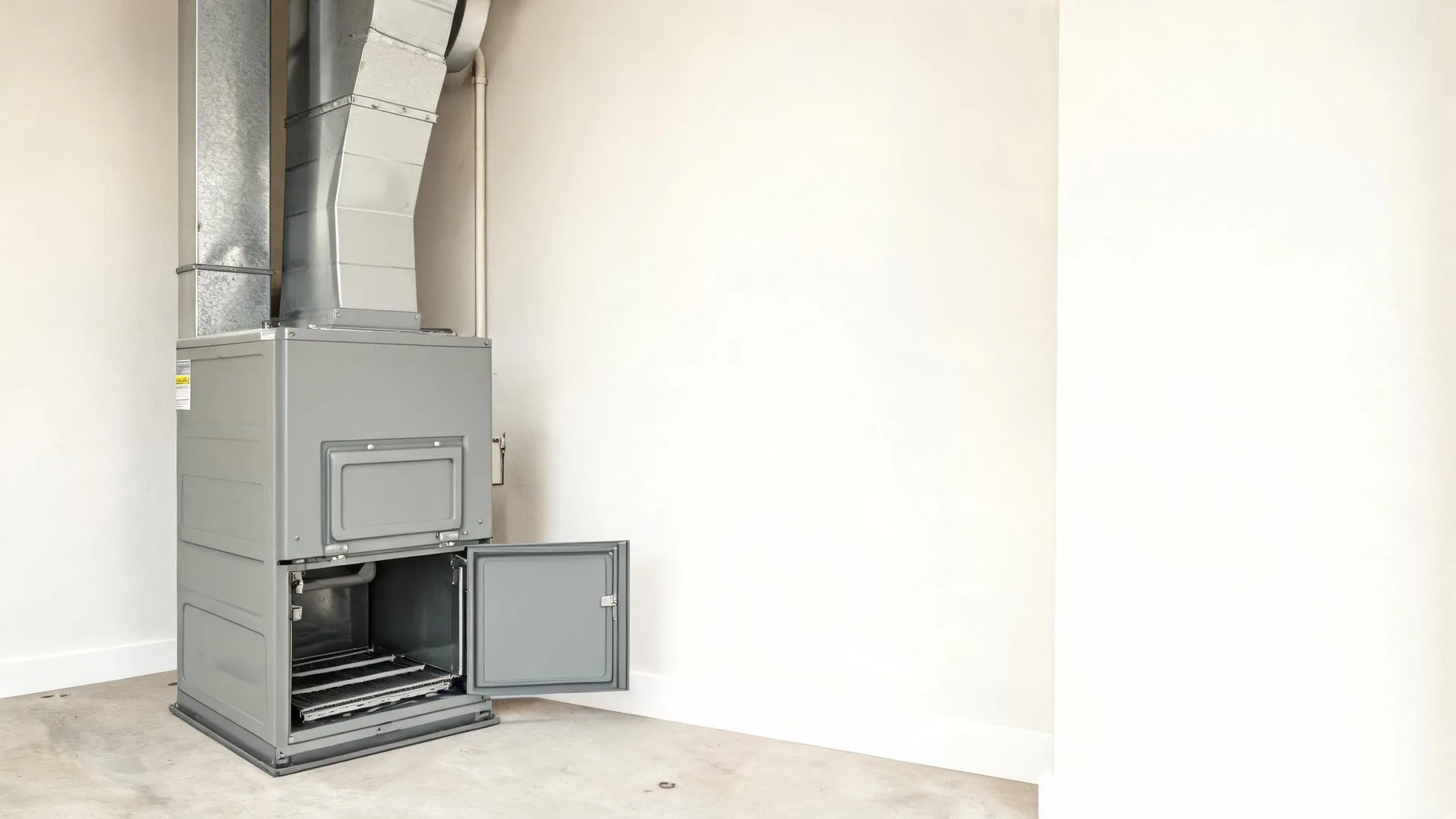
Six months of work
Furnaces in Napa County run from November through April. The rest of the year it sits off completely, which gives it a real break most years.
Takes about a minute. No obligation.
Furnaces in Napa County run from November through April. The rest of the year it sits off completely, which gives it a real break most years.
Overnight lows average 39°F through December, January and February. That's not a hard freeze a furnace has to fight against, so parts here tend to wear slower, and a repair is more often worth doing than a sign the unit is finished.

NOAA nClimDiv, 1991–2020 normals
A furnace that short cycles, running a few minutes and shutting off before the house warms up, is usually fighting a clogged filter or a flame sensor losing its signal.
Short cycling puts more wear on the ignition system than a normal heating cycle does, so the problem tends to get worse the longer it runs that way.



If your furnace is acting up, that's more likely a part worth fixing than a system worth replacing. A furnace that's only run six mild winters, say, hasn't taken the beating one in a colder state has. So when something goes wrong, the common causes, a dirty filter, a failing igniter, a flame sensor that needs cleaning, are usually fixable rather than signs the unit is done. Worth getting it looked at before you write it off.
It has an easier job here than in most places, so your furnace is often in decent shape. Repair is usually worth it.
Find a contractorA furnace that's struggling doesn't fix itself by staying on longer. If the flame sensor is losing its signal, the furnace shuts off mid-cycle, tries again, and shuts off again, and every one of those restarts puts a load on the igniter. Igniters are built to handle a normal number of cycles over a season, not far more than that. A clogged filter causes a different kind of harm. Airflow drops, the heat exchanger runs hotter than it should, and that extra heat stresses a part that's dangerous to ignore if it cracks. None of this shows up all at once. It shows up as a part failing before it should have. Shutting the furnace off and getting the real cause looked at stops that chain before it reaches the parts that matter most.
A furnace needs air moving through it to get rid of the heat it makes. A filter clogged with dust chokes that off. The blower keeps running but can't pull enough air past the heat exchanger, so it runs hotter than it's built for. Left alone long enough, that's what cracks a heat exchanger, warps a blower wheel, or trips the limit switch over and over.
Hot surface igniters are thin, and they're built to handle a set number of on-off cycles before they fail. Every limit trip, every failed attempt to catch a flame, uses up part of that life. A furnace that's been short cycling for weeks has usually put more wear on its igniter than one that's run clean all season, so that's often the part that finally quits.
Estimates for a typical Napa County home, compared with an older unit built to the previous federal minimum, from EIA household energy data, California fuel prices and NOAA climate normals. Your home will differ.
Repair makes sense when one part has failed and the heat exchanger is sound.
Replacement makes sense when the heat exchanger is cracked or the furnace keeps needing parts.
A diagnostic visit starts before any panel comes off. A tech asks what the furnace is doing, when it started, and whether it's one room or the whole house, because that narrows things down fast. Then the cover comes off and the burners get watched through a full cycle, ignition, flame sense, blower kicking in, shutdown. A lot of problems only show up during that sequence, not when the furnace is sitting cold. From there it's testing with a meter, checking the flame sensor's signal, checking that the igniter is pulling the right current, checking static pressure if airflow looks like the issue. The filter gets pulled and looked at regardless, since it rules things in or out fast. By the time the panel goes back on, the cause should be named, not guessed at.