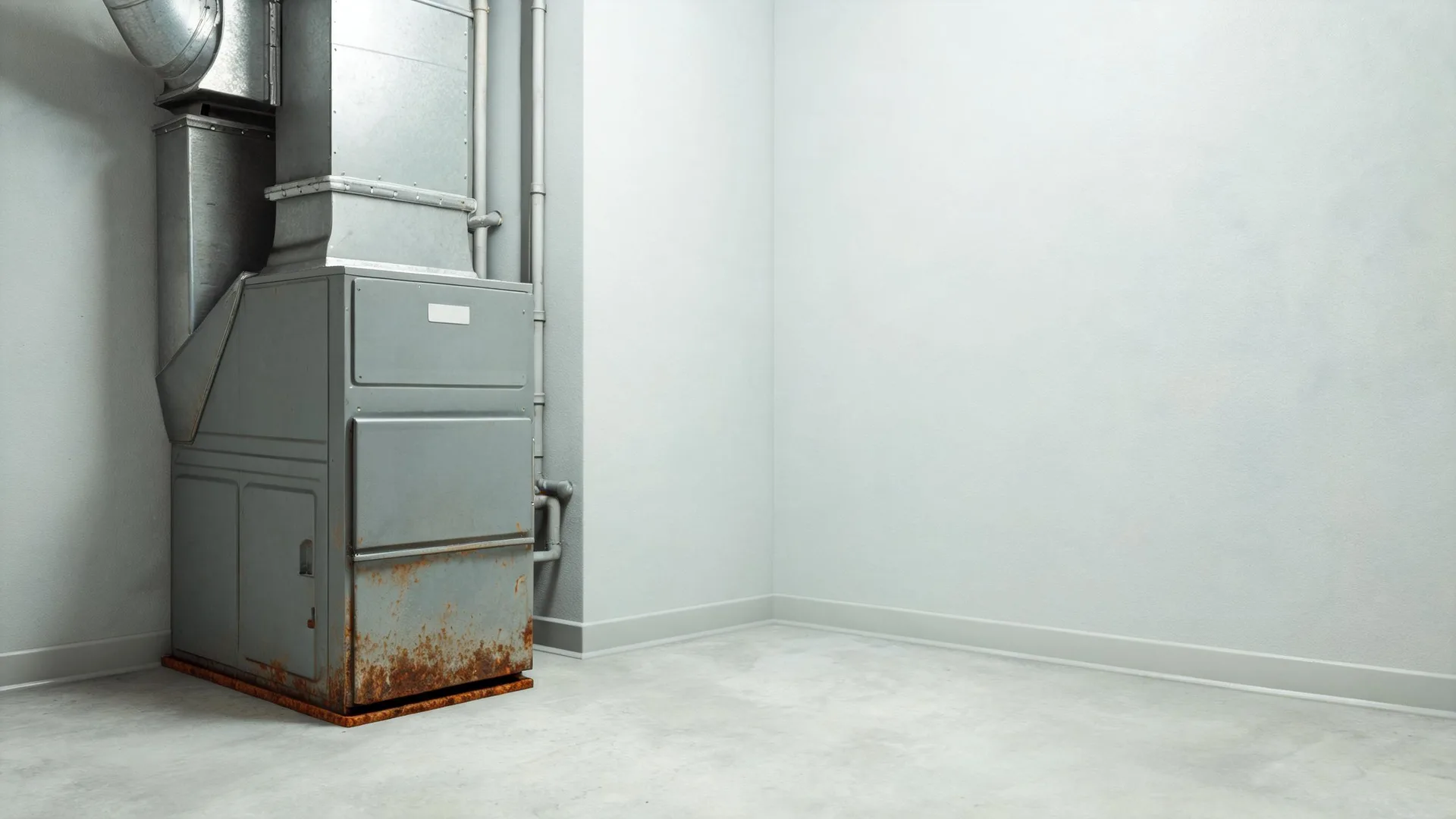
October is check month
Furnaces in Salinas sit unused most of the year and start working again in November. A weak igniter or a cracked heat exchanger can sit quiet through October, before the first cold morning asks something of it.
Takes about a minute. No obligation.
Furnaces in Salinas sit unused most of the year and start working again in November. A weak igniter or a cracked heat exchanger can sit quiet through October, before the first cold morning asks something of it.
A furnace that struggled last winter tends to fail at the same spot once the heat comes back on. Getting it looked at before November means the repair happens on your schedule, not on the first cold morning.

NOAA nClimDiv, 1991–2020 normals
Salinas furnaces run about seven months a year, November through May, and overnight lows average 38°F in winter.
A furnace here isn't working against extreme cold, so a repair is usually worth doing rather than replacing the unit.



Problems tend to show up in the first weeks of the season, when the load hits a part that was already weak.
Find a contractorA furnace that's starting to fail still runs when you ask it to, so it's easy to keep using it. That's what lets a small problem turn into a bigger one. A cracked heat exchanger gets wider with every heat cycle, as the metal expands and contracts around the crack. A blower motor with a failing bearing keeps spinning, but it's working harder to do it, and that heat has nowhere to go. An igniter that glows weak instead of bright is burning out a little more each time it lights. None of these stop the furnace from running right away. They just make the next cycle worse than the last one, until the part that was struggling finally gives out, usually on the coldest morning of the stretch.
The furnace runs longer than it used to, or it cycles on and off more than it should. The air coming out feels cooler than normal. A burning smell on the first run of the season is normal dust burning off the heat exchanger, but if it lingers past that first cycle, something's off. A clicking sound when the igniter tries to light, followed by the burner not catching, usually means the igniter is on its way out.
A furnace that short cycles is shutting itself off before it should, often because a flame sensor isn't reading the flame right or airflow is restricted somewhere. That's a straightforward fix. A furnace that won't stay lit at all, or trips its limit switch repeatedly, points to something further along, like a cracked heat exchanger, and that's worth a careful look before you run it again.
Estimates for a typical Monterey County home, compared with an older unit built to the previous federal minimum, from EIA household energy data, California fuel prices and NOAA climate normals. Your home will differ.
Repair makes sense when one part has failed and the heat exchanger is sound.
Replacement makes sense when the heat exchanger is cracked or the furnace keeps needing parts.
A diagnostic call starts with questions about what the furnace is doing and when, before any panel comes off. Then the cover comes off and the tech watches it run through a full cycle, start to finish, because some problems only show up at a certain point in that sequence. The igniter gets checked for a strong, even glow rather than a weak orange one. The flame sensor gets cleaned and tested, since a coated sensor can mimic other problems that have nothing to do with the sensor itself. The heat exchanger gets inspected for cracks, usually with a camera or a mirror, because that's not something you feel for with your hand. Airflow gets checked too, since a restricted filter or a blocked vent can cause symptoms that look electrical but aren't. By the end, the point isn't just naming the broken part. It's telling you whether that part failing was the whole problem or a sign of something else working too hard.