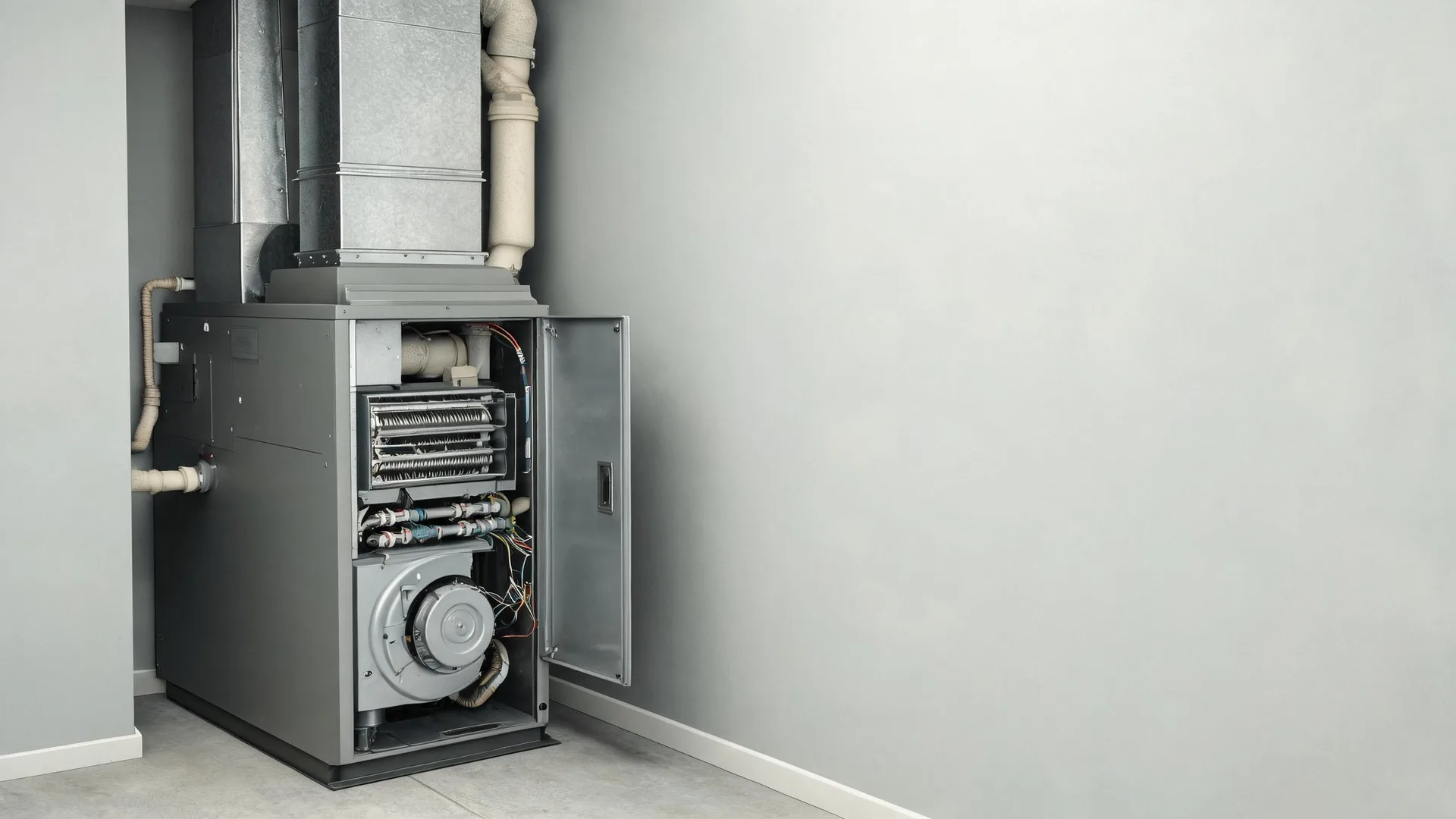
Winter storms hit here often
El Dorado County saw 449 winter storms between 2015 and 2024, along with 225 damaging wind events. That kind of weather is hard on a furnace, especially the vent pipe and any outdoor components tied to the system.
Takes about a minute. No obligation.
El Dorado County saw 449 winter storms between 2015 and 2024, along with 225 damaging wind events. That kind of weather is hard on a furnace, especially the vent pipe and any outdoor components tied to the system.
17% of California households went at least a day without power in 2024. A gas furnace still needs electricity to run the blower and controls, so an outage can leave a house without heat even when the furnace itself is fine.

NOAA nClimDiv, 1991–2020 normals
Half the homes in El Dorado County were built in 1983 or later.
A furnace that age is usually worth fixing, not replacing.
If your furnace came with a newer build, get the actual part fixed rather than pricing out a new system. A cracked heat exchanger or a dead control board doesn't mean the whole unit is done, especially on a furnace that still has years ahead of it. A tech can check the model and tell you where it stands. That's a better first call than replacing a furnace that still had a long life left.
A furnace vent pipe or outdoor component that took a hit from wind or snow won't always show it right away. If yours still runs, that doesn't rule out damage. Worth having a tech check it before the next cold snap tests it.
Find a contractorEight months of heat a year adds up fast. By the time the first real cold snap hits, a furnace has already put in a long stretch of work, and whatever part was already weak is the one that gives out. If yours is short cycling, running loud, or not keeping up, that's worth a real diagnosis, not just a reset. Get the cause checked before the next storm tests it again.
Check that the thermostat is set to heat and the setpoint is above room temperature, and swap the batteries if it uses them. Look at the filter and replace it if it's gray or clogged, since a blocked filter can choke airflow enough to shut the furnace down. Make sure the switch on the furnace itself, the one that looks like a light switch, is flipped on, and confirm the breaker hasn't tripped. If the furnace has a standing pilot, check whether it's lit and relight it following the instructions printed on the unit.
A furnace that clicks but won't ignite, shuts off a few minutes after starting, or trips its breaker repeatedly needs a tech, not another reset. The same goes for a burner flame that looks yellow or flickering instead of steady blue, since that points to a combustion problem. Any smell of gas means leaving the house and calling the gas company before anyone touches the furnace again. These aren't problems a homeowner can safely chase past the basics.
Estimates for a typical El Dorado County home, compared with an older unit built to the previous federal minimum, from EIA household energy data, California fuel prices and NOAA climate normals. Your home will differ.
Repair makes sense when one part has failed and the heat exchanger is sound.
Replacement makes sense when the heat exchanger is cracked or the furnace keeps needing parts.
A diagnostic starts before any panel comes off. The tech asks what the furnace was doing: short cycling, no heat, a smell, a sound, and when it started. Then they pull the panel and check the obvious things first, the filter, the flame, the switch, before testing anything with a meter. From there it's a sequence: check for power at the board, check the pressure switch, check the igniter or pilot, check the flame sensor, watch a full cycle if the furnace will run one. Each test rules something out, and the fault usually shows up as the one thing that doesn't check out clean. A good diagnosis ends with the tech naming the failed part and showing you why it's the cause, not just the most likely guess.