






A grey air-source heat pump outdoor unit mounted on a concrete pad next to a modern white-rendered residential house.

Heat Pump Installation in Anaheim, CA

Tell us about the job

Takes about a minute. No obligation.

New system or replacementHeat PumpOrange County, CA
Step 1 of 2

What ZIP code is the job in?

Most houses in Orange County heat with gas, 67.2% of them. Electricity comes in second at 26.8%. A heat pump replaces that gas furnace with one system that both heats and cools, running on electricity instead. That's a bigger change than swapping in a new furnace, since the electrical circuit serving the unit has to be sized for it, not just the gas line capped off. Where the house already runs on electric heat, a heat pump is the simpler swap, since the power and the panel are already set up for it.

4 months
December through March, your system heats
5 months
June through October, it cools
47°F
the average winter night it heats against
82°F
the average summer afternoon it cools against
Isometric cutaway illustration of a single-story house showing interior ductwork, an indoor air handler, and an outdoor condenser unit connected by lines along the exterior wall.
Your system heats December through March and cools June through October.

NOAA nClimDiv, 1991–2020 normals

Heat pump installs booked for November fill up fast in Anaheim.

Get yours in before November and it's running when heat season starts in December, not partway through it.

Anaheim doesn't need a bigger heat pump than anywhere else, just one installed right

147 severe weather events from 2015 to 2024
17% of homes statewide lost power a day or more in 2024
138 damaging wind events from 2015 to 2024
A heat pump sized for Anaheim works the same as anywhere elseHalf the homes in Orange County were built in 1977 or earlier, half later. Age alone doesn't change the sizing.

Anaheim falls under zone 3B, and any heat pump installed here now has to meet 14.3 SEER2 for cooling and 7.5 HSPF2 for heating at minimum. Those are federal floors for equipment made from 2023 on, so a contractor isn't choosing whether to meet them, only what to install above them. A heat pump that clears those numbers is doing real work in a climate like this one, with its long run of warm months and short mild winter. Orange County doesn't ask more of a heat pump than a cold climate does. It asks something different, more cooling capacity carried over more months, less heating capacity needed at all.

A standard heat pump, sized for what this home actually needs

A standard heat pump, sized normally for this climate, runs on electricity for both heating and cooling. California power runs 31.97 cents per kilowatt-hour, so what a system costs to run matters here as much as what it costs to install. There's no reason to size this bigger than a normal home needs. A standard unit, installed right, covers it.

Find a contractor
A gray heat pump condenser unit mounted on a concrete pad against the gray lap-siding exterior wall of a house.

The number on the label is what it can do, not what it will

SEER2 covers cooling, HSPF2 covers heating, and both describe how much heat the system moves for the power it draws. A higher number means less electricity for the same comfort, not a stronger or bigger unit. That rating holds up over the life of the equipment only if the rest of the install matches it. A coil that's dirty, a refrigerant charge that's off, ductwork leaking air before it reaches a room, any of those drag the real efficiency below what the label promises. The rating also assumes the unit is sized to the house. Oversize it and it short cycles, turning on and off instead of running a steady stretch, and it never settles in long enough to work the way the label says it will. The label is a ceiling. What the system actually delivers depends on everything installed around it.

A load calculation, not a guess off the old furnace

Sizing a heat pump means working through the house room by room. How much wall and window area it has. Which way each room faces. How much air leaks through gaps around doors and framing. How much insulation sits in the attic and the walls. A contractor works through that math before quoting equipment. Matching the new heat pump to whatever number was stamped on the old furnace skips that step, and a gas furnace was never sized by the same math a heat pump needs.
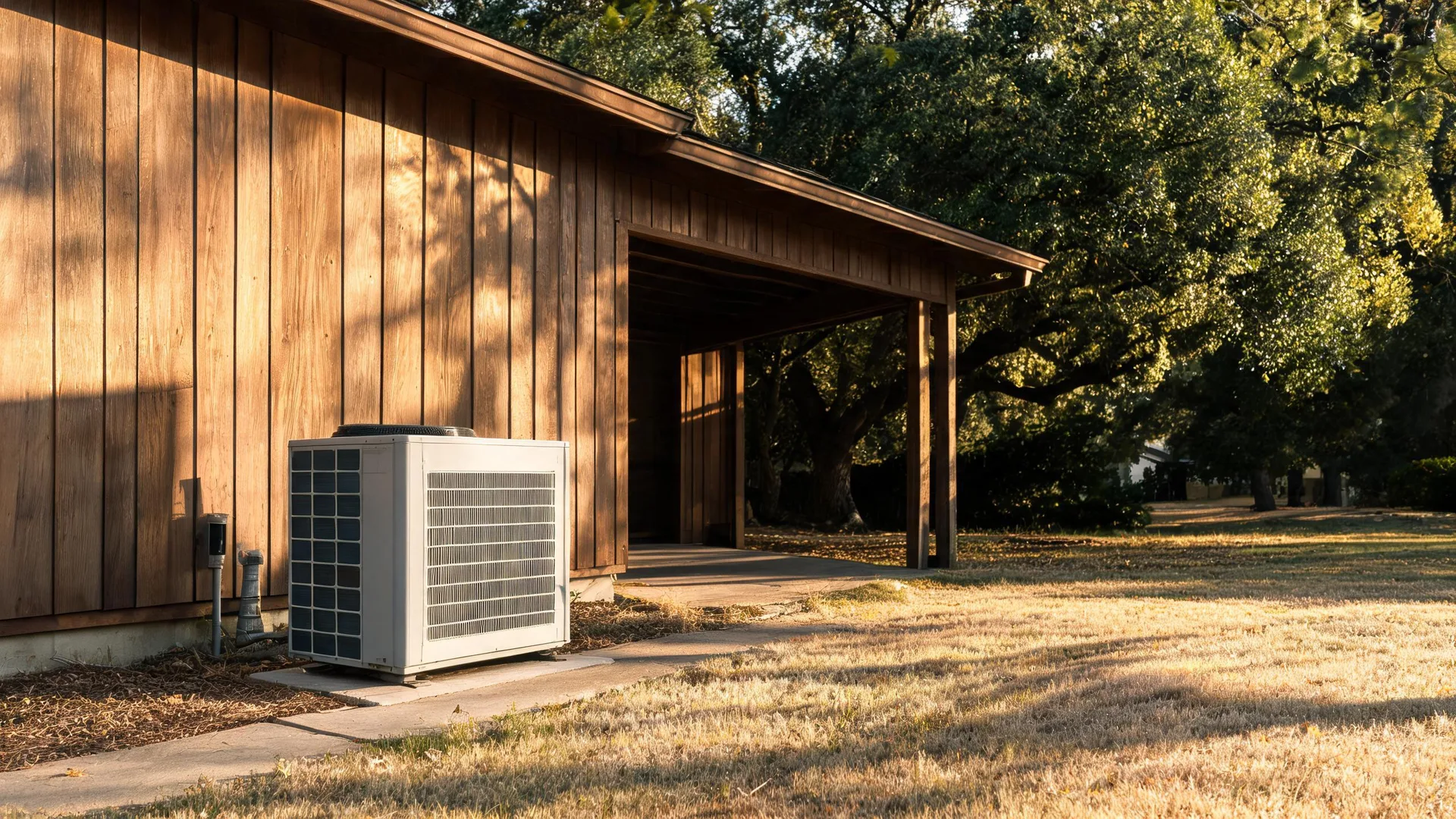
Oversized hurts comfort, not just the equipment

A heat pump too big for the house blasts the space to temperature fast, shuts off, then sits idle until the room drifts again. That cycling keeps humidity high indoors. The system never runs long enough to pull moisture out of the air. It also wears the compressor down through constant starts and stops instead of long steady runs. Undersized has the opposite problem. It runs flat out and still falls behind on the hottest afternoons. A heat pump sized right runs long steady stretches, holds the temperature, and pulls moisture out of the air as it goes.

When a heat pump goes in to replace a gas furnace, the old furnace comes out, and so does the venting that ran with it, the flue pipe that carried exhaust up through the roof. Nothing about the new system uses it, so it gets capped or removed rather than left in place. The gas line that fed the furnace gets shut off and capped too, unless something else in the house still draws from it. What stays is the ductwork, assuming it's in decent shape and sized right for the new airflow. A heat pump moves a steady lower volume of air over a longer stretch than a furnace does, so a contractor checks the duct sizing before assuming it carries over as is. The old thermostat usually gets swapped as well, since a heat pump needs one built to manage a compressor and sometimes a backup heat strip, not the simple on off switching a furnace used.

Installation day starts with the old furnace coming out, and the house runs on neither system while that happens, so a contractor plans to have the new unit in and running before leaving rather than spreading the job across more than one visit. The indoor coil and air handler go in first if they're being replaced. Then the line set that connects indoor to outdoor, then the outdoor unit itself, set on a pad with clearance around it so air can move through it. Electrical work runs alongside all that, since the circuit has to be pulled and sized for the new load before the unit can power on at all. Once everything's connected, the system gets charged with refrigerant to the exact weight the manufacturer specifies, not just until the gauges look close. Startup means checking airflow at the vents, checking the temperature difference between the air going into the system and the air coming back out, and listening for anything that sounds off before calling it finished. A contractor walks the thermostat settings with whoever's home before leaving, since a heat pump thermostat works differently than the one it replaced.