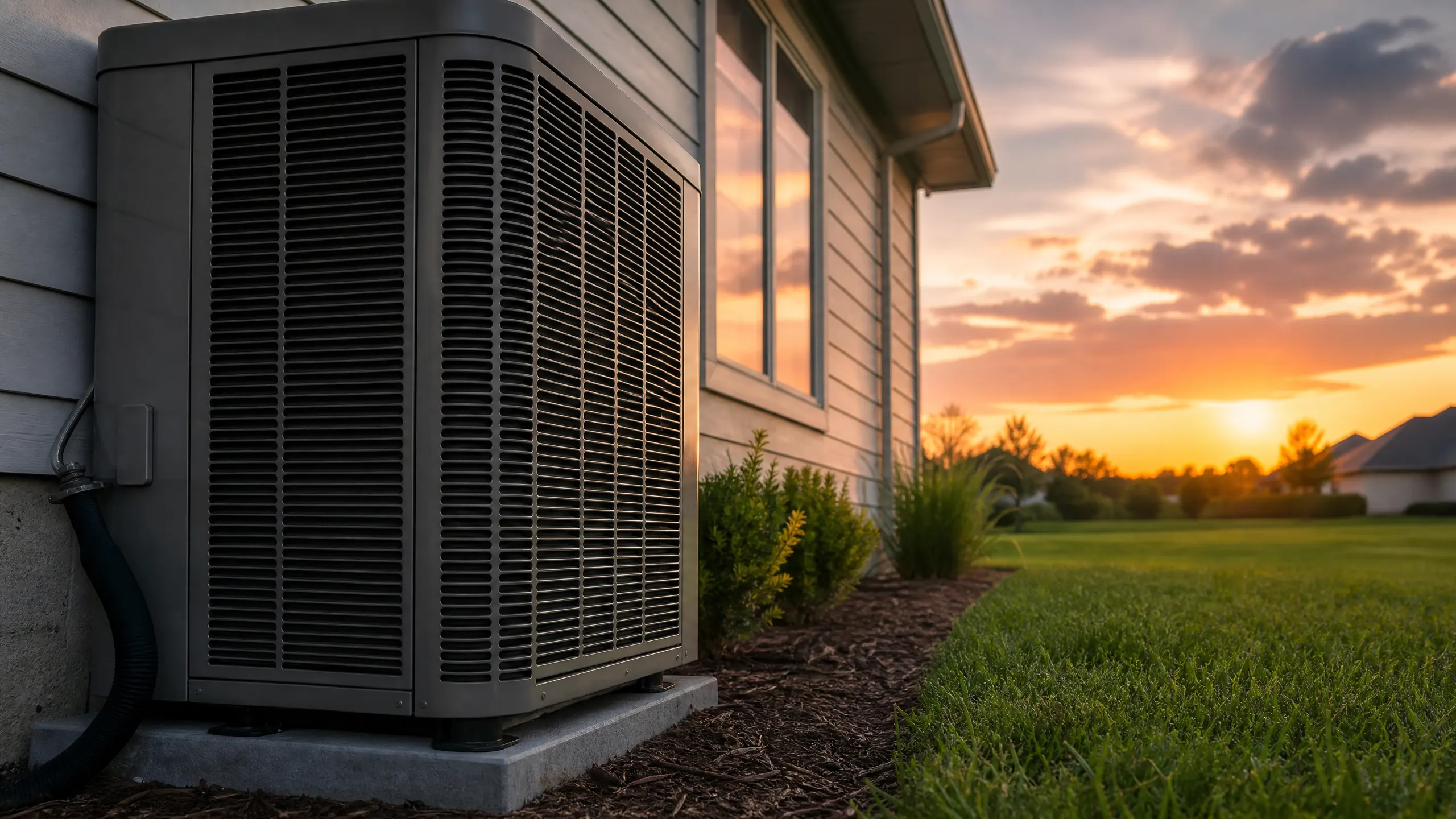







An outdoor air conditioning condenser unit mounted on a concrete pad beside a house at sunset.

Heat Pump Installation in Fresno, CA

Tell us about the job

Takes about a minute. No obligation.

New system or replacementHeat PumpFresno County, CA
Step 1 of 2

What ZIP code is the job in?

Electricity in California runs 31.97 cents per kilowatt-hour, among the highest rates in the country. A heat pump moves heat instead of burning gas to make it, so it gets more out of every kilowatt it draws. In Fresno, where summers push the system hard, that difference shows up on the bill every month, not just once a year. The efficiency rating on the unit you pick matters more here than it would somewhere with cheaper power.

8 months
October through May, your system heats
4 months
June through September, it cools
32°F
the average winter night it heats against
86°F
the average summer afternoon it cools against
Isometric line illustration of a cutaway house showing interior rooms with furniture, a furnace or air handler with overhead ductwork, and an outdoor condenser unit connected by lines outside the wall.
Your system heats October through May and cools June through September.

NOAA nClimDiv, 1991–2020 normals

Heat here runs October through May, eight months out of the year.

Get a heat pump installed before September and it's ready, not rushed.

Fresno sees storms and outages. Where the outdoor unit goes and how it's protected matters.

378 severe weather events from 2015 to 2024
17% of homes statewide lost power a day or more in 2024
179 damaging wind events from 2015 to 2024
Most of Fresno heats with gasUtility gas heats 53.7% of homes in Fresno County, electricity heats 35.8%

Winter lows here average 32°F. A heat pump isn't fighting deep cold to keep a house warm, and that's most of what wears one out over time. The storms that hit Fresno County bring wind and the occasional bout of snow or ice, but the cold itself stays mild. That's an easier job than this kind of system faces in most of the country. You don't need the highest-efficiency model on the market to get through a Fresno winter in good shape. A well-matched, reliably built system will do it for years, and when something does go wrong later on, it's more likely age catching up with it than the system having been pushed too hard.

Fresno sets a floor. Your system should clear it by more than a little.

Fresno falls in climate zone 3B. Any heat pump installed here now has to meet 14.3 SEER2 for cooling and 7.5 HSPF2 for heating at minimum. That floor narrows the field before you even start comparing units. A federal tax credit is available for equipment that qualifies, which helps offset choosing one built to last rather than the cheapest one that clears the minimum.

Find a contractor
A man in a cap, gray long-sleeve shirt and tan work pants carries a worn canvas tool bag up wooden porch steps toward a blue front door, with a potted shrub to the left.
A residential heat pump outdoor unit mounted on a concrete pad next to a house with gray vinyl siding.

This system runs every month, not just the hot ones

A heat pump runs in both directions, all year, so there's no off season where it just sits. The compressor cycles on through summer afternoons and winter mornings alike, and every hour it runs is an hour the bearings, the valves and the windings are working. What drives installation cost is mostly what stands between the equipment and a long working life. A variable-speed compressor costs more up front than a single-stage one because it ramps instead of slamming on and off, and that gentler start adds years to the system. Line sets add up fast too, especially if the path between the indoor and outdoor unit isn't simple and the refrigerant lines have to be run through walls or attic space. Electrical work matters just as much. The unit needs a dedicated circuit sized correctly, breakers that match, and a disconnect placed where code wants it. None of that shows once the covers go on, but skipping it is how a system ages badly before its time. The brand on the cabinet matters less than the compressor inside it and whether the crew set the charge and checked the airflow before they left.

Ask what the system does below freezing

Every heat pump loses some capacity as the outdoor air gets colder, and at some point it needs backup heat to make up the difference. Ask where that point is for the specific unit you're quoted, not the brand in general. Systems with the same rating on paper can start leaning on backup heat at different outdoor temperatures, and that backup heat usually costs more to run.
Ask who sized the system, and how

The right size comes from a room-by-room load calculation on the house itself, not a guess based on square footage or what the old system was. An oversized unit short cycles, turning on and off more than it should, which wears out parts faster and leaves the house less comfortable. An undersized one runs constantly and still falls behind. Ask to see the calculation, not just the recommendation.

Sizing a heat pump comes down to how much heat the house loses in winter and gains in summer, and that's worked out room by room, not by square footage alone. The calculation accounts for window area, which way the house faces, how many exterior walls each room has, and how much attic and wall insulation it's working against. A contractor measures all of that and runs the numbers rather than matching whatever size the old system happened to be. The old system might have been wrong from the day it went in, or it might have been sized for a roof or windows that aren't there anymore. Get the size wrong and the unit itself pays for it. Too big, and it blasts the house to temperature and shuts off before it's pulled any moisture out of the air, then starts again a few minutes later. Too small, and it runs nonstop trying to catch up and never quite does. Either way, the parts inside work harder than they should, cycling more or running longer than they're built for, and that's what shortens the life of a system that should otherwise last for years.

Installation starts with the old equipment coming out, not the new unit going in. If there's an existing system, it gets disconnected and removed before anyone touches the new one. The indoor air handler or furnace coil goes in first, since the outdoor unit connects to it. Refrigerant lines get run or reused, then pressure tested to make sure there are no leaks before any charge goes into them. The outdoor unit gets set on a pad, leveled, and connected to power on its own dedicated circuit. Once everything's connected, the system gets charged with refrigerant to the exact amount the manufacturer specifies, not just topped off by feel. Then comes airflow testing and a check that the thermostat is talking to the system the way it should. A job done right ends with the contractor walking the house with you, not just packing up and leaving.