







White stucco buildings with terracotta roofs glow with warm lighting on a tree-covered hillside at dusk.

Heat Pump Installation in Los Angeles, CA

Tell us about the job

Takes about a minute. No obligation.

New system or replacementHeat PumpLos Angeles County, CA
Step 1 of 2

What ZIP code is the job in?

Gas heats most homes in Los Angeles County, 62.6 percent of them. Electricity is next at 29.3 percent. A heat pump replaces that gas furnace with one system that heats and cools, running on electricity instead. If your home already has central air, the ductwork and the electrical panel may be most of what's needed to make the switch. If it doesn't, that's worth finding out before you decide what to install.

6 months
November through April, your system heats
4 months
June through September, it cools
41°F
the average winter night it heats against
87°F
the average summer afternoon it cools against
Isometric line illustration of a cutaway single-story house showing interior rooms with beds and furniture, ceiling ductwork connected to an indoor air handler, and an outdoor condenser unit linked by refrigerant lines.
Your system heats November through April and cools June through September.

NOAA nClimDiv, 1991–2020 normals

Los Angeles County saw 112 damaging wind events over the past decade and nine winter storms.

None of that calls for anything beyond a standard heat pump sized to your home.

Winters here average 41°F at night. A heat pump doesn't have to work hard to keep up with that.

112 damaging wind events from 2015 to 2024
9 hail events from 2015 to 2024
9 winter storms from 2015 to 2024
A standard system, sized rightElectricity runs 31.97 cents a kilowatt-hour here, so a right-sized heat pump matters more than a big one.

Half the homes in Los Angeles County were built in 1965 or earlier. If yours is one of them, the ductwork and the panel are worth a closer look before you install, not after, since neither was necessarily sized with a heat pump in mind. That's not a problem on its own. It just means the fit has to be checked on a house this age rather than assumed. A newer home built with central air already in place has usually settled that question. An older one may not have.

Install before October, ahead of the heat season

Heat runs here from November through April. October is the last month before it starts, and it's the better time to put in a new system than the middle of a cold snap. Get it installed before October and it's set up on a normal schedule, with time to fix anything that comes up before you need the heat.

Find a contractor
A man in a dark cap, dark shirt and tan pants, seen from behind, carries a canvas tool bag up concrete steps toward a blue front door, with a potted green plant in a blue planter beside the entry.
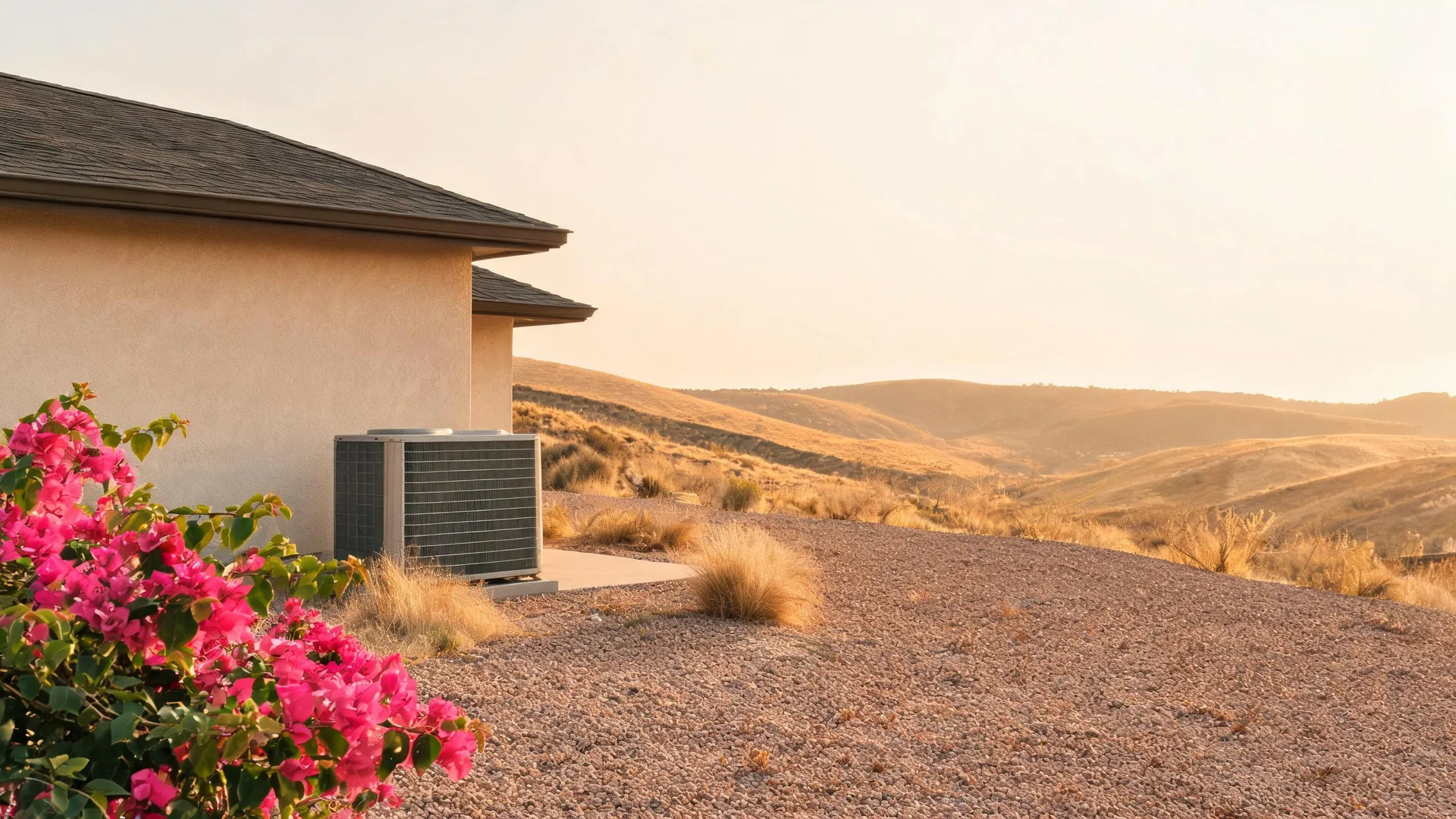
A gray outdoor HVAC unit mounted on a concrete pad beside a house with gray lap siding and a stone foundation.

Sized to the house, not guessed at

Sizing comes from a load calculation, not the square footage alone. A contractor works out how much heat the house loses on a cold night and how much it gains on a hot afternoon, using the window area, the insulation, and how the ductwork moves air room to room. That number tells them which unit to install, not the other way around. A unit sized too big satisfies the thermostat fast and shuts off, then starts again a few minutes later. That's called short cycling, and it keeps the compressor starting and stopping instead of settling into a steady run, which is where it wears the least. A unit sized too small just keeps running and still falls behind when the temperature drops. Right-sized, it ramps up to meet the load and holds there, which is the easiest kind of running on the equipment.

Size drives the cost, not the brand name

A heat pump has to be matched to the square footage, the window area, and how the ductwork distributes air through the house. A contractor works this out with a load calculation, not a guess. Go too big and the unit short cycles, turning on and off instead of running steady. Too small and it can't keep up on the coldest nights. Either way you're paying for a mistake, so the sizing work upfront is what gets the installation cost right, not what model you pick.
What's already there changes what the job involves

If the ductwork fits the new airflow and the electrical panel has room for the new circuit, installation is mostly swapping equipment. If the ducts were sized for a furnace and move less air than a heat pump needs, or the panel is already near capacity, that work has to happen before the heat pump goes in, not after. Finding out which situation you're in is what separates a straightforward swap from a bigger job.

The old furnace doesn't need to come out for any technical reason, it just has no job left once the heat pump is carrying both heating and cooling. Whoever installs the new system disconnects the gas line to the furnace and caps it, since that line has to be sealed off properly and not just left capped loosely at the valve. If the furnace sat in the airflow path, the ductwork gets reworked so air moves straight to the heat pump's coil instead. Some installers pull the old furnace out entirely to free up the space it sat in, others leave the cabinet in place if it's not in the way. Either way, the gas meter stays unless you ask the utility to remove it, since the stove or water heater may still run on it.

The crew sets the outdoor unit on a pad or mounting bracket first, then runs the refrigerant lines to the indoor coil. Before any refrigerant goes in, the system gets evacuated to pull out moisture and air, since either one left in the lines causes problems later. Electrical hookup and any ductwork changes happen alongside that. Near the end, the contractor charges the system, checks refrigerant levels against the manufacturer's spec, and runs it through a heating and cooling cycle to make sure it responds the way it should. Walk through what was done before the crew leaves, and ask what the normal operating sounds are so you know what to expect once it's running on its own.