







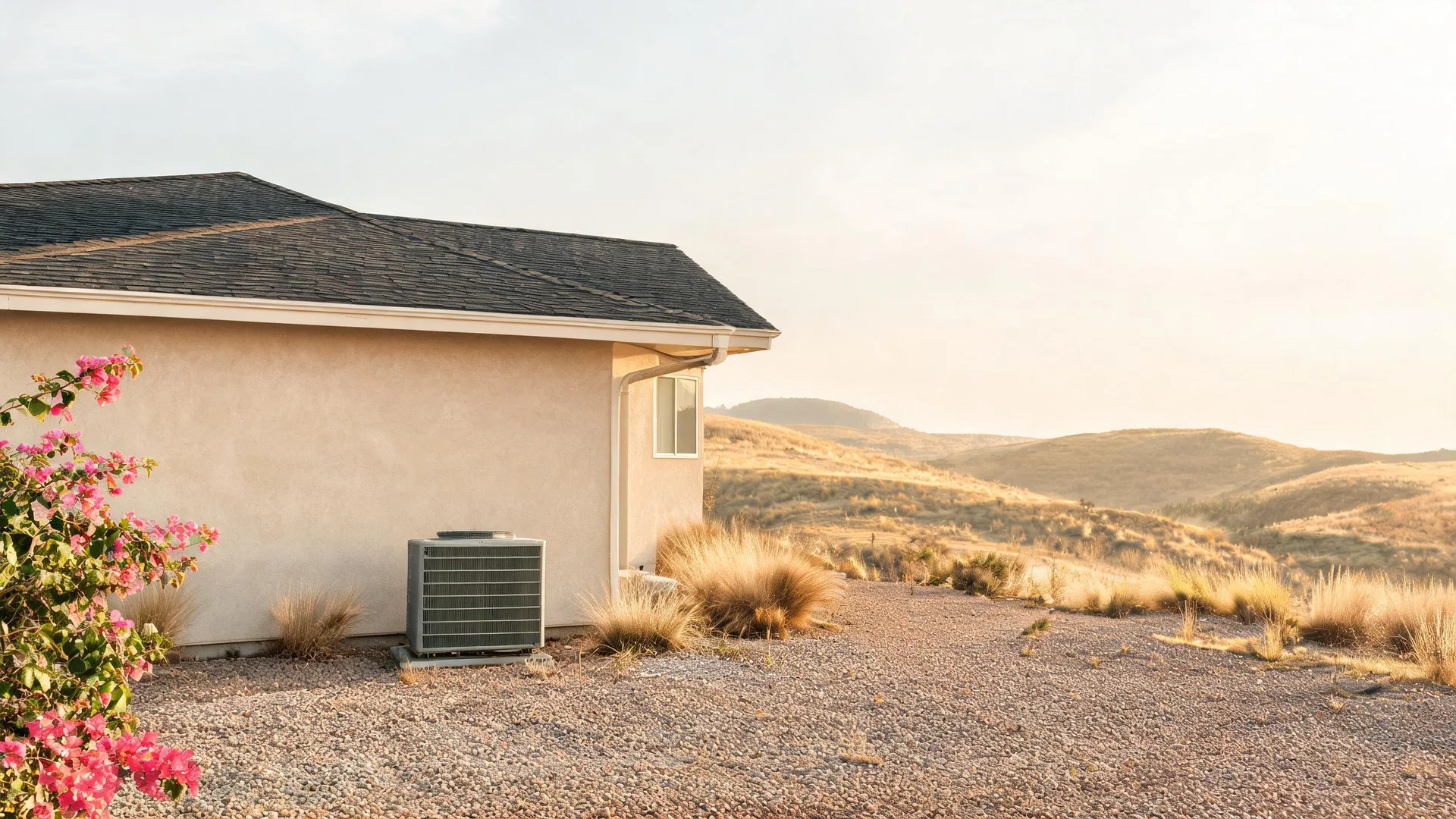
An outdoor air conditioning condenser unit mounted on a concrete pad next to a residential house at sunset.

Heat Pump Installation in Roseville, CA

Tell us about the job

Takes about a minute. No obligation.

New system or replacementHeat PumpPlacer County, CA
Step 1 of 2

What ZIP code is the job in?

Electricity in California ran 31.97 cents per kilowatt-hour in 2024, among the highest rates in the country. A heat pump moves heat instead of burning fuel to make it, so it gets more out of every kilowatt-hour than straight electric heat does. At that price, the difference between a unit with a good efficiency rating and one without shows up on every bill. Roseville gets hot enough that the same unit is doing double duty, cooling the house all summer too. Worth asking any contractor you talk to for the efficiency rating of what they're proposing, and what size fits your house, before you decide.

8 months
October through May, your system heats
2 months
July through August, it cools
32°F
the average winter night it heats against
84°F
the average summer afternoon it cools against
Isometric line illustration of a cutaway single-story house showing interior rooms, ceiling ductwork connected to an indoor air handler, and refrigerant lines running to an outdoor condenser unit on a pad.
Your system heats October through May and cools July through August.

NOAA nClimDiv, 1991–2020 normals

Gas heats 61.2% of homes in Placer County, more than any other fuel.

A heat pump replacing a gas furnace means swapping the fuel the house runs on, not just the equipment.

Heat runs eight months here. Get it installed in September, not in October when you need it.

Cooling runs July through August
Heat runs October through May
223 damaging wind events from 2015 to 2024
Power here costs moreCalifornia electricity ran 31.97 cents per kilowatt-hour in 2024.

Overnight lows here average 32°F in December and January. That's cold enough to need heat, but it's not the kind of deep freeze that makes a heat pump work hard all night to keep up. Placer County gets plenty of winter storms, but those are snow and ice up in the higher country, not conditions down here in Roseville. A system sized right for this house won't be pushed near its limit on the coldest nights the way it would further east or up in elevation. That's reason enough to pick a reliable, correctly sized unit rather than chasing the highest efficiency rating on the shelf. A well-built system will hold up fine here for years without being strained.

Efficiency pays here

Power costs more here, so an efficient system pays you back on every bill.

Find a contractor
A man in a cap, dark long-sleeve shirt, tan work pants and boots walks up wooden porch steps toward a teal front door, carrying a canvas tool bag with hand tools.
A gray heat pump outdoor unit mounted on a concrete pad next to the stone-accented exterior wall of a house.

Built to last, not to struggle

A correctly sized system here isn't cycling against 32°F nights the way one would further up in elevation. That's less strain over the life of the unit, so the money is better spent on a solid install, good ductwork, correct sizing, than on chasing the highest rating on the shelf. Ask what size the contractor is proposing and why, before you ask about the rating.

The ductwork decides a lot of it

If the house already has ducts that are sealed well and sized right, a heat pump connects into them and the job is mostly swapping equipment. If the ducts are leaky, undersized, or were built for a furnace that pushed air differently, they may need rework before the new system can heat and cool the way it's supposed to. That part of the job is often worth more than the unit itself.
Going from gas means new wiring, not just a new unit

A furnace burns fuel and only needs enough electricity to run a blower. A heat pump runs on electricity alone, moving real heat through it, so it draws a lot more power. The electrical panel and the circuit feeding that spot may need upgrading to carry the load, and that's work an installer has to price separately from the equipment.

The rating on the label, SEER2 for cooling and HSPF2 for heat, tells you how much heat the unit moves for the electricity it uses. A higher number means less power for the same comfort, but only if the rest of the install backs it up. A top-rated unit choked by cramped ductwork or a bad charge won't perform like its label says. The rating is measured under set lab conditions, so it's a way to compare one unit against another, not a promise of what your bill will look like. Ask what rating a proposed system carries, and whether the ductwork and electrical can actually support it, before you weigh that number too heavily.

Installation day starts with the old equipment coming out, then the ductwork and electrical get checked against what the new system actually needs rather than just bolted to what's there. The outdoor unit goes on its pad or mount, the indoor coil ties into the ductwork, and refrigerant line gets run and connected between them. Before any refrigerant goes in, that line gets evacuated to pull out moisture and air, because either one trapped in there causes problems down the road. The contractor checks the charge against the manufacturer's spec, confirms airflow at the vents, and sets up the thermostat to run the system correctly. A heat pump often needs different thermostat settings than a furnace did, since it heats differently and may have backup heat wired in alongside it. Before anyone leaves, the system should run through a full heating cycle and a full cooling cycle, so any problem shows up that day instead of the first cold night after.