

What winter here actually asks of a heat pump
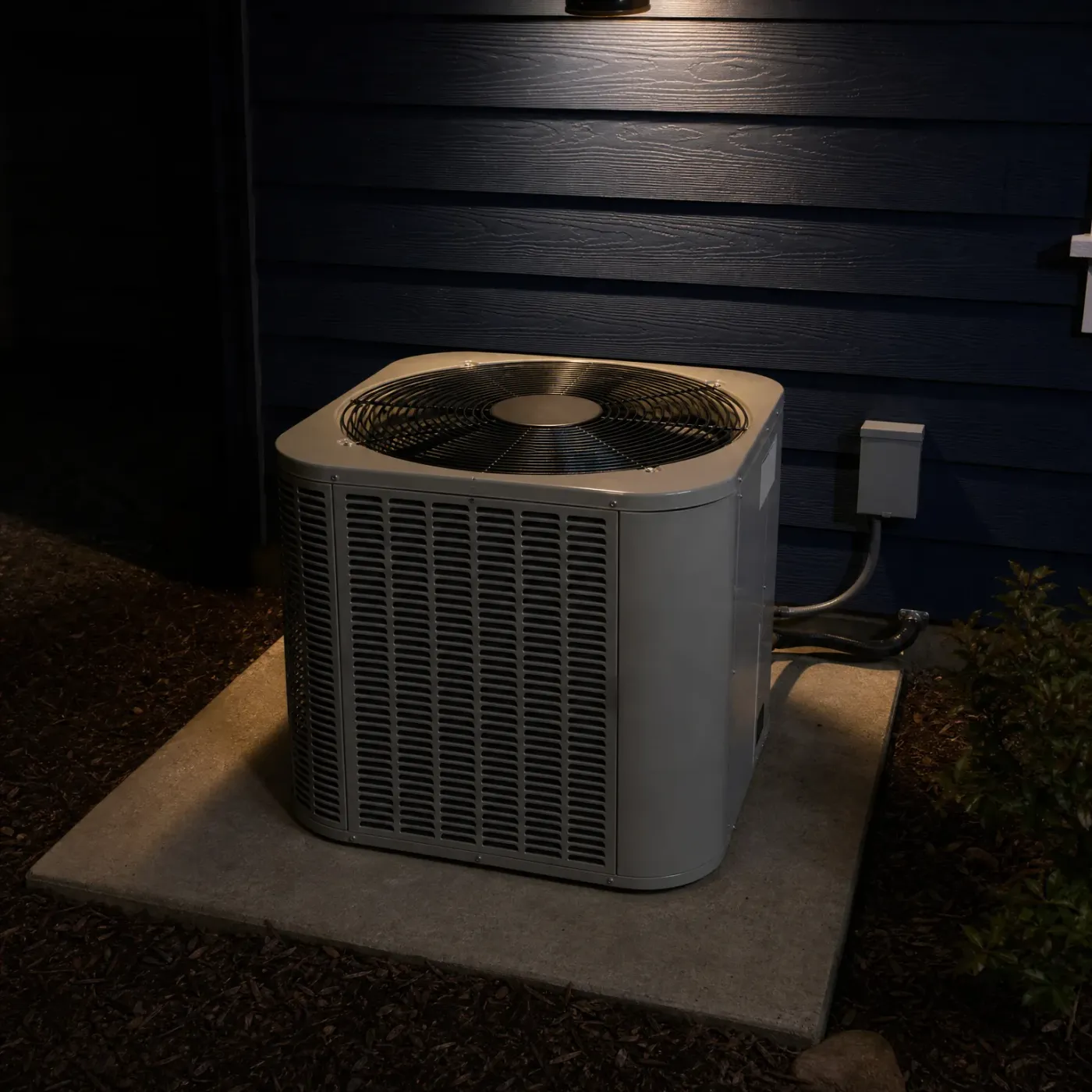
Your winter is mild, and that's the whole case for a heat pump in Placer County. The overnight low averages 32°F across December, January and February, and only about 25 nights a year drop to freezing or below. Almost none of those reach 0°F. A standard heat pump loses capacity below 40°F and often leans on backup heat below about 35°F, but here the hard nights are rare and barely cold, not the long deep freeze that breaks a heat pump's case elsewhere.
If you want that margin covered, an ENERGY STAR Cold Climate heat pump holds at least 70 percent of its 47°F capacity at 5°F and still makes 1.75 units of heat per unit of electricity at that temperature. You will not see 5°F in Placer County. Field tests of these cold-climate units in occupied homes found backup heat carried only a small share of the load even between 0°F and 35°F, and running on backup alone was rare above 0°F. In a county where freezing nights are under a quarter of the heating season and 0°F does not happen, that backup element will sit mostly idle.
Heating is also the season that matters most here. Your house runs heat about eight months a year, October through May, against two months of cooling in July and August. A heat pump earns its keep across both, and a furnace does nothing for you the other four months. If you already need central air, a heat pump folds that into one system instead of two.