A illuminated Spanish Colonial Revival estate with white stucco walls and red tile roofs nestled at the base of golden oak-covered hills at dusk.

Furnace Installation in Roseville, CA

Tell us about the job

Takes about a minute. No obligation.

New system or replacementFurnace or heatingPlacer County, CA
Step 1 of 2

What ZIP code is the job in?

Placer County sees real storm activity

Placer County logged 680 severe weather events between 2015 and 2024. Winter storms accounted for 449 of those, and damaging wind hit the county 223 times in the same stretch. Hail and even a tornado have shown up here too.
A furnace needs power to run

A gas furnace still needs electricity to fire the igniter and run the blower. In 2024, 17% of California households lost power for 24 hours or more. When the power goes out in a winter storm, the furnace stops with it.

8 months
October through May, your furnace is on duty
32°F
the average winter night it heats against
61%
of homes here heat with gas, so most furnaces here burn gas
80% AFUE
the federal minimum any new unit must meet
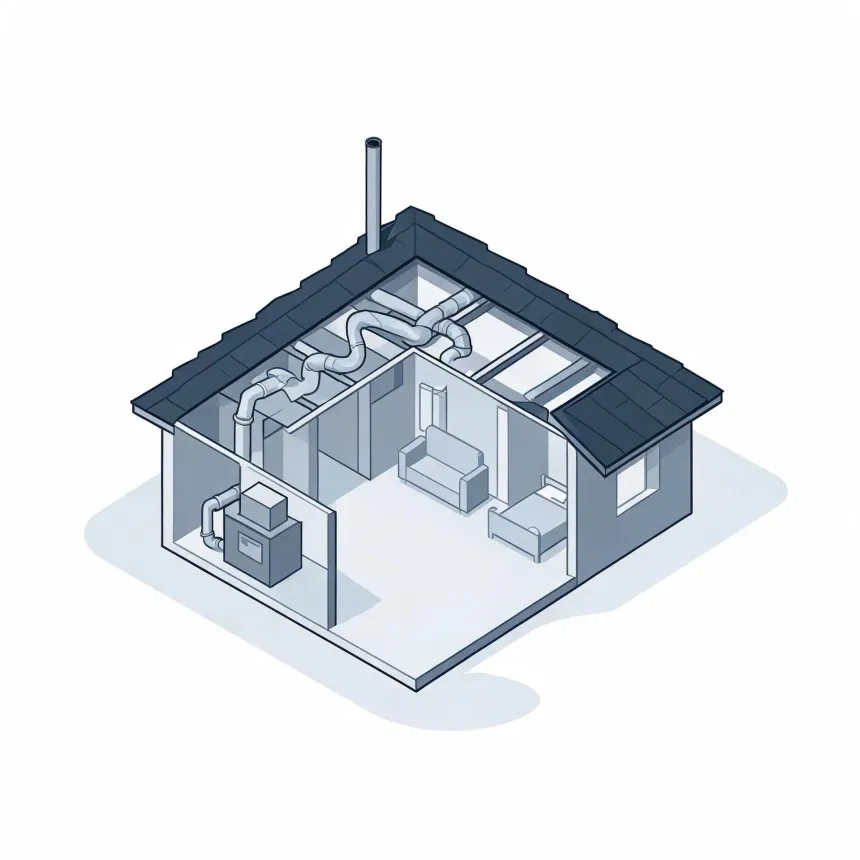
Isometric cutaway illustration of a small house showing a furnace unit connected to ductwork running through the interior and attic, with a chimney on the shingled roof and simple furniture in the rooms.
Your furnace works hardest from November through April.

NOAA nClimDiv, 1991–2020 normals

Gas heats 61.2% of homes in Placer County.

A gas furnace is the standard replacement here, but it still needs power to start and run.

Get the furnace in before October, not after the first cold snap

Heat runs October through May
Winter nights average 32°F
449 winter storms from 2015 to 2024
Built for the power you'll actually haveNatural gas ran $18.44 per million Btu in California last year, cheap enough that a furnace that keeps running through an outage matters more than squeezing out another point of efficiency.

Placer County sits in climate zone 3B, which calls for a lighter heating setup than colder parts of the state. Any new furnace still has to clear the federal minimum, which asks for at least 80 percent efficiency. That floor jumps to 95 percent for furnaces built on or after December 18, 2028. A furnace bought now only has to meet the lower bar, but it's worth asking a contractor which rating the unit they're installing actually carries. A more efficient furnace also tends to draw less power to run its blower and ignition system, which matters here given what the grid already costs.

Plan for the outage before you plan for the cold

Installing a furnace is also the time to decide where equipment sits and how the house handles a power cut. This county logged 223 damaging wind events and 449 winter storms between 2015 and 2024. Work out backup heat and placement with the contractor now, not after the power drops mid-winter.

Find a contractor
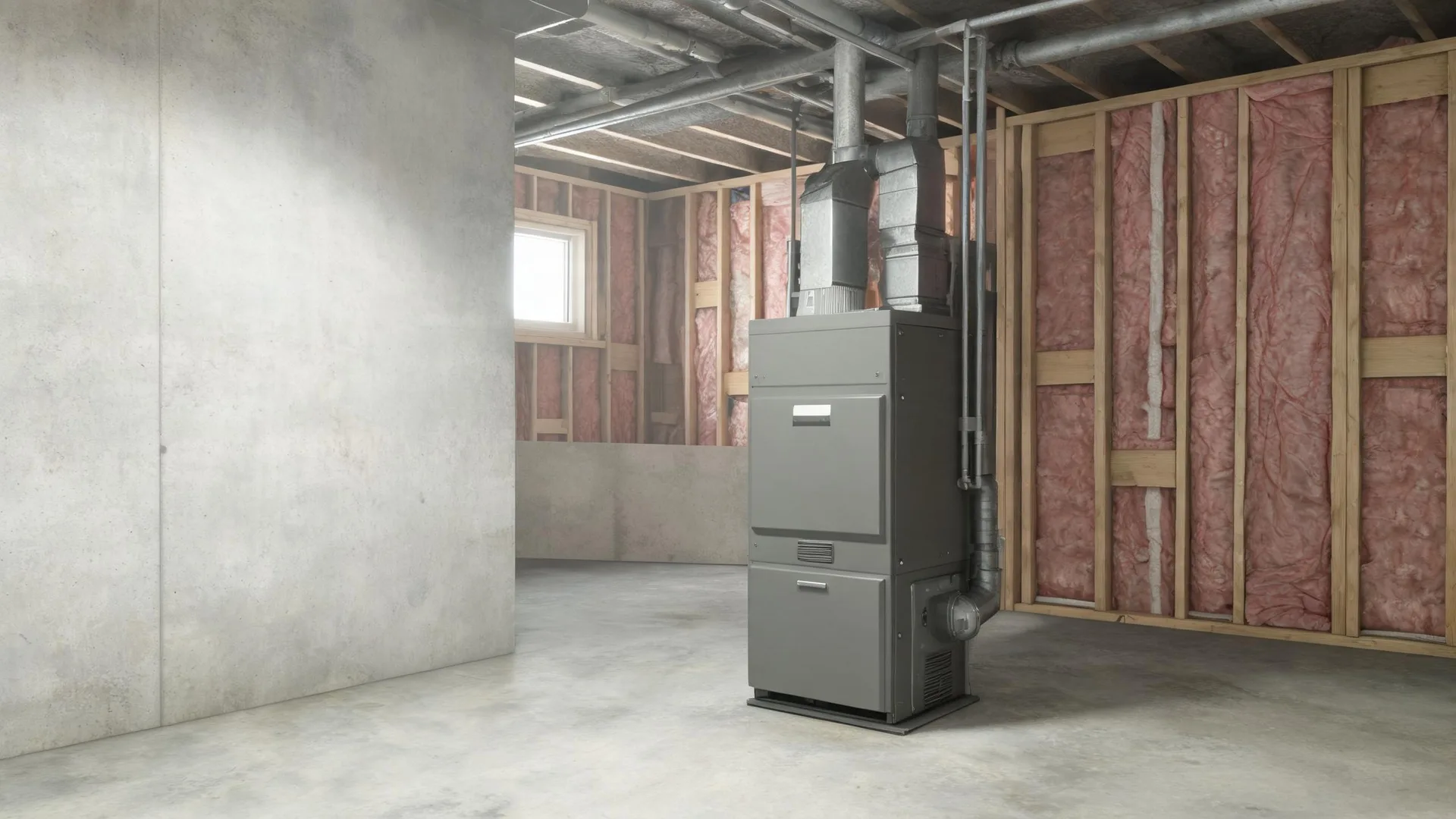
A gray high-efficiency gas furnace installed in an unfinished basement, surrounded by gas lines, a condensate drain, and sheet-metal ductwork.

Eight months of work, every year

Eight months of heat a year is a long work year for a furnace. October through May, this one will run most mornings and most nights, cycling on and off as the house calls for it. That's a lot of ignition cycles on the igniter, a lot of hours on the blower motor. Placer County also logged 449 winter storms between 2015 and 2024, the kind of weather that pushes a furnace to run longer and harder to hold the house at temperature. A unit sized and installed right carries that load for years without trouble. One that's undersized or poorly matched to the house starts showing strain earlier, in the parts that cycle the most.

The size has to match the house

A contractor figures out how much heat a house loses on the coldest night and sizes the furnace to cover it, not just by the square footage. Too big and the furnace short cycles, heating the house fast then shutting off before it runs long enough to warm evenly. Too small and it runs constantly without catching up. Either way the parts that start and stop the most wear out sooner.

The ductwork decides more than the furnace does

A new furnace moving air through old, leaky, or undersized ducts won't heat the house the way it's rated to. Installers often have to seal joints, add a return, or resize a section of duct to get the airflow the new unit needs. That work is part of the job, not an extra, and it's where a lot of the labor on an install actually goes.

An empty unfinished basement containing a forced-air furnace with overhead ductwork, exposed ceiling joists, and a single hanging light bulb.

A high-efficiency gas furnace would save about $90 a year to run in Placer County compared with a gas furnace.

  • A high-efficiency gas furnace$490 a year
  • A gas furnace$580 a year

Estimates for a typical Placer County home, from EIA household energy data, California fuel prices and NOAA climate normals. Your home will differ.

Installation day starts with the old furnace coming out, along with the plenum and any duct sections that don't match what the new unit needs. The contractor sets the new furnace, connects the gas line, and runs new venting if the old vent doesn't match the new unit's exhaust requirements. Electrical and a condensate line get hooked up next if the furnace needs one. Once it's in, the contractor fires it up and checks the gas pressure, the temperature rise across the heat exchanger, and the airflow at the registers. A combustion analyzer tells them whether the burner is tuned right, not just whether it lights. Expect the system to run through a full cycle or two before the contractor calls it done, so they can watch how it actually behaves rather than just that it turns on.