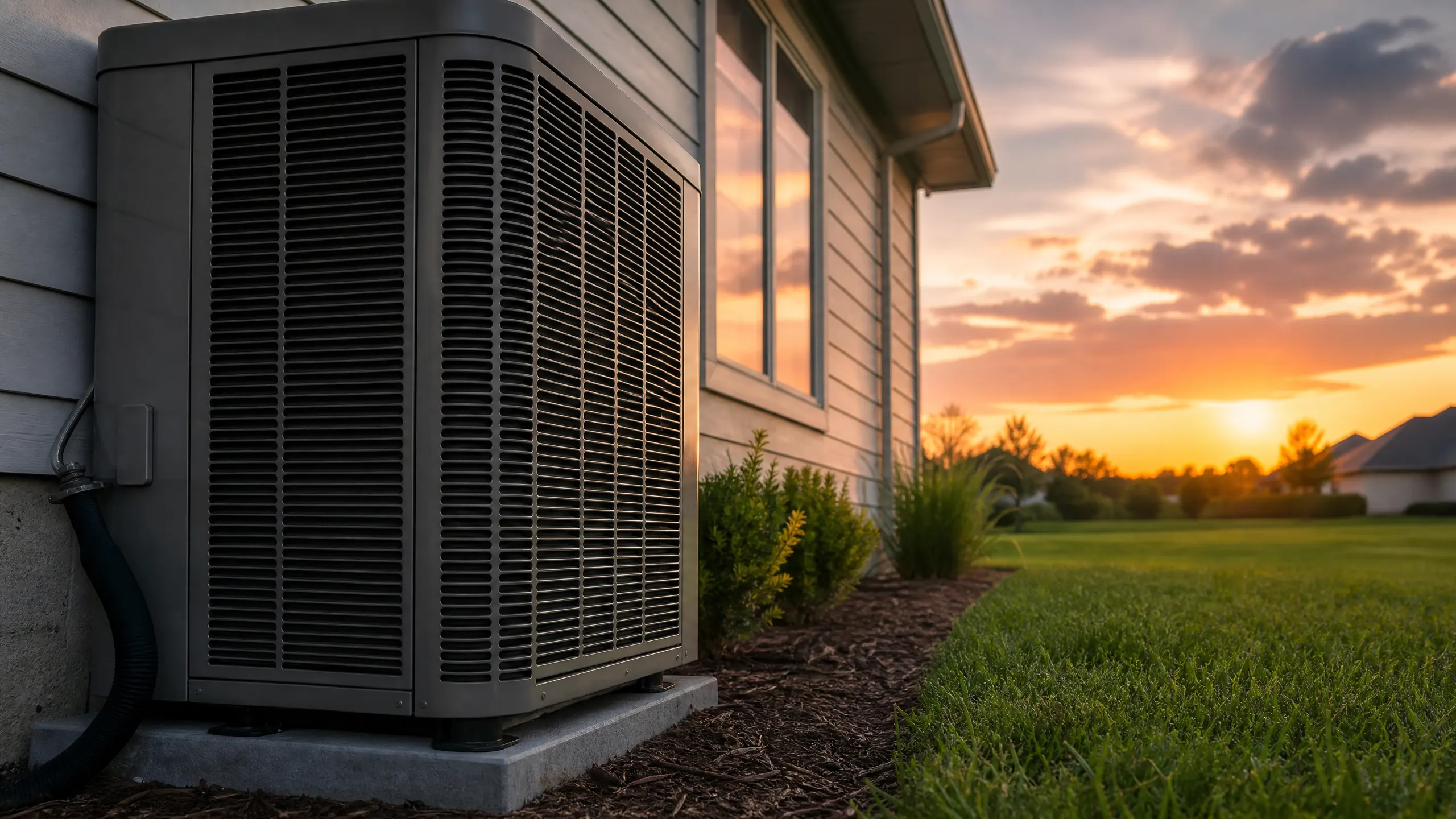







An outdoor air conditioning condenser unit mounted on a concrete pad beside a house at sunset.

Heat Pump Installation in San Diego, CA

Tell us about the job

Takes about a minute. No obligation.

New system or replacementHeat PumpSan Diego County, CA
Step 1 of 2

What ZIP code is the job in?

San Diego County recorded 442 severe weather events between 2015 and 2024. Damaging wind was behind most of that, 370 times. Hail hit 11 times in that same stretch, and hail does real damage to the fins and coil on an outdoor unit if it's left exposed. Statewide, 17% of California households lost power for a full day or longer in 2024. A heat pump needs power to run, for heat and for hot water if you've paired it with a heat pump water heater. Where the installer sets the unit and how it's protected matters more here than the brochure numbers do.

6 months
November through April, your system heats
4 months
June through September, it cools
41°F
the average winter night it heats against
89°F
the average summer afternoon it cools against
Isometric line illustration of a cutaway house showing interior rooms with furniture, a furnace or air handler with overhead ductwork, and an outdoor condenser unit connected by lines outside the wall.
Your system heats November through April and cools June through September.

NOAA nClimDiv, 1991–2020 normals

Gas heats 53.7% of homes in San Diego County, more than any other fuel.

A gas furnace paired with a heat pump for cooling is the system most installers here already know how to wire into the power and backup it needs.

Expensive power means every wasted hour on this system costs you

Power here costs 42.22 cents per kilowatt-hour
370 damaging wind events from 2015 to 2024
11 hail events from 2015 to 2024
Get it done before NovemberHeat here runs November through April, so October is the month to have the new system in.

San Diego County falls under zone 3B, which calls for a long cooling season and a short, mild winter. Any split-system heat pump installed here has to clear federal minimums set for that kind of year-round use: at least 14.3 Btu of cooling delivered for every watt-hour it draws, and at least 7.5 Btu of heating for every watt-hour on the heating side. Central air systems paired separately have their own bar to clear, an EER2 of 11.7 or 9.8 depending on how high the unit's SEER2 rating runs. These aren't suggested targets. A unit that doesn't meet them isn't legal to install here, which narrows the field before cost or brand ever comes into it.

Plan for where the unit sits and what happens when the power goes out

Ask the installer where the outdoor unit will go and what shields it from wind-blown debris and hail. Ask what happens to heat and hot water if the power drops for a day. That's part of the install, not an afterthought once the system is in.

Find a contractor
A man in a cap, gray long-sleeve shirt and tan work pants carries a worn canvas tool bag up wooden porch steps toward a blue front door, with a potted shrub to the left.
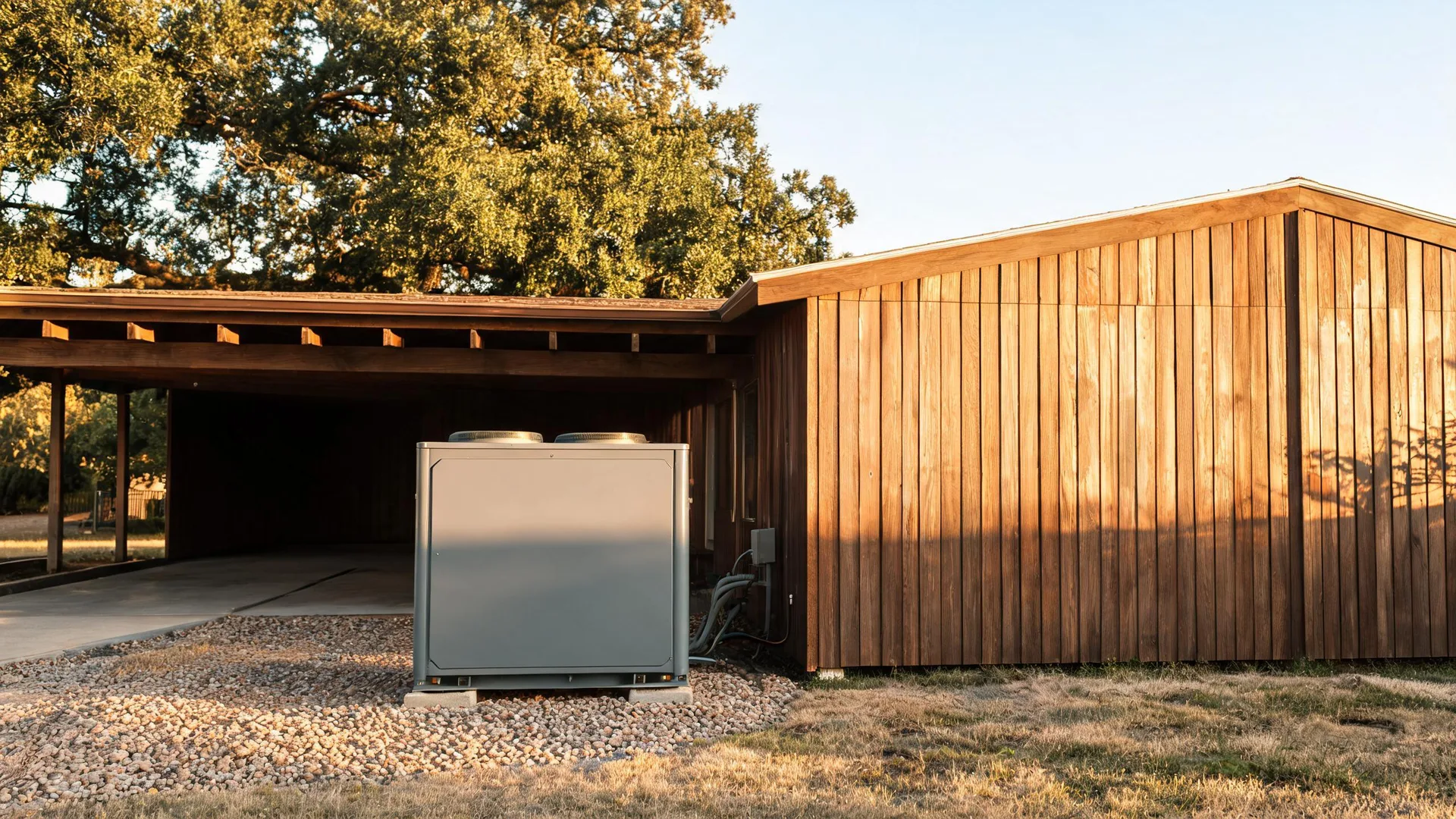
A gray outdoor HVAC unit mounted on a concrete pad beside a house with gray lap siding and a stone foundation.

What the work actually involves, day one to day one thousand

The install itself is what takes the time, not the equipment sitting in the truck. Setting the outdoor unit means running new electrical circuits sized for it, laying a pad or mounting it level, and connecting refrigerant lines that have to be cut, brazed and pressure tested on site. Indoors, the air handler or the existing furnace plenum often needs ductwork modified to match the new unit's airflow. A heat pump that's oversized for the space cycles on and off too fast and never settles into steady, efficient running. One that's undersized runs constantly and still falls short on the coldest or hottest days. Getting that sizing right takes a room by room load calculation, not a guess based on the old system's tonnage. Every hour spent on wiring, line sets, duct changes and testing is time the equipment has to earn back by running right for years afterward.

The math behind the size

A load calculation looks at the floor area, the ceiling height, the window glass, the insulation and how many walls face the sun, then works out how much heat the house gains and loses. That number, not the tonnage of the system being replaced, is what sizes the new heat pump. A house that's had a roof or windows replaced since the old system went in may need a different size now, even if nothing else about the house changed.
What the wrong size costs you every day

An oversized heat pump blasts the space to temperature fast, shuts off, and starts again a few minutes later. That short cycling wears the compressor and leaves the air clammy because the system never runs long enough to pull moisture out of it. An undersized one does the opposite: it runs without stopping and still can't catch up on the hardest days of the year. Either way the thermostat never settles, and the equipment ages faster than it should.

Since power here already costs you more per kilowatt-hour than almost anywhere else, the efficiency rating on the unit you pick matters more than it would in a cheaper state. Ask the installer to show you the HSPF2 and SEER2 numbers for each model under consideration, not just the price tag. A unit sitting higher above the federal minimum draws less power to deliver the same heat or cooling, and that difference shows up on every bill for as long as you run it. It's worth asking how that higher efficiency was reached too. Some of it comes from a better compressor, and that part tends to hold up.

Installation day starts outside. The crew sets the outdoor unit on its pad or mounting brackets, then runs new line sets between it and the indoor coil or air handler. Those refrigerant lines get cut to length, brazed by hand, and pressure tested before any refrigerant goes in, because a joint that leaks slowly will cost you capacity for months before it ever fails outright. Indoors, the air handler connects into the ductwork, and the electrical work ties the whole system into a dedicated circuit sized for it. Once everything is connected, the crew runs the system through its paces, checking refrigerant charge, airflow across the coil, and static pressure in the ducts before they call it done. None of that gets rushed, because a system that's charged wrong or starved for airflow on day one will run worse for as long as you own it.