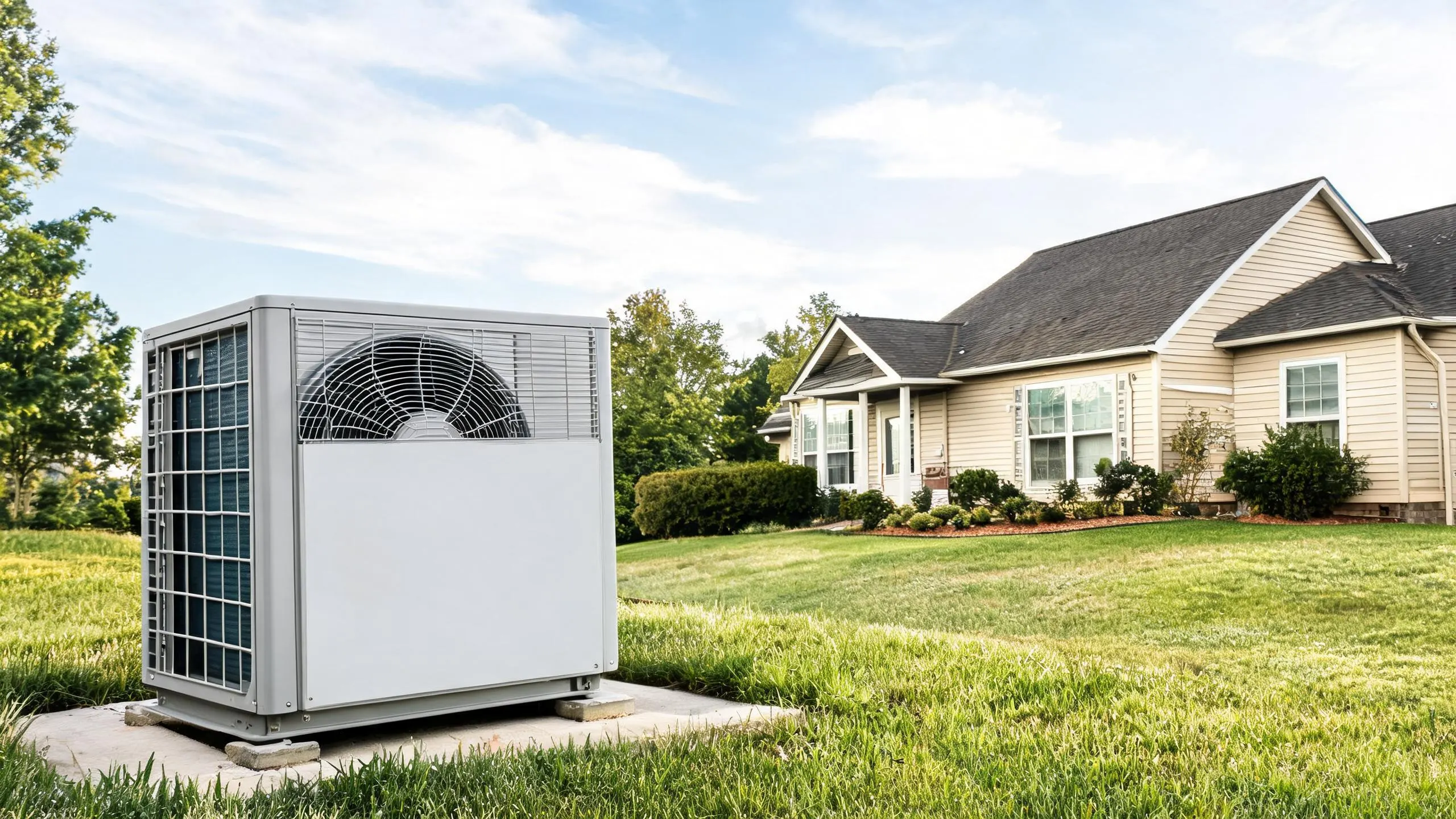





An outdoor heat pump unit mounted on a concrete pad in front of a single-story suburban house with beige siding.

Heat Pump Installation in San Luis Obispo, CA

Tell us about the job

Takes about a minute. No obligation.

New system or replacementHeat PumpSan Luis Obispo County, CA
Step 1 of 2

What ZIP code is the job in?

Most houses in San Luis Obispo County run on utility gas, about 65.5 percent. Electricity heats another 20.7 percent, and bottled or LP gas covers 7.7 percent. If your home has a gas furnace now, a heat pump is still worth pricing out, but it changes the job. Instead of swapping in another furnace, the contractor sizes equipment to carry both your heating and your cooling off the same system, usually tied into the ductwork already in place. Whether it makes sense to keep the gas furnace as backup or move to electric heat fully is worth asking about directly, since it depends on what you have now.

6 months
November through April, your system heats
4 months
June through September, it cools
38°F
the average winter night it heats against
87°F
the average summer afternoon it cools against
Isometric line illustration of a cutaway house showing interior rooms with furniture, ceiling ductwork connected to an indoor air handler, and refrigerant lines running to an outdoor condenser unit on a pad.
Your system heats November through April and cools June through September.

NOAA nClimDiv, 1991–2020 normals

A correctly sized heat pump does the job here without upsizing.

Electricity runs 31.97 cents a kilowatt-hour in California, so there's no reason to pay for more capacity than your home needs.

November is close. A heat pump put in before then starts the job already caught up.

Cooling runs June through September
Heat runs November through April
Climate zone 3C

Taking out the old system is its own piece of the job, separate from pricing or sizing the new one. If a furnace is coming out, the contractor disconnects the gas line and caps it, pulls the flue, and removes the cabinet from the plenum. If an old condenser sits outside, the refrigerant in it has to be recovered, not vented, before the unit is disconnected and hauled off. Any ductwork that only ever carried heat from a furnace usually works fine for a heat pump, but the contractor should check it rather than assume. None of this is optional work tacked onto the estimate. It has to happen before the new equipment goes in, and a contractor who skips stating it upfront usually adds it back later.

A new heat pump here has a bar to clear, not just a size to match

Any heat pump installed here now has to clear 14.3 SEER2 and 7.5 HSPF2 at minimum. That's the federal floor, and it's also what the federal tax credit requires. A contractor pricing this job should be showing you equipment that clears these numbers, not just equipment that matches what the old system did.

Find a contractor
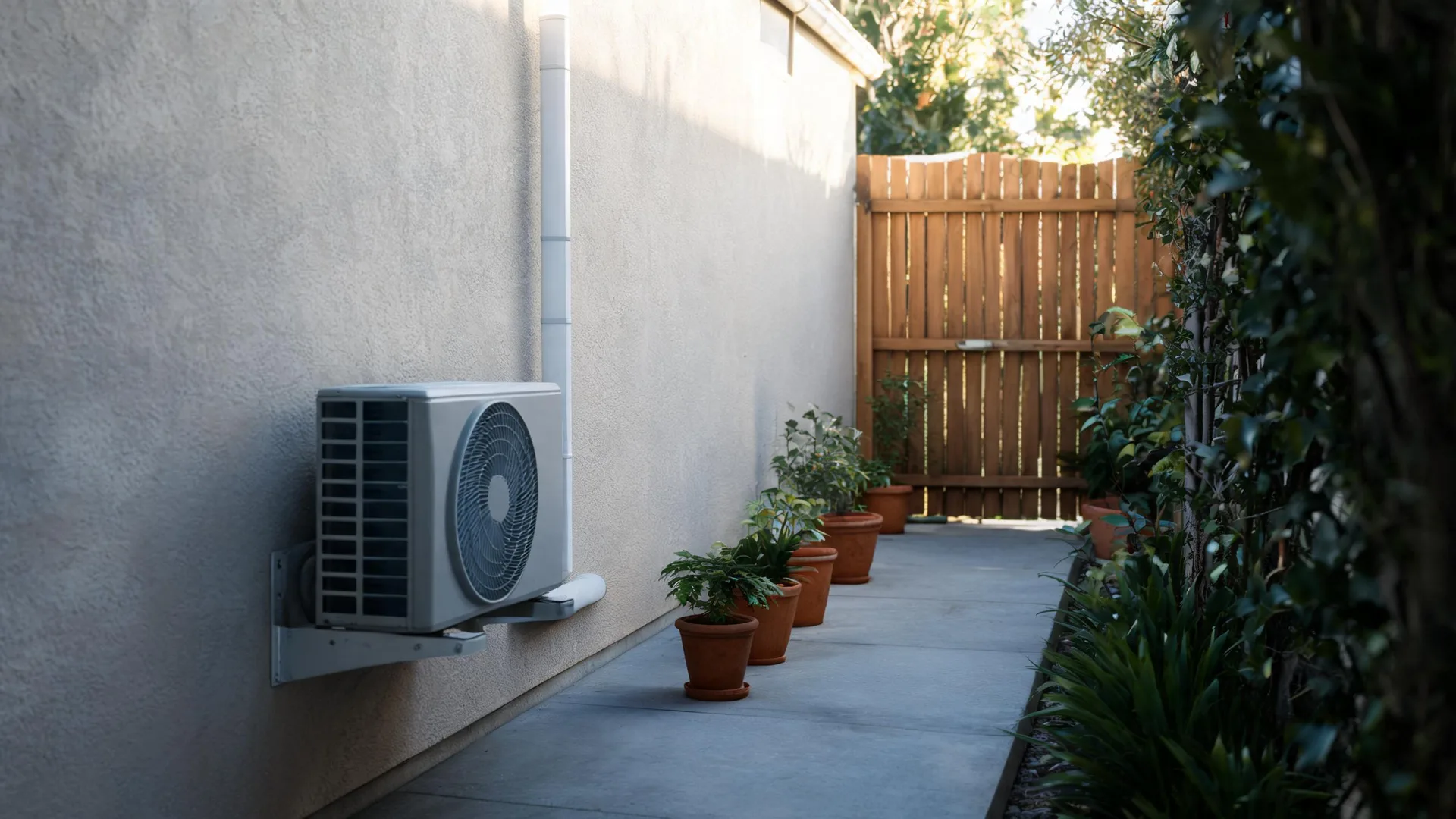
A white mini-split heat pump outdoor unit mounted on a concrete pad beside a gray-sided house, surrounded by gravel and green shrubs.

A mild climate means less wear

Winters here stay mild. The overnight low averages 38°F across December, January and February, so a heat pump isn't fighting single-digit air to pull heat out of it. Wind is the bigger factor this county sees, with hail and winter storms rare by comparison. None of that runs through the unit the way a hard freeze would. What wears a heat pump down over the years is mostly how many hours it runs and how hard, not storms, and a mild winter means less of that strain. A midrange unit, properly sized, should hold up fine here.

The outdoor unit and the air handler are priced as a pair

A heat pump installation prices the outdoor unit and the indoor coil or air handler together, because they're matched to work as one system. A contractor can't quote one without the other. If the indoor side is old or mismatched to a new outdoor unit, it has to be replaced too, and that's part of the job, not an upsell.
What the ductwork needs changes the labor, not just the equipment

A heat pump moves a different volume of air than a furnace did, and at different temperatures, so the contractor has to check whether the existing supply and return ducts can handle it. Sealing gaps, adding a return, or resizing a trunk line all add labor hours on top of the equipment cost. None of that shows up until someone opens up the ductwork and looks.

Sizing a heat pump comes from a load calculation, not from matching the tonnage of whatever furnace or condenser is already there. The contractor works out how much heat the house loses in winter and gains in summer, using the square footage, the window area, the insulation, and the ceiling height. An oversized unit reaches the thermostat setting fast and shuts off again before it has run long enough to pull moisture out of the air or settle the temperature evenly through the rooms. That start and stop is harder on the compressor than running steady, no matter how mild the weather is outside. Too small, and it runs flat out during the coldest or hottest stretches and still falls behind. The right size runs long, low, steady cycles most of the time, and that's also where a heat pump holds up best and works most efficiently.

When you're comparing bids, ask each contractor what the load calculation came out to, and ask to see the number itself, not just the equipment size they landed on. Contractors looking at the same house can land on different tonnage, and the gap usually comes down to whether they measured or just matched the old system. Ask what efficiency rating the quoted equipment hits for cooling and for heating, since a unit can be strong in one and weak in the other. Ask whether the quote includes a new indoor coil or air handler, or whether it's reusing what's already there, and if it's reusing it, ask why that's the right call and not just the cheap one. Ask what happens to the ductwork, whether it actually gets tested or just assumed to be fine. A contractor who answers without hesitating has done the work behind the number. One who waves the question off is still guessing.