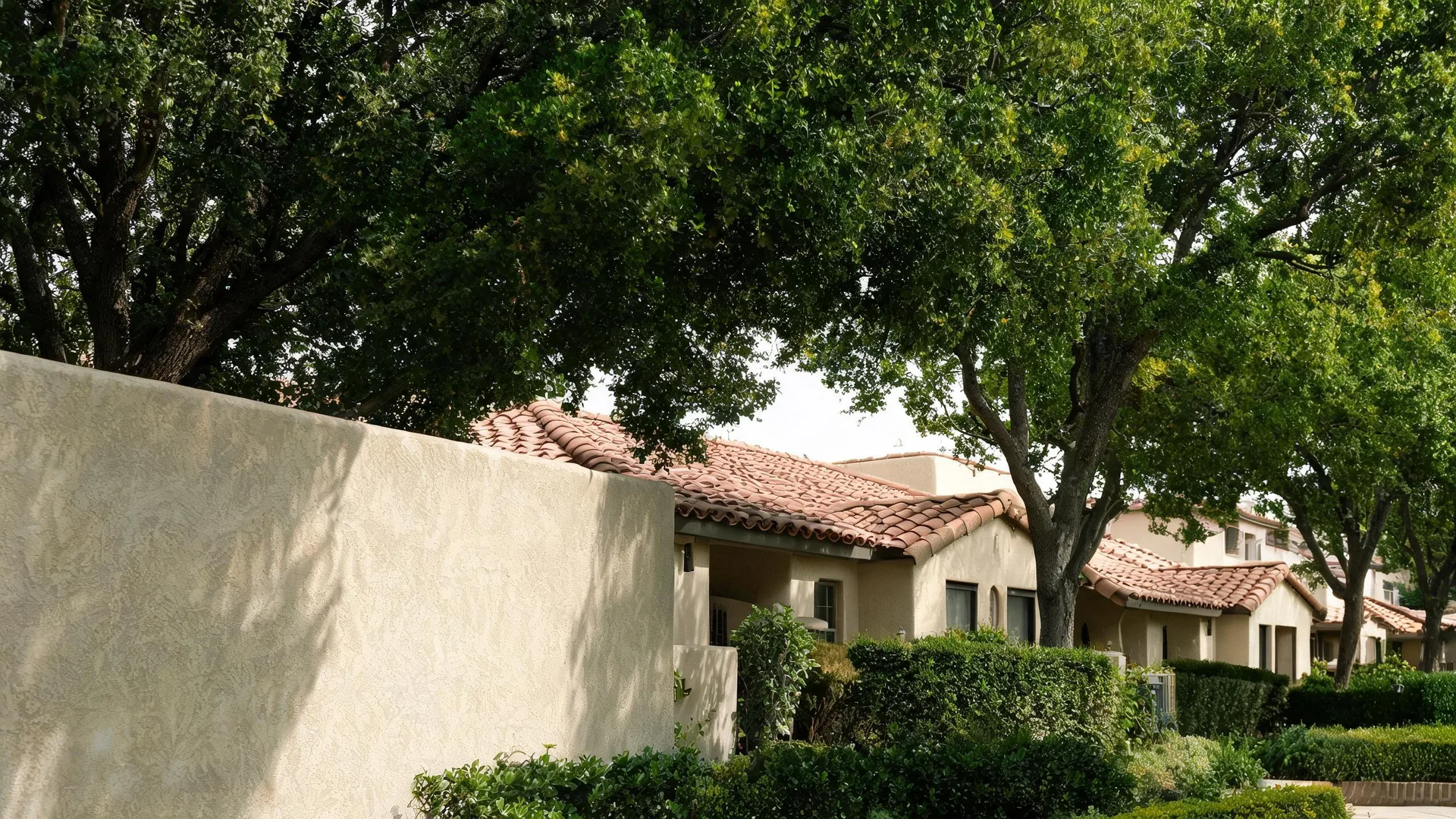
A tall beige stucco wall in the foreground with single-story stucco houses with red clay tile roofs behind it, surrounded by large leafy trees and trimmed hedges.

Heat Pump Installation in San Rafael, CA

Tell us about the job

Takes about a minute. No obligation.

New system or replacementHeat PumpMarin County, CA
Step 1 of 2

What ZIP code is the job in?

Most homes here run on gas

Utility gas heats 66.6% of occupied homes in Marin County. Electricity comes in second at 25.9%, with a small share on bottled or LP gas. If your house came with the fuel most of your neighbors have, chances are good it's gas.


A heat pump means a different setup

Swapping in a heat pump when the house is wired for gas heat is not a like-for-like job. It means running new electrical circuits to the unit and deciding what happens to the existing gas furnace and ductwork. Worth asking the contractor to walk through exactly what changes at your place.

9 months
October through June, your system heats
43°F
the average winter night it heats against
71°F
the average summer afternoon it cools against
Isometric line illustration of a cutaway house showing interior rooms with furniture, ceiling ductwork connected to an indoor air handler, and an outdoor condenser unit linked by refrigerant lines.

California electricity ran 31.97 cents per kilowatt-hour in 2024.

A correctly sized heat pump matters more here than in states with cheaper power.

Weather here is not the reason to size this bigger

134 severe weather events from 2015 to 2024
17% of homes statewide lost power a day or more in 2024
122 damaging wind events from 2015 to 2024
Install before OctoberHeat here runs nine months, October through June. September is the month to get this done.

San Rafael falls under zone 3C, the warm marine zone in the state's energy code. A heat pump installed here now has to hit 14.3 SEER2 for cooling and 7.5 HSPF2 for heating at minimum. Those numbers set the floor. A contractor can quote something above it, but nothing below it goes in. The federal tax credit for qualifying heat pumps is worth asking about before you sign anything, since it can offset part of what you pay up front. Ask to see the system's rating label before it goes in, not after.

Pick a reliable heat pump, not the biggest one

Marin County sees mild winters, with overnight lows averaging 43°F through December, January and February, and damaging wind or hail here is rare. A heat pump in San Rafael isn't working against much. That's a case for a unit sized and built to last, not one chasing the highest efficiency number on the shelf.

Find a contractor
A gray heat pump outdoor unit mounted on a concrete pad next to the stone-accented exterior wall of a house.

Your house is older than you might think

Half the homes in Marin County were built in 1967 or earlier. A house that age wasn't built with a heat pump in mind, and whatever's there now, ductwork, electrical, the spot the old equipment sits in, was sized for whatever came before it. A new system has to work with that, not with a blank slate. That's a question for the contractor doing the install, not a guess to make yourself.

Sizing runs on a load calculation, not the old unit's label

A contractor works out heat pump size from a room by room load calculation. That means wall and ceiling insulation, window area and orientation, air leakage, the layout of the house. The old furnace's capacity doesn't factor into it, especially since equipment from decades ago was often oversized by habit rather than math. Matching the new unit to whatever's already there skips the one step that actually determines the right size.

Oversized or undersized, the problem shows up differently

A heat pump sized too big cools or heats the space fast, then shuts off. It never runs long enough to pull moisture out of the air or settle into a steady temperature. One sized too small runs constantly and still can't keep up on the coldest or hottest days. Both wear the system down, just from opposite directions.

Comparing quotes means comparing more than the price at the bottom. Ask each contractor to show the load calculation behind their number rather than just the total, since that's what the size should rest on. Ask what refrigerant line length and diameter they're planning, because a line run longer than the equipment is rated for cuts into performance. Ask whether the quote includes a new thermostat or reuses the old one, and whether that thermostat can actually run a heat pump's staged or variable speed operation, since not all of them can. Ask what happens to the existing ductwork, whether it gets tested for leaks or just reconnected as is. A contractor who answers all of this without hesitation usually did the work to get there.

Install day starts with the old equipment coming out, not the new one going in. If there's a furnace and ductwork staying in place, the crew works around them. If the gas furnace is being retired, that's demolition first, then the new electrical circuit run out to where the outdoor unit will sit. The outdoor unit needs a level pad and clearance on all sides for airflow, so part of the day is just setting that pad and running line sets and wiring between indoor and outdoor units. Once both halves are in place, the system gets charged with refrigerant, and that charge has to be weighed in to the manufacturer's spec, not eyeballed. Last comes startup and testing, running the system in both heating and cooling, checking temperatures at the vents, and confirming it responds properly to the thermostat before anyone calls it done.