
Heat pump vs furnace in Marin County, California

Get My Quote

Installers who work in Marin County

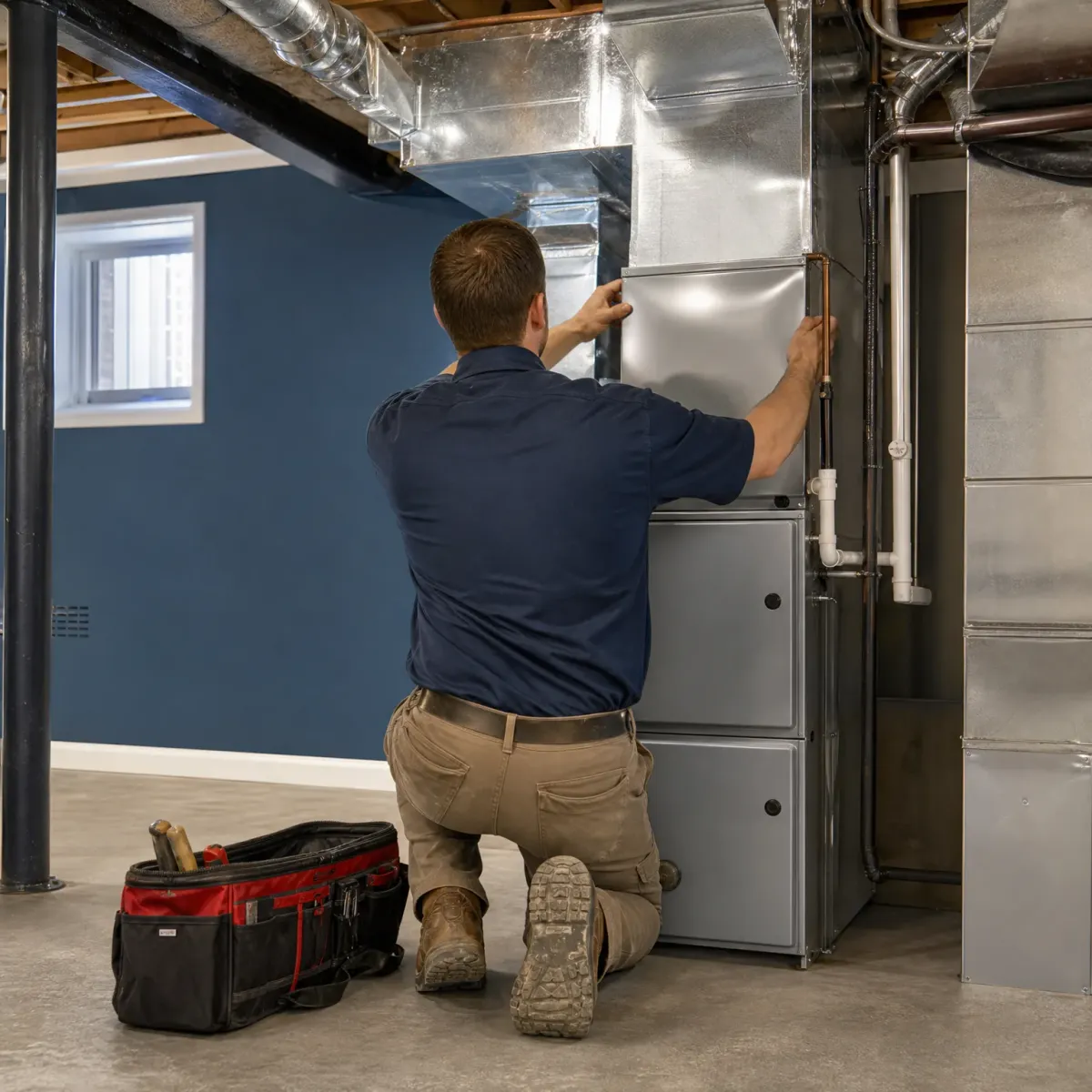
A man in a navy shirt and tan pants kneels in a basement, removing or replacing the front panel of a furnace beside sheet-metal ductwork and pipes, with an open tool bag on the concrete floor.

Tell us about the job

Takes about a minute. No obligation.

New system or replacementMarin County, CA
Step 1 of 3

What kind of equipment?

Which costs less to run in Marin County?

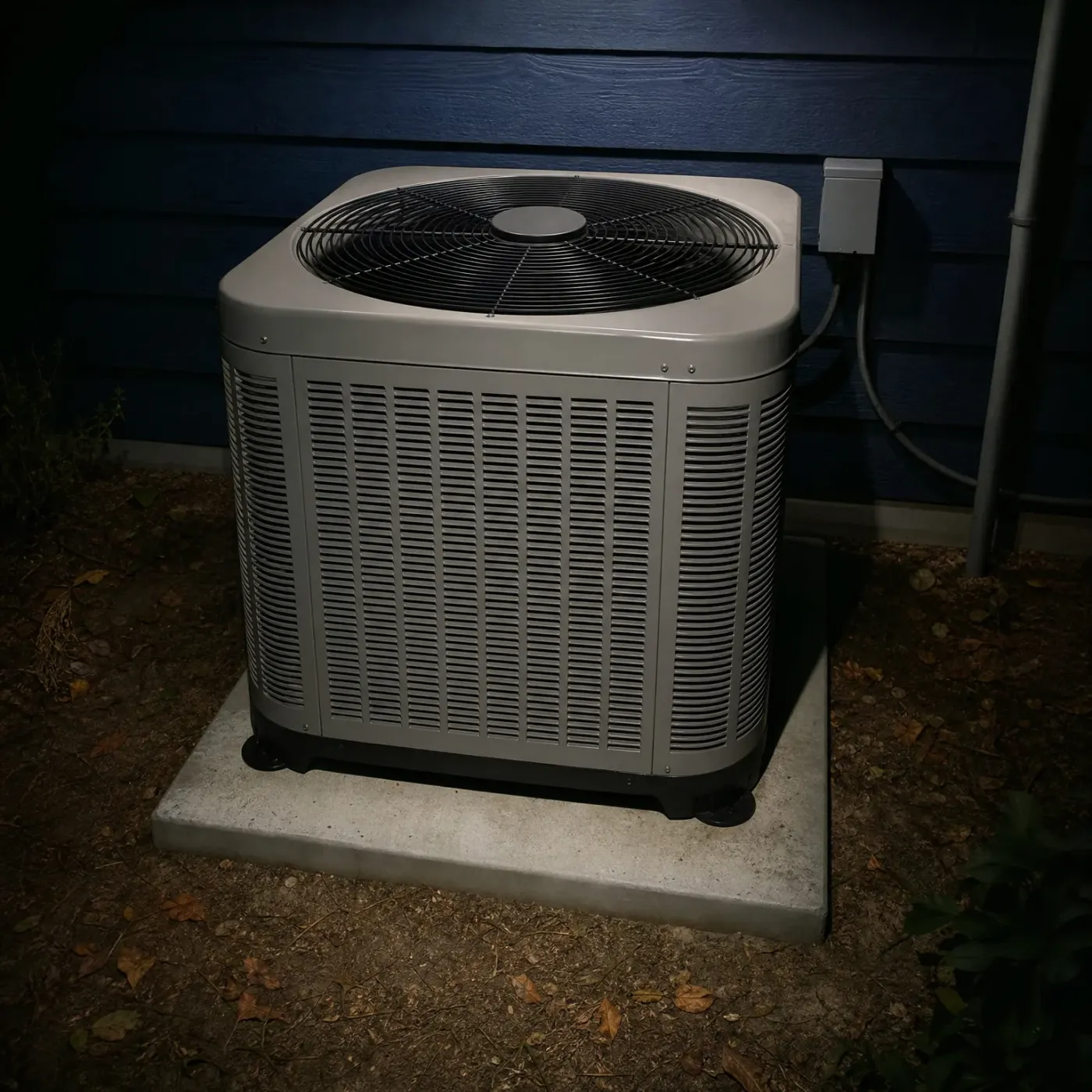
An outdoor air conditioner condenser unit on a concrete pad beside a dark blue horizontal lap-sided wall, with a disconnect box and conduit above and fallen leaves on the surrounding soil at night.

Heat pump

To heat your home here$4.26per 100,000 Btu

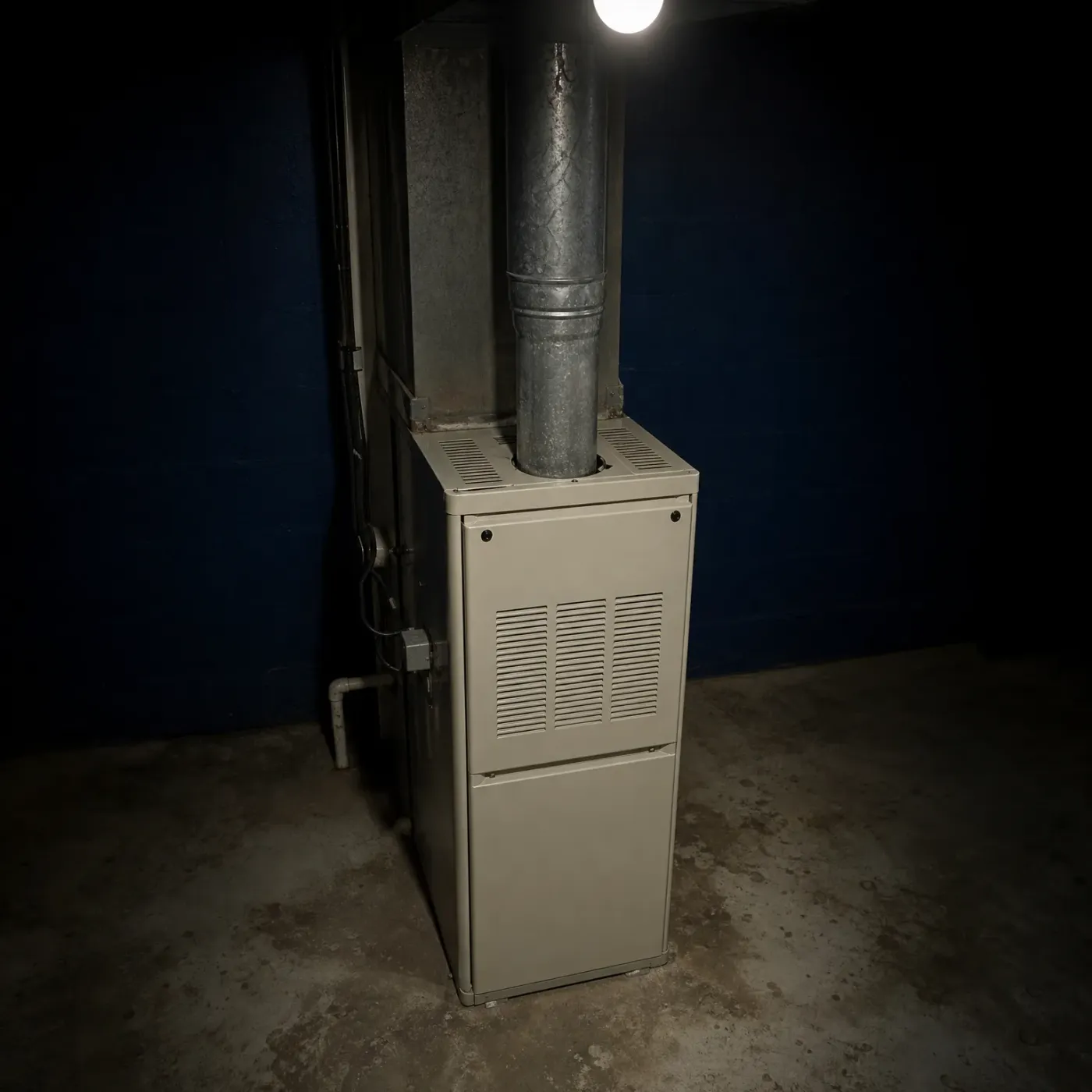
A beige residential furnace with a galvanized metal flue pipe stands on a concrete basement floor against a dark blue painted block wall, lit by a bare overhead bulb.

Furnace

To heat your home here$2.31per 100,000 Btu

At California's gas and electricity prices, a gas furnace makes the same heat as a heat pump for at least 45% less.

Btu stands for British thermal unit, the standard measure of heat energy.

Where does a heat pump shine?

  • Made for mild winters

    Winter nights here average 43°F, which is mild work for a heat pump. It can pull heat from outside air all winter without straining to keep up.

    Front entry of a blue clapboard house with white trim and porch columns, a dark navy door with a six-pane window, a pair of boots and a planter on the porch, and a stone walkway bordered by frost-dusted grass and shrubs.
  • Heats and cools in one system

    One machine handles the heat in winter and the cooling in summer. There's no second system to buy or keep up.

    A living room with a navy sofa, light blue cushions and a fringed throw in front of large white-framed windows showing a green garden, with a potted fiddle-leaf fig, an upholstered armchair, a woven rug, and a wooden coffee table holding a bowl, mug and vase of white flowers.
  • No gas line, nothing burning in the house

    A heat pump runs on electricity alone. Nothing burns inside the house.

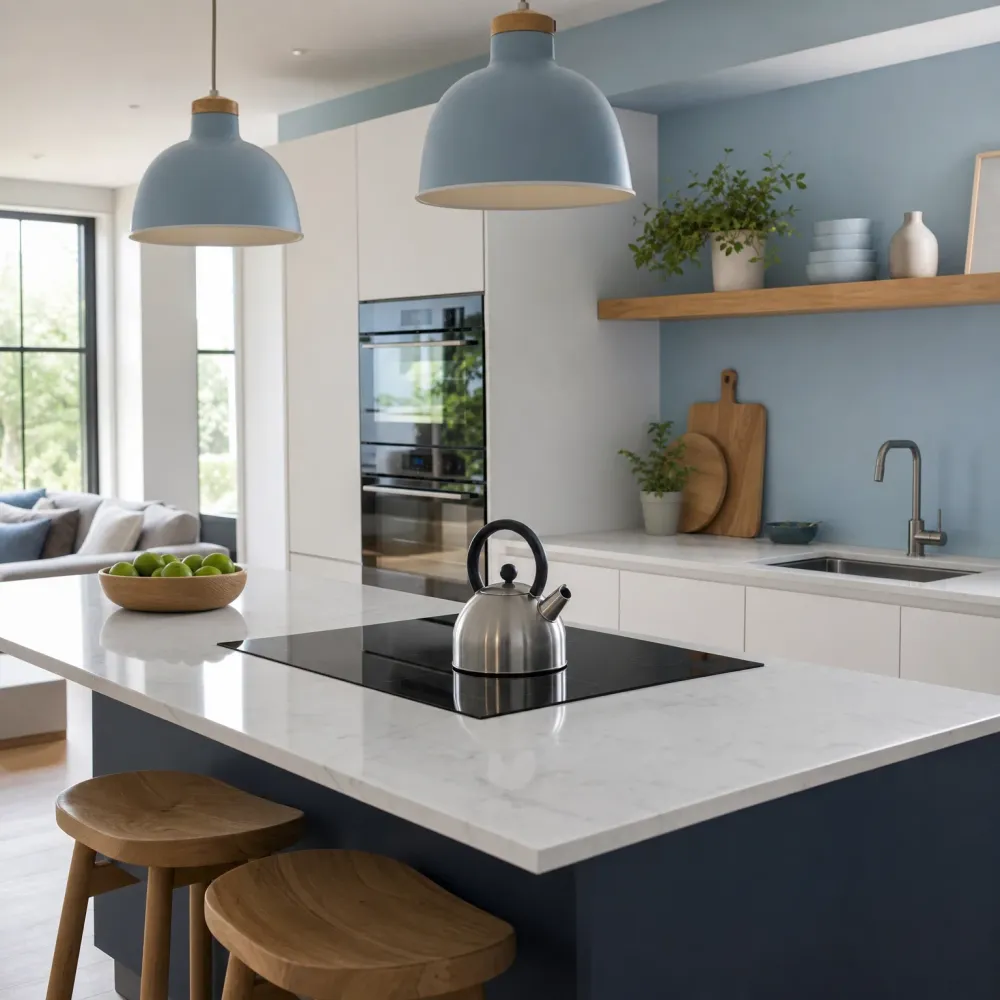
    A kitchen with a white marble-look island counter over navy cabinetry, a black induction cooktop with a stainless steel kettle, two light blue pendant lamps, wooden stools, a bowl of green apples, a wooden shelf with plants and dishes against a blue wall, and a built-in oven.

Where does a furnace shine?

  • Runs on the gas most homes here already use

    Most homes in Marin County already heat with gas, so a line likely runs to your house already. A furnace just uses what's already there.

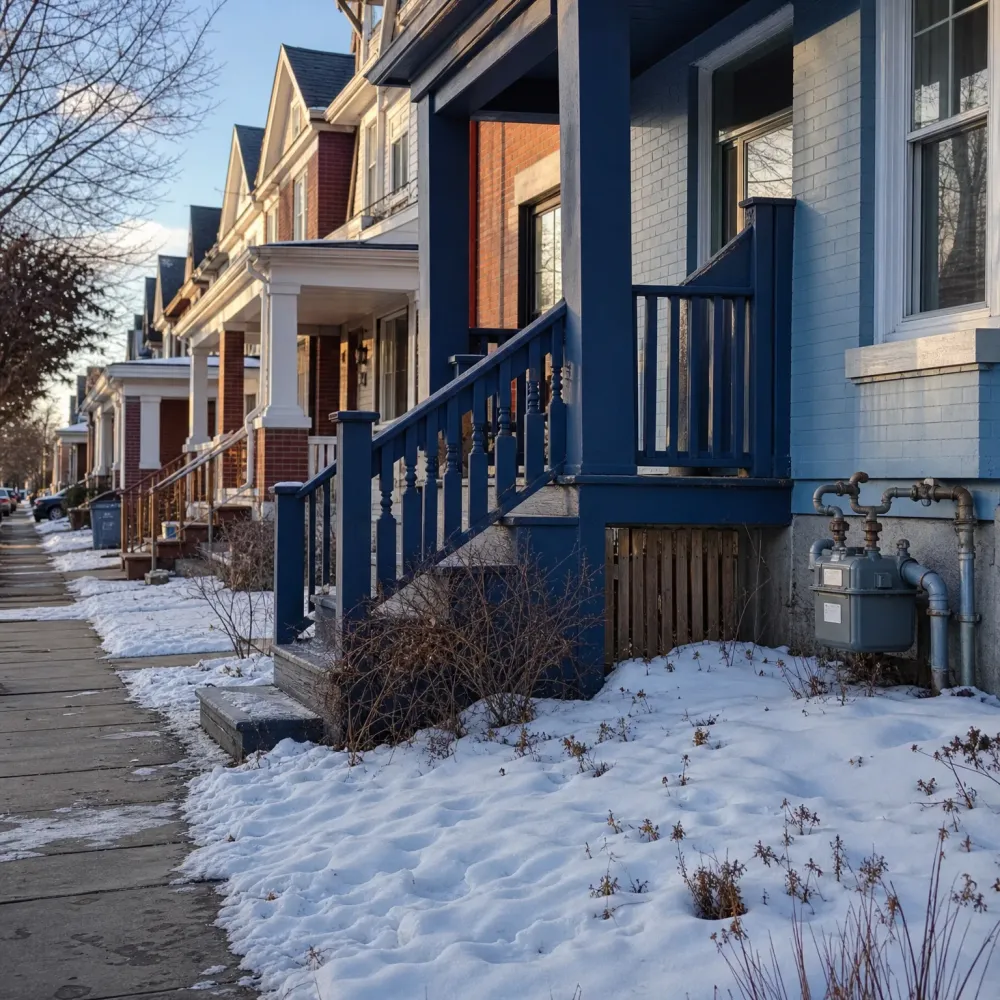
    A row of houses along a snowy residential street, with a blue-painted porch and railing in the foreground, a gas meter and pipes on the wall, and a cleared sidewalk at left.
  • Proven, simple, easy to get serviced

    Parts are easy to find and most repairs are routine. Getting one fixed rarely means waiting on a specialist.

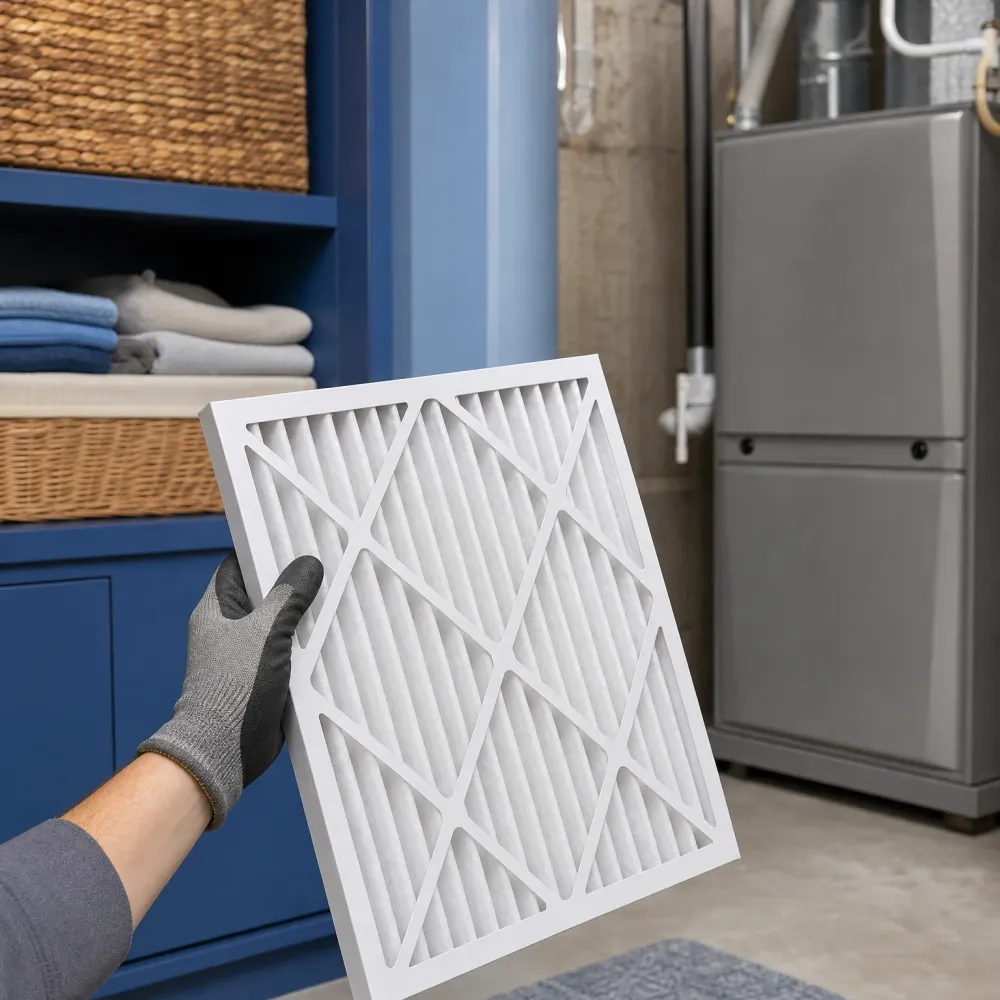
    A gloved hand holds a white pleated air filter in front of a blue storage cabinet with folded towels and a gray furnace unit.
  • Pairs with any central AC

    A furnace's blower and ducts carry cooled air too. Adding central AC uses the same system.

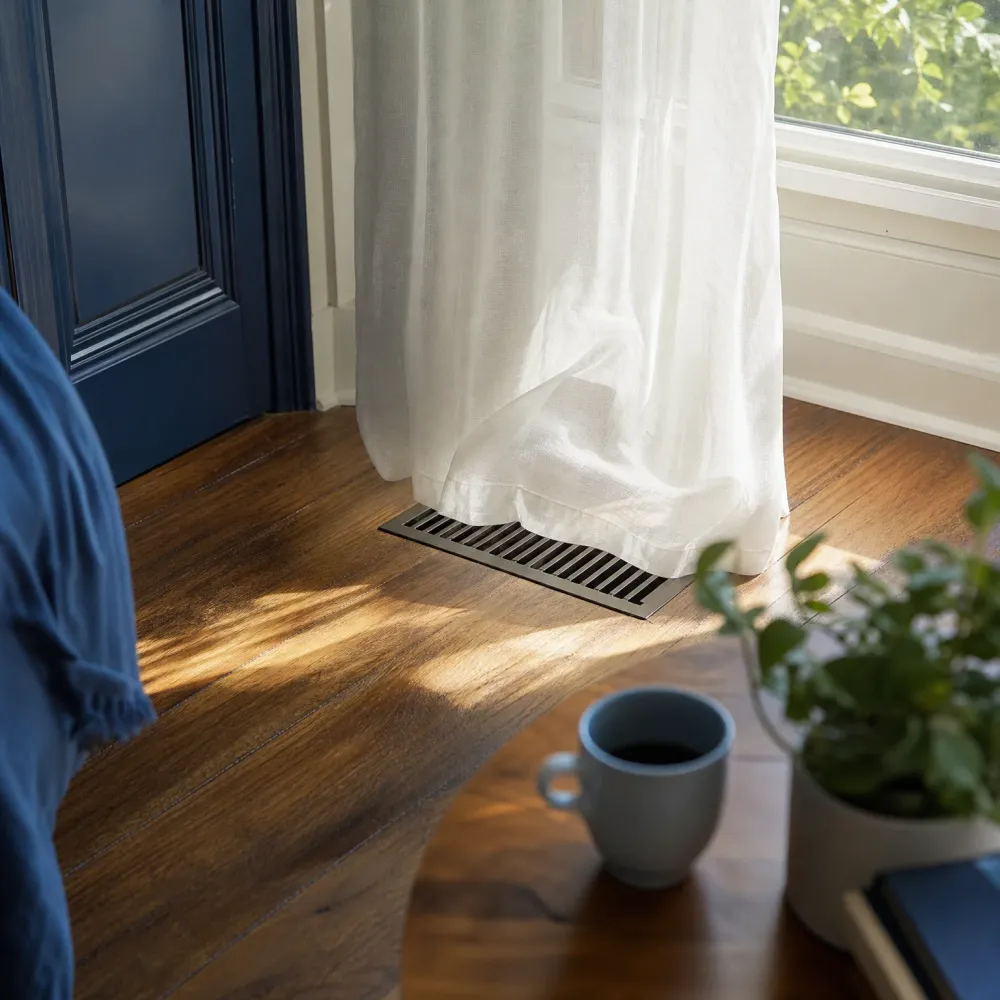
    A floor air vent set into dark hardwood flooring near a white curtain and window, with a gray mug of coffee on a wooden table and a potted green plant in the foreground.

Will a heat pump keep your house warm here

Marin winters are mild. The overnight low averages 43°F across December, January and February, and it only drops to 32°F or below about 3 nights a year out of the roughly 275 nights the heat runs. That's the kind of winter a heat pump is built for. It isn't fighting single-digit nights or long stretches below freezing. For almost all of the season here, it's pulling heat out of air that isn't that cold to begin with.

The heat runs about nine months a year here, October through June. A heat pump handles that whole stretch on its own in this climate. The 3 nights a year that fall to freezing or below are the ones worth asking a contractor about directly, since that's where a heat pump built to the federal minimum works hardest and backup heat can matter. For the other 272 nights, it isn't a question.
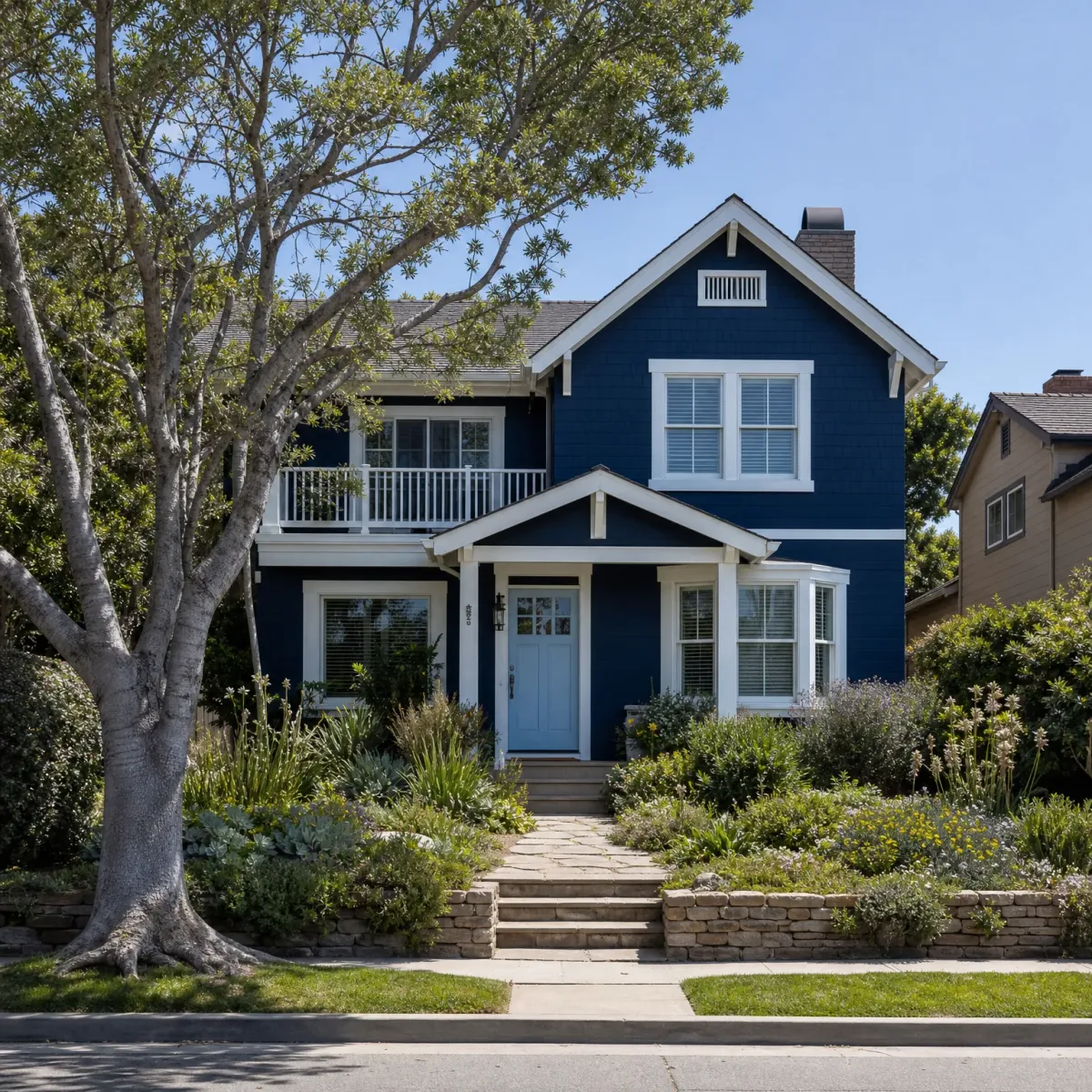
A two-story navy blue house with white trim, a light blue front door, gabled roof and balcony, fronted by a stone-walled garden bed, stone steps and a large tree under a clear sky.

What it costs to run, and what that comes down to

Running cost favors the furnace. A gas furnace makes the same heat here for $2.31 per 100,000 Btu against $4.26 for a heat pump, both at the federal minimum and California's average fuel prices. That gap is gas being the cheaper fuel in this state, not one machine working harder than the other.

Two in three homes in Marin County already heat with gas, one in four with electricity. If gas already runs to your house, a furnace uses the line that's already there, and it's cheaper to run on top of that. If it doesn't, a heat pump also cools, which matters less here since there's essentially no cooling season and afternoon highs in summer average only 71°F. A furnace only heats, so it has nothing to do those few months, but in a climate like this that's a small gap to give up.

So the choice isn't whether a heat pump can handle a Marin winter. It can. It's whether you'd rather pay less to run a furnace on gas you likely already have, or pay more for a heat pump that also cools and keeps combustion out of the house.

Sources: NOAA nClimDiv · NOAA 1991–2020 seasonal normals · EIA SEDS 2024 · 10 CFR 430.32 · Census ACS 2020–2024

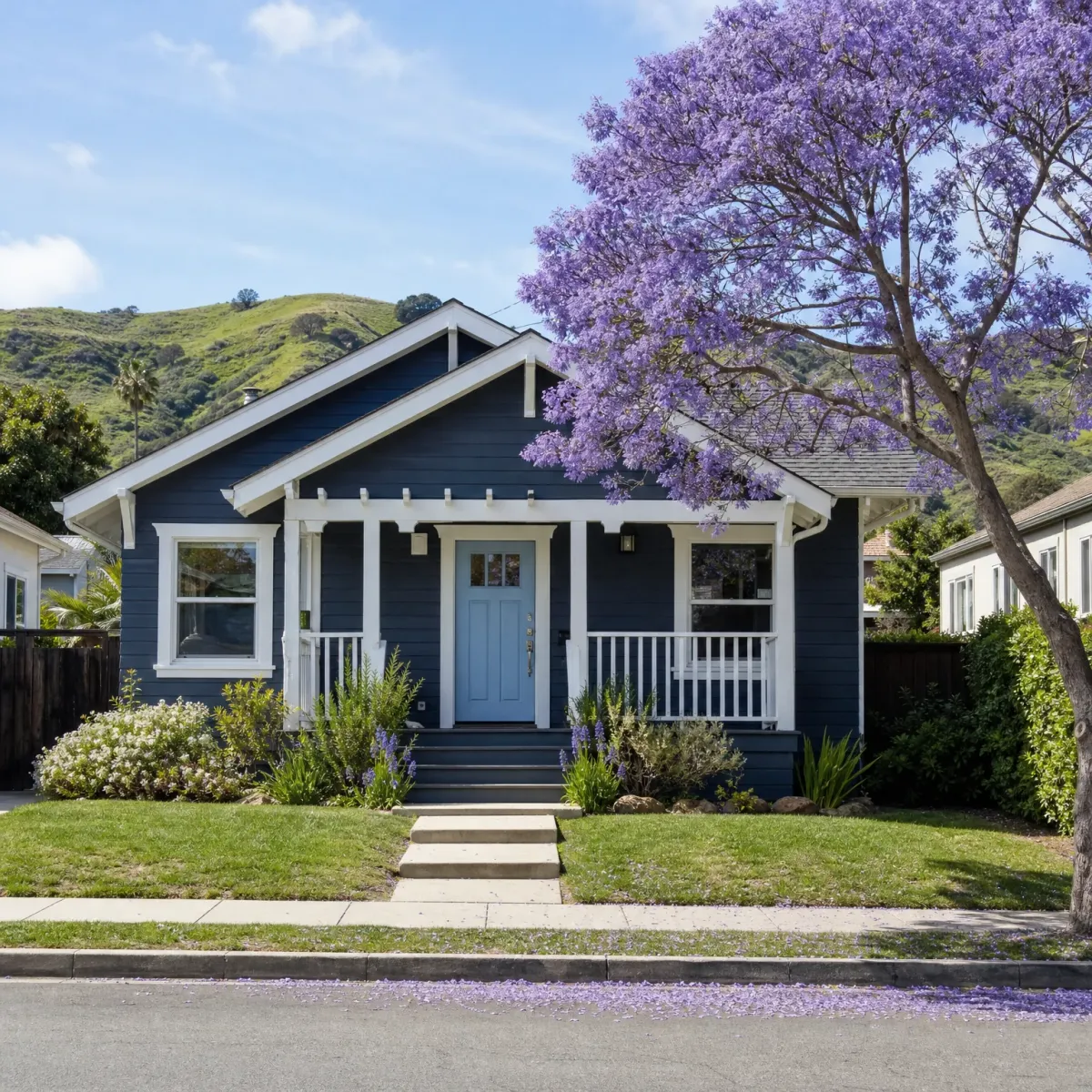
A navy-blue bungalow with white trim, a light blue front door and covered porch, with a flowering purple tree in the yard, a green lawn, concrete walkway, and a grassy hill behind.