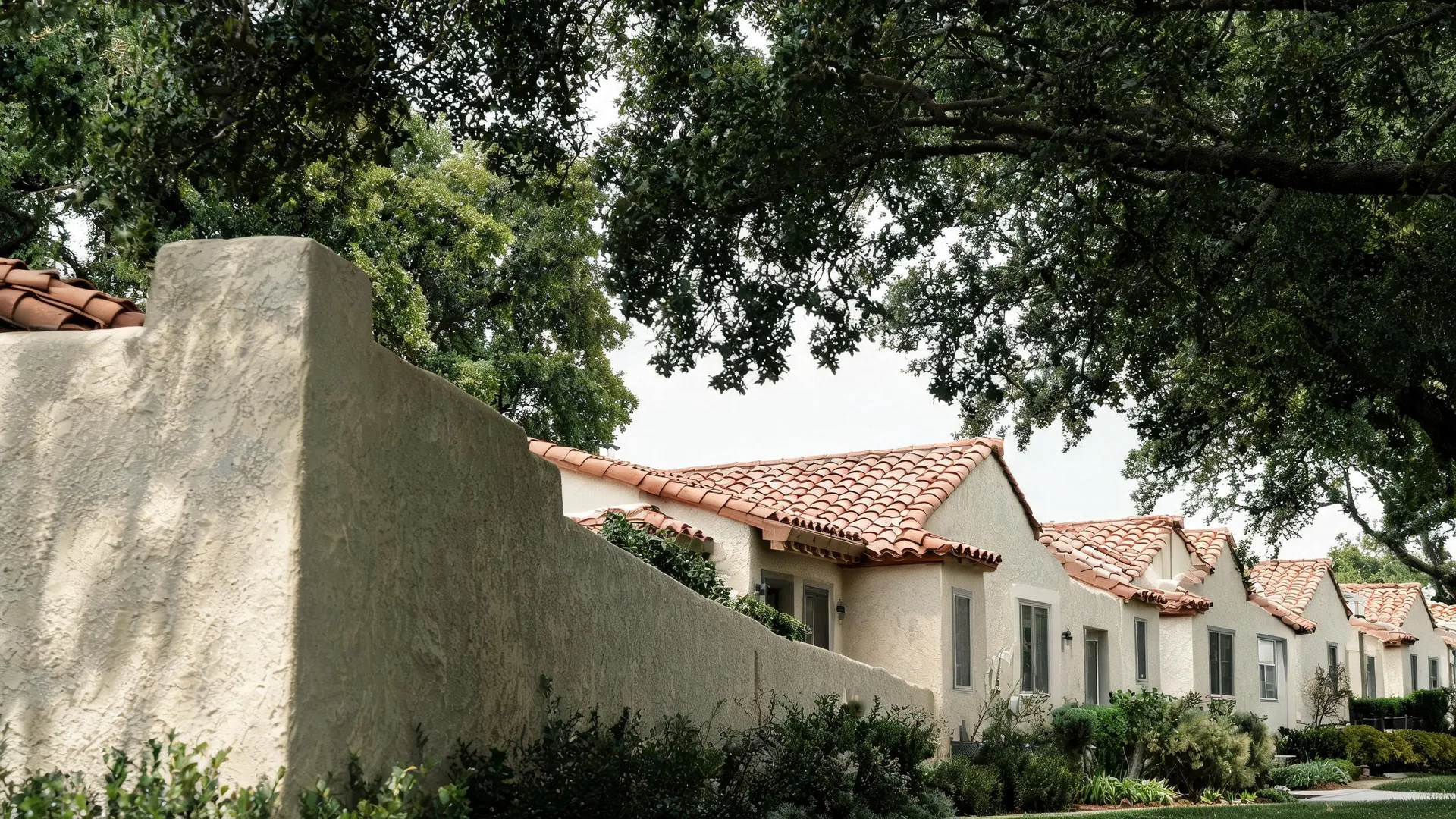



A row of single-story stucco houses with red clay tile roofs behind a tall stucco wall, framed by large oak trees and shrubs.

Furnace Maintenance in San Rafael, CA

Tell us about the job

Takes about a minute. No obligation.

Tune-up, service, or cleaningFurnace or heatingMarin County, CA
Step 1 of 2

What ZIP code is the job in?

September is the month to get a furnace looked at here. Homes in Marin County run heat from October through June, nine months straight, and October is when it has to come on and work right away. A furnace that sat quiet since spring can have a dead igniter or a clogged flame sensor and you won't know until the first cold morning you need it. Getting it checked in September means any part that's failing gets found before the house is counting on it.

A furnace filter clogged with dust chokes the airflow a furnace needs to run safely.

Check yours every month and swap it when it's gray, and you've cut out the most common reason furnaces overheat and shut themselves down.

Marin County weather is not why your furnace fails. Skipping a year is.

134 severe weather events from 2015 to 2024
17% of homes statewide lost power a day or more in 2024
122 damaging wind events from 2015 to 2024

A quick visit gets you a filter swap and a glance at the flame. A thorough one gets the cabinet opened up. The tech should pull the burners and look at them, not just listen for them to light. They should check the flame sensor for a coating of carbon and clean it rather than just wipe it. The igniter gets tested under load, since a hairline crack can still glow and still fail the next cold morning. Someone should check that the inducer motor spins freely and that the pressure switch responds when it does. The heat exchanger gets inspected for cracks, because that's the part that keeps carbon monoxide out of the air you breathe. If nothing got unscrewed and no tool came out of the bag, most of that didn't happen.

Your furnace burns gas. Get the burner and venting checked, not just the filter.

Gas heats 66.6% of homes in Marin County, and your furnace most likely runs on it. A gas furnace burns fuel to make heat, so the burner, the venting and the safety controls all need a check, not just a filter swap. That takes opening the cabinet, not just a quick look.

Find a contractor
A man in a gray T-shirt and tan work pants, seen from behind, carries a worn canvas tool bag up concrete steps toward a blue front door of a house with gray siding and a potted shrub.
A gray high-efficiency gas furnace installed in an unfinished basement, surrounded by gas lines, a condensate drain, and sheet-metal ductwork.

An older house has more years on the parts you can't see

Half the homes in Marin County were built in 1967 or earlier. If yours is one of them, the furnace has likely been swapped out at least once, but the ductwork and gas line often date back to the house itself. Years of running heat through the same joints and connections is exactly what an annual check is for. It catches the slow leak or the loose connection while it's still small, instead of after it's failed.

Small problems turn into no-heat calls

A furnace that skips its yearly check doesn't fail all at once. A cracked igniter still lights some mornings and not others. A sticking pressure switch still closes most of the time, until the morning it doesn't. Left alone, these small faults wear into the kind of failure that leaves the house cold and waiting on a repair instead of a checkup.

The parts wear whether you watch them or not

Burners pit, bearings dry out, and connections loosen with every heating cycle whether anyone is checking them or not. A yearly look is what catches a bearing going dry before it seizes the blower, or a cracked heat exchanger before it lets combustion gas mix with the air moving through the house. Skip enough years and the furnace is running on parts nobody has looked at since they were new.

A tune-up turns up what sound alone won't tell you. A flame should burn steady and blue. Let a tech pull the burner cover and you might find the flame lifting off the port or tipping yellow at the edge, a sign it's not burning clean even though it sounds the same as always. Amp draw on the blower motor climbs months before the motor actually quits, but you'd need a meter on it to know. A pressure switch can read fine sitting still and still fail to respond once the inducer spins up, which is why it gets checked while the furnace is running, not after. None of this shows up from the thermostat. It shows up when someone opens the cabinet and tests the parts under load instead of just looking at them.

A tune-up is also when the tech checks the gas side, not just the heat side. That means testing for gas leaks at every fitting the furnace has, not just the main line in. Combustion gas has to leave the house, so the venting gets checked for a blockage or a disconnect somewhere along its run, and the draft gets measured to confirm the furnace is actually pulling exhaust out instead of letting it linger. Thermostat wiring and the safety limit switch get tested too, since a limit switch that doesn't trip when it should is the kind of fault that stays invisible until it matters. A tune-up closes with the cabinet back on and the furnace run through a full cycle, start to shutoff, watched the whole way.