





A row of stucco houses with terracotta tile roofs seen past a tall light-colored wall in the foreground, framed by overhanging tree branches under a pale sky.

Heat Pump Repair in San Rafael, CA

Tell us about the job

Takes about a minute. No obligation.

RepairHeat PumpMarin County, CA
Step 1 of 2

What ZIP code is the job in?

Winters here are mild. Overnight lows average 43°F through December, January and February, nowhere near the kind of cold that forces a heat pump to run flat out for months. That matters because a heat pump logs most of its hours in weather it barely has to work for. So when one in San Rafael starts short cycling or blowing air that is not warm enough, the cause is usually something specific gone wrong, not a system worn down by the climate. A repair is worth looking at seriously before anyone talks about replacing the unit.

9 months
October through June, your system heats
43°F
the average winter night it heats against
71°F
the average summer afternoon it cools against
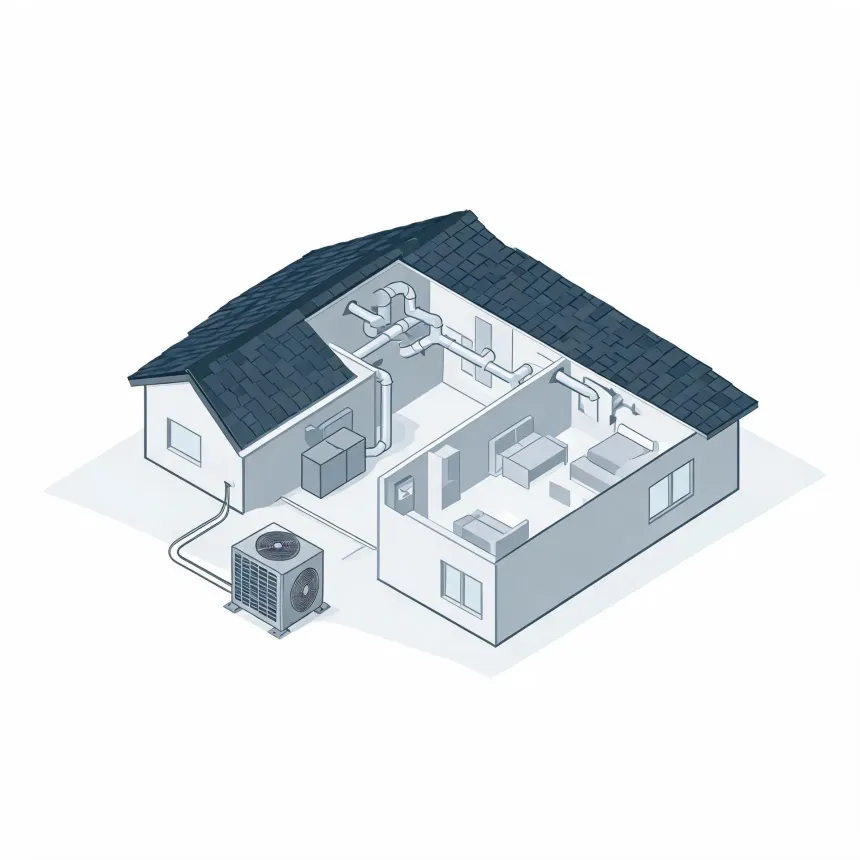
Isometric cutaway illustration of a single-story house showing interior rooms, ceiling ductwork, an indoor air handler, and an outdoor condenser unit connected by lines on the ground.

Heat here starts in October, right after a September where it barely ran at all.

A weak part can sit unused all September and fail the first cold week it has to work.

San Rafael isn't hard on a heat pump. A specific part failing is.

Power costs 31.97 cents a kWh statewide
122 damaging wind events from 2015 to 2024
11 hail events from 2015 to 2024

Before anyone comes out, check the thermostat is set to heat and the setpoint is a few degrees above room temperature. Look at the outdoor unit. If the coil is covered in frost or ice, that can be normal during a defrost cycle, but ice that stays for hours is not. Check that nothing is blocking airflow around the outdoor unit, like leaves or a stray branch. Go inside and look at the air filter. A filter clogged with dust chokes airflow and can make the system blow air that feels cool even when it is heating normally. Check the breaker for both the indoor and outdoor units, since a tripped breaker on just one side will stop the system cold. None of this fixes a bad capacitor or a failed reversing valve, but it rules out the simple stuff first.

It's usually worth repairing

It has an easier job here than in most places, so your heat pump is often in decent shape. Repair is usually worth it.

Find a contractor
A man in a dark shirt and tan pants carries a canvas tool bag as he walks up concrete steps toward a blue front door on a porch with a potted shrub.
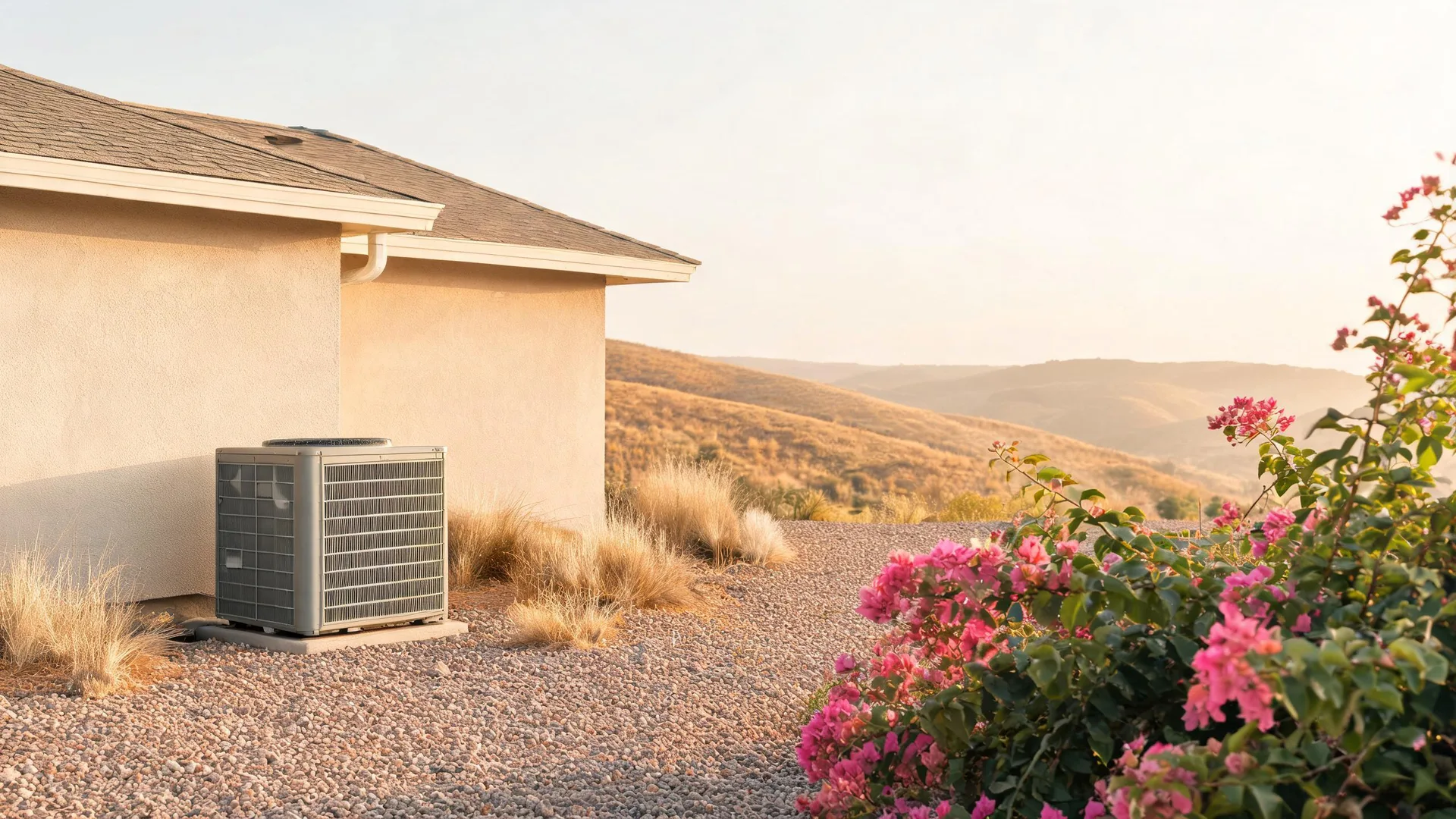
A residential heat pump outdoor unit mounted on a concrete pad next to a house with gray vinyl siding.

Age wears down a few parts. It doesn't wear down the machine.

A heat pump has fewer failure points than most people think. A compressor, a reversing valve, a couple of fan motors, a run of refrigerant line. Any one of those can fail on its own. It doesn't matter how long the unit has been running. What age actually works against is the stuff that wears a little every cycle. Contactor points pit a bit more each time they close. A capacitor loses its charge slowly over years. A coil corrodes a little further each season. Those are the parts worth asking about on an older unit. A reversing valve stuck in one position or a compressor that hums but won't start is a repair worth getting a straight answer on before anyone brings up replacing the whole system.

A failing capacitor can take the compressor with it

A capacitor that's gone weak makes the compressor pull harder to start each cycle. Keep running the system on a bad capacitor and the compressor windings take the strain instead. A capacitor is a simple swap. A failed compressor is not, and sometimes it means the whole outdoor unit.
Ice on the coil doesn't melt itself if the reversing valve is stuck

A heat pump clears frost by briefly running in cooling mode, which warms the outdoor coil. If the reversing valve won't switch, that defrost cycle never happens and ice just keeps building. Thicker ice blocks more airflow, which makes the compressor work harder to move heat through a coil that can barely breathe.

A few things take out a heat pump more than anything else. Contactor points get pitted from arcing every time they close, until they stick or stop making contact at all. A run capacitor loses its charge slowly, and the compressor it's supposed to help start begins pulling more current than it should. Refrigerant lines can develop a slow leak at a joint or a rubbed-through spot, and a system low on charge makes the compressor work harder to move the same amount of heat. Outdoor fan motors wear out their bearings and start running slow or noisy before they quit. None of these announce themselves ahead of time. The system runs fine, then one part gives out, and everything downstream of it struggles until someone finds the actual cause.

A diagnostic visit starts outside, watching the unit run through a full cycle rather than just looking at it sitting there. A tech will check the suction and discharge pressures, since both tell a different part of the story. Low suction pressure points toward a refrigerant leak or a restriction. High head pressure can mean a dirty coil or a fan motor not moving enough air. They'll check the temperature split between the air going into the indoor coil and the air coming out, because a small split means the system isn't moving heat the way it should. The capacitor gets tested under load, not just looked at, since a capacitor can look fine and still have lost most of its charge. Electrical connections get checked for pitting or heat damage, especially at the contactor. None of this takes guesswork. Each reading either matches what a healthy system should show or it points straight at the part that doesn't.