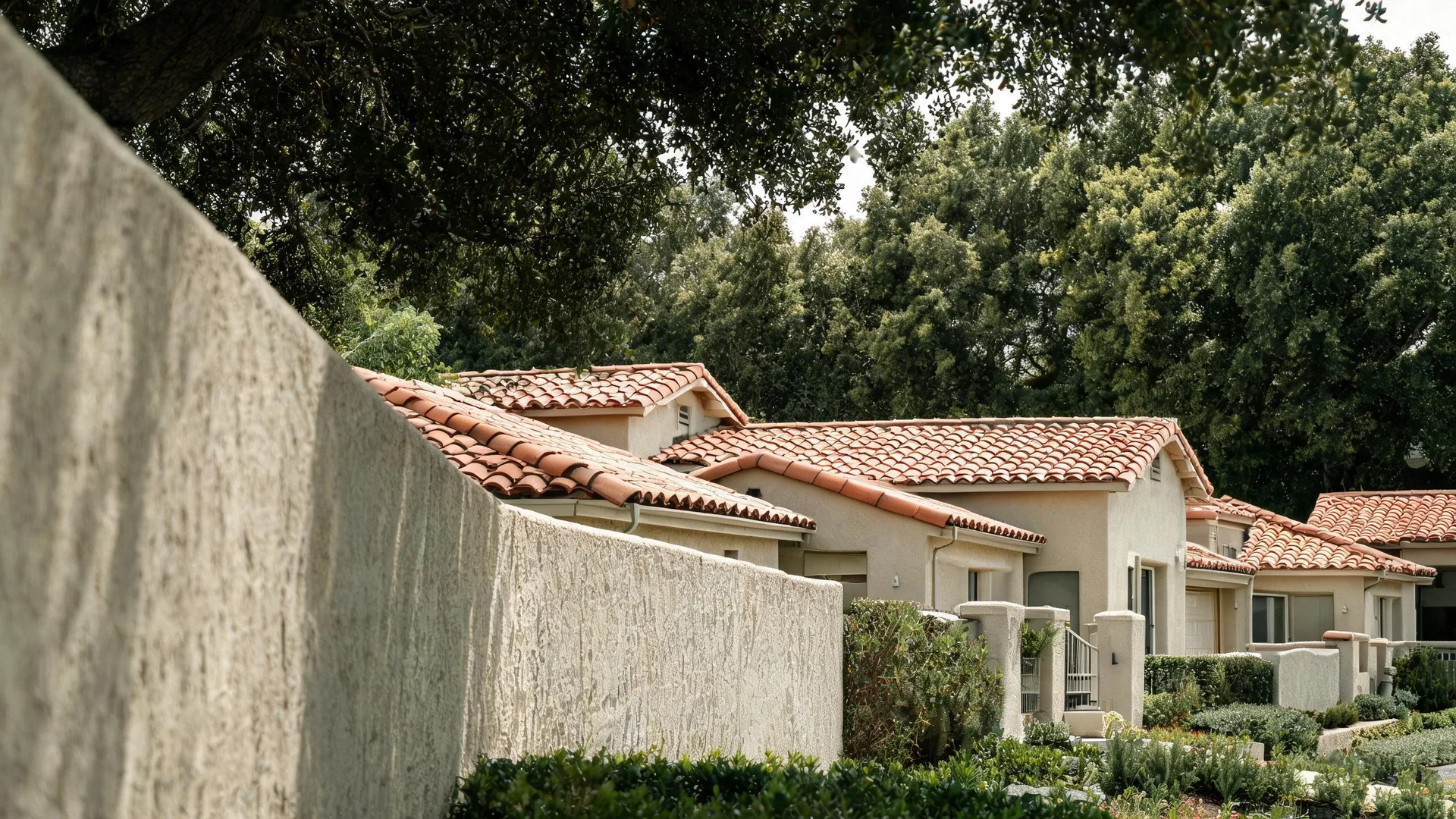




A textured beige stucco wall runs diagonally in the foreground past single-story houses with red clay tile roofs, surrounded by dense green trees and trimmed hedges.

Heat Pump Installation in Santa Cruz, CA

Tell us about the job

Takes about a minute. No obligation.

New system or replacementHeat PumpSanta Cruz County, CA
Step 1 of 2

What ZIP code is the job in?

Electricity in Santa Cruz County ran homeowners an average of 38.48 cents per kilowatt-hour in 2025, among the highest rates in the country. A heat pump here does not run as many hours as it would somewhere with a harder winter. That works against a badly matched or poorly installed one, not for it. Every hour it does run costs more than it would almost anywhere else, so a unit sized wrong or installed loose gives that cost back to you faster here than it would elsewhere. What it costs to run depends less on how many months it works and more on how well it was put in.

7 months
November through May, your system heats
41°F
the average winter night it heats against
76°F
the average summer afternoon it cools against
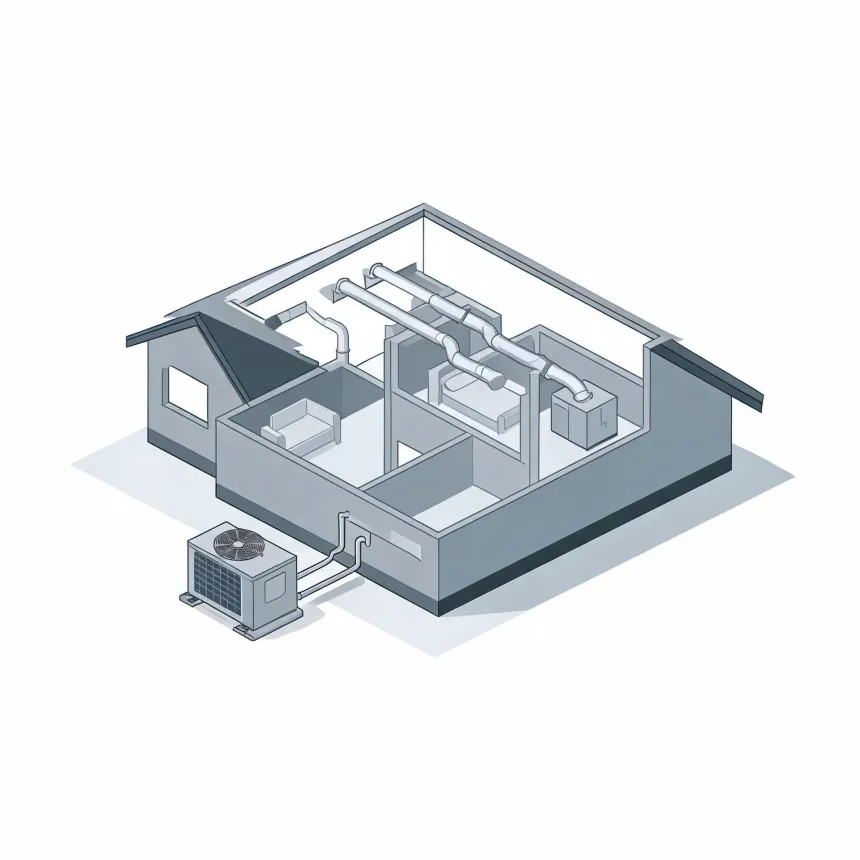
Isometric grayscale illustration of a cutaway house showing interior rooms, ceiling ductwork and an air handler, connected by lines to an outdoor condenser unit on a pad outside.

Damaging wind hit this county 207 times between 2015 and 2024.

Where the outdoor unit goes, and what shields it, is part of the install.

November is when the heat goes on here, not when to start looking for a new system

Heat runs November through May
207 damaging wind events from 2015 to 2024
15 hail events from 2015 to 2024

Most houses in Santa Cruz County heat with gas, 57.3% of them. Electricity is next at 25.9%, and a smaller share run on bottled or LP gas. A heat pump replacing a gas furnace is a bigger change than swapping one electric system for another, since it adds a line to carry its power and a spot to set the outdoor unit, not just a new unit in the old place. None of that rules it out. It just means the job includes wiring and sizing that a straight gas-to-gas swap never had to touch. Whether your home already has a heat pump or has run on gas since it was built changes what this installation involves.

Here, the install decides what it costs to run

With power priced the way it is in Santa Cruz County, a heat pump sized right and set up right earns that back on every bill after. Getting the sizing and the setup right at install is what makes the difference.

Find a contractor
A gray outdoor HVAC unit mounted on a concrete pad beside a house with gray lap siding and a stone foundation.

It won't work as hard here

The dew point here averages 51 degrees across June, July and August, lower than most of the country, and winters stay mild. A heat pump in this county is not fighting heavy, humid air all summer or deep cold all winter. Less strain on the compressor over the year means less reason for a repair to turn into a replacement. Most of what shortens a heat pump's life here is age or a part that got skipped at a service visit, not the machine straining to keep up. That's a reason to pick one that holds up over years, not one that chases the highest efficiency number on the sheet.

Sizing is the first cost

A heat pump has to be matched to the house, the room by room heat loss and heat gain, not just the square footage. One sized too big will short cycle, switching on and off before it ever settles into a steady run, and that wears the compressor faster than steady use would. One sized too small runs constantly and still can't quite catch up on the coldest or warmest days. Getting this number right takes a load calculation, not a guess based on the system it's replacing.

The line set and the charge

The refrigerant lines running between the outdoor unit and the indoor coil have to be the right length and the right diameter, and the refrigerant charge has to match what the manufacturer specifies for that length. Too long a run without adjusting for it, or a charge that's off even a little, costs the system efficiency for as long as it operates. This is work that happens once, at install, and it's hard to correct later without opening the system back up.

The efficiency rating on a heat pump's label, the HSPF2 number for heating and the SEER2 number for cooling, tells you how much heat it moves for the power it draws, measured under set lab conditions. It is not a promise of what you'll see on the unit once it is running in a house. Two systems with the same rating can perform differently depending on how the ducts are sealed, how the refrigerant charge was set, and whether the unit is the right size for the space it's heating and cooling. A higher number usually means more sophisticated parts inside, a variable speed compressor instead of a single speed one, which can run longer at a lower output rather than cycling on and off. That steadier run is often what saves power, not the rating by itself. A unit with a lower number, installed and charged correctly, can outperform a higher rated one that was sized wrong or installed loose. The rating is a starting point for comparing equipment, not a finished answer for what it will cost to run.

Santa Cruz County sits in climate zone 3C, a warm zone with a short, mild winter. Any split-system heat pump installed here now has to clear 14.3 SEER2 for cooling and 7.5 HSPF2 for heating, the federal minimums that took effect in 2023. Central air systems installed in this region face a separate cooling requirement too, an EER2 of 11.7 or 9.8 depending on how the unit is certified, which measures how it holds up under a steady load rather than the average used for SEER2. These numbers set the floor, not the choice. What a contractor proposes for your house still has to be sized to it and installed to hold that rating, or the label on the box stops meaning much once the system is running.