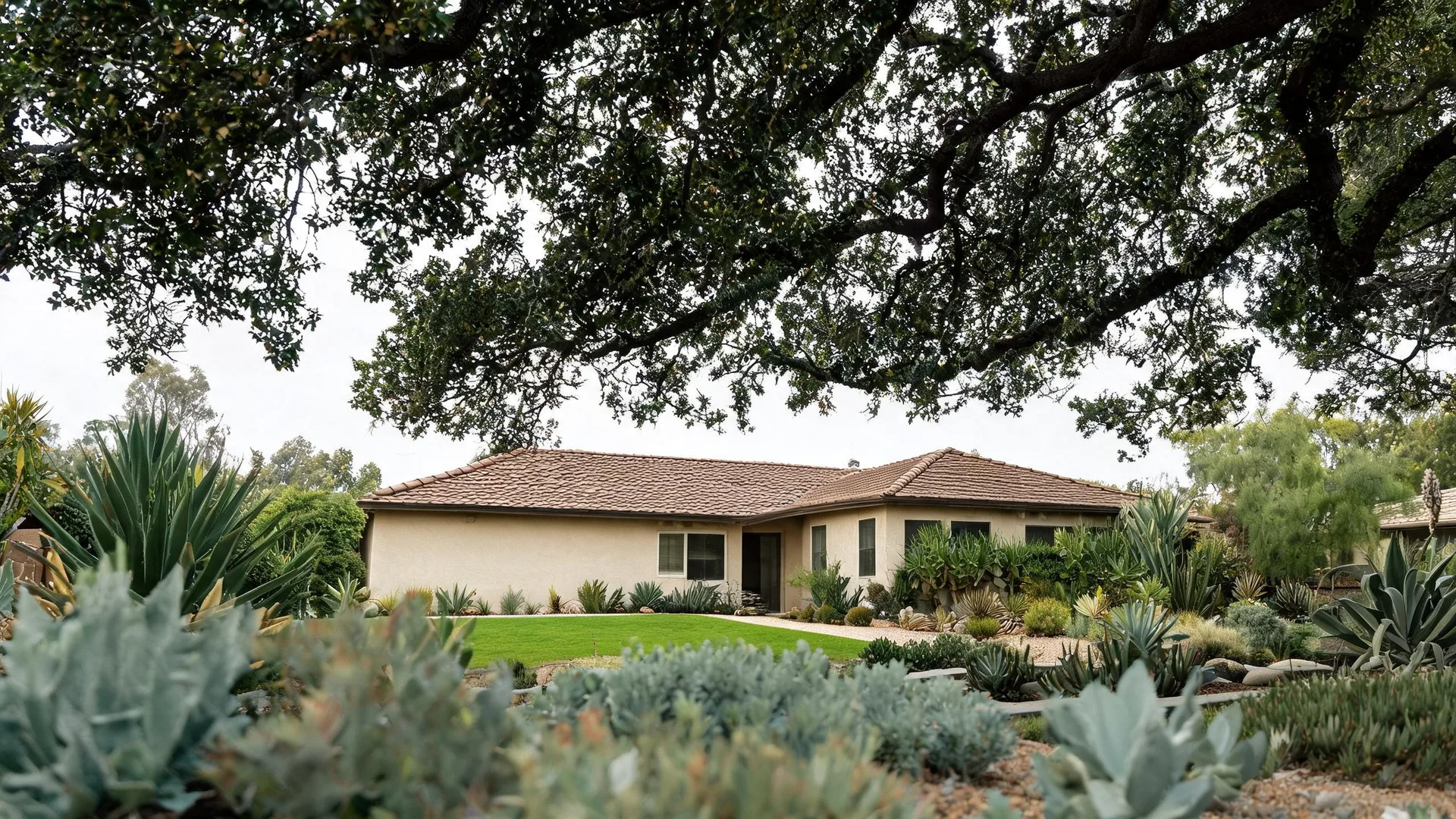







A single-story stucco house with a tile roof sits behind a lawn and drought-tolerant garden of agaves and succulents, framed by overhanging oak branches under an overcast sky.

Heat Pump Installation in Stockton, CA

Tell us about the job

Takes about a minute. No obligation.

New system or replacementHeat PumpSan Joaquin County, CA
Step 1 of 2

What ZIP code is the job in?

Gas heats most homes in San Joaquin County, 61.6 percent of them. Electricity accounts for 29.4 percent, with bottled or LP gas making up the rest. A heat pump works differently from either setup since it moves heat instead of burning gas or running resistance coils, and it handles both heating and cooling from one system. If your home has gas heat now, swapping in a heat pump means adding ductwork changes or electrical capacity the old system never needed, worth checking before you compare quotes. If you're already on electric heat, a heat pump often fits in more directly since the wiring and panel may already support it.

6 months
November through April, your system heats
5 months
May through September, it cools
40°F
the average winter night it heats against
91°F
the average summer afternoon it cools against
Isometric cutaway illustration of a single-story house showing interior rooms with furniture, an attic duct system connected to an indoor air handler, and an outdoor condenser unit linked by lines along the exterior wall.
Your system heats November through April and cools May through September.

NOAA nClimDiv, 1991–2020 normals

Stockton doesn't need an oversized heat pump or a high-end efficiency tier to handle its winters or summers.

A standard-capacity, standard-efficiency unit sized to your home is the right call here, and at 31.97 cents per kilowatt-hour, matching the size to the house is what keeps the bill in check.

October gets you ready for heat, April gets you ready for cooling. Either way, go before the weather decides for you.

Cooling runs May through September
Heat runs November through April
21 damaging wind events from 2015 to 2024
A mild climb for a heat pumpWinter lows here average 40°F, so the system isn't working against deep cold.

Any heat pump installed here now has to meet 14.3 SEER2 for cooling, the federal minimum as of 2023. Stockton falls under the Southwest region rule too, so a central air system sold on its own has to clear that same number. These are floors, not targets to chase past. San Joaquin County is warm with mild winters, and a unit built to the minimum already handles that load without needing a bigger or higher-end tier. A federal tax credit is available on top of this if the equipment qualifies, worth asking about when you're comparing quotes.

Size it for Stockton, not for extremes

A 40°F winter low isn't much of a load. Pick a heat pump sized right for your house, standard capacity and standard efficiency, and let it do the job it was built for.

Find a contractor
A man in a dark T-shirt, backwards cap and brown work pants, seen from behind, climbs porch steps toward a blue paneled front door while carrying a canvas tool bag, with a potted shrub in a blue planter to the right.
A dark gray heat pump unit mounted on a concrete pad next to a house with gray siding and a stone veneer wall.

Sized right, it runs steady and doesn't strain

A heat pump sized right cycles on, meets the thermostat, and shuts off. One that's too big blasts the space fast, hits the setpoint, and shuts down again before it's settled into a steady rhythm or pulled much moisture out of the air. All those short cycles wear on the compressor. Starting and stopping is harder on it than running steady. An undersized unit has the opposite problem. It runs long stretches trying to catch up, sometimes never quite getting there on the hardest days, and leans on backup heat strips more than it should. Getting the size right takes a load calculation, not a guess off square footage. A contractor walks the house, counts windows and which way they face, checks insulation, measures room by room, and runs it all through a standard formula. Square footage feeds into that math, but ceiling height, duct runs, and how much sun hits a wall matter too. Size off square footage alone and the unit can land well off what the house actually needs.

The old system doesn't power both jobs at once

If a furnace is coming out, the contractor disconnects the gas line and vents, and that equipment is hauled off. If there's a separate air conditioner, its refrigerant lines and outdoor unit come out too, since a heat pump replaces both with one system. None of the old equipment stays in place as backup.
The ductwork decides how clean the swap is

A heat pump moves more air at a lower temperature than a gas furnace does, so the same ducts don't always perform the same way once the new system is running. A contractor checks duct size and layout before pulling the old furnace, not after, so any changes get made as part of the same job instead of as a surprise later.

The efficiency rating on the label tells you how much heat a system moves for the power it uses. A higher rating means it moves more heat per unit of electricity, not that it heats or cools faster. It isn't fixed once the system is running, either. A dirty filter, a coil packed with dust, or a leaky duct run all drag real performance below what the label promises. That number assumes the system was installed right and gets maintained, not just set in place and left alone. Chasing a rating higher than the house needs doesn't make the air warmer or colder, it just raises the cost of equipment that leans on savings tied to how much the system actually runs.

Installation day starts with the old equipment coming out, not the new one going in. A contractor disconnects the gas line or the old refrigerant lines, pulls the furnace or condenser, and clears the pad before the heat pump ever gets set outside. Indoors, the air handler or coil gets swapped and the line set run between inside and out, then pressure tested before anything gets charged with refrigerant. That test matters because a leak is far easier to find and fix before the system is sealed up and running. Electrical work usually follows, since a heat pump draws differently than what was there before and the disconnect or breaker has to match. Once it's all connected, the system gets charged, the airflow checked against the duct size, and the thermostat run through both heating and cooling before anyone calls it done.