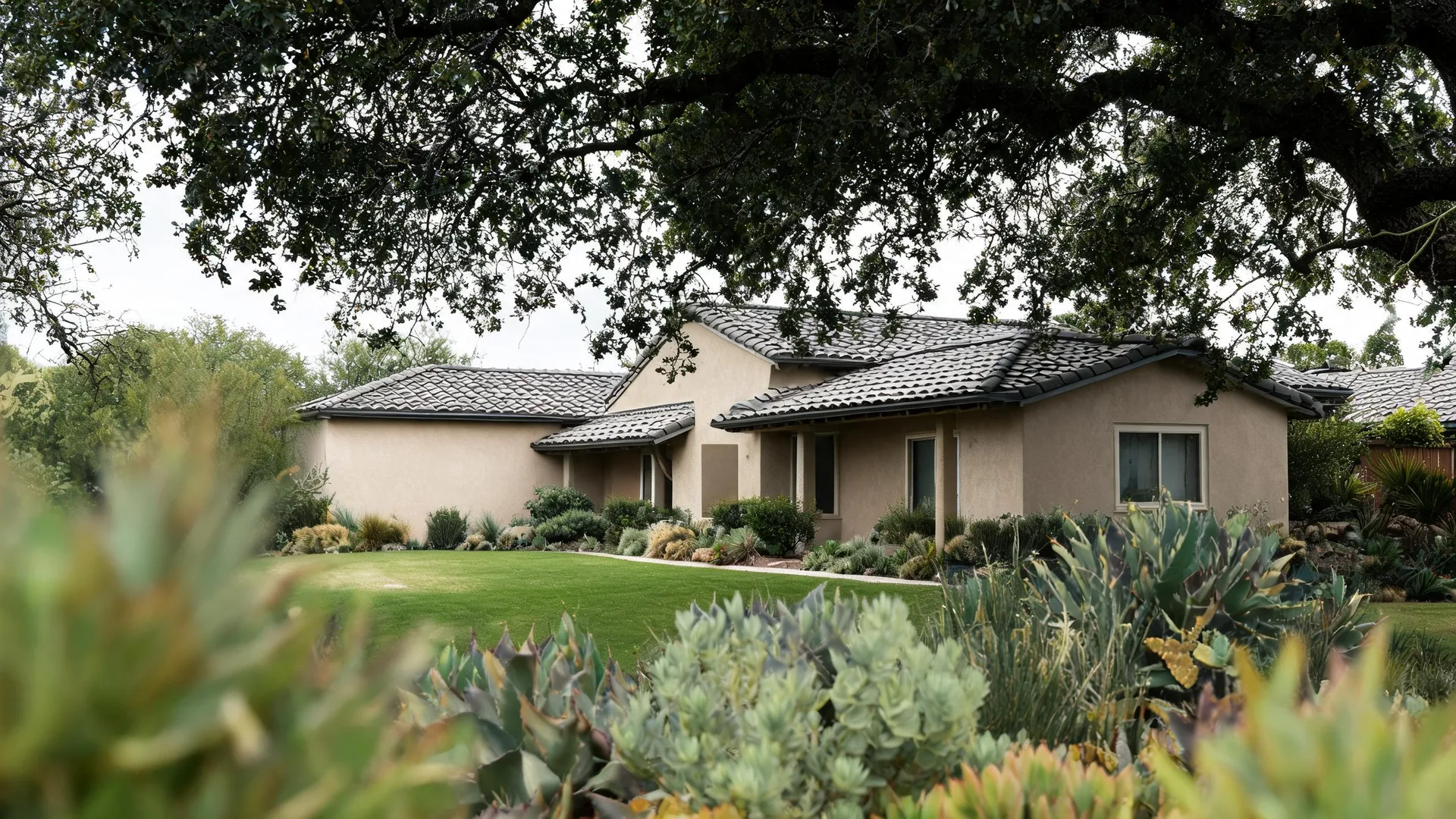






A single-story stucco house with a tiled hip roof behind a mown lawn, framed by overhanging oak branches and foreground agave and succulent plantings.

Heat Pump Installation in Visalia, CA

Tell us about the job

Takes about a minute. No obligation.

New system or replacementHeat PumpTulare County, CA
Step 1 of 2

What ZIP code is the job in?

The old system doesn't just sit there once the new one is in. Whoever installs the heat pump disconnects the existing furnace or AC unit and hauls it away, along with the old refrigerant lines if they're being replaced. If there's a gas furnace coming out, the gas line gets capped off safely, not just left open. The refrigerant in the old condenser has to be recovered properly rather than vented, since it's not legal or safe to just let it out. Your ductwork usually stays, though a good installer checks it first to make sure it can handle the new system's airflow before hooking anything up. The old thermostat comes down too, replaced with one that actually talks to the heat pump correctly.

8 months
October through May, your system heats
4 months
June through September, it cools
31°F
the average winter night it heats against
84°F
the average summer afternoon it cools against
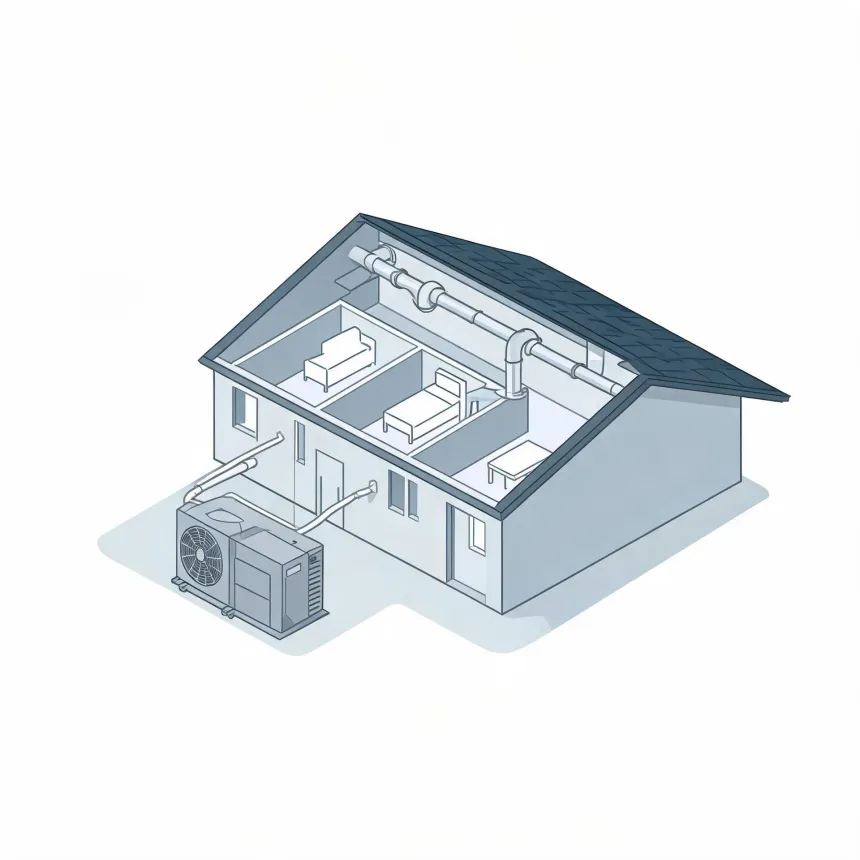
Isometric line illustration of a cutaway single-story house showing interior rooms with furniture and attic ductwork connected to an outdoor condenser unit beside the building.
Your system heats October through May and cools June through September.

NOAA nClimDiv, 1991–2020 normals

Winter lows in Visalia average 31°F, nowhere near the extremes that push a heat pump to its limit.

A heat pump here isn't straining against the weather most of the year, so a well-built mid-range system holds up fine.

May is when to put in a heat pump here, before cooling starts in June

Cooling runs June through September
Heat runs October through May
191 damaging wind events from 2015 to 2024
Power here costs more, so efficiency pays you backCalifornia homes paid 31.97 cents per kilowatt-hour in 2024

Gas heats 67.5% of homes in Tulare County, the kind with a furnace already sitting in the attic or closet. For those homes, a heat pump install usually means dual fuel, not a full swap. The furnace stays in as backup for the coldest stretches, and the heat pump handles everyday heating and all the cooling. Electricity heats 21.8% of homes here, and those are typically a straight swap, heat pump in, nothing else to tie in. Whoever installs it needs to know which setup is in your home before sizing anything.

A new heat pump here has to clear a set efficiency bar

Any heat pump installed here now has to hit 14.3 SEER2 and 7.5 HSPF2, the federal minimum for this climate zone. That floor rules out the older, less efficient units some installers may still have on hand. Ask what's being installed meets it, and check whether it qualifies for the federal tax credit before you sign anything.

Find a contractor
A man in a dark jacket, knit hat and tan work pants climbs porch steps toward a gray front door, carrying a worn canvas tool bag, with a potted shrub in a blue planter at left.
A gray outdoor HVAC unit mounted on a concrete pad beside a house with gray lap siding and a stone foundation.

Running steady, not straining, most of the year

Since it isn't fighting hard winters or long cooling runs, a mid-range heat pump here will rack up its hours gradually instead of getting hammered day after day. That's the kind of system where a solid warranty and a reliable installer matter more than chasing the highest efficiency number on the shelf.

Ask for the load calculation, not a guess

Sizing a heat pump off the old system or a rule of thumb leads to a unit that short-cycles or can't keep up. A contractor should run a room-by-room load calculation based on your insulation, windows and layout, and show you the numbers, not just hand you a model.
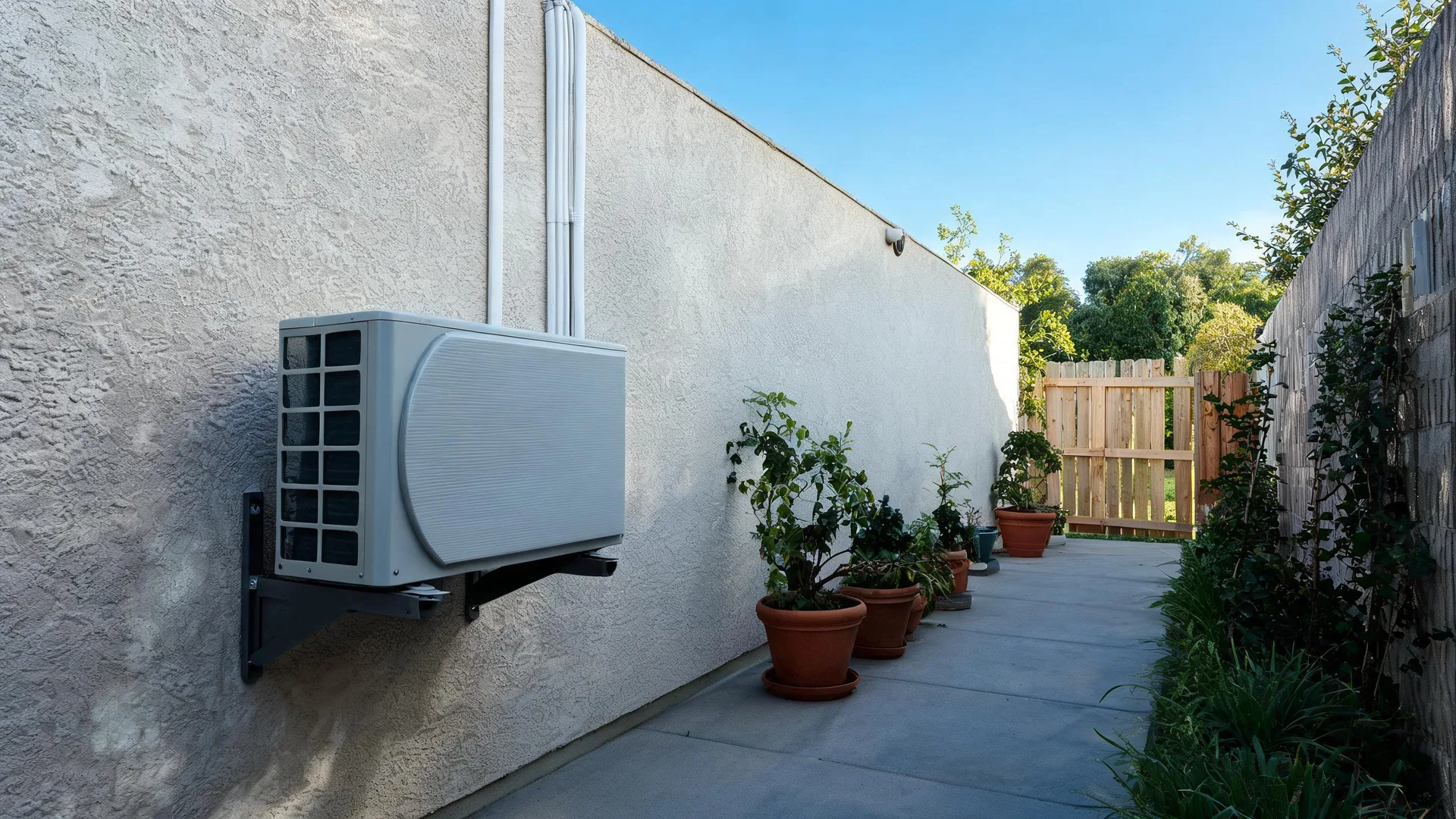
Ask how it performs at low temperatures, not just its rating

Heat pumps with matching efficiency ratings can behave differently once it actually gets cold out. Ask for the manufacturer's capacity and efficiency data at low outdoor temperatures, not just the standard rating, so you know what you're getting on the coldest mornings, not just in mild weather.

A heat pump sized wrong causes problems whichever way it's off. Too big, and it blasts a short burst of hot or cold air, hits the thermostat setting, and shuts off before it's run long enough to pull moisture out of the air or warm the place evenly. That's short-cycling, and it wears on the compressor too, since starting up is the hardest thing it does. Too small, and it runs constantly trying to catch up, especially on the hottest or coldest days, never quite getting there. The right size comes from a load calculation, not the square footage of the house or whatever size the old unit happened to be. Insulation, window count, ceiling height and how the rooms are laid out all feed into that number, and homes that look alike from the street can need different systems entirely.

SEER2 measures cooling efficiency and HSPF2 measures heating efficiency, and neither one tells you how much heat or cold the unit can actually put out. That's capacity, a separate spec entirely. Systems with the same capacity can carry different ratings, and the higher rated one pulls less electricity to do the same job. That rating comes from a lab test under set conditions, so it's a way to compare units side by side, not a promise of what you'll see in your own house. How the place is insulated, where the ducts run and how carefully the system gets installed all shape the result you actually get. A higher rated unit tends to cost more upfront, and it earns that back through lower power draw over the years it runs. Ask for the spec sheet on what's being installed, not just the rating number someone tells you across the counter.